La Llotja, Palma de Mallorca
Historic Building in Palma de Mallorca
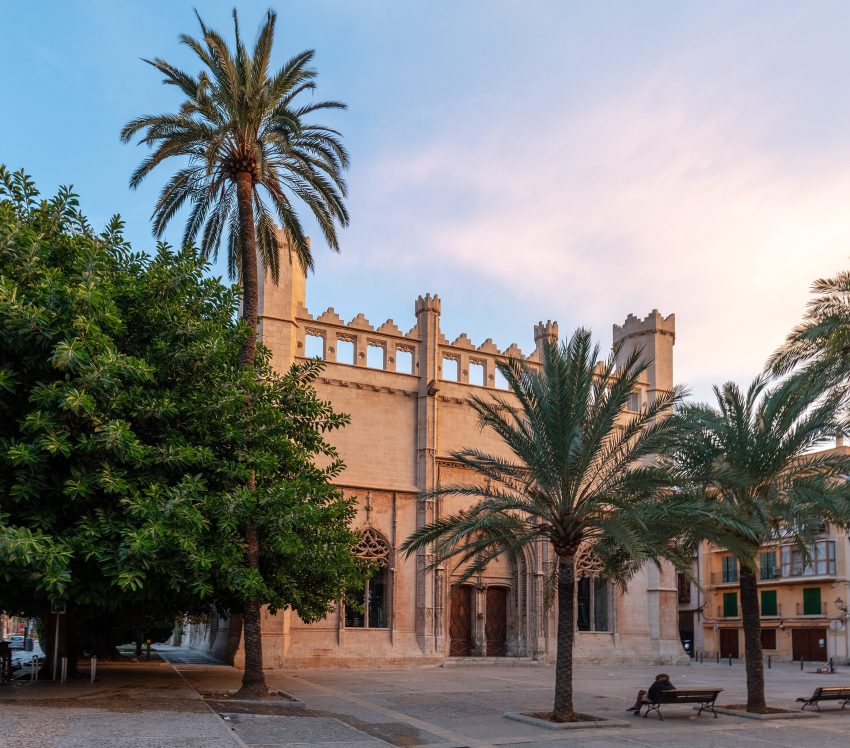
Just a short stroll from the cathedral and once almost at the water's edge, La Llotja is a masterpiece of Mallorcan bourgeois Gothic architecture that tells the story of Palma's trading power in stone. Built as the headquarters of the Maritime Trade Exchange and later folded into the city's defensive walls, this cube-like hall with its four towers has watched ships come and go, goods change hands and the city reinvent itself over centuries, making it one of the must-see places in Palma de Mallorca for anyone interested in history and architecture.
Step inside and you find a single soaring hall, its space divided by two rows of beautifully twisted columns that rise like stone palm trees to support a ribbed vault overhead. Light filters in softly, catching the curves of the columns and the details of The Angel of Merchants sculpted above the main portal, while the surrounding quarter hums with cafés, streets and sea breezes. La Llotja feels both grand and surprisingly peaceful, a great place to visit on a walking tour of Palma de Mallorca when you want a moment of quiet drama away from the busy seafront promenade.
History and Significance of the La Llotja
La Llotja's story begins with the Maritime Trade Exchange founded in Barcelona in 1403 under a privilege granted by King Marti I. As Mallorca's importance in Mediterranean commerce grew, the Exchange relocated to the island and, in 1452, took up residence in the newly completed La Llotja. From here it regulated trade, oversaw merchant activity and acted as the administrative heart of the bustling port of Palma, linking local traders with wider Mediterranean networks.
Construction of the building began in 1426 under architect Guillem Sagrera and was completed in 1447 by Guillermo Vilasolar. Designed as a cube-like volume anchored by four corner towers, it was integrated into the city's defensive walls when the Exchange moved in, symbolising both economic strength and strategic might. At that time, La Llotja stood very close to the sea, physically and symbolically connecting commercial life on land with the maritime routes that brought wealth to the city.
As maritime trade declined and economic priorities shifted, La Llotja adapted to new roles. It became a goods depot, then an arms factory and arsenal during the Napoleonic wars, and later a courthouse. From 1886 to 1962 it served as a museum, reinforcing its status as a keeper of Palma's civic memory. Today, restored and carefully maintained, La Llotja functions as a cultural venue and exhibition space, a living building that continues to host gatherings, art and public events rather than sitting as a frozen relic of the past.
Things to See and Do in the La Llotja
The exterior is your first encounter with La Llotja’s distinctive character. The solid cubic form, punctuated by four corner towers and elegant Gothic windows, makes a powerful statement without excessive ornament. As you approach along the avenue near the seafront, pause to look up at the façades and the main entrance, where the Angel of Merchants presides over the doorway, a reminder of the building’s original purpose as a hub for trade and negotiation.
Inside, the impact of the great hall is immediate. A single expansive space stretches out before you, its height and width held up by two rows of intricately twisted columns that spiral upwards to meet the vault. The effect is both orderly and organic, as if the stone has been coaxed into growing rather than built. Walk slowly between the columns to appreciate how they shape the hall and to notice details in the vaulting overhead, where ribs fan out and intersect in graceful patterns.
Depending on the time of your visit, you may find temporary art exhibitions, cultural events or even political gatherings taking place here, all of which bring contemporary life into this historic shell. When possible, try to access the recently restored flat terraced roof, where groups with permission can enjoy panoramic views over Palma, the cathedral and the nearby waterfront. Even if the roof is closed, simply lingering inside the hall to watch how light and shadow move across the stone gives you a strong sense of the building's enduring presence in the city.
How to Get to the La Llotja
Most visitors arrive in Palma via Palma de Mallorca Airport, the island's main international hub with frequent connections from Spain and across Europe. For the best deals and a seamless booking experience, check out these flights to Palma de Mallorca on Booking.com. From the airport, you can take an airport bus or taxi into the city centre, then walk towards the cathedral and the seafront to reach La Llotja.
If you are based elsewhere on the island, regional trains connect towns like Inca, Sa Pobla and Manacor with Palma's central Estació Intermodal, just off Plaça d'Espanya.Train schedules and bookings can be found on Omio. From there it is an easy walk or short bus ride through the old town towards the cathedral and the waterfront; once you reach the area around La Seu, La Llotja is only a few minutes away on foot.
Travelling by car, follow the main roads into Palma and head for the car parks around the seafront or near the old town, then continue on foot along the waterfront promenade and through the adjacent streets to La Llotja.If you are looking to rent a car in Spain I recommend having a look at Discover Cars, first, as they compare prices and review multiple car rental agencies for you. The area is compact, scenic and best explored on foot, so once parked you can comfortably link La Llotja with the cathedral, Almudaina Palace and the nearby marina.
Practical Tips on Visiting the La Llotja
- Suggested tips: Combine La Llotja with a visit to the cathedral and a stroll along the seafront, and allow time simply to stand in the central hall and take in the scale and symmetry.
- Best time to visit: Late morning or late afternoon offer softer light inside and outside, and in cooler months the building provides a welcome sheltered space from the wind or rain.
- Entrance fee: Entry is often free or low cost; check current details locally before your visit.
- Opening hours: Typically open daily except Mondays, with hours that may vary by season and current exhibitions.
- How long to spend: Around 30-60 minutes is usually enough to appreciate the architecture and any exhibition, longer if you are particularly interested in photography or art on display.
- Accessibility: The main hall is generally spacious and level, but access to any upper levels or roof terraces may be limited; visitors with mobility needs should confirm access options in advance.
- Facilities: La Llotja itself has minimal facilities, so plan to use nearby cafés, bars and public toilets along the waterfront or in the old town.
- Photography tip: Use the twisted columns as leading lines for your shots, and look for angles that frame the cathedral or the harbour through doors and windows for a strong sense of place.
- Guided tours: It is sometimes included in guided walking tours or architectural visits; joining one can help place La Llotja within the wider story of Palma's maritime and mercantile past.
- Nearby food options: The surrounding streets and the nearby La Lonja and Santa Catalina districts are full of restaurants and tapas bars, making it easy to tie your visit to lunch or an evening meal.
Where to Stay close to the La Llotja
Staying near La Llotja puts you right between the old town and the waterfront, ideal if you want to explore on foot and soak up Palma's atmosphere from morning to night. For a stylish central base, HM Jaime III Hotel offers contemporary rooms within walking distance of both La Llotja and the main shopping streets. If you prefer historic charm with sea views, Hotel Boutique Calatrava sits by the old city walls, giving you easy access to the cathedral area and a scenic walk along the bay. Another good option is Hotel Almudaina, a well-located hotel that balances comfort and convenience, making it simple to drop by La Llotja at different times of day.
Is the La Llotja Worth Visiting?
La Llotja is absolutely worth visiting if you are interested in how trade and architecture shaped Palma's identity. Its soaring hall, twisted columns and maritime history create a powerful impression that is quite different from the religious atmosphere of the nearby cathedral, yet just as memorable. Compact, free or low-cost to enter and beautifully situated near the seafront, it slots easily into any Palma itinerary and offers a vivid glimpse of the city's mercantile golden age.
What Other Travellers Say...

La Llotja, at Plaça de la Llotja 5 in Palma's Centre, is a dramatic 15th-century Gothic guild building famed for its soaring spiral columns, vaulted roof and delicate stonework; visitors praise its striking exterior and interior, note that entry has been free, and find occasional modern sculpture exhibitions—Miro pieces and other contemporary shows have been highlighted—make it well worth a stop amid Palma's cafés, restaurants and winding streets.


FAQs for Visiting La Llotja
Nearby Attractions to the La Llotja
- Palma Cathedral La Seu: The city's iconic Gothic cathedral overlooking the bay, just a short walk from La Llotja.
- Royal Palace of La Almudaina: A historic royal residence beside the cathedral, blending Moorish and Gothic influences and open to visitors.
- Parc de la Mar: A seafront park with a large reflecting pool and views back to the cathedral and old city walls.
- Es Baluard Museum of Modern and Contemporary Art: A museum housed in part of the old fortifications, showcasing modern art with terraces overlooking the harbour.
- Passeig des Born: An elegant tree-lined avenue lined with shops and cafés, perfect for a relaxed stroll before or after your visit to La Llotja.
The La Llotja appears in our Complete Guide to Visiting Palma de Mallorca!

Moira & Andy
Hey! We're Moira & Andy. From hiking the Camino to trips around Europe in Bert our campervan — we've been traveling together since retirement in 2020!
This website uses affiliate links which may earn a commission at no additional cost to you!
Planning Your Visit
Typically open daily except Mondays, with hours that may vary by season and current exhibitions.
Entry is often free or low cost; check current details locally before your visit.
Nearby Attractions
- Royal Gardens of La Almudaina (0.2) km
Gardens - Royal Palace of La Almudaina (0.2) km
Palace - Passeig del Born (0.3) km
Street - Palau March Museum (0.3) km
Historic Building and Museum - Es Baluard Centre (0.3) km
Museum - La Seu: the Cathedral of Palma (0.4) km
Cathedral - Museu Diocesa de Mallorca (0.4) km
Museum - Bishop's Garden (0.5) km
Gardens - Plaza de Cort (0.5) km
Square - Centre Maimó ben Faraig (0.5) km
Museum