Ruins of Hadrianopolis, Gjirokastër
Ruins near Gjirokastër
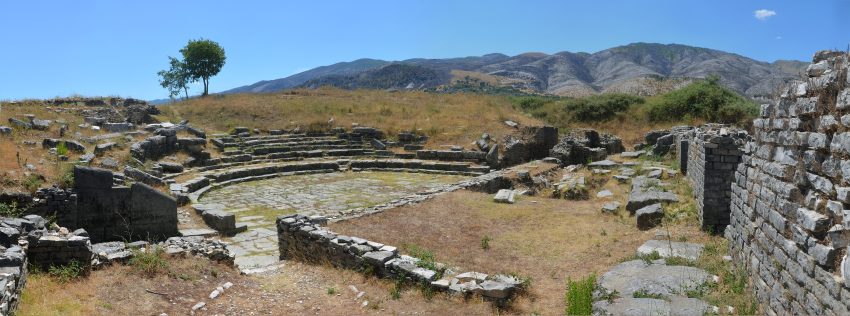
The Hadrianopolis Archaeological Site is one of the easiest “big history, small effort” add-ons from Gjirokastër: a Roman-period city remnant set in open fields near the village of Sofratikë, with the main ruins visible within minutes of arriving. If you want a break from steep stone streets and museum interiors, this is a calm, outdoorsy contrast that still feels historically substantial, and it works well as one of the top sights in Gjirokastër once you start looking beyond the old town.
What you actually come for is the theatre: a compact, semi-excavated Roman structure with stone seating that makes the place instantly legible, even without a guide. It also pairs naturally with a walking tour of Gjirokastër because you can do the city on foot in the morning, then take a short taxi out here for a quick, memorable second chapter to the day.
Table of Contents
- History and Significance of the Hadrianopolis Archaeological Site
- Things to See and Do in the Hadrianopolis Archaeological Site
- How to Get to the Hadrianopolis Archaeological Site
- Practical Tips on Visiting the Hadrianopolis Archaeological Site
- Where to Stay Close to the Hadrianopolis Archaeological Site
- Is the Hadrianopolis Archaeological Site Worth Visiting?
- For Different Travelers
- FAQs for Visiting Hadrianopolis Archaeological Site
- Nearby Attractions to the Hadrianopolis Archaeological Site
History and Significance of the Hadrianopolis Archaeological Site
Hadrianopolis sits on a landscape that mattered long before the Romans arrived, with traces of earlier settlement in the late Classical and Hellenistic periods and a wider region shaped by Epirus and its tribal communities. In the Roman period, the settlement gained city status under Emperor Hadrian (117-138 CE), positioned along the route connecting Apollonia to Nicopolis and serving as an administrative reference point for the Drino valley area.
After later instability, the site saw revival work during the reign of Justinian I (527-565 CE), when it is described as taking the name Justinianopolis and continuing as a centre tied to the local bishopric tradition. (Today it is understood within the wider Antigonea-Hadrianopolis archaeological landscape, where nearby ancient sites help explain why this valley was strategically and economically important across multiple eras.
Things to See and Do in the Hadrianopolis Archaeological Site
Begin at the theatre, because it is the clearest and most satisfying feature: a semi-circular seating bowl facing the former performance space, with enough surviving stonework to picture how crowds would have gathered and how sound would have carried. Walk the curve of the seating slowly rather than rushing to the centre, because the small changes in angle and height help you read the design in a way photos rarely capture.
After the theatre, look for the outlines of other public architecture in the surrounding excavated patches, including the remains commonly associated with a bath complex. Even if walls are low, the footprint still tells a story: baths were not optional extras in Roman urban life, but a core civic facility that signals a place designed to function as a proper town, not just a roadside stop.
If you have a bit more time, treat the visit as a short “field walk” rather than a single monument photo: move outward, note the open setting, and imagine the rectangular street grid and public buildings described for the city at its peak. It is also worth pausing for a moment of silence-Hadrianopolis is rarely crowded, and that quiet can make the scale of history feel surprisingly immediate.
How to Get to the Hadrianopolis Archaeological Site
Most international visitors fly into Tirana International Airport (TIA) and then continue to Gjirokastër by road. For the best deals and a seamless booking experience, check out these flights to Gjirokastër on Booking.com. Another practical option for some itineraries is Corfu International Airport (CFU) in Greece, then onward via Sarandë and a road transfer to Gjirokastër. For the best deals and a seamless booking experience, check out these flights to Gjirokastër on Booking.com.
From Gjirokastër, the simplest approach is a taxi or private driver to Sofratikë, then a short final track to the ruins; agree the return pickup before you set off because there is no guarantee you will find a ride back immediately. Local minibuses can work if you are comfortable with flexible schedules, but taxis are usually more efficient for this short out-of-town stop.
There is no practical passenger rail route to Gjirokastër or to the site, so plan around buses and road transfers instead. Driving from Gjirokastër is straightforward via the SH4 toward Kakavijë, with a turnoff near Sofratikë and a short final approach on a smaller road. If you are looking to rent a car in Albania I recommend having a look at Discover Cars, first, as they compare prices and review multiple car rental agencies for you.
Practical Tips on Visiting the Hadrianopolis Archaeological Site
- Entrance fee: Free.
- Opening hours: 24 Hours
- Official website:
- Best time to visit: Go in the morning or late afternoon for softer light and a cooler walk around the exposed stone seating.
- How long to spend: 30-60 minutes is ideal for the theatre plus a slow loop around the nearby ruins.
- Accessibility: Expect uneven ground and a rural approach; sturdy shoes help, and the stone seating area is not step-free.
- Facilities: There are no reliable on-site services, so bring water and plan cafés and restrooms back in Gjirokastër.
Where to Stay Close to the Hadrianopolis Archaeological Site
For a culture-heavy itinerary, base yourself in Gjirokastër's Old Bazaar and lower Old Town so you can cover the main sights on foot and then use short taxi hops for day trips like Hadrianopolis.
For a classic stay in the historic fabric, Hotel Kalemi 2 puts you close to the cobbled lanes and evening atmosphere. If you want a smaller boutique feel that suits a sight-seeing schedule, Boutique Hotel Museum is a strong option for being near the action without feeling busy. For views and a more resort-like setup after long walking days, Kerculla Resort works well, especially if you value a pool and panoramic terraces.
Is the Hadrianopolis Archaeological Site Worth Visiting?
Yes, particularly if you enjoy ruins that feel unfiltered and quiet, where you can stand in a real Roman theatre without crowds or complicated logistics. The site is small, but the theatre is visually strong, and the open landscape setting makes it feel like a genuine discovery rather than a curated museum experience.
It is also a smart choice if you want to broaden your Gjirokastër trip beyond the Ottoman-era stone city story. Hadrianopolis adds a different historical layer-Roman urban life in the Drino valley-that rounds out the region in a way the old town alone cannot.
For Different Travelers
Families with Kids
Hadrianopolis works well for families because the theatre is immediately understandable: kids can see where people sat, where performances happened, and how the semi-circle shape “holds” the scene. Keep it simple by framing the visit as a quick outdoor exploration, then move on before attention fades.
Plan for practical comfort: bring water, keep hats handy in warm weather, and treat the stone seating as a look-but-don't-climb zone if you have very young children. It pairs nicely with a reward stop back in Gjirokastër-ice cream in the bazaar makes the day feel complete.
Couples & Romantic Getaways
For couples, the appeal is the quiet and the sense of space: you can wander, take photos, and linger without feeling rushed or watched. The site is especially atmospheric in late afternoon when the stone warms in the light and the valley feels calmer.
Use it as a “slow travel” contrast to the intensity of the old town: do Gjirokastër's lanes and viewpoints first, then come here for a quieter second act. On the way back, stop for a drink or early dinner in the old bazaar to close the loop.
Budget Travelers
This is an easy budget win because it is typically free to visit and doesn’t require a guided ticket. Your main cost is transport, so the best strategy is sharing a taxi with other travellers from your accommodation or combining it with another nearby stop in the same direction.
Bring what you need (water, snacks) and keep the visit compact, then spend the rest of the day walking in Gjirokastër, which is where you get the most value from a low-cost itinerary. If you like low-key places that feel “yours” for a moment, Hadrianopolis delivers that feeling without a price tag.
History Buffs
History-focused travellers will appreciate how neatly the site connects Roman urban planning, civic architecture, and later Byzantine-era continuity. The theatre is the headline, but the real interest is in what it signals: a town with public infrastructure, baths, and regional administrative importance in a valley that linked major centres.
To get more from the visit, read the landscape as well as the stones-think about roads, movement, and why a city would be reinforced and renamed in late antiquity. It also makes a strong pairing with Antigonea, because together they show how power and settlement patterns shifted in the region across centuries.
FAQs for Visiting Hadrianopolis Archaeological Site
Getting There
Tickets & Entry
Visiting Experience
Tours, Context & Itineraries
Photography
Accessibility & Facilities
Food & Breaks Nearby
Safety & Timing
Nearby Attractions to the Hadrianopolis Archaeological Site
- Antigonea Archaeological Park: A larger hilltop ancient city site with wide Drino valley views and a strong sense of scale beyond the excavated sections.
- Gjirokastër Castle: The city's dominant fortress, ideal for panoramic viewpoints and a deeper look at Gjirokastër's layered history.
- Old Bazaar of Gjirokastër: Cobblestone lanes, small shops, and café stops that make an easy, atmospheric walking loop.
- Zekate House: A standout Ottoman-era tower house with dramatic rooms and views that show how Gjirokastër's elite once lived.
- Labovë e Kryqit Church: A notable Byzantine-era church in the wider region, worth a detour if you want a second heritage stop beyond the city.
The Ruins of Hadrianopolis appears in our Complete Guide to Visiting Gjirokastër!

Moira & Andy
Hey! We're Moira & Andy. From hiking the Camino to trips around Europe in Bert our campervan — we've been traveling together since retirement in 2020!
This website uses affiliate links which may earn a commission at no additional cost to you!
Planning Your Visit
24 Hours
Free.
Nearby Attractions
- Syri Kalter - The Blue Eye (8.6) km
Natural Phenomenon - Ruins of Antigonea (10.3) km
Area, Historic Site and Ruins - Ali Pasha Bridge (10.9) km
Bridge - National Museum of Armaments (11.2) km
Museum - Gjirokastër Castle (11.2) km
Castle and Museum - Gjirokastër Cold War Tunnel Museum (11.2) km
Historic Building - Cold War Tunnel (11.3) km
Museum - Old Bazaar (11.3) km
Historic Site - Bazaar Mosque (11.3) km
Mosque - Gjirokastër Obelisk (11.4) km
Monument