Federico Fellini Airport
Airport in Rimini
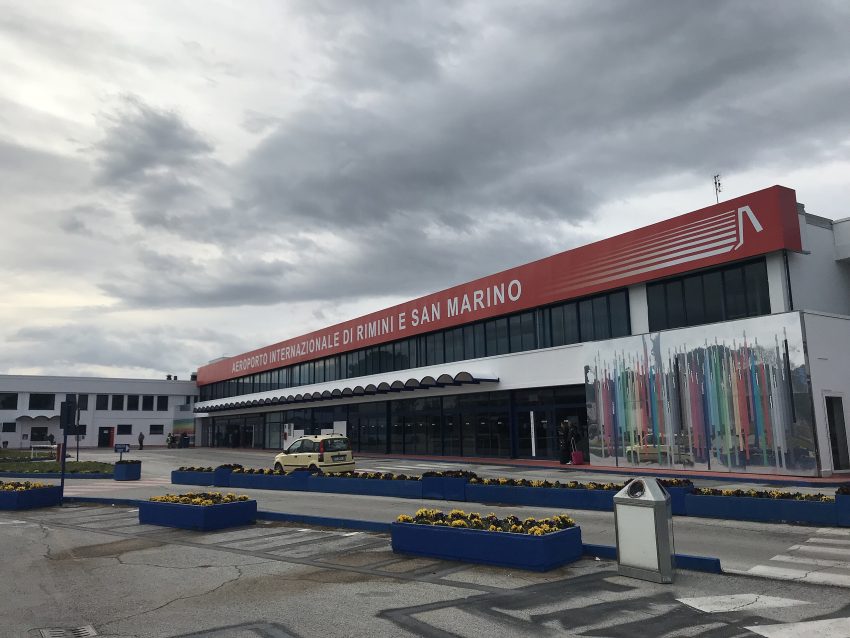
Federico Fellini Airport (Rimini and San Marino) is the main gateway to Italy's Romagna Riviera and a convenient arrival point for travellers combining beach time with historic day trips. Located about 5 km from Rimini, this compact and efficient airport is the starting point for travellers exploring Rimini, Riccione, Cattolica, and nearby San Marino, as well as the broader Emilia-Romagna coastline. Whether you're arriving for the first time or departing after a memorable trip, this guide explains everything you need to know about navigating the airport with ease.
Table of Contents
- Why This Airport Matters
- History and Significance
- Airport Layout and Quick Facts
- Where to Stay Close to Federico Fellini Airport
- Getting To and From Federico Fellini Airport
- Arriving at Federico Fellini Airport
- Money Exchange & Currency Tips for Italy
- SIM Cards & Connectivity
- Departing from Federico Fellini Airport
- Airport Services and Facilities
- Lounges at Federico Fellini Airport
- Renting a Car at Federico Fellini Airport
- Flights and Airlines Operating at Fellini Airport
- Practical Tips for Using Fellini Airport
- Can You Sleep Overnight at the Airport?
- FAQs about Federico Fellini Airport
- Final Thoughts
Why This Airport Matters
RMI matters because it is purpose-built for quick access to the Adriatic coast. Instead of losing time crossing a large city airport, you arrive close to the seafront districts and resort zones, which makes it ideal for short breaks, summer holidays, and weekend trips where the goal is to get checked in and start enjoying the Riviera quickly.
It also matters strategically for travellers planning a split itinerary. Rimini's rail links make it practical to arrive via RMI, stay on the coast, and then continue by train to other Emilia-Romagna cities. For the Republic of San Marino, RMI can be one of the simplest air arrival points before continuing by road.
History and Significance
The airport has long been tied to Rimini’s identity as a leisure destination, supporting the growth of the Riviera’s beach tourism and seasonal travel demand. Over time, it developed into a focused regional airport that concentrates on point-to-point routes rather than complex hub operations.
It is named after Federico Fellini, the celebrated film director born in Rimini, which gives the airport a cultural anchor that feels fitting for a city known for both seaside life and heritage. The airport's role today is closely linked to seasonal tourism, events, and the wider hospitality economy along the coast.
Airport Layout and Quick Facts
Federico Fellini Airport is compact and easy to navigate, typically operating through a single main terminal footprint with short walking distances between check-in, security, and gates. This is a clear advantage if you are travelling with family, arriving with limited time, or simply prefer an airport that is straightforward and predictable.
Because the airport is small, services can feel concentrated during busy departure waves. Expect the main pinch points to be check-in/bag drop and security around peak flight times. Outside those waves, the experience is usually calm, with fast curb-to-terminal transitions.
Where to Stay Close to Federico Fellini Airport
If you have an early flight or you are landing late, the Miramare area around the airport is the most practical place to stay: it keeps transfers short and makes travel days far less stressful. Terminal Palace & SPA is a strong option for an airport-adjacent overnight with a resort-style feel, while Hotel Ascot & Spa is ideal if you want a comfortable base close to the terminal and the beach.
If you prefer slightly more atmosphere and dining choice while still staying close, Miramare’s seafront strip works well, and Yes Hotel Touring & SPA is a reliable choice for a travel-friendly stay. For travellers who are equally interested in Riccione’s nightlife and shopping, the southern coast is also very convenient to RMI, with Hotel Abner's and Atlantic Hotel & SPA offering an easy base that still keeps airport transfers manageable.
Getting To and From Federico Fellini Airport
By Bus
Local bus services are a practical way to reach Rimini's centre and Rimini Centrale railway station, and they are usually the best-value choice if you are travelling light. This option works particularly well for Miramare stays and for travellers whose accommodation is near major stops along the coastal strip.
If you are arriving late, check that services are still running and consider a taxi if frequencies drop. For many visitors, the simplest plan is bus to Rimini Centrale, then walk or connect onward from the station area.
By Taxi
Taxis are the simplest door-to-door choice, especially for late arrivals, heavy luggage, families, or accommodation outside the main corridor. The ride into central Rimini is usually quick, and taxis are also convenient if you are heading straight to a Miramare hotel where you want a short transfer and an easy check-in.
If you are staying in a pedestrianised or restricted-traffic area nearer the historic centre, confirm the nearest vehicle drop-off point with your hotel so the driver can take the most efficient route.
By Train
RMI does not have a train station inside the terminal, but rail is still very useful here because Rimini has strong train connectivity. The two stations to know are Rimini Miramare (about a 1 km walk from the airport area) and Rimini Centrale (the main station), where you can connect to regional and long-distance services along the Adriatic line and inland routes.
If your itinerary includes Bologna, Ravenna, Cesena, or onward connections across northern Italy, organising your transfer to Rimini Centrale is often the cleanest approach. Once at the station, trains can be the fastest and least stressful way to move between cities without driving.
By Car
Driving is ideal if you are continuing to San Marino, heading into the Romagna countryside, or planning to explore smaller towns where public transport is slower. The airport’s location near major roads makes it easy to get moving without complicated city navigation.
If your trip includes several nights in central Rimini, consider postponing car pickup until you are leaving the city. This avoids parking hassle and lets you enjoy the seafront and historic core on foot.
By Transfers and Shuttles
Private transfers are a strong option for groups, families, and travellers heading directly to San Marino or to accommodation outside Rimini’s main coastal corridor. They are also useful if you have a tight schedule and want a fixed-price plan without waiting.
Some hotels offer shuttles or can arrange a partner transfer. If you are staying in Miramare or Riccione and have a very early departure, confirming a pre-booked transfer the day before is often the simplest way to reduce risk.
Arriving at Federico Fellini Airport
Arrivals at RMI are typically uncomplicated: you move through passport control if required, collect baggage, and exit into a small terminal area where transport and basic services are easy to find. The compact layout means you can usually be on your way quickly, which is one of the airport’s biggest advantages for short leisure trips.
A good arrival plan is to decide your first-night base before you land. If you are staying in Miramare, you can usually transfer quickly and settle in. If you are heading to Rimini Centrale for trains or a station-area hotel, prioritise getting to the station efficiently so you can lock in onward connections without rushing.
Money Exchange & Currency Tips for Italy
Italy uses the euro (EUR), and card payments are widely accepted in Rimini, Riccione, and most hotels. Even so, a small amount of cash is useful for beach concessions, small cafés, tips, and minor purchases where contactless may not be as convenient.
If you need cash, an ATM withdrawal is often more practical than exchanging currency at the airport, especially for small amounts. As a rule, withdraw once for basics, then rely on card for the majority of spending.
When paying by card, you may be offered the choice to pay in your home currency instead of euros. Choose euros to avoid extra conversion mark-ups, which can matter particularly for hotel bills and car-related deposits.
SIM Cards & Connectivity
You will commonly see Italian carriers such as TIM, Vodafone, WINDTRE, and Iliad, and tourist-focused plans are widely available in Italy. At a smaller airport like RMI, SIM purchase options can be more limited than at major hubs, so it is sensible to treat airport SIM availability as a convenience rather than a guarantee.
If you want certainty, an eSIM can be the easiest approach: you can activate it using airport Wi-Fi and avoid searching for a physical SIM shop after you arrive. For longer stays, buying a SIM in central Rimini is straightforward, with more plan choice and staff support.
Airport Wi-Fi is useful for messaging accommodation, confirming transfers, and downloading offline maps. For security, avoid sensitive transactions on public Wi-Fi unless you are using a trusted VPN.
Departing from Federico Fellini Airport
Departures at RMI are usually efficient if you time your arrival to match the airport’s operational rhythm. Because flights often depart in clusters, check-in and security can feel busy for short periods, then quiet again soon after. Arriving with a sensible buffer is the best way to keep the experience calm.
As a practical baseline, aim to reach the airport at least two hours before departure, and earlier in peak summer periods or if you expect passport control. Keep essentials accessible for screening and stay alert to gate announcements, as smaller airports may consolidate boarding flows quickly when schedules are tight.
Airport Services and Facilities
Food and Drink
Expect a limited but useful set of cafés and snack options designed for short waits. Availability can be narrower outside peak operating periods, so consider eating before arriving if you are on an early flight.
Shops
Shopping is typically focused on travel essentials, small gifts, and convenience items. This is best for last-minute needs rather than major retail browsing.
ATMs and Currency
ATMs are typically available, and this is usually the simplest way to access euros. Keep withdrawals modest if you mainly use cards.
Wi-Fi and Charging
Wi-Fi is generally available, and charging points are usually found near main seating areas. A power bank remains a good fallback, especially if you are using your phone for tickets and transfers.
SIM Cards
SIM availability may be limited compared to major airports. If you do not find a suitable plan, central Rimini and Riccione have many alternatives.
Family and Accessibility Facilities
The airport’s small footprint is helpful for families and travellers who want to avoid long walks. If you need assistance, arrange it through your airline in advance to ensure smooth support from check-in to boarding.
Medical and Assistance Points
Basic first aid and assistance are typically available during operating hours. For specific medical needs, plan ahead and carry essential medications in your cabin bag.
Lounges at Federico Fellini Airport
RMI offers a priority-style lounge option aimed at travellers who want a quieter space away from the main waiting areas. Access is typically via eligible services, paid entry options where available, or arrangements linked to specific travel products rather than broad airline-lounge networks.
At a small airport, lounge value is highest during peak departures when seating tightens and the terminal feels busy. If your flight day is time-sensitive, the lounge can provide a calmer pre-boarding experience with basic hospitality services.
Renting a Car at Federico Fellini Airport
Renting a car at RMI is most useful if you are planning to visit San Marino, drive the inland hills, or explore smaller towns where public transport requires multiple changes. It is also practical for travellers building a coastal itinerary that includes stops beyond Rimini and Riccione.
If your plan is primarily beach and city time, you may not need a car at all. Many visitors stay near the seafront and use local transport or trains from Rimini Centrale, then rent a car only for a specific day trip.
Flights and Airlines Operating at Fellini Airport
RMI is primarily a seasonal leisure airport with a route network that expands during the summer peak. International flights often focus on point-to-point travel rather than hub connections, and schedules can change significantly between summer, shoulder season, and winter.
Domestic services, when available, tend to support key Italian city links and holiday travel patterns, while international services typically prioritise leisure demand and charter-style operations. If you are planning a trip outside peak season, build flexibility into dates and check the current timetable as early as possible.
For the best deals and a seamless booking experience, check out these flights to Rimini on Booking.com.Practical Tips for Using Fellini Airport
- Treat RMI as a schedule-driven airport: arrive in line with your flight’s peak wave, not just your personal routine.
- If you are heading onward by train, prioritise getting to Rimini Centrale, then use rail for regional connections rather than driving.
- If you are staying in Miramare, an airport-area hotel can be the easiest solution for late arrivals and early departures.
- Keep a small amount of cash for minor purchases, but expect to pay by card for most hotels and restaurants.
- Consider an eSIM if you want immediate data and do not want to rely on limited airport SIM options.
- If using Metromare, note that the “Miramare Airport” stop typically requires a walk to the terminal, so it is best with light luggage.
- For early flights, plan your transfer the night before (taxi/transfer booking or confirmed bus timing).
- Pack a light layer even in summer: airside areas can feel cool when air conditioning is strong.
Can You Sleep Overnight at the Airport?
Overnight stays at RMI are not usually comfortable, and the terminal is not typically run as a fully 24-hour airport in the way major hubs are. In practice, opening times tend to follow flight operations, and the building may close or become very quiet and service-limited outside scheduled activity.
If you do find yourself needing to wait late or very early, expect bright lighting, limited quiet corners, and seating that is designed for short waits rather than sleeping. Security may ask passengers to move along as areas are cleaned or prepared for operations. A safer and more comfortable alternative is to book a nearby Miramare hotel close to the terminal, or stay around Rimini Centrale if you want more evening options and a predictable morning transfer.
FAQs about Federico Fellini Airport
What is the airport code for Federico Fellini Airport (Rimini and San Marino)?
The airport code is RMI.
How far is the airport from Rimini city centre?
It is about 5 km from central Rimini, and the journey time depends mainly on traffic and your transfer method.
Is this airport a good option for visiting San Marino?
Yes. Many travellers use RMI as a convenient arrival point, then continue by road to San Marino.
Is there a train station at the airport terminal?
No, there is no train station inside the terminal. Most travellers connect via Rimini Miramare station (nearby) or Rimini Centrale for the widest rail options.
What is the easiest way to get from RMI to Rimini Centrale?
A taxi is the simplest door-to-door option, while local buses can be a good-value alternative depending on the time of day and luggage.
Can I reach Riccione easily from the airport?
Yes. Riccione is close, and a short taxi ride is often the easiest option, with local transport also possible depending on schedules.
Can I buy a SIM card at the airport?
Sometimes, but options can be limited at smaller airports. Many travellers use an eSIM or buy a SIM in central Rimini for more choice.
How early should I arrive for departures from RMI?
Aim for at least two hours before departure, and add extra buffer in peak summer periods or when passport control is expected.
Does the airport have a lounge?
There is a priority-style lounge option, with access depending on the services available at the time you travel.
Can you sleep overnight at Federico Fellini Airport?
Overnight comfort is limited, and opening hours typically follow flight operations. If you need proper rest, a nearby Miramare hotel is usually a better option.
Final Thoughts
Federico Fellini Airport is at its best when you use it for what it is: a compact, easy gateway to the Romagna Riviera and nearby San Marino. With short transfer times, simple terminal navigation, and practical links into Rimini's rail network, it can be an efficient start or finish to a coastal trip. Plan around seasonal schedules, choose accommodation that matches your arrival and departure times, and RMI becomes a notably low-friction airport for Adriatic travel.
What Other Travellers Say...

Federico Fellini International Airport on Via Flaminia in Rimini is a small, regularly open airport (daily 7:00 AM–11:00 PM) with bus connections to Rimini's main train station; visitors note friendly staff, generally satisfactory facilities though some areas could be cleaner, and it's popular with plane-spotters.


The Federico Fellini Airport appears in our Complete Guide to Visiting Rimini!

Moira & Andy
Hey! We're Moira & Andy. From hiking the Camino to trips around Europe in Bert our campervan — we've been traveling together since retirement in 2020!
This website uses affiliate links which may earn a commission at no additional cost to you!
Planning Your Visit
Nearby Attractions
- Oltremare Theme Park (4.7) km
Aquarium and Theme Park - Arch of Augustus (5.2) km
Historic Site - Rimini Roman Amphitheatre (5.3) km
Amphitheatre - Tempio Malatestiano (5.5) km
Church - Piazza Tre Martiri (5.6) km
Historic Site and Square - Porta Montanara di Rimini (5.6) km
City Gate - Piazza Cavour (5.8) km
Square - Palazzo Garampi (5.8) km
Palace - Domus del Chirurgo (5.9) km
Historic Site - Castel Sismondo (5.9) km
Castle and Museum