El Escorial
Monastery near Segovia
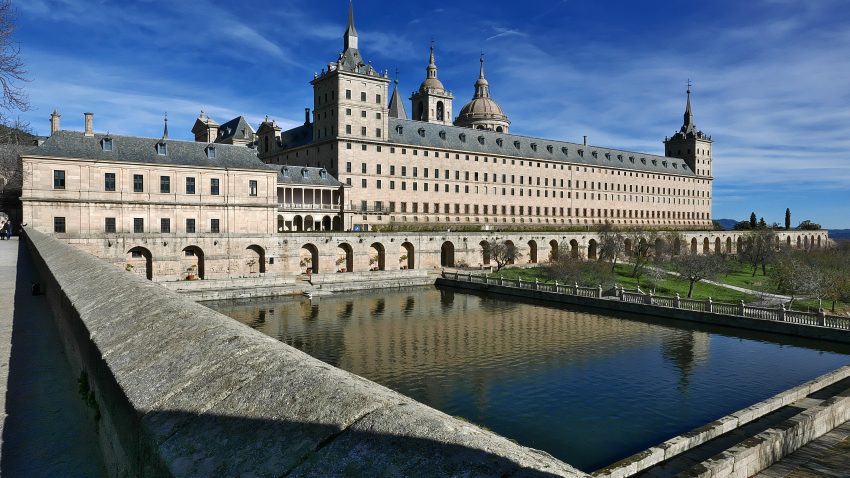
The Royal Monastery of San Lorenzo de El Escorial (often shortened to “El Escorial”) is one of those places that instantly recalibrates your sense of scale. Built for King Philip II in the 16th century, it's part monastery, part royal palace, part art-and-history vault, and part dynastic mausoleum - all set against the piney slopes of the Sierra de Guadarrama, just outside Madrid.
For travelers, it's an ideal anchor for a Madrid day trip, and it also works beautifully as the main highlight of a relaxed day around San Lorenzo de El Escorial: arrive, climb through the town's gentle streets, tour the complex, then finish with viewpoints and forest paths that frame the monastery like a stage set.
Table of Contents
- History and Significance of the Royal Monastery of San Lorenzo de El Escorial
- Things to See and Do in the Royal Monastery of San Lorenzo de El Escorial
- How to Get to the Royal Monastery of San Lorenzo de El Escorial
- Practical Tips on Visiting the Royal Monastery of San Lorenzo de El Escorial
- Where to Stay Close to the Royal Monastery of San Lorenzo de El Escorial
- Is the Royal Monastery of San Lorenzo de El Escorial Worth Visiting?
- For Different Travelers
- FAQs for Visiting the Royal Monastery of San Lorenzo de El Escorial
- Nearby Attractions to the Royal Monastery of San Lorenzo de El Escorial
History and Significance of the Royal Monastery of San Lorenzo de El Escorial
El Escorial was commissioned by Philip II at the height of Spain's imperial power, and it's best understood as a statement as much as a building. It was designed to be a spiritual stronghold, a seat of royal authority, and a permanent home for learning and remembrance - which is why you'll find a functioning basilica, monastic spaces, royal apartments, and one of Europe's most famous historical libraries all intertwined.
The atmosphere is deliberately austere in places: pale stone, long corridors, and a sense of order that feels almost monastic even in the “royal” rooms. That restraint is part of the point. The artistry and symbolism are meant to elevate the dynasty and its faith, and the most moving spaces (the pantheons) underline that this complex was also built to outlast a lifetime - it was designed to outlast a lineage.
In practical terms, its significance today is that you’re not visiting a single monument; you’re stepping into a carefully choreographed world where politics, religion, scholarship, and art were meant to reinforce each other. Even if you’re not deep into Spanish history, the place communicates power and ambition in a way that’s hard to miss.
Things to See and Do in the Royal Monastery of San Lorenzo de El Escorial
Start with the basilica and the core architectural spaces, because the building itself is the headline: vast courtyards, disciplined symmetry, and that unmistakable granite presence that makes El Escorial feel both fortress-like and ceremonial. If you can, slow down in the major passageways and staircases - they're part of the experience, not just connectors between “rooms.”
The Royal Library is usually the crowd-stopper: it’s not just beautiful, it’s conceptually impressive - a place built to preserve knowledge as an act of statecraft. Give yourself time to take in the ceiling decoration and the way the space is staged; it’s the rare library that feels like a destination rather than a footnote.
Then there are the pantheons, which tend to be the most emotionally charged rooms on the route. Even if you don't know the royal family tree, the atmosphere is unmistakable: this is dynasty made physical. Round out your visit by looking for the quieter details - side chapels, smaller art displays, and views back across the courtyards - because El Escorial rewards curiosity more than speed.
How to Get to the Royal Monastery of San Lorenzo de El Escorial
Most international visitors will arrive via Adolfo Suárez Madrid-Barajas Airport (MAD), then continue into Madrid before heading out to San Lorenzo de El Escorial. For the best deals and a seamless booking experience, check out these flights to Madrid on Booking.com.
From central Madrid, the simplest public-transport approach is a Cercanías commuter train to El Escorial station, then either a walk uphill to the monastery or a short local connection if you prefer to save your legs for inside. Train schedules and bookings can be found on Omio.. An easy alternative is the interurban bus from Madrid’s Moncloa transport hub, which typically drops you closer to the historic centre and can feel more direct for a day trip.
If you're driving, the most common route is via the A-6 (towards A Coruña) and then onwards on local roads into San Lorenzo de El Escorial; it's a straightforward run, but parking can be the time-sink on busy weekends. If you are looking to rent a car in Spain I recommend having a look at Discover Cars, first, as they compare prices and review multiple car rental agencies for you.
Practical Tips on Visiting the Royal Monastery of San Lorenzo de El Escorial
- Entrance fee: Standard admission €14; reduced €7; free for eligible visitors (including under 5s and some other categories).
- Opening hours: (Summer) Tuesday – Sunday: 10:00–19:00. (Winter) Tuesday – Sunday: 10:00–18:00. Closed on Monday.
- Official website: https://www.patrimonionacional.es/en/visita/royal-site-san-lorenzo-de-el-escorial
- Best time to visit: Aim for an early start or a late-afternoon slot to reduce crowds and to enjoy softer light around the courtyards and façades.
- How long to spend: Plan on 2-3 hours for a comfortable visit that doesn’t feel rushed, especially if you like lingering in the library and major halls.
- Accessibility: Expect long distances and some uneven pacing between sections; if mobility is a concern, prioritize the key interiors and ask staff about the most direct route.
- Facilities: Bring water and allow time for a café break in town rather than relying on quick options right at the entrance.
Where to Stay Close to the Royal Monastery of San Lorenzo de El Escorial
If your priority is culture and an easy morning start, base yourself in central San Lorenzo de El Escorial so you can walk everywhere; if your trip focus is hiking and nature, stay on the edges near trail access and quieter evenings. For convenience, staying near the town centre puts you within a short stroll of restaurants, viewpoints, and the monastery approach.
For a classic, full-service option close to the action, Exe Victoria Palace is a strong pick, especially if you like the idea of a more “grand hotel” feel after a day of stone and history. Hotel Florida is a practical, well-located choice if you want something simple and walkable. If you prefer small and characterful, Hotel Posada Don Jaime has a boutique feel that suits a slower, more atmospheric stay.
Is the Royal Monastery of San Lorenzo de El Escorial Worth Visiting?
Yes - decisively. It’s one of Spain’s most complete “single-site” experiences: architecture, history, royal drama, sacred spaces, and serious art all in one place, and it’s genuinely different from the big-city museums because the building is the collection.
Honest pivot: if you dislike large, formal interiors or you’re short on time and already overloaded with palaces and cathedrals, it can feel heavy and repetitive. In that case, consider skipping the full visit and instead do a shorter town-and-viewpoints day focused on scenery, cafés, and a quick exterior look.
What Other Travellers Say...

Reviewers consistently describe El Escorial as an impressive, well-preserved historical complex with grand architecture, rich art and history, and standout areas like the library, basilica, courtyards, and royal tombs, plus beautiful mountain views. It's frequently recommended as an easy and worthwhile day trip from Madrid, often reached by train, and many suggest allowing several hours to explore. The self-guided audio/tablet tour is generally appreciated for flexibility, though some found the instructions could be clearer. Practical downsides mentioned include restrictions on backpacks requiring paid lockers.


For Different Travelers
Families with Kids
El Escorial can work well with kids if you treat it like a “castle-scale” adventure: pick a few headline rooms, keep the pace moving, and let the courtyards break up the interiors. Bring snacks and set a clear end-point (library or pantheons), because the long corridors can become tiring without a mini-mission.
Couples & Romantic Getaways
For couples, the best version of El Escorial is unhurried: a late-morning visit, a long lunch in town, then a golden-hour viewpoint walk where the monastery sits in the landscape like a backdrop. Choose a hotel with atmosphere, and build in time to enjoy the slower rhythm of San Lorenzo once the day-trippers leave.
Budget Travelers
This is a high-value day trip because you can do it with commuter rail or bus and spend most of the day on foot. Pack water, skip pricey add-ons unless they genuinely matter to you, and plan your meals in town where you’ll find better-value menus than “attraction-adjacent” options.
History Buffs
Come with a little Philip II context in mind and you’ll notice how deliberately the complex is staged - from the spiritual symbolism to the dynastic messaging. Spend extra time in the library and the pantheons, and don’t rush the transitions: El Escorial’s “in-between” spaces are part of what makes it such a historical document in stone.
FAQs for Visiting the Royal Monastery of San Lorenzo de El Escorial
Getting There
Tickets & Entry
Visiting Experience
Tours, Context & Itineraries
Photography
Accessibility & Facilities
Food & Breaks Nearby
Safety & Timing
Nearby Attractions to the Royal Monastery of San Lorenzo de El Escorial
- La Herrería Forest: A peaceful woodland area for easy walks with classic views back toward the monastery and the mountains.
- Silla de Felipe II: A simple viewpoint stop with one of the most iconic panoramas of El Escorial across the landscape.
- Casita del Príncipe: A smaller royal retreat that adds lighter, more intimate context to the scale of the main complex.
- Jardines de los Frailes: Formal gardens and shaded paths that are ideal as a decompression walk after the interiors.
- Historic centre of San Lorenzo de El Escorial: A compact, walkable core of cafés, plazas, and local streets that rounds out the day beyond the monument.
The El Escorial appears in our Complete Guide to Visiting Madrid!

Moira & Andy
Hey! We're Moira & Andy. From hiking the Camino to trips around Europe in Bert our campervan — we've been traveling together since retirement in 2020!
This website uses affiliate links which may earn a commission at no additional cost to you!
Planning Your Visit
(Summer) Tuesday - Sunday: 10:00-19:00.
(Winter) Tuesday - Sunday: 10:00-18:00.
Closed on Monday.
Standard admission €14; reduced €7; free for eligible visitors (including under 5s and some other categories).
Nearby Attractions
- Valle de los Caídos (5.9) km
Basilica - Palacio Real la Granja (36.4) km
Palace - Casa de Campo (38.3) km
Area, Park and Walk - Zoo-Aquarium de Madrid (38.3) km
Aquarium and Zoo - Parque de Atracciones de Madrid (38.8) km
Amusement Park - Faro de Moncloa (39.8) km
Attraction, Tower and Viewing Point - Plaza del Azoguejo (40.0) km
Square - Casa de los Picos (40.0) km
Historic Building - Aqueduct of Segovia (40.0) km
Aqueduct - Arco de la Victoria (40.0) km
Historic Site, Memorial and Monument