Domus Romana, Lucca
Historic Site in Lucca
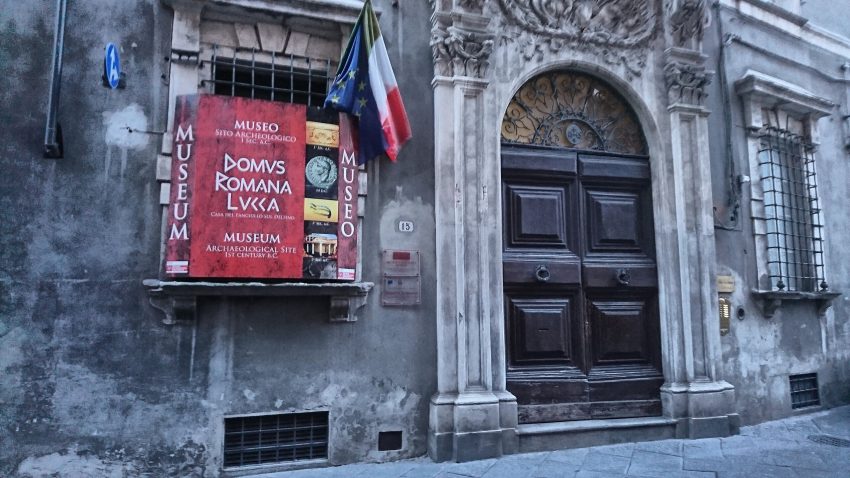
Hidden in plain sight in the heart of Lucca's historic centre, the Casa del Fanciullo sul Delfino Domus Romana is where the city's past literally unfolds beneath your feet. Uncovered only in 2010, this compact archaeological site takes you from a Roman house of the 1st century BCE through Lombard, medieval, and Renaissance layers, all under one roof. Its name comes from a beautiful terracotta frieze showing two putti riding dolphins, a playful scene that instantly humanises the ancient world and reminds you that people have been living, working, and dreaming on this spot for over two millennia. For visitors who love digging into the story behind a place, this is one of the must-see places in Lucca.
Inside, you weave between exposed foundations, architectural fragments, and everyday objects, following an exhibition route that feels more like stepping into a carefully narrated excavation than a traditional museum. Roman-era friezes, household items, and votive offerings are displayed alongside finds from later periods, showing how building techniques and daily life evolved over 2,000 years. The route continues into the Renaissance cellars, with their impressive brick vaults and layers of history, where objects such as a sestertius issued by Emperor Tiberius in 14 CE and a bronze fibula from the Augustan age bring the past into sharp focus. Clear educational panels and 3D reconstructions help you picture the original Roman dwelling, making this a great place to visit on a walking tour of Lucca when you want a deeper sense of what lies beneath its elegant streets.
Table of Contents
- History and Significance of Casa del Fanciullo sul Delfino Domus Romana
- Things to See and Do in Casa del Fanciullo sul Delfino Domus Romana
- How to Get to Casa del Fanciullo sul Delfino Domus Romana
- Practical Tips on Visiting Casa del Fanciullo sul Delfino Domus Romana
- Where to Stay close to Casa del Fanciullo sul Delfino Domus Romana
- Is Casa del Fanciullo sul Delfino Domus Romana Worth Visiting?
- FAQs for Visiting Casa del Fanciullo sul Delfino Domus Romana
- Nearby Attractions to Casa del Fanciullo sul Delfino Domus Romana
History and Significance of Casa del Fanciullo sul Delfino Domus Romana
The Domus Romana came to light relatively recently, in 2010, during investigations beneath a historic building in central Lucca. What at first looked like routine works turned into a remarkable discovery: the remains of a Roman house dating back to the 1st century BCE, later overlain by structures from the Lombard, medieval, and Renaissance eras. This vertical sequence of walls, floors, and artefacts offers a rare, layered cross-section of Lucca's development from ancient settlement to medieval city.
Its poetic name, Casa del Fanciullo sul Delfino, comes from the charming terracotta frieze showing two putti riding dolphins, recovered on site. This fragment does more than decorate the space: it embodies the Roman taste for playful, mythological imagery in domestic settings, and it gives the house an identity beyond dates and masonry. The frieze anchors the site emotionally, reminding visitors that behind every wall and shard there were real families with their own stories and aesthetic preferences.
The significance of the Domus Romana lies in how clearly it illustrates continuity and change. Roman foundations coexist with later phases, each layer reusing or transforming what came before. Lombard traces, medieval additions, and Renaissance cellars show how the site remained important across centuries, adapting to new needs and styles. For Lucca, which is often appreciated mainly for its medieval and Renaissance fabric, this underground museum adds an essential chapter, connecting the city back to its Roman origins and making Casa del Fanciullo sul Delfino Domus Romana one of the best places to visit in Lucca for historically minded travellers.
Things to See and Do in Casa del Fanciullo sul Delfino Domus Romana
The visit follows a clear, well-organised route. You begin with the Roman layer, where architectural friezes, wall remains, and domestic artefacts evoke the layout and life of the original domus. Displayed objects include fragments of decoration, household ceramics, and items linked to daily rituals and worship, all carefully labelled so you can see how each piece fits into the bigger story. The highlight here is the terracotta frieze of the two putti on dolphins, which gives the house its name and instantly connects you to its former inhabitants.
As you continue, you encounter finds from the Lombard and medieval periods-evidence of how the site continued to be inhabited and reworked as Lucca evolved into a fortified medieval town. The exhibition makes it easy to understand how walls were reused, foundations thickened, and new structures added on top of older ones. This is where the site really shines: instead of presenting each period in isolation, it shows how they literally sit on top of one another.
The route then leads into the Renaissance cellars of the palace above, with large brick vaults that feel both substantial and atmospheric. Here, you'll see numerous everyday objects and votive items discovered during excavation, including the sestertius of Emperor Tiberius from 14 CE and a bronze fibula from the Augustan period. Educational panels with floor plans, graphic reconstructions, and excavation photographs help you piece everything together, while a 3D graphic representation of the Roman house lets you visualise how the rooms once looked. It's one of the things to do in Lucca that manages to be compact yet dense with information, perfect if you enjoy sites where you can really “read” the city's layers.
How to Get to Casa del Fanciullo sul Delfino Domus Romana
Casa del Fanciullo sul Delfino Domus Romana is located right in the historic centre of Lucca, within easy walking distance of major landmarks such as San Michele in Foro and the main shopping streets. Once inside the city walls, it's simply a matter of following local signs or a map to the address, and then descending from the Renaissance palace level into the archaeological spaces below.
For international visitors, the closest major airports are Pisa International Airport and Florence Airport, both of which offer frequent connections and straightforward onward travel into Tuscany. For the best deals and a seamless booking experience, check out these flights to Lucca on Booking.com. From either airport, you can reach Lucca first and then walk into the historic centre to find the Domus Romana.
Lucca's train station lies just outside the southern stretch of the city walls and is served by regular regional trains from Pisa, Florence, and other Tuscan towns.Use Omnio to easily compare schedules, book train tickets, and find the best prices all in one place for a hassle-free journey across Italy. From the station, walk through Porta San Pietro and follow the streets toward the centre; depending on your route and photo stops, it typically takes around 15-20 minutes to reach the site on foot.
If you are arriving by car, Lucca is connected to the wider region via the A11 motorway and a network of local roads.If you are looking to rent a car in Italy I recommend having a look at Discover Cars, first, as they compare prices and review multiple car rental agencies for you. Because the old town operates as a limited traffic zone, it's best to park in one of the car parks outside or just inside the walls, then continue on foot. From most parking areas, Casa del Fanciullo sul Delfino Domus Romana is an easy stroll through the atmospheric streets of the historic centre.
Practical Tips on Visiting Casa del Fanciullo sul Delfino Domus Romana
- Suggested tips: Take your time with the information panels and reconstructions-this is a small site where slowing down really pays off as you piece together 2,000 years of history.
- Best time to visit: Late morning or mid-afternoon are ideal; the site is indoors and partly underground, making it a good option for very hot or rainy days.
- Entrance fee: €5.00
- Opening hours: Open every day 10.00 - 18.00 Closed on Tuesdays
- Official website: https://www.domusromanalucca.it/site/
- How long to spend: Around 45-60 minutes is usually enough to explore the route, read the panels, and study the key artefacts without rushing.
- Accessibility: The site involves steps and underground spaces; visitors with reduced mobility should check in advance about access, and anyone sensitive to enclosed areas should be aware of the cellar setting.
- Facilities: Facilities on site are limited; you’ll find plenty of cafés, shops, and restrooms for customers in the surrounding streets of the historic centre.
- Photography tip: Focus on details like the putti-and-dolphin frieze, coin close-ups, and the contrast between ancient masonry and the later brick vaults; avoid flash if requested to protect the artefacts.
- Guided tours: When available, guided visits or audio guides can help you interpret the different layers and understand the excavation process in more depth.
- Nearby food options: You're right in central Lucca, so it's easy to pair your visit with a coffee, gelato, or meal at one of the many cafés and trattorie just a few minutes' walk away.
Where to Stay close to Casa del Fanciullo sul Delfino Domus Romana
Staying near Casa del Fanciullo sul Delfino Domus Romana puts you in the very heart of Lucca's historic centre, with churches, towers, and the city walls all within easy reach. A characterful choice in a historic building is Palazzo Alexander, which offers an atmospheric base just a short walk from the main sights and the Domus Romana. For a comfortable option close to the cathedral and still within easy walking distance of the site, Albergo San Martino is a friendly, well-located hotel. Travellers who like being near the eastern walls while remaining central might opt for Hotel Ilaria, which combines modern comforts with quick access to both the ramparts and the archaeological site in the old town.
Is Casa del Fanciullo sul Delfino Domus Romana Worth Visiting?
Casa del Fanciullo sul Delfino Domus Romana is definitely worth visiting if you're interested in what lies behind (and beneath) Lucca's pretty façades. It's compact and manageable, yet the combination of Roman domestic remains, later structural layers, carefully displayed artefacts, and clear interpretive panels makes it surprisingly rich in content. The star finds-a charming terracotta frieze, ancient coins, and a bronze fibula-help bring individuals from the distant past into focus, while the 3D reconstruction of the Roman house lets you visualise the space in its prime. For many visitors, it becomes a small but memorable highlight that adds depth to their understanding of the city.
What Other Travellers Say...

Domus Romana Lucca | Museo Archeologico a Lucca on Via Cesare Battisti, 15 is a small, well laid-out archaeological house museum where finds are shown in their original rooms and guided tours by the owners bring Roman Lucca's layered past vividly to life; visitors praise the passionate, knowledgeable hosts (often giving tours in English and Italian), clear signage, and the chance of an intimate or semi-private experience even with short notice, making it a highly recommended, good-value stop.


FAQs for Visiting Casa del Fanciullo sul Delfino Domus Romana
Nearby Attractions to Casa del Fanciullo sul Delfino Domus Romana
- San Michele in Foro - A striking Romanesque church built on Lucca's ancient Roman forum, with a richly decorated marble façade.
- Cathedral of San Martino - Lucca's duomo, home to the Volto Santo and the celebrated tomb of Ilaria del Carretto.
- Piazza dell'Anfiteatro - An oval piazza built on the footprint of the Roman amphitheatre, surrounded by cafés and colourful buildings.
- Guinigi Tower - Medieval brick tower topped with a rooftop garden of holm oaks, offering panoramic views over the city.
- Lucca's Historical Walls - The complete tree-lined Renaissance fortifications encircling the city, perfect for a stroll or bike ride between sights.
The Domus Romana appears in our Complete Guide to Visiting Lucca!

Moira & Andy
Hey! We're Moira & Andy. From hiking the Camino to trips around Europe in Bert our campervan — we've been traveling together since retirement in 2020!
This website uses affiliate links which may earn a commission at no additional cost to you!
Planning Your Visit
Open every day 10.00 – 18.00
Closed on Tuesdays
€5.00
Nearby Attractions
- Palazzo Pfanner (0.1) km
Gardens and Historic Building - Torre delle Ore (0.2) km
Tower - Basilica of San Frediano (0.2) km
Church - San Michele in Foro (0.2) km
Basilica - Puccini Museum (0.2) km
Historic Building and Museum - Via Fillungo (0.2) km
Street - Piazza dell Anfiteatro (0.3) km
Amphitheatre - Guinigi Tower (0.3) km
Tower - Piazza Napoleone (0.4) km
Square - Church and Baptistery of Santi Giovanni e Reparata (0.4) km
Church and Museum