Cuevas del Drach
Cave near Pollenca
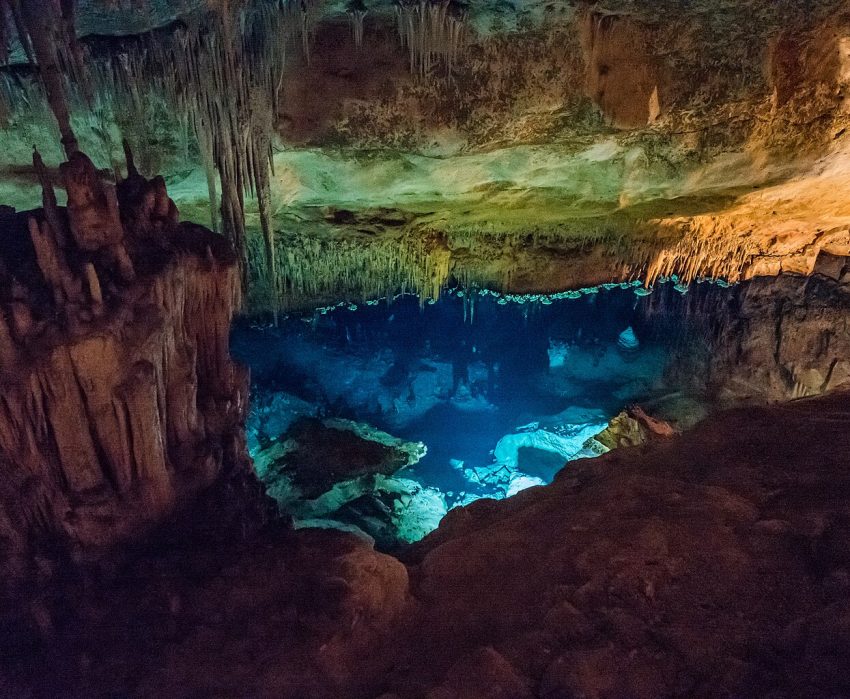
On Mallorca's eastern coast, just a short walk from Porto Cristo, the Cuevas del Drach open up into an entirely different world beneath the surface. Known since the Middle Ages but only fully mapped in 1896 by French geologist E.A. Martel, these caves extend for more than 1,200 metres and reach depths of around 25 metres, maintaining a constant temperature of 21°C and humidity of 80%. The route leads you through a carefully lit landscape of stalactites, stalagmites and underground pools, ending at Lake Martel, one of the largest subterranean lakes in Europe and truly one of the top sights in Mallorca for cave lovers and families alike.
The experience takes about an hour as you follow a clearly marked path past dramatic formations and an underground river, eventually reaching a cavern where the atmosphere becomes almost theatrical. Here, visitors sit in a natural “concert hall” and listen to live classical music performed from a boat gliding silently across the lake. It is an unusual and surprisingly moving moment, part geology, part performance, and often visited on walking tours of Porto Cristo that combine the caves with the town’s harbour and beaches.
Table of Contents
- History and Significance of the Cuevas del Drach
- Things to See and Do in the Cuevas del Drach
- How to Get to the Cuevas del Drach
- Practical Tips on Visiting the Cuevas del Drach
- Where to Stay close to the Cuevas del Drach
- Is the Cuevas del Drach Worth Visiting?
- FAQs for Visiting Cuevas del Drach
- Nearby Attractions to the Cuevas del Drach
History and Significance of the Cuevas del Drach
The Cuevas del Drach have been known for centuries, but for much of their history they were only partly explored and wrapped in local legend. It was not until the late 19th century that their true scale began to be understood, when French geologist E.A. Martel arrived in 1896 and undertook a systematic exploration. His work mapped the cave system in detail and revealed the huge underground lake that now bears his name, Lake Martel, which forms the dramatic finale of the modern visitor route.
Geologically, the caves are the product of thousands of years of dissolution and erosion in Mallorca’s limestone bedrock. Rainwater and underground rivers slowly carved out chambers and tunnels, while dissolved minerals were redeposited as stalactites hanging from the ceiling and stalagmites rising from the floor. Over time, these features grew and sometimes joined to form columns and draperies, creating the intricate interior that visitors see today.
As tourism on Mallorca developed, the Cuevas del Drach became a cornerstone attraction for the island's east coast. The introduction of lighting, walkways and eventually the classical music performance transformed the cave from a challenging speleological site into an accessible show cave for a broad public. Today, the combination of geological spectacle, historic exploration and carefully staged visitor experience makes the Cuevas del Drach one of the most recognisable natural landmarks associated with Porto Cristo.
Things to See and Do in the Cuevas del Drach
A standard visit begins at the entrance and follows a one-way path through a series of chambers. The route is well laid out and designed to take about an hour at a steady pace, with gradual descents and occasional steps. As you walk, look up and around: the stalactites, stalagmites and columns form a dense forest of stone, some needle-thin and others massive, all brought to life by thoughtful lighting that highlights textures and reflections without overwhelming the natural shapes.
Along the way you will see an underground river and smaller pools that hint at the presence of the larger lake ahead. The reflections on the water often double the impact of the formations, making them seem even more complex and mysterious. The controlled temperature of 21°C and high humidity create a distinctive atmosphere-cool but not cold, slightly heavy with moisture, and very different from the bright, dry air outside.
The highlight of the visit is Lake Martel itself. Here, visitors are invited to sit in tiered seating carved into the cavern, forming a natural concert hall. The lights are dimmed and a small boat carrying musicians glides out onto the water, performing a short programme of classical music that echoes around the chamber. The combination of sound, darkness, and the soft glow on the boat and rock walls is unlike anything above ground. After the concert, in many cases you can either walk along the lakeside path or take a brief boat ride, depending on how the visit is organised on the day.
How to Get to the Cuevas del Drach
Most visitors to the Cuevas del Drach arrive in Mallorca via Palma de Mallorca Airport, the island's main international gateway with frequent connections from across Spain and Europe. For the best deals and a seamless booking experience, check out these flights to Palma de Mallorca on Booking.com. From the airport, you can hire a car or take a transfer towards the east coast and the town of Porto Cristo.
If you are travelling by public transport, regional trains from Palma run towards Manacor, the main inland town nearby.Train schedules and bookings can be found on Omio. From Manacor, buses connect to Porto Cristo, from where it is a pleasant walk or short taxi ride to the cave entrance.
Travelling by car, follow the main roads across the island towards Manacor and then continue on to Porto Cristo, where the Cuevas del Drach are clearly signposted and offer free parking for visitors.If you are looking to rent a car in Spain I recommend having a look at Discover Cars, first, as they compare prices and review multiple car rental agencies for you. Once parked, it is just a short walk through the grounds to the ticket area and entrance.
Practical Tips on Visiting the Cuevas del Drach
- Suggested tips: Book tickets in advance in high season and arrive a little early for your chosen time slot to avoid rushing at the entrance.
- Best time to visit: Morning visits are often a bit quieter, while midday and early afternoon can be busier due to coach tours; visiting outside peak holiday weeks makes for a more relaxed experience.
- Entrance fee: €16,50
- Opening hours: 01 November to 12 March: 10:30 a.m., 12 p.m., 2 p.m. and 3:30 p.m. 13 March to 31 October: 10 a.m., 11 a.m., 12 p.m., 2 p.m., 3 p.m., 4 p.m. and 5 p.m.
- Official website: https://www.cuevasdeldrach.com/en
- How long to spend: Plan around 1.5-2 hours in total, including arrival, the hour-long tour, the classical concert and a little time at the facilities outside.
- Accessibility: The path is well made but includes steps, slopes and sometimes damp surfaces; it may be challenging for visitors with reduced mobility or those using wheelchairs or pushchairs.
- Facilities: On the surface you will find free parking, a café, picnic areas, a souvenir shop and complimentary Wi-Fi, making it easy to turn the visit into a half-day outing.
- Photography tip: Check current rules, as flash or photography may be restricted in some areas; if allowed, use a steady hand or high ISO to capture low-light scenes without blinding other visitors.
- Guided tours: Many visits follow a set route with recorded or live commentary; some tour operators also include transport from resorts, which can simplify logistics if you are not driving.
- Nearby food options: You can eat at the on-site café or head into Porto Cristo afterwards, where restaurants along the harbour and seafront offer plenty of choice.
Where to Stay close to the Cuevas del Drach
Staying in or near Porto Cristo makes visiting the Cuevas del Drach very straightforward and lets you enjoy the harbour and nearby beaches as well. A classic seafront option in town is Hotel THB Felip, which provides comfortable rooms right by the promenade and an easy walk or short taxi ride to the caves. For a slightly more intimate feel, Hotel Porto Cristo offers a charming base close to both the harbour and the cave complex. If you prefer a resort-style stay in the countryside just outside town, CM Castell dels Hams gives you gardens, pools and quick access by car or transfer to the Cuevas del Drach and surrounding attractions.
Is the Cuevas del Drach Worth Visiting?
The Cuevas del Drach are absolutely worth visiting if you have any interest in natural wonders or unique experiences. The combination of a vast, beautifully lit cave system, the impressive underground lake and the unusual classical music concert performed from a boat makes this much more than a quick cave stop. Even if you are not usually a fan of organised tours, the one-hour route is well paced, visually striking and easy to follow, and pairing the caves with time in Porto Cristo or nearby beaches turns the outing into a memorable half day on Mallorca's east coast.
What Other Travellers Say...

Drach Caves in Porto Cristo lead visitors along underground paths to the shore of a vast subterranean lake, with well-lit walkways through impressive rock formations and caverns; the self-guided walk concludes in a natural auditorium for a short classical music performance featuring illuminated boats on the lake, and visitors can either walk out or take a brief boat ride at the end—tours are orderly and staffed, temperatures are pleasant, visits take around an hour, and it can be busy so earlier time slots and online ticket purchase (often discounted) help avoid larger crowds.


FAQs for Visiting Cuevas del Drach
Nearby Attractions to the Cuevas del Drach
- Porto Cristo Harbour: A sheltered marina and seafront promenade with cafés and restaurants, ideal for a meal before or after your cave visit.
- Cuevas dels Hams: Another show cave near Porto Cristo, smaller but with its own distinctive formations and lighting.
- Cala Anguila: A pretty sandy cove with clear turquoise water, perfect for swimming and relaxing after time underground.
- Cala Mandia: A nearby family-friendly beach with shallow water and services, easy to combine with a visit to the caves.
- Torre del Serral dels Falcons: A coastal watchtower on a headland near Porto Cristo, offering fine sea views and a short coastal walk.
The Cuevas del Drach appears in our Complete Guide to Visiting Palma de Mallorca!

Moira & Andy
Hey! We're Moira & Andy. From hiking the Camino to trips around Europe in Bert our campervan — we've been traveling together since retirement in 2020!
This website uses affiliate links which may earn a commission at no additional cost to you!
Planning Your Visit
01 November to 12 March: 10:30 a.m., 12 p.m., 2 p.m. and 3:30 p.m.
13 March to 31 October: 10 a.m., 11 a.m., 12 p.m., 2 p.m., 3 p.m., 4 p.m. and 5 p.m.
€16,50
Nearby Attractions
- Cuevas del Hams (1.4) km
Cave - Capdepera Lighthouse (23.6) km
Lighthouse - Es Pontàs (28.3) km
Natural Phenomenon - Santuari del Puig de Maria (45.5) km
Monastery - Convent of Sant Domingo (46.3) km
Convent and Museum - Mare de Deu dels Angels Church (46.5) km
Church - Calvari Steps in Pollensa (46.7) km
Historic Site and Viewing Point - Pont Roma (47.0) km
Historic Site - Cap de Formentor Lighthouse (48.4) km
Lighthouse - Santuari de Lluc (49.7) km
Monastery