Convent of San Esteban, Salamanca
Convent, Historic Building and Historic Site in Salamanca
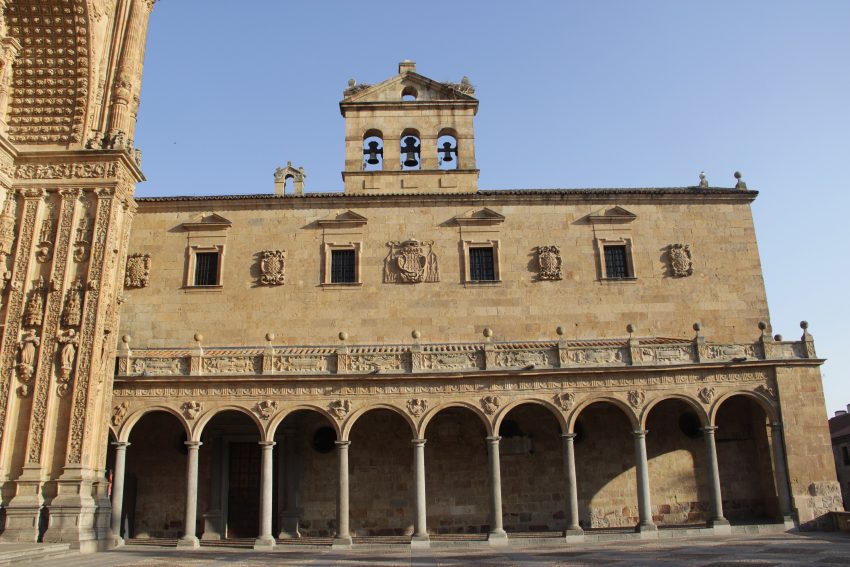
The Convent of San Esteban is one of Salamanca's most impressive religious monuments, known for its richly carved façade, calm cloisters, and a visit route that feels part museum, part architectural deep-dive. It sits just west of the historic center, a short walk from Salamanca's main sights, making it an easy add-on to a day of cathedral-hopping and Plaza Mayor people-watching.
If you're doing a walking tour, this is one of the best places to step inside for a quieter, more contemplative side of the city, away from the busiest lanes. It's also a great “look up” stop: ceilings, vaults, and stonework details reward slow wandering, and the choir area is often a highlight for views and atmosphere.
Table of Contents
- History and Significance of the Convent of San Esteban
- Things to See and Do in the Convent of San Esteban
- How to Get to the Convent of San Esteban
- Practical Tips on Visiting the Convent of San Esteban
- Where to Stay Close to the Convent of San Esteban
- Is the Convent of San Esteban Worth Visiting?
- For Different Travelers
- FAQs for Visiting Convent of San Esteban
- Nearby Attractions to the Convent of San Esteban
History and Significance of the Convent of San Esteban
Founded as a Dominican convent, San Esteban became deeply tied to Salamanca's golden age of learning, when theology, philosophy, and law shaped debates far beyond Spain. The convent's identity is closely linked to the intellectual tradition of the Dominicans and their role in scholarship and teaching alongside the University of Salamanca.
One of the names most often associated with San Esteban is Francisco de Vitoria, a key figure in early modern thought whose work influenced ideas around international law and human rights. Even if you’re not arriving with a history background, the convent’s spaces make that legacy feel tangible: this is not just a church you peek into, but a complex designed for study, community life, and ceremony.
Architecturally, the convent is also a statement piece. The blend of late Gothic and Renaissance elements, the formal cloister layout, and the carefully staged transitions between rooms create a visit that feels like moving through chapters of Salamanca’s religious and academic past.
Things to See and Do in the Convent of San Esteban
Start with the church exterior and main façade, which is often the first “wow” moment—ornate stonework that sets expectations high for what’s inside. From there, the visit typically unfolds through cloisters and key convent rooms, where the mood shifts from grand to hushed and meditative.
Don’t rush the cloisters: they’re the heart of the experience, offering symmetry, light, and a peaceful rhythm that contrasts with the city streets. If the choir is open during your visit, prioritize it—many visitors cite it as one of the most memorable viewpoints and spaces, especially for the sense of scale and the layered perspective across the church.
Finally, treat the route like a small museum visit rather than a quick church stop. Give yourself time to read the interpretive material (often available in multiple languages) and to notice the ceilings and carved details that change from room to room.
How to Get to the Convent of San Esteban
The nearest major airports are Madrid-Barajas (MAD) and Valladolid (VLL), with Madrid typically offering the widest range of international connections and onward transport options. For the best deals and a seamless booking experience, check out these flights to Salamanca on Booking.com.
From elsewhere in Spain, Salamanca is straightforward by rail, with regular train services connecting to major hubs (often via Madrid), and the main station is a short taxi or bus ride from the historic center. Train schedules and bookings can be found on Omio..
If you're driving, Salamanca is well connected by highways and ring roads, and paid parking garages around the old town are usually the easiest option since central streets can be restricted or tight. If you are looking to rent a car in Spain I recommend having a look at Discover Cars, first, as they compare prices and review multiple car rental agencies for you.
Practical Tips on Visiting the Convent of San Esteban
- Official website: https://www.conventosanesteban.es/
- Entrance fee: Check official website.
- Opening hours: (Summer) Monday – Sunday: 10:00–14:00 & 16:00–20:00.
- Best time to visit: Aim for a weekday morning for the calmest atmosphere and better photo conditions in the cloisters. Shoulder-season days can feel especially peaceful.
- How long to spend: Plan for 60–90 minutes for a satisfying visit, or up to 2 hours if you like reading exhibits and lingering in the cloisters.
- Accessibility: Expect historic surfaces and steps in parts of the complex; some areas may be challenging for wheelchairs or anyone with limited mobility. If accessibility is essential, confirm current access routes before you go.
- Facilities: Bring water, and consider a light layer—stone interiors can feel cool even on warm days. Restrooms and small visitor amenities may be limited compared with larger museums.
Where to Stay Close to the Convent of San Esteban
Base yourself in Salamanca’s historic center for the easiest walking access to San Esteban, the cathedrals, and evening tapas without needing transport.
Hotel Rector A refined, quiet boutique option near the river and old town edge—great if you want calm nights and an upscale feel while staying walkable to the convent.
NH Collection Salamanca Palacio de Castellanos A stylish, central hotel close to major monuments; ideal for travelers who want comfort and a prime location for early starts and late strolls.
Parador de Salamanca Best for panoramic city views and a more spacious, modern stay; a strong pick if you don’t mind a slightly longer walk (or quick taxi) to the old town.
Eurostars Las Claras A reliable, comfortable base with easy access to the center; good value for travelers who want a full-service hotel feel.
Soho Boutique Salamanca A smart mid-range choice near the action—handy for dining and evening atmosphere while still being walkable to San Esteban.
Is the Convent of San Esteban Worth Visiting?
Yes—if you're in Salamanca, the Convent of San Esteban is one of the city's most rewarding interiors, combining architecture, quiet cloistered spaces, and a strong sense of place. It's especially worth it if you enjoy historic buildings where the experience is as much about atmosphere as it is about individual “must-see” objects.
Honest Pivot: If you're short on time and mainly want Salamanca's headline sights (Plaza Mayor and the cathedrals), you might skip San Esteban in favor of viewpoints and street life. It's also less compelling for travelers who don't enjoy slow, detail-focused visits in religious or historic settings.
What Other Travellers Say...

Google reviewers are overwhelmingly positive, describing San Esteban as a must-see in Salamanca for architecture, art, and a peaceful, uncrowded atmosphere. Visitors frequently highlight the cloisters, dramatic ceilings, and the choir area as standout moments, and several note that the experience feels well organized and easy to follow. Common minor drawbacks include that it can take longer than expected if you read everything carefully, and some travelers mention that access to certain areas or museum sections can vary by day or time.


For Different Travelers
San Esteban works well as a flexible stop: it can be a quick architectural highlight or a slower, reflective visit. Your enjoyment mostly depends on whether you like historic interiors and quiet spaces.
Families with Kids
For families, the cloisters and big interior spaces can be a nice change of pace, especially if kids enjoy spotting details like carvings and high ceilings. It’s not an interactive museum, so it helps to turn it into a mini “treasure hunt” for patterns, animals, and symbols.
Keep the visit shorter and focus on the most visually impressive areas first. Pair it with a nearby open space afterward (like a plaza stop for snacks) to balance quiet time with movement.
Couples & Romantic Getaways
Couples tend to love San Esteban for its calm, cinematic feel—stone corridors, soft light, and a slower rhythm than the main tourist streets. It’s a great place for unhurried photos and a shared “wow” moment without needing a big itinerary.
Go at a quieter time, then continue on foot toward the cathedrals or along the river for a relaxed, romantic loop. It's an easy way to add depth to a Salamanca day without overplanning.
Budget Travelers
San Esteban is a strong value stop because it delivers a lot of atmosphere and architecture for a relatively modest ticket. It also fits perfectly into a walking day, so you won’t need paid transport.
To keep costs down, combine it with free exterior viewpoints and Salamanca’s classic budget pleasures: wandering the old town, sunset views, and tapas hopping. If you’re watching spending, prioritize one or two paid interiors per day and make San Esteban one of them.
History Buffs
History lovers will appreciate that San Esteban isn't just decorative—it's tied to major intellectual currents in Spain's early modern period. The convent context adds a layer to Salamanca beyond the university façades and cathedral towers.
Take your time with interpretive material and think of the visit as a window into how religious orders shaped education, debate, and civic life. If you're building a theme day, pair it with the University area and the cathedrals for a cohesive “Salamanca of ideas” itinerary.
FAQs for Visiting Convent of San Esteban
Getting There
Tickets & Entry
Visiting Experience
Tours, Context & Itineraries
Photography
Accessibility & Facilities
Food & Breaks Nearby
Safety & Timing
Nearby Attractions to the Convent of San Esteban
- Salamanca Cathedral (Old and New): A must-see complex of soaring interiors, chapels, and viewpoints close to San Esteban.
- Casa de las Conchas: A landmark building with a shell-studded façade and a pleasant courtyard atmosphere.
- University of Salamanca: Historic university buildings and courtyards that define the city's intellectual identity.
- Plaza Mayor: Salamanca's iconic main square for architecture, cafés, and evening ambience.
- Roman Bridge (Puente Romano): A scenic walk with classic city views, especially at sunset.
The Convent of San Esteban appears in our Complete Guide to Visiting Salamanca!

Moira & Andy
Hey! We're Moira & Andy. From hiking the Camino to trips around Europe in Bert our campervan — we've been traveling together since retirement in 2020!
This website uses affiliate links which may earn a commission at no additional cost to you!
Planning Your Visit
(Summer) Monday - Sunday: 10:00-14:00 & 16:00-20:00.
Check official website.
Nearby Attractions
- Convento de las Dueñas (0.0) km
Convent, Historic Building and Religious Building - Iglesia de San Pablo (0.1) km
Church, Historic Building and Religious Building - Colegio de Calatrava (Salamanca) (0.2) km
Historic Building, Historic Site and Religious Building - Cueva de Salamanca (0.2) km
Attraction, Cave and Historic Site - Torre del Clavero (0.2) km
Tower - Palacio de Anaya (0.2) km
Palace - St Thomas of Canterbury Church (0.2) km
Church and Religious Building - Convent Museum of Santa Clara (0.2) km
Convent, Historic Site and Museum - Catedral Viejo y Nueva (0.3) km
Cathedral - Huerto de Calixto y Melibea (0.3) km
Gardens, Park and Viewing Point