Complesso Monumentale di Santa Sofia , Salerno
Church in Salerno
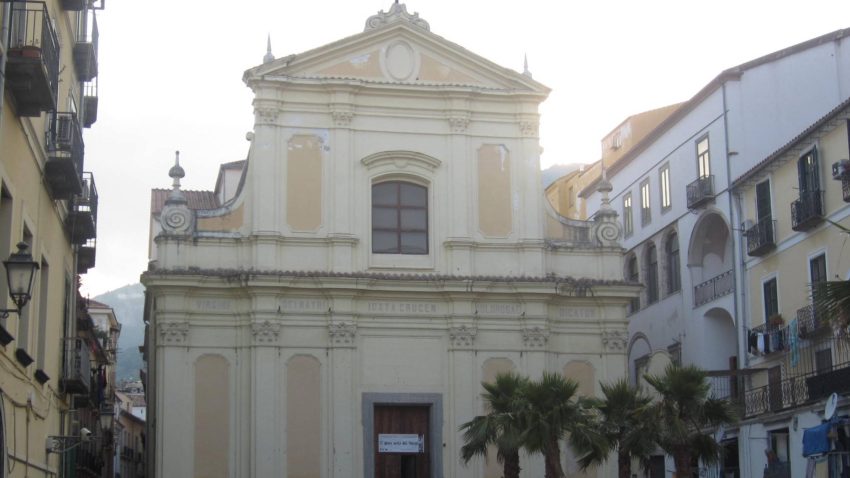
Tucked into Largo Abate Conforti, just a short stroll from Salerno’s cathedral, the Complesso Monumentale di Santa Sofia is the kind of place you can easily miss until you notice the theatrical staircase and the hush of a cloistered corner in the middle of the old town. It’s not a single “must-do” room or one headline artwork; it’s a layered complex where the atmosphere does the work, especially when the doors are open for a show or cultural event.
If you're building a walking tour of Salerno, this spot is a rewarding detour because it sits right where the city feels most lived-in: alleys, church façades, small piazzas, and the hum of everyday Salerno life. It's also one of the best places to visit in Salerno if you like sites that reveal themselves slowly, with architecture that hints at centuries of change rather than a single frozen moment.
Table of Contents
- History and Significance of the Complesso Monumentale di Santa Sofia
- Things to See and Do in the Complesso Monumentale di Santa Sofia
- How to Get to the Complesso Monumentale di Santa Sofia
- Practical Tips on Visiting the Complesso Monumentale di Santa Sofia
- Where to Stay Close to the Complesso Monumentale di Santa Sofia
- Is the Complesso Monumentale di Santa Sofia Worth Visiting?
- For Different Travelers
- FAQs for Visiting the Complesso Monumentale di Santa Sofia
- Nearby Attractions to the Complesso Monumentale di Santa Sofia
History and Significance of the Complesso Monumentale di Santa Sofia
The story here begins deep in the medieval period, when a monastery rose on ground associated with Salerno’s ancient Roman heart. The complex is traditionally linked to a Longobard foundation, and that early origin still matters because it explains why Santa Sofia feels like a palimpsest: each era left a trace rather than wiping the slate clean.
A major turning point came in the early modern period, when the Jesuits established themselves on the site and shaped the church into the dramatic, scenographic space you see today. The staircase leading up to the church is not just practical access; it’s a statement, designed to heighten arrival and focus attention, in the spirit of post-medieval Catholic theatre and devotion.
What makes the complex especially interesting for travelers is that it’s not only “old,” it’s still useful to the city. In recent years it has operated as a venue for exhibitions and cultural programming, and parts of the broader complex have been adapted for contemporary uses, giving the place a quietly modern heartbeat beneath its historic stone.
Things to See and Do in the Complesso Monumentale di Santa Sofia
Start outside, in Largo Abate Conforti, and take a moment to read the space before you go in. The setting is compact and cinematic, and the best way to appreciate it is to let your eye travel from the piazza up toward the church approach, imagining how this would have felt when processions, sermons, and civic life spilled through the same routes.
When the church is open, step inside and look for the painted surfaces and the sense of volume: this is a place where decoration and architecture work together to guide attention forward. Even if you’re not a church person, the mood is compelling, especially if you catch it during an exhibition when contemporary displays contrast with the historic shell.
If you can access the monastic areas, keep an eye out for the “in-between” spaces: passages, courtyards, and the way the complex stitches together different building phases. One of the more satisfying details is on the side streets, where medieval elements can appear almost unexpectedly on the façade line, reminding you that the old town’s layers are not confined to one postcard view.
How to Get to the Complesso Monumentale di Santa Sofia
The easiest flight options are typically via Naples International Airport (NAP) for the widest range of routes, or Salerno Costa d'Amalfi Airport (QSR) when schedules line up well. For the best deals and a seamless booking experience, check out these flights to Salerno on Booking.com. From either arrival point, you’ll usually continue into Salerno by train, bus, or taxi depending on timing and budget.
Salerno’s main train station is well connected on the regional and high-speed network, and from there the old town is a straightforward walk or short bus ride to Largo Abate Conforti. Use Omnio to easily compare schedules, book train tickets, and find the best prices all in one place for a hassle-free journey across Italy. If you prefer buses, local city routes and taxis make the last stretch simple, especially if you’re staying near the centre.
If you’re driving, it’s generally easiest to park on the edge of the historic centre and walk in, since old-town streets can be tight and limited-traffic rules may apply. If you are looking to rent a car in Italy I recommend having a look at Discover Cars, first, as they compare prices and review multiple car rental agencies for you.
Practical Tips on Visiting the Complesso Monumentale di Santa Sofia
- Entrance fee: Fee: Usually free to enter when open; ticketing can vary for special events.
- Opening hours: Open during exhibitions and cultural events; hours vary by programme. Entrance
- Official website: https://cultura.comune.salerno.it/it/luogo/Complesso-di-S-Sofia-e-Chiesa-dell-Addolorata
- Best time to visit: Aim for a morning or early evening opening tied to an exhibition, when the old town is quieter and the piazza feels more atmospheric. If you’re visiting in peak summer, choose cooler hours so the walk through the historic centre feels easy.
- How long to spend: Plan 30-60 minutes if you’re dropping in during an event, and longer if an exhibition interests you or you’re combining it with nearby churches and lanes. It pairs well with a slow, unhurried wander rather than a rushed checklist stop.
- Accessibility: Access can involve steps and uneven historic surfaces, and event layouts can change the most convenient route through the space. If step-free access is important, check the specific event information before you go.
- Facilities: As an event venue, facilities can vary, but you’re surrounded by cafés and services in the old town for breaks before or after your visit. Treat it as a cultural stop within a wider centre walk rather than a self-contained “visitor complex.”
Where to Stay Close to the Complesso Monumentale di Santa Sofia
For a culture-heavy itinerary, base yourself in Salerno's historic centre or along the central shopping axis so you can walk to sights and evening dining; if your trip is more about transport connections and day trips, staying near Salerno station makes early departures effortless.
Staying central pays off here because the old town is at its best early and late, when the lanes calm down and you can drift between churches, viewpoints, and small restaurants without thinking about logistics. A convenient option by the station is Hotel Plaza, which is ideal if you’re arriving late or heading out early, while still being walkable to the historic centre. For a more classic, in-town feel on the main pedestrian street, Hotel Montestella puts you close to shopping, cafés, and an easy downhill stroll into the old town. If you like being near the waterfront for evening walks, Grand Hotel Salerno gives you space and sea air, with the centre still reachable on foot or by a short ride.
Is the Complesso Monumentale di Santa Sofia Worth Visiting?
Yes, especially if you enjoy places that feel authentically woven into a city rather than staged as a standalone attraction. The real value is in the setting and the layers: Longobard origins, later religious life, and a present-day role as a cultural venue, all sitting quietly a few minutes from Salerno’s cathedral and main lanes.
It's also a smart stop for travelers who like to build “micro-routes” through a historic centre. Even if it's only open intermittently, it's worth threading into your plan because the piazza and surrounding streets are rewarding in their own right, and when you do catch it open, the contrast between everyday Salerno and a contemplative interior is part of the experience.
What Other Travellers Say...

Church of Saint Sophia on Piazza Santa Sofia sits in the centre of Benevento and is praised for its compact, beautifully restored complex and simple exterior; visitors note a different interior layout from typical churches, a strong example of Lombard architecture, and a pleasant square setting that makes it worth a visit for sightseeing or ceremonies.


For Different Travelers
Families with Kids
This works best as a short, curiosity-led stop: stairs, big spaces, and the sense of “discovering” a hidden corner of the old town can be more engaging than trying to explain every historical layer. Pair it with a treat break nearby and keep expectations flexible, since opening depends on events.
Couples & Romantic Getaways
If you like atmospheric places, aim to pass through this area in the softer light of late afternoon, when the piazza feels calmer and the old town becomes more intimate. Combine it with a slow wander toward the cathedral area and a long dinner nearby for an easy, romantic flow.
Budget Travelers
This is a strong budget-friendly choice because access is often free when open, and even when it isn’t, the surrounding old town delivers plenty of atmosphere at no cost. Use it as a waypoint in a self-guided loop that strings together churches, lanes, viewpoints, and the waterfront.
History Buffs
The appeal is the layering: a site associated with medieval foundations, reworked in later centuries, and still visibly stitched into Salerno’s urban fabric. Look for the architectural “tells” that different eras leave behind, and treat the complex as part of a wider narrative that includes the cathedral quarter and Salerno’s medieval street plan.
FAQs for Visiting the Complesso Monumentale di Santa Sofia
Getting There
Tickets & Entry
Visiting Experience
Tours, Context & Itineraries
Photography
Accessibility & Facilities
Food & Breaks Nearby
Safety & Timing
Nearby Attractions to the Complesso Monumentale di Santa Sofia
- Cattedrale di San Matteo (Duomo di Salerno) - Salerno's defining landmark, with a grand courtyard and a powerful sense of medieval continuity in the heart of the old town.
- Via dei Mercanti - The classic old-town street for wandering, shopping, and soaking up Salerno’s everyday rhythm among historic façades.
- Complesso Monumentale di San Pietro a Corte - A rare Lombard-era palace complex where you can see how Salerno's political and religious layers overlap.
- Giardino della Minerva - A terraced botanical garden with views and a calm, green break that feels miles away from the tight lanes below.
- Lungomare Trieste - The city's seafront promenade, perfect for a sunset walk after you've explored the historic centre.
The Complesso Monumentale di Santa Sofia appears in our Complete Guide to Visiting Salerno!

Moira & Andy
Hey! We're Moira & Andy. From hiking the Camino to trips around Europe in Bert our campervan — we've been traveling together since retirement in 2020!
This website uses affiliate links which may earn a commission at no additional cost to you!
Planning Your Visit
Open during exhibitions and cultural events; hours vary by programme.
Entrance
Fee: Usually free to enter when open; ticketing can vary for special events.
Nearby Attractions
- Complesso Monumentale di San Pietro a Corte (0.1) km
Palace and Roman Site - Duomo di Salerno (0.2) km
Cathedral - Museo Diocesano San Matteo di Salerno (0.2) km
Museum - Chiesa di San Giorgio (0.3) km
Church - Giardino della Minerva (0.3) km
Gardens - Chiesa della Santissima Annunziata (0.3) km
Church - Lungomare Trieste (0.3) km
Park - Villa Comunale di Salerno (0.4) km
Gardens - Museo Archeologico Provinciale of Salerno (0.4) km
Museum - Castello di Arechi (0.4) km
Castle