City Walls of Poitiers
City Walls in Poitiers
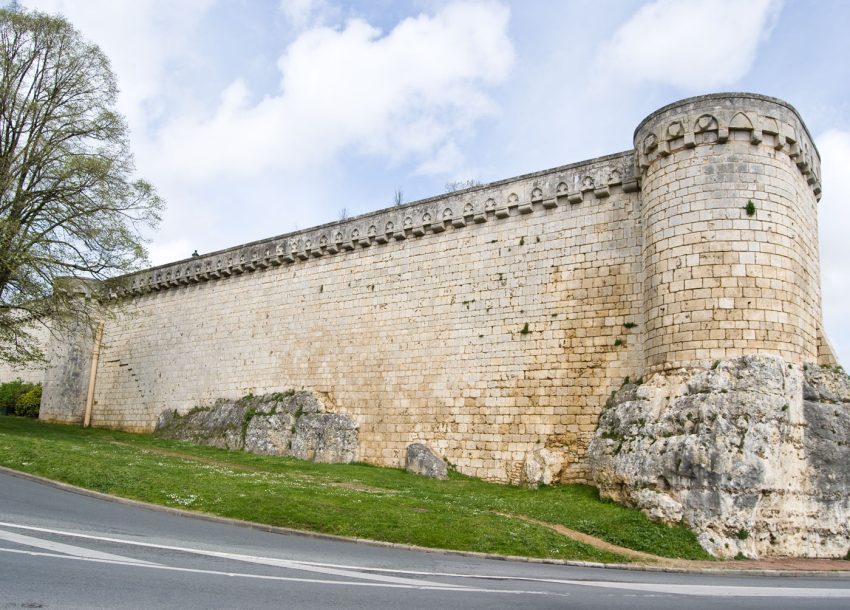
As you wander around the plateau, you will notice how modern streets, quiet gardens, and old stonework all follow the same defensive line that once protected ancient Limonum from invasion. Many sections are subtle rather than dramatic, but that is part of the charm: the City Walls of Poitiers are often visited on walking-tours of Poitiers because they reveal layers of the city that most visitors would otherwise stroll past without noticing.
Table of Contents
- History and Significance of the City Walls of Poitiers
- Things to See and Do in the City Walls of Poitiers
- How to Get to the City Walls of Poitiers
- Practical Tips on Visiting the City Walls of Poitiers
- Where to Stay close to the City Walls of Poitiers
- Is the City Walls of Poitiers Worth Visiting?
- FAQs for Visiting City Walls of Poitiers
- Nearby Attractions to the City Walls of Poitiers
History and Significance of the City Walls of Poitiers
The City Walls of Poitiers trace their origins back to the Roman city of Limonum, when this plateau-top settlement did not initially require fortifications thanks to its naturally defensible position. That changed around 276 AD, when a wave of Germanic incursions swept across the region and prompted the construction of substantial stone walls and gates. These new defences allowed Poitiers to recover and flourish for another century as a strategic stronghold in western Gaul, guarding key routes through the area.
In the Middle Ages, as Poitiers grew into an influential political and religious centre, the fortifications were expanded, reinforced, and adapted to new military realities. Towers, ramparts, and fortified gates were added or rebuilt, turning the walls into a powerful defensive belt that helped protect the city during turbulent times, including the Hundred Years' War. During the 1356 Battle of Poitiers, these walls formed part of the contested landscape as English forces clashed with the French crown, yet the fortifications remained a defining feature of the city even as power shifted.
By the 17th century, improvements in warfare and the need for urban expansion led to the gradual dismantling of many stretches of wall. Stones were reused in new buildings, and broad avenues replaced some of the ramparts. However, key remnants survived, particularly near Rue des Arènes Romaines, where you can still see traces of the original Roman masonry. A handful of medieval towers and gates also remain, giving today’s visitors a rare chance to read Poitiers’ defensive story directly in its stones and street layout.
Things to See and Do in the City Walls of Poitiers
Exploring the City Walls of Poitiers is all about following the old perimeter and spotting what remains. Start near Rue des Arènes Romaines, where some of the most evocative Roman sections survive, with hefty blocks and curved lines hinting at the scale of the original enclosure. From here, you can follow side streets and stairways that rise and fall along the plateau edge, tracing where the fortifications once stood and noticing how the modern city still respects their line.
As you walk, keep an eye out for surviving medieval towers and gateways incorporated into later houses, courtyards, or garden walls. Some towers are partially hidden behind façades or peeking over rooftops, so it pays to look up. In a few places, interpretation panels or plaques explain what you are seeing and mark the approximate line of the old ramparts. It is a gentle, immersive way to experience Poitiers, and This spot is one of the best places to see in Poitiers if you enjoy connecting architectural fragments with the stories behind them.
Take your time to pause at viewpoints where the plateau drops away towards the surrounding valleys, a reminder of why the Romans initially felt secure even without stone defences. These natural vantage points offer attractive views across the newer parts of town and the green corridors of the Clain valley. Combining the wall remains with nearby churches, squares, and museums makes this circuit one of the things to do in Poitiers that rewards curious, observant travellers.
How to Get to the City Walls of Poitiers
To reach the City Walls of Poitiers, you will first need to get to Poitiers itself, which is served by Poitiers-Biard Airport on the edge of the city, along with larger international airports in Paris if you are flying from further afield. For the best deals and a seamless booking experience, check out these flights to Poitiers on Booking.com. From these airports, you can continue by rental car, shuttle services, or onward train connections, depending on your itinerary and budget.
Poitiers is well linked by rail, with frequent services from Paris and other French cities bringing you directly into Gare de Poitiers, a short walk or bus ride from the historic centre and the main remains of the walls.You can use SNCF Connect to check schedules, compare routes, and purchase tickets for National (SNCF ) and regional trains (TER). For a more streamlined experience, we recommend using Omio, which allows you to easily compare prices, schedules, and book tickets for both National and Regional travel across all of Europe, all in one place. Long-distance and regional buses also serve Poitiers, often stopping near the station or in central locations that make it easy to start exploring on foot.
If you are travelling by car, Poitiers lies close to major routes such as the A10 motorway, and there are several car parks around the edge of the historic centre where you can leave your vehicle before walking up onto the plateau to follow the old wall line.If you are looking to rent a car in France I recommend having a look at Discover Cars, first, as they compare prices and review multiple car rental agencies for you. Once you are parked or have arrived by public transport, the City Walls of Poitiers are best experienced on foot, weaving through the old streets and parks that now occupy the former defensive perimeter.
Practical Tips on Visiting the City Walls of Poitiers
- Suggested tips: Pick up a map from the tourist office or download a self-guided route that highlights remaining wall sections, towers, and viewpoints.
- Best time to visit: Late spring to early autumn offers pleasant walking weather and longer daylight, ideal for exploring the plateau and its viewpoints.
- Entrance fee: Free
- Opening hours: Outdoor sections are accessible at all times; guided-tours follow local tourism office hours and schedules.
- How long to spend: Allow 1.5 to 2 hours for a relaxed loop around key wall remnants, more if you combine it with nearby churches and museums.
- Accessibility: Many streets along the former walls are steep or cobbled, so visitors with reduced mobility may prefer selected viewpoints rather than the full circuit.
- Facilities: Cafés, toilets, and shops are scattered throughout the old town; there are no dedicated facilities just for the wall remains themselves.
- Photography tip: Visit in early morning or late afternoon for softer light that brings out the textures in the stonework and reveals the contours of the plateau.
- Guided tours: Look for seasonal walking-tours run by the tourist office or local guides, which weave together Roman, medieval, and early modern history as you follow the ramparts.
- Nearby food options: The streets radiating from the old town squares offer plenty of bistros and bakeries, making the walls a great place to visit on a walking tour of Poitiers with built-in food stops.
Where to Stay close to the City Walls of Poitiers
Staying close to the City Walls of Poitiers means you can explore the old town at quieter times of day, when the lanes are calm and the light is at its best. A comfortable and central option is Hotel de l'Europe Poitiers, which puts you within easy walking distance of both the surviving wall sections and the main historic squares. For a slightly more characterful stay, Best Western Poitiers Centre Le Grand Hôtel offers classic rooms a short stroll from the plateau edge and its viewpoints. Travellers looking for a more intimate, almost guesthouse feel might consider Hotel Central Poitiers, conveniently located between the station and the historic core, making it easy to arrive by train and set out on foot to discover the old ramparts.
Is the City Walls of Poitiers Worth Visiting?
If you are drawn to places where history is woven into the everyday cityscape, the City Walls of Poitiers are definitely worth your time. Rather than a single, heavily restored monument, you get a series of revealing fragments that invite you to read the city like an open-air archive, from Roman Limonum through the Middle Ages to the present day. For travellers who enjoy atmospheric walks, unexpected viewpoints, and digging a little below the surface of a destination, the walls turn Poitiers into one of the best places to visit in Poitiers for a quietly compelling dose of history.
What Other Travellers Say...

Blossac Park at 1 BIS Rue Léopold-Thézard in Poitiers is an 18th-century garden with fountains, topiary and tree-lined walks, open daily from about 7:15 AM until 10:30 PM; visitors note it's a pleasant, centrally located green space ideal for a leisurely walk and occasionally hosts a funfair.


FAQs for Visiting City Walls of Poitiers
Nearby Attractions to the City Walls of Poitiers
- Église Notre-Dame-la-Grande: Romanesque church famous for its richly carved façade and lively evening illuminations in summer.
- Poitiers Cathedral (Cathédrale Saint-Pierre): An impressive Gothic cathedral with beautiful stained glass and a sense of calm just a short walk from the old ramparts.
- Baptistery of Saint-Jean: One of the oldest Christian buildings in France, offering a fascinating look at early medieval religious architecture and archaeology.
- Parc de Blossac: A spacious formal park and garden with views over the valley, perfect for a relaxed stroll or picnic after exploring the city walls.
- Place Charles-de-Gaulle: A lively central square surrounded by cafés and shops, ideal for sitting with a drink while you reflect on your wall-side wanderings.
The City Walls of Poitiers appears in our Complete Guide to Visiting Poitiers!

Moira & Andy
Hey! We're Moira & Andy. From hiking the Camino to trips around Europe in Bert our campervan — we've been traveling together since retirement in 2020!
This website uses affiliate links which may earn a commission at no additional cost to you!
Planning Your Visit
Outdoor sections are accessible at all times; guided tours follow local tourism office hours and schedules.
Free
Nearby Attractions
- Parc de Blossac (0.0) km
Park - Amphithéâtre de Poitiers (0.7) km
Amphitheatre and Roman Site - Poitiers Prefecture (0.7) km
Historic Building - Place du Maréchal Leclerc (0.8) km
Square - Palace of the Counts of Poitou (1.2) km
Palace - Church of Notre-Dame-la-Grande (1.3) km
Church - Musée Sainte-Croix (1.3) km
Museum - Baptistère Saint-Jean (1.3) km
Baptistery - Cathédrale Saint-Pierre de Poitiers (1.4) km
Cathedral - Place de la Liberté (1.4) km
Square