Chiesa di San Giorgio, Salerno
Church in Salerno
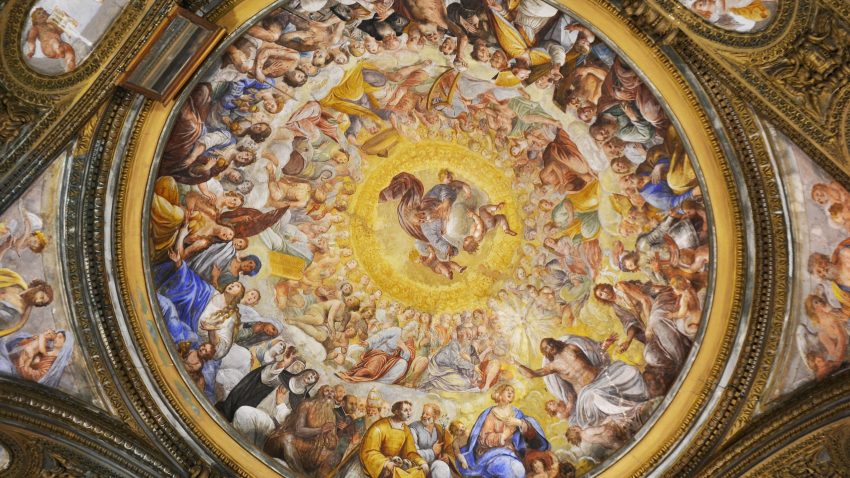
Chiesa di San Giorgio is the kind of Salerno surprise you only truly appreciate once you step inside. From Via Duomo, the exterior feels understated, almost easy to miss, but the moment you enter you're met by a rich Baroque interior where frescoes and gilded details take over, turning a quick stop into a “how is this not more famous?” moment.
If you're building a day in the old town, this spot is one of the must-see places in Salerno, especially on a walking tour of Salerno when you want something intimate, art-filled, and refreshingly uncrowded compared with bigger headline sights. It's a church that rewards curiosity: look up, slow down, and you'll start spotting layers of history tucked into the décor and even beneath your feet.
Table of Contents
- History and Significance of the Chiesa di San Giorgio
- Things to See and Do in the Chiesa di San Giorgio
- How to Get to the Chiesa di San Giorgio
- Practical Tips on Visiting the Chiesa di San Giorgio
- Where to Stay Close to the Chiesa di San Giorgio
- Is the Chiesa di San Giorgio Worth Visiting?
- For Different Travelers
- FAQs for Visiting the Chiesa di San Giorgio
- Nearby Attractions to the Chiesa di San Giorgio
History and Significance of the Chiesa di San Giorgio
The church’s roots reach back to the 8th century, built on the foundations of an even older place of worship dedicated to the eastern saint. What you see today, though, is largely the result of major late-17th-century renovations that transformed the older monastic complex into the Baroque showpiece that locals still talk about with pride.
Chiesa di San Giorgio is also inseparable from its wider setting: it formed part of the ancient Monastery of San Giorgio, a complex that has continued to evolve through the centuries. In modern times the former monastery buildings have been used for the Carabinieri and Guardia di Finanza, which adds a slightly unexpected contemporary twist to a site with such a long religious history.
One of the most distinctive chapters came after the 1980 earthquake, when restoration work revealed something extraordinary beneath the modern floor: the remains of a frescoed apse structure dating to before the 10th century. To make this visible, an electric mechanism was installed to lift sections of the flooring, turning the church into a rare place where you can encounter multiple eras in a single glance.
Things to See and Do in the Chiesa di San Giorgio
Start with the ceiling and upper walls, where the Baroque ambition really lands. The church is famed for its frescoes by Angelo and Francesco Solimena, and even if you don’t know the artists, the effect is immediate: colour, movement, and dramatic religious storytelling that feels designed to pull your gaze upward and keep it there.
Then move more slowly through the side chapels and the main axis of the nave. Architecturally, the interior is a single nave with a barrel vault, side chapels, and a rectangular transept crowned by a dome, ending in a squared space behind the altar-an arrangement that creates a steady rhythm of “pause points” where details suddenly come into focus.
If the floor-lift display is operating during your visit, it’s worth timing your stop around it. Seeing the earlier frescoed apse remains beneath the current church is one of those rare experiences that makes Salerno’s timeline feel tangible rather than theoretical, and it’s exactly the sort of detail that turns a beautiful church into a memorable one.
How to Get to the Chiesa di San Giorgio
The nearest airports are Salerno Costa d'Amalfi and Cilento Airport (Salerno Airport) and Naples International Airport, with Naples offering the widest range of routes year-round. For the best deals and a seamless booking experience, check out these flights to Salerno on Booking.com.
From Salerno railway station, the easiest approach is to walk or take a short local bus/taxi ride toward the Centro Storico and Via Duomo, then finish on foot through the old-town lanes. Use Omnio to easily compare schedules, book train tickets, and find the best prices all in one place for a hassle-free journey across Italy.
If you’re travelling by car, plan to park on the edge of the historic centre and walk in, because the final streets around Via Duomo are best handled on foot. If you are looking to rent a car in Italy I recommend having a look at Discover Cars, first, as they compare prices and review multiple car rental agencies for you.
Practical Tips on Visiting the Chiesa di San Giorgio
- Entrance fee: €10 For Cathedram, Museum and San Giorgio, €7 for two, €5 for museaum only
- Opening hours: Daily: 09:30–18:30.
- Official website: https://www.salernosacra.it/tariffe/
- Best time to visit: Aim for late morning or mid-afternoon when the light is steadier inside and you can take your time without feeling rushed by services or groups.
- How long to spend: 25-45 minutes is ideal for the main interior and frescoes; add time if you want to linger for the floor-lift display and close-up details.
- Accessibility: Expect uneven old-town paving outside and a few typical church thresholds; the interior is manageable once inside, but the underfloor viewing feature may involve standing and waiting.
- Facilities: Treat this as a focused cultural visit rather than a full visitor centre; plan cafés, restrooms, and longer breaks around the surrounding streets of the Centro Storico.
Where to Stay Close to the Chiesa di San Giorgio
For a culture-heavy itinerary, base yourself in Salerno’s Centro Storico so you can walk to churches, lanes, and evening dining effortlessly; if your priority is transport links for day trips, staying closer to the station and main seafront corridor can make arrivals and departures simpler.
For a stay that puts you right in the old-town atmosphere a short walk from Via Duomo, B&B Dietro al Duomo is a strong, practical choice. If you want a central address that keeps both the historic lanes and the waterfront within easy reach, Albergo del Centro Storico is well placed for an “all-on-foot” Salerno stay. For something that balances old-town proximity with a slightly more polished, modern feel, Palazzo Dogana Room&Suite works well as a comfortable base for evenings in the centre.
Is the Chiesa di San Giorgio Worth Visiting?
Yes, particularly if you enjoy places that feel like insider discoveries rather than obvious checklist stops. The contrast between the modest street presence and the richly decorated Baroque interior is genuinely striking, and it’s exactly the kind of “small” sight that ends up being the one you remember.
It’s also worth it for the layered history. Few visits give you such a clear sense of continuity-from early medieval traces beneath the floor to the later Baroque transformation above-without needing a long museum-style commitment.
What Other Travellers Say...

Church of St. George, on Via Duomo in Salerno, is a Baroque gem in the old city notable for its richly painted interior—many visitors highlight detailed frescoes attributed to Solimena—and ornate flooring; entry can be included with a combined ticket for nearby sites or via a small separate fee, and while some find the main church and its decoration deeply impressive, others note that certain intriguing areas (like parts of the crypt or other sections) may be inaccessible during a visit.


For Different Travelers
Families with Kids
This is a good stop for families if you frame it as a short, visual visit rather than a long, quiet one. The “look up” factor is strong, and the underfloor feature can feel like a mini discovery when it’s operating.
To keep it smooth, aim for a quick loop: step in, pick two or three details to spot, then head back out for a snack break nearby. If you’re visiting with very young kids, it helps to come at a quieter time so you can move at your own pace.
Couples & Romantic Getaways
For couples, Chiesa di San Giorgio feels like a hidden pocket of grandeur in the middle of the old town. It's a great “slow moment” stop-cool air, candlelight atmosphere, and art that rewards lingering without needing a plan.
Pair it with a gentle wander along Via Duomo and nearby lanes, then finish with aperitivo somewhere close by. It's a simple sequence, but it feels intimate and distinctly Salerno.
Budget Travelers
This is an excellent value stop because it delivers high-impact art and history in a relatively short visit. If you're using the Salerno Sacra passes, it also fits neatly into a day where you bundle a few major religious sites together without paying multiple separate admissions.
It’s also a smart choice in bad weather, since you can get a meaningful cultural hit without spending much time outdoors. Build your day around a few indoor old-town sights and use cafés as your “connectors” between them.
FAQs for Visiting the Chiesa di San Giorgio
Getting There
Tickets & Entry
Visiting Experience
Tours, Context & Itineraries
Photography
Accessibility & Facilities
Food & Breaks Nearby
Safety & Timing
Nearby Attractions to the Chiesa di San Giorgio
- Duomo di Salerno (Cattedrale di San Matteo): Salerno's headline cathedral, ideal to pair with San Giorgio for a sacred-art mini-route.
- Via dei Mercanti: The classic old-town street for browsing, snacks, and that lived-in historic-centre atmosphere.
- San Pietro a Corte: A compact site where Salerno’s layers feel tangible, perfect for history lovers who enjoy “small but significant” stops.
- Giardino della Minerva: A terraced garden escape with medicinal-plant history and views that reset your pace after church interiors.
- Piazza Portanova: A lively threshold square that works well as a navigation anchor when you’re stitching together the Centro Storico on foot.
The Chiesa di San Giorgio appears in our Complete Guide to Visiting Salerno!

Moira & Andy
Hey! We're Moira & Andy. From hiking the Camino to trips around Europe in Bert our campervan — we've been traveling together since retirement in 2020!
This website uses affiliate links which may earn a commission at no additional cost to you!
Planning Your Visit
Daily: 09:30-18:30.
€10 For Cathedram, Museum and San Giorgio, €7 for two, €5 for museaum only
Nearby Attractions
- Lungomare Trieste (0.1) km
Park - Duomo di Salerno (0.2) km
Cathedral - Complesso Monumentale di San Pietro a Corte (0.2) km
Palace and Roman Site - Museo Diocesano San Matteo di Salerno (0.2) km
Museum - Complesso Monumentale di Santa Sofia (0.3) km
Church - Museo Archeologico Provinciale of Salerno (0.3) km
Museum - Salerno Porta Nova (0.3) km
City Gate - Chiesa della Santissima Annunziata (0.4) km
Church - Villa Comunale di Salerno (0.5) km
Gardens - Acquedotto Medievale di Salerno (0.5) km
Aqueduct