Cathedral of Santa Maria Assunta, Pisa
Cathedral in Pisa
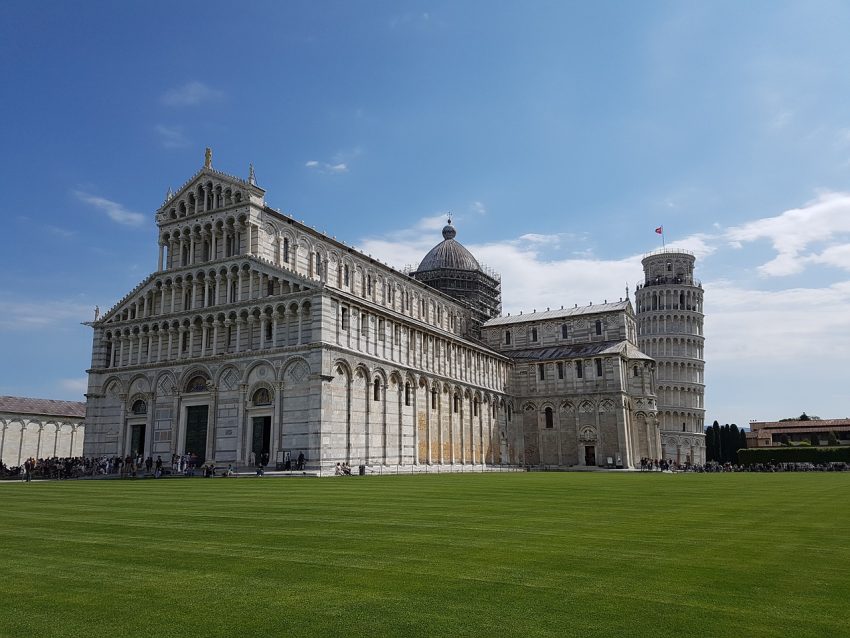
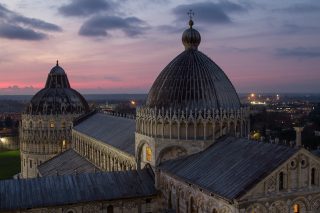
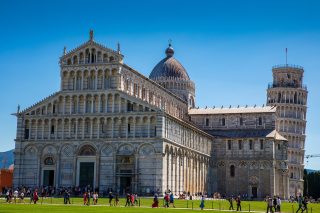
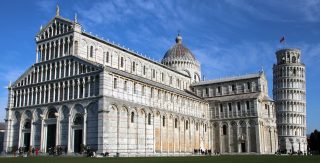
Standing at the centre of Pisa's Piazza dei Miracoli, the Cathedral of Santa Maria Assunta is the building that sets the tone for everything around it. This great Romanesque basilica, faced in luminous white marble and flanked by the Leaning Tower, is the quintessential expression of Pisan architectural flair. Begun in 1063 after Pisa's naval victory over the Saracens, it was designed by the architect Buscheto and later extended with a new west front and completed apse, creating the grand, layered monument you see today and instantly marking it out as one of the must-see places in Pisa.
As you approach, the facade's rhythmic arcades sweep across the front and along the sides, while the transepts end in small apses that project beyond the aisles, giving the church a sculptural, almost sculpted-from-light quality. Inside, the vast nave, striped columns and oval dome draw your gaze towards the richly decorated apse, where a shimmering medieval mosaic of Christ between the Virgin and John the Evangelist presides above the altar. In the nave, Giovanni Pisano's pulpit, alive with twisting figures and biblical scenes, pulls you in close to admire details that feel surprisingly dynamic and human for their time, making the cathedral a highlight of any walking tour of Pisa.
Table of Contents
- History and Significance of the Cathedral of Santa Maria Assunta
- Things to See and Do in the Cathedral of Santa Maria Assunta
- How to Get to the Cathedral of Santa Maria Assunta
- Practical Tips on Visiting the Cathedral of Santa Maria Assunta
- Where to Stay close to the Cathedral of Santa Maria Assunta
- Is the Cathedral of Santa Maria Assunta Worth Visiting
- FAQs for Visiting the Cathedral of Santa Maria Assunta
- Nearby Attractions to the Cathedral of Santa Maria Assunta
History and Significance of the Cathedral of Santa Maria Assunta
Construction of the cathedral began in 1063, at a moment when Pisa was asserting itself as Italy's dominant maritime republic. Buscheto's design deliberately showcased Pisan ambition: a monumental stone basilica in the then-modern Romanesque style, its loggia-like facade echoing classical forms but interpreted in a distinctly local way. Although the building was consecrated in 1118, it was not fully finished; later in the 11th and 12th centuries, a new west front was added and the main apse completed, extending both the footprint and the decorative program.
The exterior arcading, which wraps around the facade and continues along the side walls, became a defining feature of what we now call the “Pisan style.” The cathedral's placement, slightly off-axis in the piazza and later joined by the baptistery and campanile, helped turn the area into a coherent sacred complex, the Piazza dei Miracoli. Over time, fires, modifications and restorations have altered details, but the overall impression remains that of a confident medieval city celebrating its power and faith in stone.
Inside, the building's significance is reinforced through its art. The apse mosaic of Christ flanked by the Virgin and John the Evangelist, dating from the 13th-14th centuries and attributed in part to Cimabue, reflects the transition from Byzantine-influenced iconography to a more naturalistic Gothic sensibility. Giovanni Pisano's early 14th-century pulpit, with its vigorous figures and rounded forms, signals another shift - away from the more angular classicism of his father Nicola Pisano and towards a style that anticipates later Renaissance dynamism. Together, architecture and decoration chart an arc from Romanesque solidity to Gothic grace, making the cathedral a key reference point for understanding Tuscan art history.
Things to See and Do in the Cathedral of Santa Maria Assunta
Begin outside, taking time to walk the full length of the facade and side walls. From a distance, the stacked arcades and tiers of arches create a harmonious pattern; up close, you can pick out carved capitals, inlaid details and the play of shadow under each arch. Step around the transepts to see how the small apses project beyond the aisles, giving the building depth and sculptural interest from multiple angles.
Inside, the space opens up into a majestic Romanesque hall, with rows of columns leading your eye towards the crossing and the oval dome. Pause under the dome to appreciate its proportions and how it centres the building, then move into the apse area to study the mosaic of Christ between the Virgin and John the Evangelist. Even if you are not an art historian, you can sense how the figures retain a certain solemnity while becoming more expressive and three-dimensional compared to earlier, flatter styles.
One of the absolute highlights is Giovanni Pisano's pulpit, set within the nave. Walk all the way around it to see how the sculptor uses lions to support short columns, then layers in figures of the Archangel Michael, Hercules and Christ with the Four Evangelists at the base. The relief panels narrate New Testament scenes with remarkable energy: draperies swirl, bodies twist and faces show emotion, a clear departure from the stricter classical restraint of Nicola Pisano's baptistery pulpit. Take time to pick out your favourite panel and consider how radical this dynamism must have felt in the early 1300s. Combined with the bronze doors of the Porta di San Ranieri, decorated with scenes from the lives of the Virgin and Christ, these details reward slow, attentive looking far beyond a quick walkthrough.
How to Get to the Cathedral of Santa Maria Assunta
Most international visitors arrive via Pisa International Airport (Galileo Galilei), which lies only a few kilometres from the historic centre and offers easy onward travel into town by bus, train, taxi or tram connection. For the best deals and a seamless booking experience, check out these flights to Pisa on Booking.com.
Within Italy, Pisa is very well connected by train, with regular services running to and from Florence, Lucca, Livorno and other Tuscan and national destinations; from Pisa Centrale station, you can walk to the Piazza dei Miracoli in about 20-25 minutes or take a local bus or taxi to get closer to the cathedral.Use Omnio to easily compare schedules, book train tickets, and find the best prices all in one place for a hassle-free journey across Italy. The cathedral sits within the Piazza dei Miracoli, alongside the Leaning Tower and baptistery, and is well signposted from central streets.
If you are travelling by car, you can reach Pisa via major routes such as the A12 motorway or the Florence-Pisa highways and then park in designated car parks outside the restricted traffic zone before walking or taking a shuttle to the Piazza dei Miracoli.If you are looking to rent a car in Italy I recommend having a look at Discover Cars, first, as they compare prices and review multiple car rental agencies for you.
Practical Tips on Visiting the Cathedral of Santa Maria Assunta
- Suggested tips: Combine your cathedral visit with the Leaning Tower, baptistery and Camposanto for a full Piazza dei Miracoli experience, and book key tickets in advance to avoid queuing in peak season.
- Best time to visit: Early morning or late afternoon tends to be quieter and offers softer light on the marble facade; shoulder seasons like spring and autumn are more comfortable than the height of summer.
- Entrance fee: Adults: €8.00
- Opening hours: Daily: 9:00 – 18:00
- Official website: https://www.opapisa.it/en/tickets/prices/
- How long to spend: Allow around 45-60 minutes inside the cathedral itself, plus extra time if you are also visiting the tower, baptistery and cemetery in the same trip.
- Accessibility: Access to the nave is generally step-free or via ramps, but some side areas may have minor level changes; there is no need to climb stairs unless you visit other monuments.
- Facilities: Ticket offices, restrooms and small cafés can be found in and around the Piazza dei Miracoli, with more extensive dining and shopping options a short walk away in central Pisa.
- Photography tip: Capture the full facade from the far side of the lawn, then move closer to focus on details like arcades and carved capitals; inside, be mindful of low light and respectful of worshippers.
- Guided tours: Consider joining a guided tour that covers the entire piazza; guides can help you decode the symbolism of the mosaic, the iconography on the bronze doors and the stylistic evolution between Nicola and Giovanni Pisano.
- Nearby food options: For more authentic, less touristy dining, wander a few streets away from the square towards the river or university district, where you will find trattorias, cafés and gelato shops favoured by locals.
Where to Stay close to the Cathedral of Santa Maria Assunta
Staying near the Piazza dei Miracoli makes it easy to experience the cathedral and Leaning Tower early or late in the day, when tour groups are thinner. A convenient option just a short walk from the square is Hotel Di Stefano, which places you between the historic core and the cathedral complex. For something more upscale and atmospheric, Relais dell’Orologio offers a historic townhouse setting within easy walking distance of the Piazza dei Miracoli and central streets. Travellers arriving by train who still want good access to the cathedral might choose NH Pisa, directly opposite the station and about a 20-25 minute walk or short bus ride from the cathedral.
Is the Cathedral of Santa Maria Assunta Worth Visiting
The Cathedral of Santa Maria Assunta is absolutely worth visiting and, in many ways, is the key to understanding Pisa beyond its famous leaning campanile. The building anchors the Piazza dei Miracoli, showcases the distinctive Pisan Romanesque style and holds major artworks from Cimabue's apse mosaic to Giovanni Pisano's dynamic pulpit. Even if you are primarily drawn by the tower, stepping into the cathedral reveals the city's deeper artistic and spiritual heritage and rounds out the story of how this small maritime republic once projected its power and faith in marble. For most visitors, it quickly becomes one of the top attractions in Pisa, not just a backdrop for photos.
What Other Travellers Say...

Cattedrale di Pisa on Piazza del Duomo is a grand, marble-striped Romanesque cathedral noted for its ornate bronze doors, carved 14th-century pulpit and abundant artwork and inlaid marble; visitors praise the stunning interior, the sense of spiritual calm, and the impressive views both inside and out, note the interior can be dimly lit, recommend pairing the visit with the Baptistery and the nearby tower, allow about 45–60 minutes, wear comfortable shoes for uneven floors, and pick up free entry tickets at the ticket office rather than at the cathedral entrance.


FAQs for Visiting the Cathedral of Santa Maria Assunta
Nearby Attractions to the Cathedral of Santa Maria Assunta
- Leaning Tower of Pisa: The world-famous freestanding campanile of the cathedral complex, known for its dramatic tilt and climbable spiral staircase.
- Baptistery of San Giovanni: A circular baptistery with impressive acoustics and fine Romanesque and Gothic detailing, standing just in front of the cathedral.
- Camposanto Monumentale: A monumental cemetery with cloistered arcades, fresco fragments and historic tombs lining the edge of the Piazza dei Miracoli.
- Museo dell'Opera del Duomo: The museum that preserves original sculptures, artworks and liturgical objects from the cathedral and surrounding buildings.
- Borgo Stretto and the historic centre: A lively area of arcaded streets, shops and cafés where you can experience everyday Pisan life beyond the Piazza dei Miracoli.
The Cathedral of Santa Maria Assunta appears in our Complete Guide to Visiting Pisa!

Moira & Andy
Hey! We're Moira & Andy. From hiking the Camino to trips around Europe in Bert our campervan — we've been traveling together since retirement in 2020!
This website uses affiliate links which may earn a commission at no additional cost to you!
Planning Your Visit
Daily: 9:00 - 18:00
Adults: €8.00
Nearby Attractions
- Leaning Tower of Pisa (0.1) km
Historic Building and Tower - Campo dei Miracoli (0.1) km
Historic Site and Square - Camposanto Monumentale (0.1) km
Historic Building - Museo dell'Opera del Duomo (0.1) km
Museum - Battistero di San Giovanni (0.1) km
Historic Building - Orto Botanico dell’Università di Pisa (0.4) km
Gardens - Baths of Nero (0.5) km
Historic Site - Palazzo dei Cavalieri (0.5) km
Palace - Santo Stefano dei Cavalieri (0.6) km
Church - Borgo Stretto (0.8) km
Street