Castle Varrich, Sutherland
Castle near Sutherland
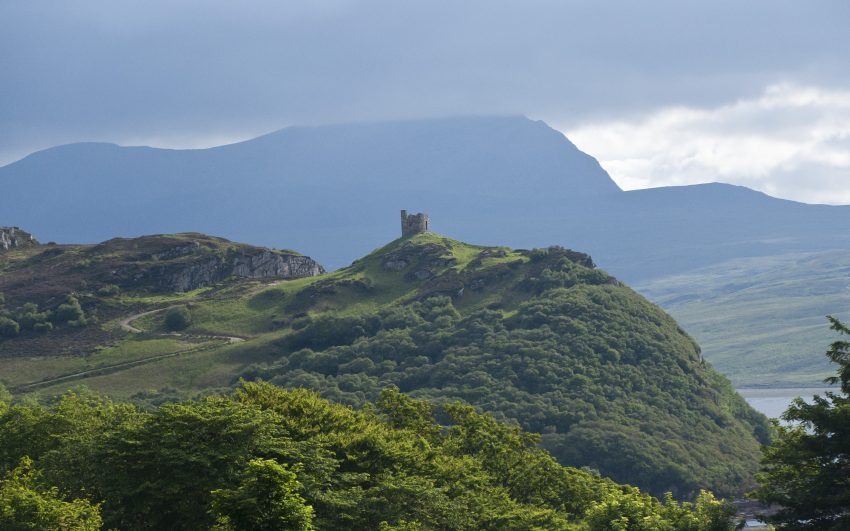
Castle Varrich is a small, weathered ruin perched on a rocky high point just outside the village of Tongue, in the far north of the Scottish Highlands. What survives today is more about setting than grandeur-thick stone walls on a knoll above the Kyle of Tongue, with the sea-loch twisting below and the hills rolling out behind it. The walk up is the real experience: a steady climb through trees and open ground that ends with a viewpoint you'll remember long after the stones blur together.
If you’re basing yourself in the village, this spot is one of the best places to visit in Tongue because it delivers a genuine Highlands “wow” without demanding a full-day hike. It also slots neatly into a walking tour of Tongue, pairing perfectly with a slow wander through the village and a relaxed stop by the water before or after the climb.
Table of Contents
- History and Significance of Castle Varrich
- Things to See and Do in Castle Varrich
- How to Get to Castle Varrich
- Practical Tips on Visiting Castle Varrich
- Where to Stay Close to Castle Varrich
- Is the Castle Varrich Worth Visiting?
- For Different Travelers
- FAQs for Visiting Castle Varrich
- Nearby Attractions to the Castle Varrich
History and Significance of Castle Varrich
Castle Varrich has an intentionally mysterious feel, partly because its precise origins are unclear. Tradition links the site to Clan Mackay, whose chiefs were associated with this headland, and local lore suggests earlier layers of occupation that may stretch back before the medieval period. That uncertainty is part of the appeal: you're not visiting a fully interpreted castle-museum, but a place where landscape, memory, and fragmentary history intertwine.
What is clear is why this position mattered. The rock above the Kyle offers natural surveillance over the waterway and the routes in and out of Tongue, the kind of strategic advantage that made sense in a world where control of movement meant control of power. Even as a ruin, the site reads as a watchpoint first and a residence second.
Today Castle Varrich is best approached as a scheduled monument rooted in place rather than a polished attraction. The story you take away comes from the climb, the exposure to wind and weather, and the way the Kyle below makes the geography of this corner of Sutherland feel instantly understandable.
Things to See and Do in Castle Varrich
The essential experience is the walk up from Tongue and the moment the view opens. From the top, look for the layered landscape: tidal water and sand, low-lying shoreline curves, and the broader sweep of hills that makes the far north feel both empty and expansive. On a clear day, the light over the Kyle can be spectacular, especially when the tide is pulling patterns across the flats.
At the ruin itself, take a few minutes to circle what remains and notice how the stonework sits on the rock. It’s not a “rooms and corridors” castle visit; it’s a short, tactile encounter with thick masonry in a dramatic position, where you’re encouraged to imagine what once stood here rather than being shown.
If you have time, build a simple mini-route: start with a village coffee, hike to the castle, then return to the shore for a slower, lower-level perspective of the Kyle. The contrast-high viewpoint then waterside calm-makes the outing feel like a full experience rather than a quick leg-stretch.
How to Get to Castle Varrich
The nearest major airport is Inverness Airport (INV), with Wick John O'Groats Airport (WIC) sometimes useful for limited regional flights depending on season and routing. For the best deals and a seamless booking experience, check out these flights to Sutherland on Booking.com.
There is no train station in Tongue, so the usual rail approach is to travel on the Far North Line to Lairg (LRG) or Thurso and continue by bus, taxi, or car hire. Train schedules and bookings can be found on Omio.
By bus, services in the far north are less frequent than in the Central Belt, so it’s worth planning around fixed departures and allowing slack time for connections. Tongue is served by regional and community-run routes that link villages along the NC500 corridor.
By car, Tongue is reached via the A836 and A838, and the simplest plan is to park in the village and follow the signed footpath up to the ruin.
Practical Tips on Visiting Castle Varrich
- Entrance fee: Free
- Opening hours: 24 Hours
- Best time to visit: Go early or late in the day for softer light over the Kyle and fewer people on the path, especially in summer.
- How long to spend: Allow 60-90 minutes return from the village at a comfortable pace, longer if you want to linger for views and photos.
- Accessibility: The path is generally well-defined, but expect a steady ascent and rougher ground close to the ruin; sturdy footwear makes a noticeable difference.
- Facilities: Use Tongue village for toilets, food, and supplies before you start, as there are no facilities at the ruin itself.
Where to Stay Close to Castle Varrich
For a culture-heavy itinerary, stay in Tongue village so you can walk to the castle path, the shoreline, and dinner with minimal driving; if your main focus is wide-ranging North Coast exploring, a base that keeps you flexible for day trips along the NC500 can be the better fit.
For an easy, classic Highlands stay right in the village, Tongue Hotel is a strong choice for views and a relaxed evening after the hike. If you prefer a smaller, local pub-hotel feel on the same central stretch, Ben Loyal Hotel keeps you close to the footpath and the village’s everyday rhythm. For a budget-friendly base with a social, outdoorsy atmosphere, Tongue Hostel is practical for walkers and road-trippers.
Is the Castle Varrich Worth Visiting?
Yes-if you like viewpoints, short hikes, and places where the landscape does most of the storytelling. The ruin itself is modest, but the setting is exceptional, and the walk delivers a satisfying sense of earning the view.
It’s also one of those stops that improves your understanding of the area. From above, the shape of the Kyle and the position of Tongue make immediate sense, which helps the rest of your far-north travel feel more connected.
What Other Travellers Say...

Castle Varrich View Point, A836, Ardgay IV27 4XN, UK, offers a simple roadside spot with an information board describing local flora and fauna and clear sightlines to the nearby castle ruins visible just above the sign; visitors note it as an easy stop for views of the ruins and surrounding landscape.

For Different Travelers
Families with Kids
Castle Varrich works well for families if you frame it as a “treasure hunt” walk to a viewpoint rather than a deep castle tour. The climb feels like an adventure, and the big reward at the top is the kind of payoff kids usually remember.
Keep expectations simple at the ruin itself and focus on the experience of getting there. Snacks and a warm layer help, because the wind can make the top feel much colder than the village.
Couples & Romantic Getaways
For couples, this is a perfect short shared hike with a dramatic finish, especially at golden hour when the Kyle catches the light. The route is just long enough to feel like you’ve done something active, without consuming the whole day.
Pair it with a slow evening in Tongue-good food, a shoreline stroll, and that lingering “far north” atmosphere. It’s a low-effort, high-reward stop that feels quietly special.
Budget Travelers
This is an excellent budget-friendly highlight because it’s open-access and the main cost is simply your time and energy. If you’re doing the NC500, it’s a smart leg-stretch that adds a standout viewpoint without needing a paid ticket.
Bring your own water and snacks, and use the village facilities before you head up. With good footwear and a weather check, it’s one of the best-value experiences in the area.
History Buffs
History buffs should come with the right mindset: the interest here is location, tradition, and strategic geography more than intact interiors. The uncertainty around origins and the clan associations make it a site where local narrative matters as much as hard dates.
Spend time reading the landscape from the top and thinking about movement-water routes, approaches, and visibility. In places like this, the setting is often the strongest historical evidence you can still experience directly.
FAQs for Visiting Castle Varrich
Getting There
Tickets & Entry
Visiting Experience
Tours, Context & Itineraries
Photography
Accessibility & Facilities
Food & Breaks Nearby
Safety & Timing
Nearby Attractions to the Castle Varrich
- Kyle of Tongue: A beautiful sea-loch landscape with shoreline viewpoints that show off the area’s tidal patterns and wide-open horizons.
- Ben Loyal: A distinctive mountain with dramatic ridgelines, ideal for experienced hikers looking for a bigger challenge near Tongue.
- Ben Hope: Scotland’s most northerly Munro, rewarding fit walkers with huge far-north panoramas on a clear day.
- Coldbackie Beach: A sweeping sandy bay with dunes and sea views that feels wonderfully wild and uncrowded.
- Smoo Cave, Durness: A large coastal cave system that makes a memorable day trip west, especially if you enjoy dramatic geology and sea scenery.
The Castle Varrich appears in our Complete Guide to Visiting Sutherland!

Moira & Andy
Hey! We're Moira & Andy. From hiking the Camino to trips around Europe in Bert our campervan — we've been traveling together since retirement in 2020!
This website uses affiliate links which may earn a commission at no additional cost to you!
Planning Your Visit
24 Hours
Free
Nearby Attractions
- Torrisdale Bay and Broch, Invernaver (11.4) km
Beach - Strathnaver Museum (13.7) km
Museum - Balnakeil Beach & Faraid Head (22.3) km
Beach and Monastery - Forsinard Flows National Nature Reserve (33.7) km
Nature Reserve - Sandwood Bay (36.9) km
Beach - Kylesku Bridge (42.0) km
Bridge and Waterfalls - Handa Island (45.1) km
Island and Nature Reserve - Ardvreck Castle (47.4) km
Castle - Falls of Shin (57.3) km
Natural Phenomenon and Viewing Point - Timespan, Helmsdale (60.7) km
Museum