Capela de São Frutuoso (Braga)
Monastery near Braga
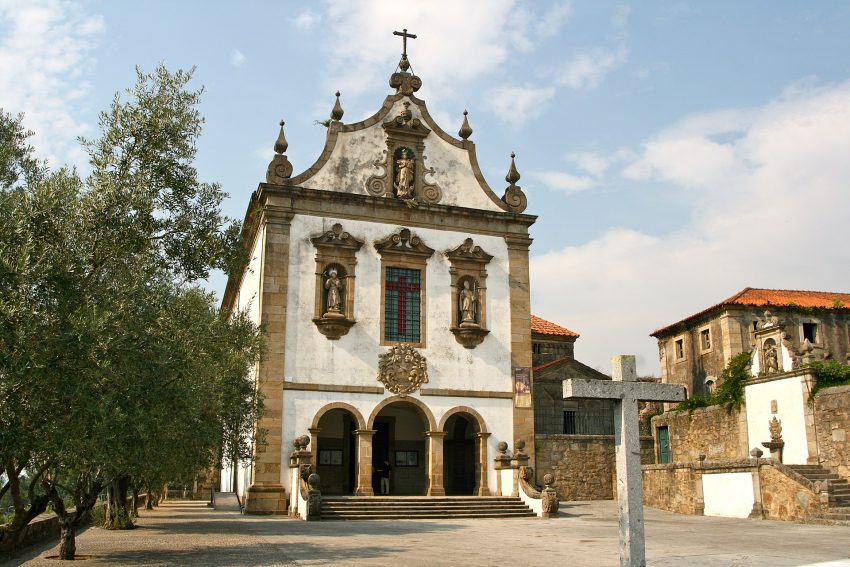
Capela de São Frutuoso (Braga) is a small religious monument just outside Braga's city centre in Braga, Portugal. It is an early Christian chapel and one of the few surviving examples of pre-Romanesque architecture in the country. Dating back to the 7th century, it stands near the Church of São Salvador de Montélios and is usually visited as a short heritage stop rather than a long museum visit.
The chapel matters for its Greek cross layout, horseshoe arches, and carved stone details, which make it different from Braga’s later churches and monasteries. Visitors come mainly to see the structure itself, the calm interior, and the sense of survival in a building that has been altered and restored over time. It is best for travellers interested in early medieval architecture, religious history, and compact sights that reward close looking.
History and Significance of Capela de São Frutuoso
The Capela de São Frutuoso, also known as the Chapel of Saint Frutuoso, dates back to the Visigothic period and is believed to have been built in the 7th century by Saint Frutuoso himself, who was the Bishop of Braga and later canonised. The chapel originally formed part of a monastic complex dedicated to Saint Vincent, reflecting the strong monastic tradition of early Christian Iberia.
The chapel’s unique Greek cross plan, combined with its horseshoe-shaped arches and Corinthian capitals, marks it as one of the few surviving examples of pre-Romanesque architecture in Portugal. Its interior features elegant arcades of three arches and twin double arch openings, while the exterior displays a simple yet striking frieze and rounded apses that hint at Visigothic influence.
In 1523, Archbishop Diogo de Sousa commissioned the construction of a Franciscan monastery nearby, and in 1728 the monks incorporated the chapel into their new convent church, unfortunately demolishing its northern façade in the process. In the late 19th century, a careful restoration returned much of the chapel to its original form, and further restoration in the 20th century helped preserve its early Christian design, making it one of the most valuable architectural relics in Braga.
Things to See and Do in Capela de São Frutuoso
The chapel’s modest size belies its artistic and historical richness. As you step inside, you’ll notice the Greek cross layout - a rare design in Portuguese architecture - and the graceful arrangement of four apses radiating symmetrically from the centre. The horseshoe arches and Corinthian capitals are beautifully carved, echoing a style that predates the Romanesque period and reflects Visigothic craftsmanship at its finest.
Inside, visitors can see the tomb traditionally believed to hold the remains of Saint Frutuoso. Though his relics were transferred to Santiago de Compostela during the Christian Reconquest in the 12th century, the site remains an important place of pilgrimage and devotion. The play of light on the stone surfaces, combined with the sense of age and sanctity, makes the interior both moving and atmospheric.
Outside, the chapel’s rounded apses and decorative frieze complete the impression of a building that has survived countless transformations yet still speaks clearly of its 7th-century origins. For architecture lovers, historians, or anyone seeking Braga’s quieter, more contemplative side, this chapel is a hidden gem.
How to Get There
Capela de São Frutuoso is located about 3 km southwest of Braga's city centre, near the Church of São Salvador de Montélios. Visitors can reach it by taxi, local bus, or even on foot from central Braga (about a 35-minute walk).For those driving, limited parking is available near the site, and larger car parks can be found closer to the main roads leading into the city. If you are looking to rent a car in Portugal I recommend having a look at Discover Cars, first, as they compare prices and review multiple car rental agencies for you.
Practical Tips on Visiting Capela de São Frutuoso
- Best time to visit Capela de São Frutuoso: Morning or late afternoon for soft natural light inside the chapel.
- Entrance fee in Euros: Free.
- Opening hours: Usually open Tuesday to Sunday, 10 am-1 pm and 2 pm-6 pm; closed Mondays.
- Official website: www.cm-braga.pt
- How long to spend: 20-40 minutes.
- Accessibility: Limited due to steps and uneven ground.
- Facilities: None on-site; basic amenities available nearby.
- Photography tip: Capture the rounded apses from the rear and the interior arches from a low angle for depth and symmetry.
- Guided tours: Occasionally included in heritage tours or available through Braga’s tourist office.
- Nearby food options: Small cafés and restaurants can be found along the main road back toward the city centre.
Is Capela de São Frutuoso Worth Visiting?
Yes - Capela de São Frutuoso is one of the best places to visit in Braga for anyone interested in early medieval art and architecture. Its pre-Romanesque design, spiritual atmosphere, and historical depth make it a fascinating contrast to Braga's later Baroque and Gothic landmarks. Visiting this chapel is like stepping into a fragment of Europe's ancient past, preserved with quiet dignity through the ages.
What Other Travellers Say...
Igreja de São Martinho de Dume, R. São Frutuoso 7, Braga — o sítio conserva as ruínas da antiga igreja e o túmulo original de S. Martinho; hoje funciona o Núcleo Museológico de São Martinho de Dume, que expõe vestígios arqueológicos locais, incluindo o sarcófago e restos da basílica, e recebeu melhorias em fases de musealização; visitantes destacam a simpatia do responsável pelo museu, o agradável espaço da igreja onde se celebram missas e atividades catequéticas e a frequência de eventos locais nas imediações.


FAQs for Visiting Capela de São Frutuoso
The Capela de São Frutuoso (Braga) appears in our Complete Guide to Visiting Braga!

Moira & Andy
Hey! We're Moira & Andy. From hiking the Camino to trips around Europe in Bert our campervan — we've been traveling together since retirement in 2020!
This website uses affiliate links which may earn a commission at no additional cost to you!
Nearby Attractions
- Sanctuary of Bom Jesus do Monte (16) km
Religious Building - Praça da República (16.6) km
Square - Torre de Menagem (16.7) km
Tower - Santa Barbara Garden (16.7) km
Gardens - Episcopal Palace (16.8) km
Palace - Biscainhos Museum (16.8) km
Museum - Theatro Circo (16.8) km
Theatre - Braga Cathedral (16.9) km
Cathedral - Arco da Porta Nova (16.9) km
City Gate - Fonte do Ídolo (16.9) km
Historic Site