Brattenstein Castle, Röttingen
Castle in Röttingen

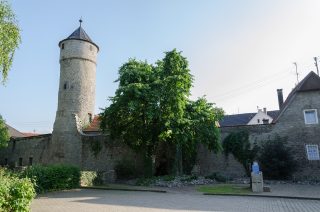
Burg Brattenstein sits right on the edge of Röttingen's historic core, woven into the town's old fortifications and instantly recognisable by its layered medieval-and-baroque feel. It is one of the top sights in Röttingen because it is not just a “look-from-the-outside” monument-this is a living complex that still anchors local culture, from community spaces to summer performances in the open-air courtyard.
What makes the visit special is how naturally the castle fits into a walking tour of Röttingen: you can drift in from the market square, explore the courtyard and adjoining buildings, and then continue along the town wall and viewpoints without needing to plan your day around a single timed entry. Even if you arrive with no more than curiosity and comfortable shoes, the setting does the rest-stonework, traces of older structures, and the sense that the castle is still part of everyday town life.
Table of Contents
- History and Significance of the Burg Brattenstein
- Things to See and Do in the Burg Brattenstein
- How to Get to the Burg Brattenstein
- Practical Tips on Visiting the Burg Brattenstein
- Where to Stay Close to the Burg Brattenstein
- Is the Burg Brattenstein Worth Visiting?
- For Different Travelers
- FAQs for Visiting Burg Brattenstein
- Nearby Attractions to the Burg Brattenstein
History and Significance of the Burg Brattenstein
Burg Brattenstein is first recorded in 1230, tied to the Lords of Hohenlohe, before passing to the Bishopric of Würzburg and, later, to Bavaria after secularisation. That long chain of ownership is written into the fabric of the site: defensive logic on one hand, and the administrative and symbolic language of coat-of-arms and civic presence on the other.
Over the centuries, the complex shifted with the town’s needs. Parts were remodelled and repurposed, the moat was eventually filled as the castle and town became more integrated, and the site moved from feudal stronghold to a more municipal, functional role. In the 20th century it was used for wartime accommodation, then later as a transit space, before a partial collapse in 1971 triggered a new era of restoration and rethinking.
Today, the castle's significance is as much cultural as historical. Since the 1980s, the courtyard has become a defining stage for the Frankenfestspiele Röttingen, and the renovated tithe barn has been reimagined as a community-focused “House of Generations,” reinforcing the idea that the castle is not frozen in time-it is still actively shaping the town's identity.
Things to See and Do in the Burg Brattenstein
Start with a slow circuit of the courtyard, because it gives you the best sense of the castle as a working ensemble rather than a single “main building.” Depending on the season, you may notice seating and staging elements that hint at its role as an open-air theatre-an atmospheric reminder that these stone walls still host big summer nights.
Look out for the historic details that reward close attention: fragments of older masonry, changing building heights and rooflines, and heraldic touches that point to Würzburg’s influence. The contrast between medieval mass and later additions is part of the appeal, especially if you enjoy reading places as much as photographing them.
If you are visiting in the warmer months, add the Wine Museum to your stop. It is small and local in the best way-less about grandeur, more about how wine shaped the Tauber valley’s working landscape-and it pairs naturally with a glass of something regional afterwards in town.
How to Get to the Burg Brattenstein
Röttingen is a small town, so the “last mile” matters more than the long-distance leg-once you arrive, everything is walkable, but you will want a clear plan for getting into town. The nearest major airports most travellers use are Frankfurt Airport and Nuremberg Airport. For the best deals and a seamless booking experience, check out these flights to Röttingen on Booking.com.
For rail travel, aim for Würzburg or Ochsenfurt as your practical gateway stations, then continue by local connections into the Tauber valley. Train schedules and bookings can be found on Omio. From there, regional buses and on-demand services can bridge the gap, and it is worth checking local timetables in advance because frequencies can be limited outside peak periods.
Driving is the simplest option for flexibility, especially if you are combining Röttingen with other Romantic Road towns or vineyard stops, and there are parking options near the historic centre for an easy walk up to the castle. If you are looking to rent a car in Germany I recommend having a look at Discover Cars, first, as they compare prices and review multiple car rental agencies for you.
Practical Tips on Visiting the Burg Brattenstein
- Entrance fee: Free to visit the castle grounds and Wine Museum
- Opening hours: (Summer) May–September: Wine Museum open Saturdays, Sundays, and public holidays 14:00–17:00; the castle exterior and courtyard are generally accessible outside of event set-ups.
- Official website: https://www.roettingen.de/tourismus/de/roettingen-entdecken/sehenswertes/burg-brattenstein
- Best time to visit: Late afternoon works beautifully for softer light in the courtyard, and summer evenings are ideal if you are pairing your visit with a performance.
- How long to spend: Plan 30-60 minutes for the courtyard and exterior, and add extra time if you are visiting the Wine Museum or staying for an event.
- Accessibility: The approach is manageable for many visitors, but expect uneven historic surfaces and occasional steps within the complex.
- Facilities: Facilities are limited on-site outside event times, so treat the castle as a walk-through highlight and use cafés and services in the town centre for breaks.
Where to Stay Close to the Burg Brattenstein
For a culture-heavy itinerary, base yourself in Röttingen's compact historic centre so you can walk everywhere; if your trip is focused on wider Franconia logistics, a larger hub like Würzburg can be better for transport connections and late-night dining options.
In Röttingen itself, you are choosing convenience and atmosphere over big-hotel amenities, which is exactly the point for a slow, local stay. Gasthof Zur Alm is a strong pick if you want a classic, central base that keeps everything within a short walk. For a quieter, wine-country feel with an easy stroll to the old town, Weingut Engelhardt offers a stay that feels rooted in the region. If you like the idea of waking up close to vineyards and keeping things simple and local, Gästehaus Weingut Hofmann is another practical option with a distinctly Franconian character.
Is the Burg Brattenstein Worth Visiting?
Yes-especially if you enjoy places that blend history with everyday life rather than presenting themselves as polished museum pieces. Burg Brattenstein gives you the satisfaction of a real medieval site, but with the added charm of being woven into a small town that still actively uses the space.
It is also an easy “high reward” stop: you do not need a long detour, an elaborate plan, or a big-ticket entry to come away with a strong sense of place. And if you time it with a summer performance, the castle shifts from scenic backdrop to unforgettable setting.
What Other Travellers Say...

Weinmuseum in der Burg Brattenstein in Röttingen sits near the Tauber and Taubertal cycle path and offers a small but interesting exhibition focused on local wine; visitors praise the charming town of Röttingen with its many half-timbered buildings and recommend stopping for food and wine at the nearby hedge inns, calling the museum well worth a visit.


For Different Travelers
Families with Kids
This is a good stop for families who prefer space and movement over long indoor exhibits. The courtyard and surrounding walkable streets make it easy to keep the pace relaxed, with plenty of natural “pause points” for snacks and short breaks.
If you are visiting in summer, an evening performance can be the highlight, but it is just as enjoyable as a daytime wander that fits between other small-town activities. Treat it as a flexible visit: arrive, explore, and move on when attention spans start to dip.
Couples & Romantic Getaways
Burg Brattenstein is made for slow travel-arrive hand-in-hand from the market square, take your time with the stonework and views, then drift into town for wine and dinner. The atmosphere is quietly romantic rather than showy, and that suits Röttingen's character.
If you can, plan around an open-air theatre night. The combination of historic walls, summer dusk, and live performance feels special in a way that bigger, busier venues often lose.
Budget Travelers
This is an easy win for budget travellers because the visit is essentially free, and the best part is simply being there. You can build a half-day around the castle, town walls, and viewpoints without spending much beyond food and transport.
To keep costs low, stay locally in simple guesthouses or plan Röttingen as a day trip within a wider route. Either way, the experience is high-value because the town is compact and walkable.
History Buffs
History lovers will appreciate how the castle reads like a timeline of changing power and use: medieval foundations, ecclesiastical influence, civic ownership, and modern cultural reinvention. It is not a perfectly preserved “storybook castle,” but that is exactly why it feels honest.
For deeper context, pair your visit with a walk along Röttingen’s defensive remnants and a look at heraldic details and repurposed structures on the complex. The story here is as much about adaptation as it is about fortification.
FAQs for Visiting Burg Brattenstein
Getting There
Tickets & Entry
Visiting Experience
Tours, Context & Itineraries
Photography
Accessibility & Facilities
Food & Breaks Nearby
Safety & Timing
Nearby Attractions to the Burg Brattenstein
- Rathaus Röttingen: A handsome town hall that anchors the market square and gives a quick sense of Röttingen's civic pride.
- Stadtmauer mit Türmen: Surviving wall sections and towers that add context to why the castle sits where it does.
- Sonnenuhrenweg: A gentle walking route linking distinctive sundials around town, ideal for an easy, scenic loop.
- Paracelsus-Gärtchen: A small herb and medicinal garden nearby that makes a peaceful, low-effort add-on.
- Weikersheim Palace (Schloss Weikersheim): A nearby grand residence with formal gardens, perfect if you want to contrast a small-town castle with high baroque splendour.
The Brattenstein Castle appears in our Complete Guide to Visiting Röttingen!

Moira & Andy
Hey! We're Moira & Andy. From hiking the Camino to trips around Europe in Bert our campervan — we've been traveling together since retirement in 2020!
This website uses affiliate links which may earn a commission at no additional cost to you!
Planning Your Visit
(Summer) May-September: Wine Museum open Saturdays, Sundays, and public holidays 14:00-17:00; the castle exterior and courtyard are generally accessible outside of event set-ups.
Free to visit the castle grounds and Wine Museum
Nearby Attractions
- Rottingen Wine Museum (0.0) km
Museum - Hundheimer Torturm (0.1) km
Tower - Mühlenturm (0.2) km
Tower - St. Kilian Church (0.2) km
Church - Rathaus Röttingen (0.3) km
Town Hall - Rippacher Turm (0.4) km
Tower - Weikersheim Palace (5.9) km
Palace - Deutschordensschloss (Castle of the Teutonic Order) (13.8) km
Castle - Klingentor (20.9) km
City Gate - Rothenburg Museum (21.0) km
Museum