Brancacci Chapel, Florence
Church in Florence
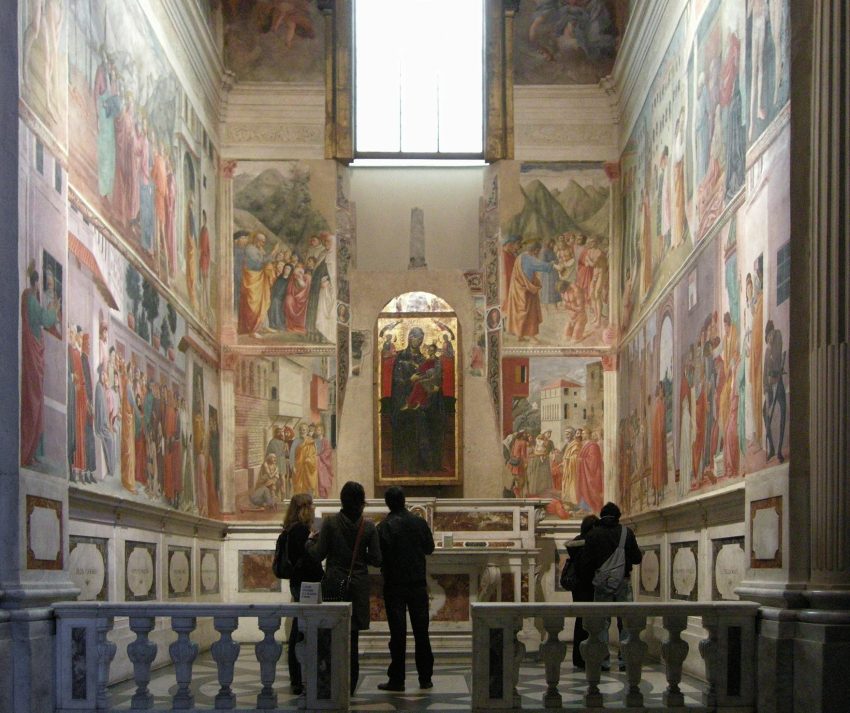
The Brancacci Chapel inside the Church of Santa Maria del Carmine is one of the must-see places in Florence, celebrated for its extraordinary fresco cycle that transformed the course of Renaissance art. Painted by Masolino, the young Masaccio, and later completed by Filippino Lippi, these frescoes illustrate scenes from the life of Saint Peter as well as the drama of Original Sin. Visitors often describe the chapel as a visual turning point-where medieval traditions give way to the bold realism and perspective of the Renaissance. It is also often visited on walking tours of Florence, especially by travellers eager to explore the artistic innovations of the early 15th century.
Commissioned around 1425 by Felice Brancacci, a wealthy Florentine statesman, the frescoes were created in stages. Masolino began the work, but soon collaborated with Masaccio, whose powerful style revolutionised the depiction of human figures. After Masaccio's untimely death in 1428, the cycle remained incomplete until Filippino Lippi continued the work sixty years later. The resulting frescoes form a unified yet stylistically diverse masterpiece, making the chapel one of the top attractions in Florence for art lovers.
Table of Contents
- History and Significance of Brancacci Chapel
- Things to See and Do in Brancacci Chapel
- How to Get to Brancacci Chapel
- Practical Tips on Visiting Brancacci Chapel
- Where to Stay close to Brancacci Chapel
- Is Brancacci Chapel Worth Visiting?
- FAQs for Visiting Brancacci Chapel
- Nearby Attractions to Brancacci Chapel
History and Significance of Brancacci Chapel
The Brancacci Chapel was commissioned at a pivotal moment in Florentine art. Masolino, trained in the Late Gothic style, initiated the project with elegant figures and delicate detailing. His involvement brought prestige to the commission, but it was the addition of the younger Masaccio that changed everything.
Masaccio introduced a revolutionary approach to form, perspective, and emotional expression. His frescoes-especially “The Tribute Money” and “Expulsion from the Garden of Eden”-demonstrate an unprecedented use of linear perspective, chiaroscuro, and naturalistic human anatomy. His work had a profound influence on later masters, including Michelangelo.
After political complications halted progress and Masaccio’s early death left the cycle unfinished, the Brancacci family’s exile delayed further decoration for decades. Only in the 1480s did Filippino Lippi complete the remaining scenes. His contribution introduced a softer, more lyrical style, reflecting the evolving artistic tastes of the late 15th century.
Things to See and Do in Brancacci Chapel
The left wall contains some of the chapel’s most iconic scenes by Masaccio. “The Tribute Money” is a landmark of Renaissance art, with its unified narrative, atmospheric perspective, and monumental figures. Nearby, “Expulsion from the Garden of Eden” portrays Adam and Eve with raw emotion and realism rarely seen before Masaccio’s time.
Masolino's frescoes, including “The Healing of the Cripple” and “The Raising of Tabitha,” offer a contrasting aesthetic, characterised by elegant gestures and graceful lines rooted in the Gothic tradition. The interplay between the two artists highlights the stylistic transition taking place in Florence during the 1420s.
Filippino Lippi’s contributions on the right wall include scenes such as “The Raising of the Son of Theophilus,” where his delicate expressions and decorative elegance blend seamlessly into the earlier cycles while introducing his own distinctive touch. Together, the frescoes offer a rich narrative journey through biblical stories, artistic innovation, and Florentine history.
How to Get to Brancacci Chapel
Florence Airport, Peretola, is the nearest airport and connects easily to the city centre by tram or taxi. For the best deals and a seamless booking experience, check out these flights to Florence on Booking.com.
Travellers arriving by train will reach Santa Maria Novella station, from which the chapel is a pleasant 20-minute walk into the Oltrarno district. Use Omnio to easily compare schedules, book train tickets, and find the best prices all in one place for a hassle-free journey across Italy.
Driving in Florence is restricted due to ZTL zones, but parking outside the restricted area allows visitors to continue by foot or taxi to the Church of Santa Maria del Carmine. If you are looking to rent a car in Italy I recommend having a look at Discover Cars, first, as they compare prices and review multiple car rental agencies for you.
Practical Tips on Visiting Brancacci Chapel
- Suggested tips: Book a timed-entry ticket, as the chapel limits visitors to protect the frescoes.
- Best time to visit: Early morning for the best lighting and smaller groups.
- Entrance fee in Euros: Approximately €8-€12.
- Opening hours: Generally open daily except Tuesdays; check seasonal times.
- Official website: Museo Novecento / Brancacci Chapel official booking site.
- How long to spend: 30-60 minutes.
- Accessibility: Mostly accessible, though some areas may have steps.
- Facilities: Nearby cafés and restrooms in the surrounding neighbourhood.
- Photography tip: Capture details of Masaccio’s figures using a zoom lens-flash is not allowed.
- Guided tours: Highly recommended to appreciate the chapel’s artistic layers.
- Nearby food options: Excellent trattorias and wine bars in the Santo Spirito and San Frediano areas.
Where to Stay close to Brancacci Chapel
For an elegant stay in the Oltrarno neighbourhood, consider SoprArno Suites, offering artistic boutique charm. Another refined option is Palazzo Guadagni, just steps from lively cafés and markets. For river views, Hotel Lungarno provides luxury with easy access to the historic centre.
Is Brancacci Chapel Worth Visiting?
Absolutely. The Brancacci Chapel is a cornerstone of Renaissance art, showcasing the evolution from Gothic sensibilities to the bold realism that defined a new era. Whether you're an art enthusiast or a curious traveller, its frescoes offer one of the most profound and influential visual experiences in Florence.
What Other Travellers Say...

Cappella Brancacci, on Piazza del Carmine 14 in Florence, is a compact museum-chapel known for its 15th-century Renaissance frescoes housed within a baroque-style church; visits require a reservation, are limited to about 30 minutes and often run as small timed groups, and many visitors recommend watching the short introductory film at the ticket area or booking a guided tour to get key context and make the most of the visit — while the chapel can be peaceful and even nearly empty off-season, some have reported frustrating experiences with the ticket office staff.


FAQs for Visiting Brancacci Chapel
Nearby Attractions to Brancacci Chapel
- Basilica di Santo Spirito - Brunelleschi's Renaissance church nearby.
- Palazzo Pitti - Medici palace with multiple museum collections.
- Boboli Gardens - Expansive Renaissance gardens behind Palazzo Pitti.
- Ponte Vecchio - Florence's iconic medieval bridge of jewellers.
- Piazza Santo Spirito - A lively square with markets and cafés.
The Brancacci Chapel appears in our Complete Guide to Visiting Florence!

Moira & Andy
Hey! We're Moira & Andy. From hiking the Camino to trips around Europe in Bert our campervan — we've been traveling together since retirement in 2020!
This website uses affiliate links which may earn a commission at no additional cost to you!
Planning Your Visit
Nearby Attractions
- Piazza Santo Spirito (0.2) km
Square - Palazzo Pitti (0.5) km
Gallery and Palace - Palazzo Strozzi (0.7) km
Gallery and Historic Building - Ponte Vecchio (0.7) km
Bridge - Boboli Gardens (0.7) km
Gardens - Palazzo Davanzati (0.7) km
Historic Building and Museum - Santa Maria Novella (0.8) km
Basilica - Piazza della Repubblica (0.8) km
Square - Uffizi Gallery (0.8) km
Gallery and Historic Building - Loggia della Signoria (0.9) km
Historic Building and Museum