Aqueduct of Nottolini, Lucca
Aqueduct in Lucca
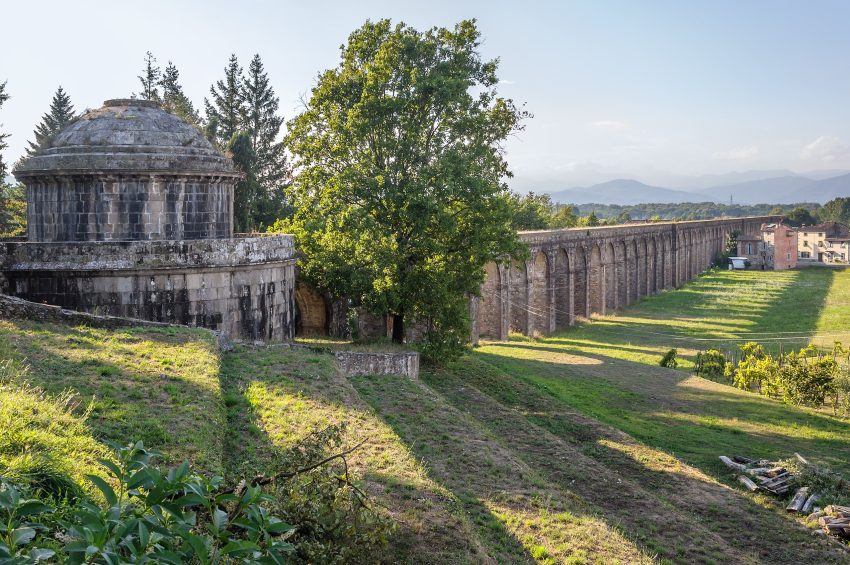
Running like a stone spine across the fields south of Lucca, the Aqueduct of Nottolini is one of those places where landscape and engineering seem to collaborate. Built in the 19th century to bring pure mountain water into the city, its more than 400 brick arches march for over 3 kilometers between the slopes of Monte di Vorno and the outskirts of Lucca. From a distance it looks like an ancient Roman monument, but in reality it is a Neoclassical masterpiece by Lorenzo Nottolini, the same visionary architect behind many of Lucca's 19th-century improvements.
Commissioned in 1823 by Maria Luisa of Spain, Duchess of Lucca, the aqueduct captured springs high above the plain, channelled water by gravity through rocky conduits to a domed stone cistern at San Quirico in Guamo, and from there sent it on toward San Concordio and into the city. The system fed fountains across Lucca, including the circular fountain in Piazza Antelminelli near the cathedral, and transformed daily life with a reliable clean water supply. Today, walking alongside the arches-especially in the golden light of late afternoon-is a peaceful way to connect with both the countryside and a remarkable chapter of local history, and it is often visited on walking tours of Lucca that venture beyond the city walls.
Table of Contents
- History and Significance of Aqueduct of Nottolini
- Things to See and Do in Aqueduct of Nottolini
- How to Get to Aqueduct of Nottolini
- Practical Tips on Visiting Aqueduct of Nottolini
- Where to Stay close to Aqueduct of Nottolini
- Is Aqueduct of Nottolini Worth Visiting?
- FAQs for Visiting Aqueduct of Nottolini
- Nearby Attractions to Aqueduct of Nottolini
History and Significance of Aqueduct of Nottolini
The Aqueduct of Nottolini was born out of practical necessity and enlightened ambition. By the early 19th century, Lucca needed a more dependable and hygienic water supply than wells and older systems could provide. Maria Luisa of Spain, Duchess of Lucca, commissioned Lorenzo Nottolini in 1823 to design a modern aqueduct that would harness the clean springs on the slopes of Monte di Vorno. Nottolini's solution blended classical inspiration with contemporary engineering, creating a structure that was both functional and beautiful.
Water was collected from multiple springs and led through rocky channels to a circular, domed stone cistern near San Quirico in the frazione of Guamo-a temple-like structure that acted as the heart of the system. From there, covered stone conduits and the long series of brick arches carried the flow toward the temple-tank of San Concordio, just outside the fortified walls of Lucca. Metal pipes then took over, distributing water into the city and feeding its fountains. The entire system worked purely by gravity, while the iron conduits were designed to cope with expansion and contraction as temperatures changed-a clever detail that underlines the sophistication of the project.
Although many people still mistake it for a Roman structure, the aqueduct is firmly a 19th-century achievement, completed in 1851. It remained in use until the construction of the A11 autostrada in the early 20th century sliced across its path, interrupting the continuous line of arches and marking the end of its original role. Even so, the Aqueduct of Nottolini stands today as a powerful symbol of Lucca's transition into the modern age, and one of the must-see places in Lucca for anyone who enjoys the quieter, more authentic corners of Tuscany.
Things to See and Do in Aqueduct of Nottolini
The main “sight” here is the aqueduct itself and the landscape it crosses. Start by walking along one of the tracks that follow the line of arches; as you move away from the road and into the countryside, the rhythm of the repeating brick spans becomes almost hypnotic. The gentle curve of the structure, the alternating light and shadow on the arches, and the backdrop of hills make this a fantastic spot for photography, especially in early morning or late afternoon when the light is soft.
If you can, seek out the domed stone cistern near San Quirico in Guamo. This circular “temple” marks the point where spring water from Monte di Vorno was gathered before being sent down the line, and it gives a clearer sense of how the whole system worked. Further along, near San Concordio close to Lucca’s walls, you can imagine how the covered conduits once fed into the city’s fountains, including the elegant one in Piazza Antelminelli by the cathedral. Even though the water no longer flows along the arches, following its former route lets you reconstruct the journey from mountain spring to city piazza in your mind.
For many visitors, the real pleasure lies in the slow, open-air experience: walking or cycling along country lanes, passing vineyards and fields, and using the aqueduct as a guide. It's a peaceful contrast to the narrow streets of Lucca, and a reminder that the beauty of the city depends not only on its walls and churches, but also on the hidden infrastructure that once sustained everyday life. This spot is one of the best places to see in Aqueduct of Nottolini if you want a blend of local history and easy, scenic walking.
How to Get to Aqueduct of Nottolini
The Aqueduct of Nottolini lies just south of Lucca, stretching between the foothills near Monte di Vorno and the area of San Concordio outside the city walls. From central Lucca, it is reachable by a short drive, cycle, or a longer walk, following local roads and paths out toward Guamo and the countryside.
If you are arriving by air, the nearest major airports are Pisa International Airport and Florence Airport, both offering frequent flights and straightforward onward connections into Tuscany. For the best deals and a seamless booking experience, check out these flights to Lucca on Booking.com. From either, you can travel on to Lucca as your base and then continue to the aqueduct by local transport or car.
Lucca's train station, located just outside the southern side of the city walls, is served by regular regional trains from Pisa, Florence, and other Tuscan towns.Use Omnio to easily compare schedules, book train tickets, and find the best prices all in one place for a hassle-free journey across Italy. From the station, you can walk, cycle, or take local buses out toward San Concordio and Guamo, depending on which section of the aqueduct you want to explore and how far you’d like to go on foot.
If you are travelling by car, reaching the Aqueduct of Nottolini is particularly convenient.If you are looking to rent a car in Italy I recommend having a look at Discover Cars, first, as they compare prices and review multiple car rental agencies for you. From Lucca, follow local roads heading south toward San Concordio, Guamo, or Vorno, watching for the line of arches in the landscape; you can then park nearby and set off on foot along paths that parallel the structure.
Practical Tips on Visiting Aqueduct of Nottolini
- Suggested tips: Wear comfortable walking shoes and bring water, especially in warmer months; mobile signal can be patchy in some rural stretches, so download a map in advance.
- Best time to visit: Spring and autumn offer the most pleasant temperatures and attractive light, while early mornings and late afternoons in summer are ideal for avoiding the heat and getting the best photos.
- Entrance fee: There is generally no formal entrance fee to walk alongside the aqueduct, though guided tours or special visits to specific structures may carry a charge.
- Opening hours: Open-air sections can be visited at any time, but check local information for access times to cisterns, trailheads, or guided walks.
- How long to spend: Allow 1-2 hours for a relaxed walk along part of the aqueduct, longer if you plan to combine it with a picnic or a loop through nearby villages.
- Accessibility: Terrain is mostly level but can include uneven paths, grass, and dirt tracks; it’s not ideal for all mobility levels or for pushchairs without off-road wheels.
- Facilities: There are no dedicated visitor facilities along most of the route, so plan for toilets, food, and drinks in Lucca, Guamo, or nearby villages before or after your walk.
- Photography tip: Use the repeating arches as strong leading lines-shoot along the length of the aqueduct to emphasise perspective, or step back to frame it against the hills and sky.
- Guided tours: When available, guided walks add depth by explaining the hydraulic system, construction methods, and Nottolini’s wider role in shaping Lucca’s infrastructure.
- Nearby food options: Look for trattorie and cafés in Guamo, Vorno, or back in Lucca, where you can reward your walk with a proper Tuscan meal or a simple glass of local wine.
Where to Stay close to Aqueduct of Nottolini
If you want easy access to both the Aqueduct of Nottolini and Lucca's historic centre, staying just inside or outside the city walls works perfectly. A comfortable base with good access toward the southern countryside is Hotel Ilaria, which combines central convenience with straightforward routes out of town. For those who prefer a more villa-like setting close to the countryside, Villa La Principessa offers a historic residence in parkland, ideal if you plan to explore multiple rural sights by car. Another appealing option within the old town is Albergo San Martino, putting you near the cathedral and main sights while keeping the aqueduct only a short drive or cycle away.
Is Aqueduct of Nottolini Worth Visiting?
Yes-if you enjoy combining gentle outdoor time with a dose of history, the Aqueduct of Nottolini is absolutely worth visiting. It offers a very different experience from Lucca's churches and towers: open skies, fields, and a long line of arches that tell the story of how the city once secured its most vital resource. The fact that it is often quiet, with mainly locals walking dogs or cycling past, only adds to its charm. For many travellers, an hour or two here becomes a favourite memory from the Lucca area, precisely because it feels authentic, unhurried, and deeply connected to the landscape.
What Other Travellers Say...

Acquedotto Nottolini in Lucca sits on Via Tempietto just behind the main train station and offers a long, mostly flat route popular for walks, hikes or bike rides that passes through small Tuscan villages; visitors note it's easy to reach on foot but parts are under repair or closed (including the bridge over the A11), so expect limited access in places and that the experience may disappoint if you've seen similar aqueducts.


FAQs for Visiting Aqueduct of Nottolini
Nearby Attractions to Aqueduct of Nottolini
- Lucca's Historical Walls - Fully preserved Renaissance ramparts encircling the city, ideal for a stroll or bike ride with views over rooftops and hills.
- Cathedral of San Martino - Lucca's duomo, home to the Volto Santo and the beautiful tomb of Ilaria del Carretto, a short journey back into the city.
- Villa Reale di Marlia - Elegant historic villa and extensive gardens north of Lucca, once home to Elisa Bonaparte, perfect for combining with other countryside sights.
- Villa Mansi - Refined 17th-century villa in Capannori with frescoed interiors and atmospheric gardens dotted with statues and rare trees.
- Aqueduct Temple of San Concordio - The terminal “temple-tank” near Lucca's walls, where the aqueduct's waters once gathered before entering the city's distribution network.
The Aqueduct of Nottolini appears in our Complete Guide to Visiting Lucca!

Moira & Andy
Hey! We're Moira & Andy. From hiking the Camino to trips around Europe in Bert our campervan — we've been traveling together since retirement in 2020!
This website uses affiliate links which may earn a commission at no additional cost to you!
Planning Your Visit
Open-air sections can be visited at any time, but check local information for access times to cisterns, trailheads, or guided walks.
There is generally no formal entrance fee to walk alongside the aqueduct, though guided tours or special visits to specific structures may carry a charge.
Nearby Attractions
- Church of St Maria della Rosa (0.5) km
Church - Cathedral of San Martino (0.6) km
Cathedral - Botanical Garden (0.6) km
Gardens - Church and Baptistery of Santi Giovanni e Reparata (0.7) km
Church and Museum - Teatro del Giglio (0.7) km
Theatre - Piazza Napoleone (0.8) km
Square - Palazzo Ducale in Lucca (0.8) km
Historic Building and Museum - Risorgimento Museum in Lucca (0.9) km
Museum - Villa Bottini (0.9) km
Historic Building - Guinigi Tower (0.9) km
Tower