Abbaye de Saint-Benoît, Poitiers
Abbey in Poitiers
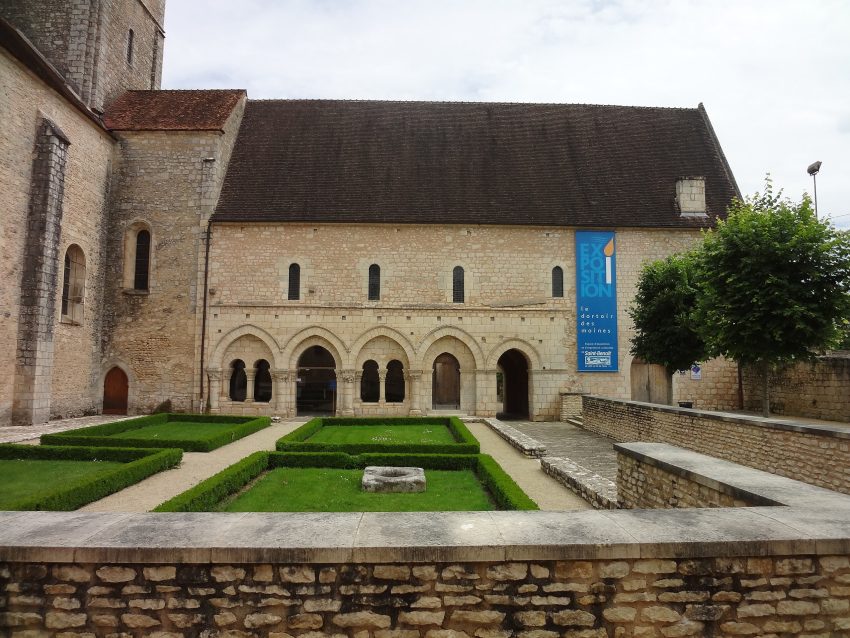
Tucked just outside Poitiers, the Abbaye de Saint-Benoit and its Monks Dormitory and Chapter Room offer a calm, atmospheric glimpse into centuries of monastic life. These spaces once housed a thriving Benedictine community, and today they have been transformed into cultural venues where exhibitions and concerts unfold beneath a 15th-century wooden roof and Romanesque arches. For travellers who enjoy mixing heritage with contemporary creativity, this intimate complex is one of the things to do in Poitiers that rewards slowing down and paying attention to detail.
The story of the abbey stretches back to the 7th century, when Saint-Achard founded a monastery here that would survive Norman raids, rebuilding campaigns, and the turmoil of the Wars of Religion. Walking into the Dortoir des Moines, with its remarkable inverted ship-hull roof, and into the sculpted Salle Capitulaire below, you feel how the architecture has absorbed every chapter of that history. Today, these same spaces echo with music, conversations, and artworks rather than chants, making them a highlight of any walking tour of Saint-Benoit and a thoughtful counterpoint to the bustle of central Poitiers.
Table of Contents
- History and Significance of the Abbaye de Saint-Benoit
- Things to See and Do in the Abbaye de Saint-Benoit
- How to Get to the Abbaye de Saint-Benoit
- Practical Tips on Visiting the Abbaye de Saint-Benoit
- Where to Stay close to the Abbaye de Saint-Benoit
- Is the Abbaye de Saint-Benoit Worth Visiting?
- FAQs for Visiting Abbaye de Saint-Benoit
- Nearby Attractions to the Abbaye de Saint-Benoit
History and Significance of the Abbaye de Saint-Benoit
The Abbaye de Saint-Benoit traces its origins to the 7th century, when Saint-Achard established a monastic community in the valley near the Clain river. This early foundation survived destruction by the Normans in the 9th century, a fate shared by many religious houses in western France, and was later rebuilt and expanded. By the 12th century, the abbey had become an important spiritual and economic centre in the Poitou region, with its church, cloister, and convent buildings anchoring local life.
The Monks Dormitory, or Dortoir des Moines, dates in its current form to the late Middle Ages, and its 15th-century timber roof is one of the most distinctive features of the complex. Shaped like an inverted ship’s hull, the structure showcases the craftsmanship of medieval carpenters and the symbolic link between the Church and the image of a protective vessel. Few comparable roofs survive in the region, which makes this hall particularly significant for understanding local building traditions and the technical skill of the period.
Beneath the dormitory, the Chapter Room, or Salle Capitulaire, was the heart of monastic decision-making. Here the community gathered daily to read the Rule, discuss business, and address discipline. Its Romanesque arches and sculpted capitals speak to the artistic language of the 11th and 12th centuries, hinting at the wealth and prestige once associated with the abbey. During the Wars of Religion, the complex suffered damage and the Chapter Room was even used as a stable, a stark reminder of how vulnerable religious buildings could be. Twentieth-century restorations eventually returned dignity to these spaces, securing their future as protected historic monuments and cultural venues.
Things to See and Do in the Abbaye de Saint-Benoit
A visit usually begins in the Monks Dormitory, a long, lofty hall whose timber roof immediately draws your eye upward. The inverted ship-hull structure, with its exposed beams and warm wood tones, gives the space a distinctive character and creates excellent acoustics for concerts and performances. When exhibitions are on, contemporary paintings, sculptures, or installations are displayed along the walls and in the central space, creating a compelling dialogue between old structure and new artistic voices.
Downstairs, the Chapter Room offers a more intimate, contemplative atmosphere. Its stone arches, squat columns, and carved capitals are closer to eye level, inviting you to linger over the details. Interpretive materials, when available, help you decode the motifs on the capitals and imagine how the room functioned when monks gathered for daily meetings. Today, the Salle Capitulaire often hosts smaller-scale exhibitions, workshops, or talks, making it a flexible space that still feels closely tied to its original purpose as a place of shared reflection.
Throughout the year, the Abbaye de Saint-Benoit runs a lively cultural programme, typically featuring four major exhibitions and a series of concerts or events. Since 2004, the Monks Dormitory has hosted shows that take advantage of its natural light and acoustics, while the town of Saint-Benoit supports artists by acquiring works for its municipal collection. Depending on when you visit, you might find yourself listening to chamber music beneath medieval beams, exploring contemporary sculpture, or joining a small workshop in the Chapter Room, all while surrounded by the quiet of a historic monastic site.
How to Get to the Abbaye de Saint-Benoit
The Abbaye de Saint-Benoit sits just south of Poitiers, making it an easy excursion from the city by car or public transport. If you are arriving from further afield, the nearest gateway is Poitiers-Biard Airport, with additional flight options via major hubs such as Paris for international visitors. For the best deals and a seamless booking experience, check out these flights to Poitiers on Booking.com. From these airports you can continue towards Poitiers by train, coach, or rental car before heading on to Saint-Benoit.
By train, aim first for Poitiers, a key stop on high-speed and regional lines connecting Paris, Bordeaux, and other French cities.You can use SNCF Connect to check schedules, compare routes, and purchase tickets for National (SNCF ) and regional trains (TER). For a more streamlined experience, we recommend using Omio, which allows you to easily compare prices, schedules, and book tickets for both National and Regional travel across all of Europe, all in one place. From Poitiers station, local buses or taxis can take you to Saint-Benoit, or you can drive if you have a rental car. The journey is short, and once in Saint-Benoit you can follow local signage or maps to reach the abbey complex.
Travelling by car is straightforward, with Saint-Benoit linked to Poitiers by local roads and regional routes.If you are looking to rent a car in France I recommend having a look at Discover Cars, first, as they compare prices and review multiple car rental agencies for you. You can park in the village or in designated areas near the abbey and then walk the final stretch. The setting is pleasantly riverside and compact, so it is easy to combine a visit to the Monks Dormitory and Chapter Room with a short stroll along the water or through the village streets.
Practical Tips on Visiting the Abbaye de Saint-Benoit
- Suggested tips: Check the current exhibition or event schedule before you go, as the experience can vary greatly depending on whether a concert, major exhibition, or quieter display is taking place.
- Best time to visit: Late spring to early autumn offers pleasant weather for combining the abbey with a riverside walk, though indoor spaces can be enjoyed year-round during opening periods.
- Entrance fee: Free
- Opening hours: Tuesday – Friday from 9:00 to 12:30 and from 13:30 to 18:00. Closed on Monday Saturdays from 9:00 to 13:00
- Official website: https://www.ville-saint-benoit.fr/visit/tourist-information-office.html
- How long to spend: Plan around 1 to 1.5 hours to explore the Dormitory and Chapter Room, and longer if you want to fully experience an exhibition or concert.
- Accessibility: Access to the upper-level Dormitory may involve stairs, so visitors with reduced mobility should confirm lift or ramp availability; the ground-floor Chapter Room is generally easier to reach.
- Facilities: Basic amenities are usually available nearby in the village, with cafés, toilets, and parking within walking distance, rather than inside the historic rooms themselves.
- Photography tip: Use the natural light in the Dormitory to capture the curves and rhythm of the wooden roof, and look for angles that contrast stone arcs and exhibits in the Chapter Room.
- Guided tours: On certain dates or during major exhibitions, guided visits or curator-led tours may be offered, adding depth to the architectural and historical context of the spaces.
- Nearby food options: Combine your visit with a meal or drink in Saint-Benoit or Poitiers, where local restaurants and cafés provide easy options for lunch before or after your cultural stop.
Where to Stay close to the Abbaye de Saint-Benoit
While Saint-Benoit itself offers a peaceful village atmosphere, many visitors choose to stay in nearby Poitiers for a wider range of accommodation and dining options, then make the short trip to the abbey. A convenient base is Hotel de l Europe, which places you close to the historic heart of Poitiers and within easy driving distance of Saint-Benoit. Travellers who enjoy characterful stays might opt for Mercure Poitiers Centre, set in a striking converted chapel and ideal if you want to balance countryside visits with evenings in the city. For a practical, modern option, ibis Styles Poitiers Centre offers straightforward comfort and good access to both Poitiers attractions and the short road to the Abbaye de Saint-Benoit.
Is the Abbaye de Saint-Benoit Worth Visiting?
If you are interested in monastic history, architecture, or intimate cultural spaces, the Abbaye de Saint-Benoit Monks Dormitory and Chapter Room are definitely worth adding to your itinerary. The combination of a rare inverted ship-hull wooden roof, Romanesque arches, and a lively programme of exhibitions and concerts makes these rooms feel both historic and very much alive. As part of a broader exploration of Poitiers and its surroundings, they offer a distinctive, atmospheric stop that deepens your understanding of the region's religious and artistic heritage.
What Other Travellers Say...

Monks Dormitory in Saint-Benoît sits on Rue Paul Gauvin and operates with varied weekday hours and a Saturday morning schedule, closed Sundays; visitors praise its attractive appearance and say it's worth a stop when passing through, noting pleasant, well-organized events such as the Christmas market, while others mention the interior is impressive but can present practical challenges for installing exhibitions because of wall cable-attachment systems; contact by phone is available.


FAQs for Visiting Abbaye de Saint-Benoit
Nearby Attractions to the Abbaye de Saint-Benoit
- River walks along the Clain: Scenic riverside paths near Saint-Benoit that invite gentle strolls or picnics before or after visiting the abbey.
- Poitiers historic centre: A nearby city with Romanesque churches, medieval streets, and lively squares that pair well with a quieter visit to Saint-Benoit.
- Musee Sainte-Croix Poitiers: The main museum in Poitiers, showcasing archaeology from prehistory to Roman times alongside fine arts and major sculpture collections.
- Parc de Blossac Poitiers: A large landscaped park offering formal gardens, shady walks, and viewpoints over the valley, ideal for a relaxing break.
- City Walls of Poitiers: Surviving stretches of Roman and medieval fortifications that frame an atmospheric walk around the edge of the old town plateau.
The Abbaye de Saint-Benoît appears in our Complete Guide to Visiting Poitiers!

Moira & Andy
Hey! We're Moira & Andy. From hiking the Camino to trips around Europe in Bert our campervan — we've been traveling together since retirement in 2020!
This website uses affiliate links which may earn a commission at no additional cost to you!
Planning Your Visit
Tuesday - Friday from 9:00 to 12:30 and from 13:30 to 18:00. Closed on Monday
Saturdays from 9:00 to 13:00
Free
Nearby Attractions
- City Walls of Poitiers (2.9) km
City Walls - Parc de Blossac (2.9) km
Park - Amphithéâtre de Poitiers (3.3) km
Amphitheatre and Roman Site - Musée Sainte-Croix (3.4) km
Museum - Baptistère Saint-Jean (3.4) km
Baptistery - Place du Maréchal Leclerc (3.4) km
Square - Cathédrale Saint-Pierre de Poitiers (3.5) km
Cathedral - Poitiers Prefecture (3.5) km
Historic Building - Palace of the Counts of Poitou (3.8) km
Palace - Church of Notre-Dame-la-Grande (3.8) km
Church