Strasbourg, France: The Ultimate Travel Guide 2026

Strasbourg France
Strasbourg France

Strasbourg offers visitors a delightful blend of French and German influences, creating an atmosphere that is both charming and distinctly unique. Travelers can leisurely explore the picturesque half-timbered houses lining its canals, stroll along narrow cobblestone streets, and discover inviting cafés and boutiques throughout the city's historic center. Highlights include the impressive Strasbourg Cathedral, vibrant local markets, and scenic boat rides through the city's canals.

Additionally, Strasbourg is celebrated as a culinary destination, offering authentic Alsatian cuisine that includes hearty dishes like tarte flambée and choucroute garnie. The city also hosts one of Europe's most beloved Christmas markets, transforming into a magical winter wonderland during the festive season. With its welcoming ambiance, captivating architecture, and vibrant cultural scene, Strasbourg remains a rewarding destination in the Grand Est region of France.

History of Strasbourg

Early History of Strasbourg

Strasbourg traces its origins back to Roman times, originally established as a military outpost named Argentoratum. It developed into a prosperous settlement due to its strategic location along major trade routes. Early archaeological remains, such as fortifications and roads, highlight the city’s significance during this period.

Strasbourg in the Middle Ages

Throughout the medieval era, Strasbourg grew rapidly, becoming an influential economic and religious center. The construction of the majestic Strasbourg Cathedral, which began in the 12th century, signified the city’s wealth and importance. Additionally, Strasbourg flourished as a hub for craftsmanship, notably in printing and trade.

Strasbourg from the Renaissance to the 18th Century

During the Renaissance, Strasbourg emerged as a prominent intellectual and cultural center, particularly known for humanist scholarship and the development of the printing press by Johannes Gutenberg. Its vibrant culture attracted scholars, artists, and merchants from across Europe. The city maintained significant autonomy, thriving through commerce and innovative thinking.

Strasbourg in Modern Times

Strasbourg experienced considerable turmoil and change during the 19th and 20th centuries, alternating between German and French control multiple times. These shifts greatly influenced its architecture, culture, and identity, reflecting a unique blend of both German and French traditions. Today, Strasbourg symbolizes European unity as a major political center, notably housing several important institutions, including the European Parliament.

Moira & Andy
Moira & Andy

Hey! We're Moira & Andy. From hiking the Camino to trips around Europe in Bert our campervan — we've been traveling together since retirement in 2020!

Read our full story here

Visiting Strasbourg for the first time and wondering what are the top places to see in the city? In this complete guide, I share the best things to do in Strasbourg on the first visit. To help you plan your trip, I have also included an interactive map and practical tips for visiting!

This website uses affiliate links which earn a small commission at no additional cost to you.
Powered by GetYourGuide

21 Best places to See in Strasbourg

This complete guide to Strasbourg not only tells you about the very best sights and tourist attractions for first-time visitors to the city but also provide insights into a few of our personal favorite things to do.

This is a practical guide to visiting the best places to see in Strasbourg and is filled with tips and info that should answer all your questions!

1. Cave Historique des Hospices de Strasbourg
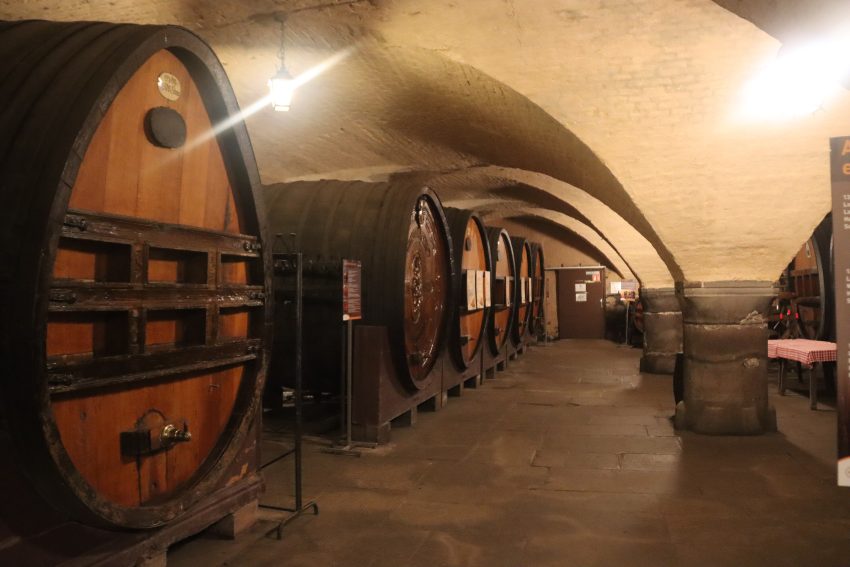
Cave Historique des Hospices de Strasbourg
CC BY-SA 4.0 / FrDr
Cave Historique des Hospices de Strasbourg is a stone-vaulted wine cellar built in 1393–1395 beneath the city’s public hospital, where wine once helped fund care as patients bequeathed land that grew into a large estate. Walking its cool corridors, you’ll see towering wooden casks and the storied 1472 white wine—now kept in a newer barrel after time in stainless steel to extend its survival. A 1716 hospital fire destroyed much above, yet the cellar was spared, leaving a rare intact working space. Revived in 1995 as a cooperative, it still ages and bottles “Vin des Hospices,” and the on-site shop is known for well-priced Alsatian bottles.
Location: 1 Pl. de l'Hôpital, 67000 Strasbourg, France | Hours: Monday – Friday: 08:30–12:00 & 13:30–17:30. Saturday: 09:00–12:30. Closed on Sunday. Closed on public holidays. | Price: Free (self-guided visit). Audio guide: €3. | Website | Distance: 0.5km

We recommend to rent a car in France through Discover Cars, they compare prices and review multiple car rental agencies. Book your rental car here.

2. Historical Museum

Historical Museum
Historical Museum
Public Domain / DCHNwam
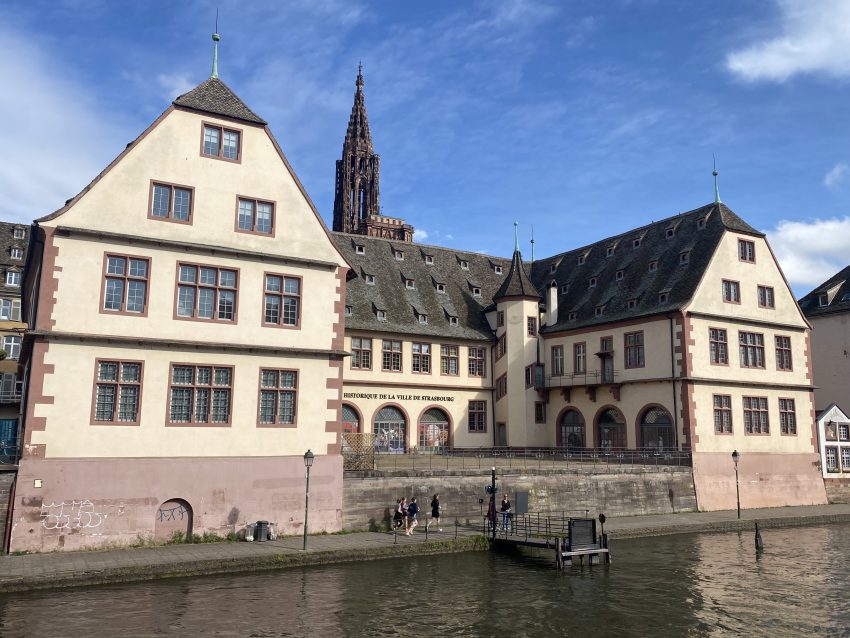
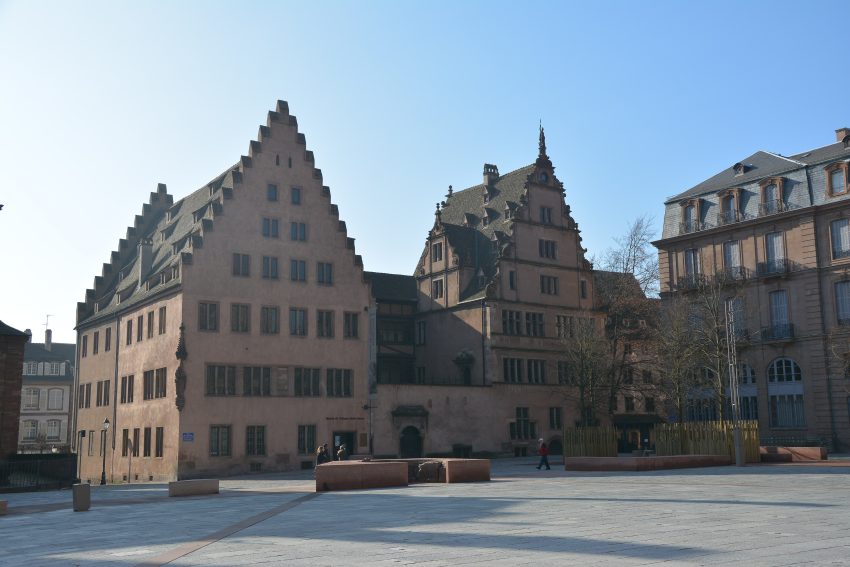
Strasbourg’s Historical Museum (Musée Historique) traces the city’s political, economic, and social story from the early Middle Ages to today, capturing the push and pull of life between French and German spheres. It’s housed in the former Great Butchery, a substantial Renaissance-era building constructed in 1586–1588, which adds grit and atmosphere to the galleries. Established in 1920 and reopened after a long renovation in 2007, the museum expanded again in 2013 to cover the Napoleonic period through contemporary Strasbourg. Visitors tend to linger over the 1727 relief map: a meticulous 1:600 scale model spanning nearly 80 square meters. Displays mix uniforms, paintings, and everyday objects, with only about 1,650 pieces shown from a collection of roughly 200,000.
Location: 2 Rue du Vieux-Marché-aux-Poissons, 67000 Strasbourg, France | Hours: Tuesday – Friday: 10:00–13:00 & 14:00–18:00. Saturday – Sunday: 10:00–18:00. Closed on Monday. | Price: Adults: €7.50; Reduced: €3.50; Under 18: free. | Website | Distance: 0.7km

Here is a complete selection of hotel options in Strasbourg. Feel free to review each one and choose the stay that best suits your needs.

3. Musée Alsacien

Musée Alsacien
Musée Alsacien
CC BY-SA 3.0 / Hermann Junghans
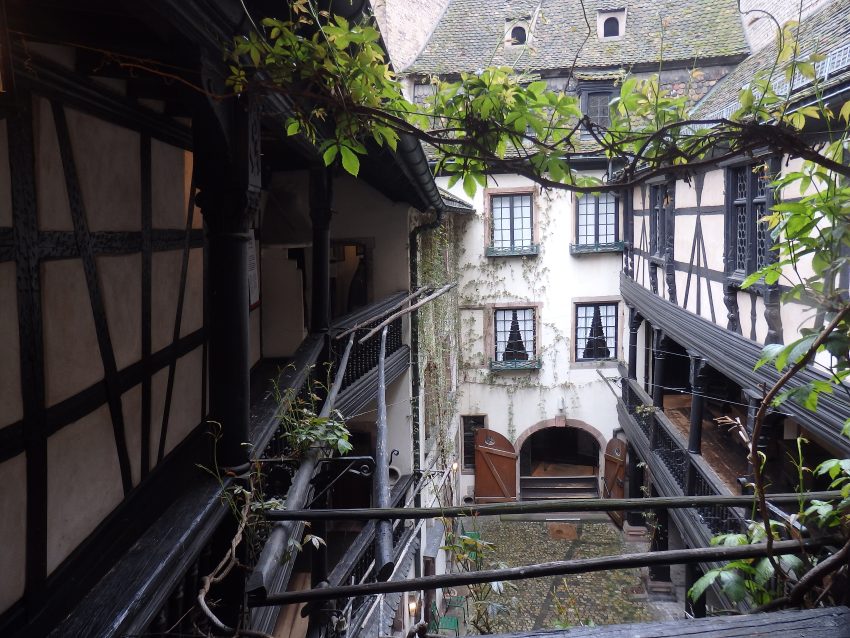
Musée Alsacien in Strasbourg is a folk museum devoted to everyday Alsatian life from the 18th to early 20th century, founded in 1907 to safeguard regional traditions as industry and politics reshaped the area. It occupies a cluster of historic houses on the River Ill, entered through an intimate courtyard framed by half-timbered façades. Inside, the visit feels like moving through real dwellings: you weave up and down uneven levels and staircases rather than following neat galleries. Rooms are staged as kitchens, bedrooms, workshops, and ceremonial spaces, filled with painted furniture, pottery, textiles, carved cupboards, and tools that make domestic routines tangible. Look for small quirks like balcony vines and a bell-ringing metal figure perched on a railing.
Location: 23-25 Quai Saint-Nicolas, 67000 Strasbourg, France | Hours: Closed for renovations (July 7, 2025 – June 30, 2027). | Price: Check official website. | Website | Distance: 0.7km

Traveling to a country with a different currency? Avoid ATM transaction fees and pay in local currency with a Wise Card. Having used it for over 5 years, we've saved loads on fees!

4. Musée de l’Œuvre Notre-Dame

Musée de l’Œuvre Notre-Dame
CC BY-SA 2.0 / Rolf Krahl
Musée de l’Œuvre Notre-Dame is the cathedral workshop museum beside Strasbourg Cathedral, preserving pieces removed during centuries of construction and restoration and turning them into a readable record of how the building was made. Spread through about forty rooms in medieval and Renaissance buildings—including a former craftsmen’s lodge—it leads you via tight staircases and doorways from Romanesque carving to later Renaissance works. The most memorable experience is seeing original statues, reliefs, and architectural fragments at eye level, where expressions and symbolic gestures that once sat high on the façade become clear. Don’t miss the Wissembourg Christ, a 12th‑century stained-glass head of Jesus and the oldest intact figurative stained glass preserved in France. Calm courtyards and hushed galleries make it feel like an extension of the cathedral itself.
Location: 3 Pl. du Château, 67000 Strasbourg, France | Hours: Tuesday – Friday: 10:00–13:00 & 14:00–18:00. Saturday – Sunday: 10:00–18:00. Closed on Monday. | Price: Adults: €7.50; Reduced: €3.50. | Website | Distance: 0.8km

Explore Strasbourg at your own pace with our self-guided walking tour! Follow our curated route to discover must-see sights and local secrets that makes Strasbourg one of the best places to visit in France.

5. Place de la Cathédrale

Place de la Cathédrale
CC BY-SA 3.0 / fotogoocom
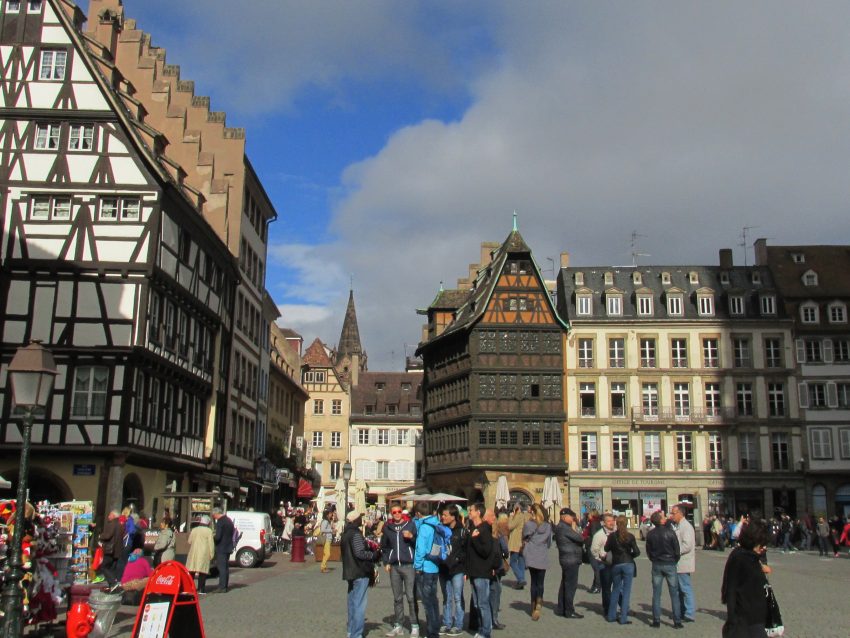
Place de la Cathédrale is Strasbourg’s compact cathedral square, formed gradually in the Middle Ages as the city’s religious, civic, and commercial center. It feels enclosed rather than grand, with timber-framed houses and Renaissance façades pressed close to the soaring walls of Cathédrale Notre-Dame, creating sharp contrasts in scale. One edge is marked by the Kammerzell House, a late-medieval merchant home densely carved with wooden panels and figures. From the paving stones, the cathedral’s west front reads like a stone tapestry—thousands of sculptures rising toward the tower and rose window. Mornings bring bells and echoing footsteps; by midday, performers and café terraces animate the scene, and at Christmas it glows with market lights and stalls.
Location: Pl. de la Cathédrale, 67000 Strasbourg, France | Hours: 24 Hours. | Price: Free. | Distance: 0.9km

6. Rue Mercière
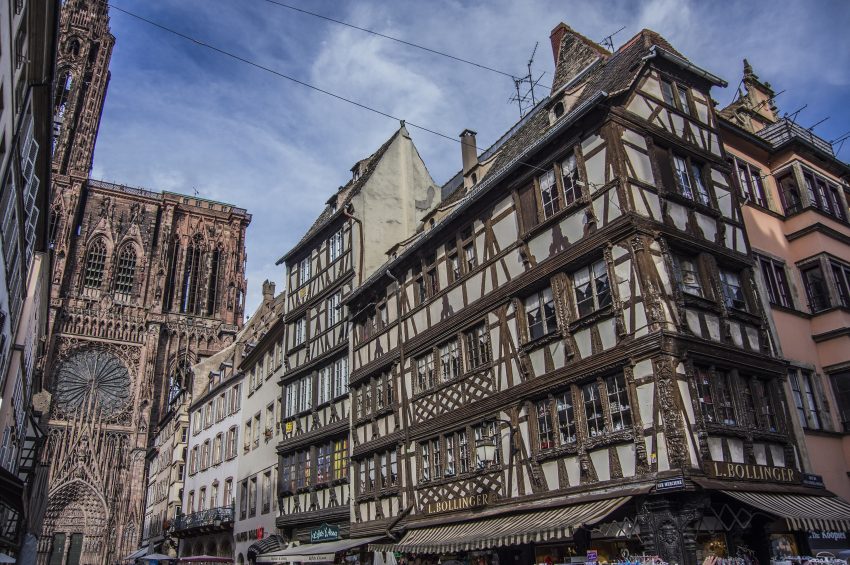
Rue Mercière
Rue Mercière
CC BY-SA 2.0 / stefano Merli
Rue Mercière is a short medieval lane in Strasbourg’s Grande Île, running between Cathedral Square and the River Ill, and it still reads as a working merchants’ street rather than a modern thoroughfare. Tall 15th- and 16th-century half-timbered houses press in on both sides, with upper floors jutting over the pavement and beams carved and painted with decorative brackets. As you walk toward the cathedral, the gentle slope turns the street into a visual funnel, with façades framing the Gothic spire in a slow, dramatic reveal. Near the corner stands the Deer Pharmacy, founded in 1268 and often cited as France’s oldest. By evening, restaurant windows glow and the lane feels hushed and close-grained.
Location: Rue Mercière, 67000 Strasbourg, France | Hours: 24 Hours. | Price: Free. | Distance: 0.9km

7. Place Gutenberg

Place Gutenberg
Place Gutenberg
CC BY-SA 4.0 / Thomon
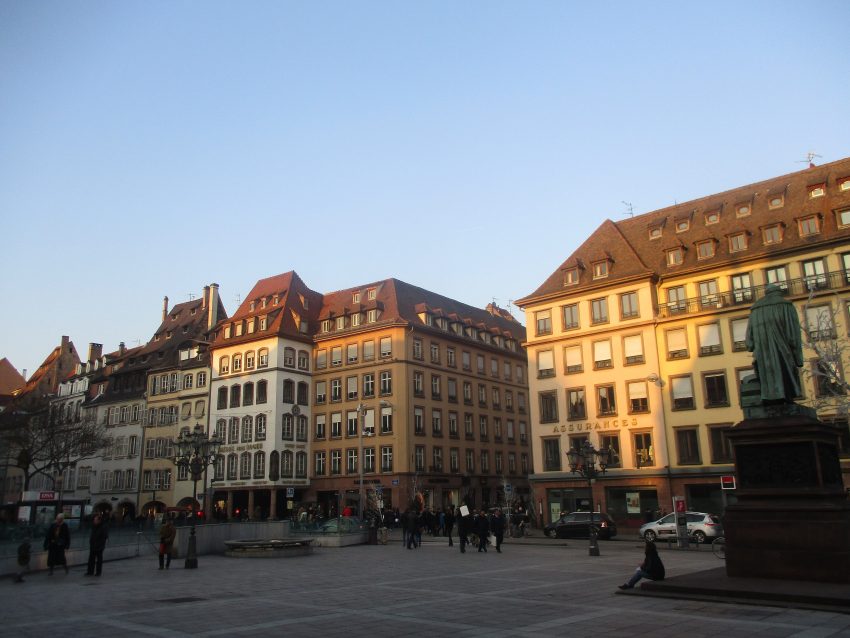
Place Gutenberg is a compact public square in Strasbourg’s historic center, built around the city’s connection to Johannes Gutenberg, who worked here in the 1430s while developing ideas that led to movable-type printing. A bronze statue of Gutenberg, installed in 1840, anchors the middle and makes an easy meeting point amid constant pedestrian flow. The square grew as a commercial zone near the cathedral, and the surrounding façades—mostly 18th- and 19th-century—still hint at that mercantile past with a mix of classical lines and Alsatian touches. Look for the former Chamber of Commerce building, marked by its Renaissance styling and sloped regional roof. Its open layout also frames a clear view toward the cathedral spire.
Location: Pl. Gutenberg, 67000 Strasbourg, France | Hours: 24 Hours. | Price: Free. | Distance: 0.9km

8. Palais Rohan

Palais Rohan
Palais Rohan
CC BY-SA 3.0 / Claude TRUONG-NGOC
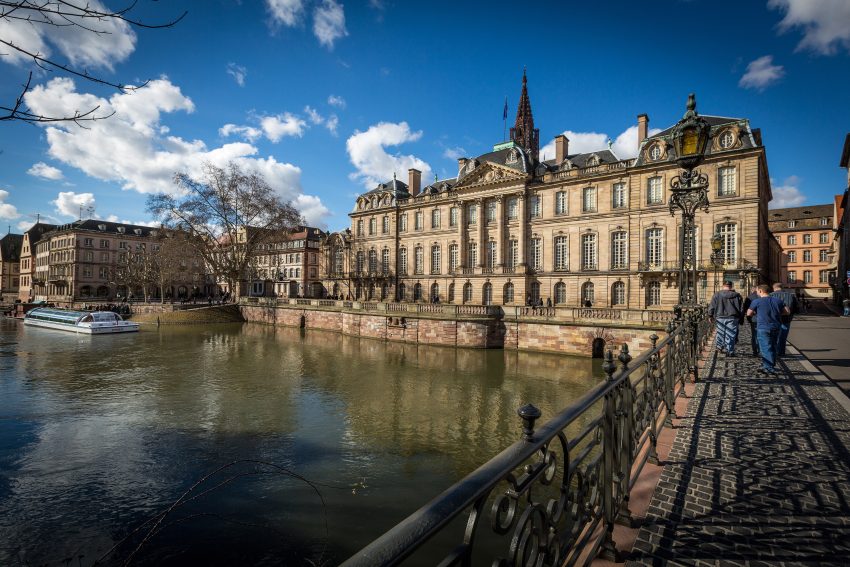
Palais Rohan in Strasbourg is an 18th-century French Baroque palace (built 1732–1742) commissioned by Cardinal Gaston de Rohan, set beside Strasbourg Cathedral and the River Ill. It mattered first as a prince-bishop’s ceremonial residence—Louis XV, Marie Antoinette, and Napoleon all stayed here—and later as a civic museum complex. Today visitors experience it as three museums layered through the building: archaeology in the basement tracing Alsace from prehistory to Roman Argentoratum, decorative arts in the former state apartments with furnished rooms, and fine arts upstairs with European painting from the Renaissance to the 19th century (including names like Botticelli, Rubens, and Goya). The formal courtyard and riverside terraces add a calm, palace-like atmosphere between galleries.
Location: 2 Pl. du Château, 67000 Strasbourg, France | Hours: Monday: 10:00–13:00 & 14:00–18:00. Tuesday: Closed. Wednesday – Friday: 10:00–13:00 & 14:00–18:00. Saturday – Sunday: 10:00–18:00. | Price: Adults: €7.50; Reduced: €3.50; Under 18: free. | Website | Distance: 0.9km

9. Cathédrale Notre-Dame de Strasbourg

Cathédrale Notre-Dame de Strasbourg
CC BY-SA 4.0 / Chabe01
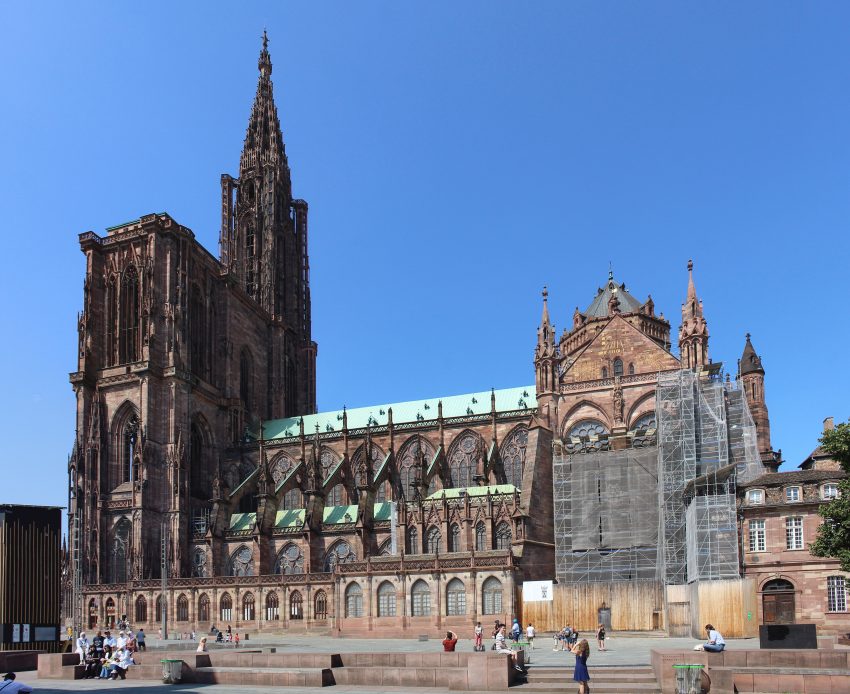
Cathédrale Notre-Dame de Strasbourg is Strasbourg’s pink-Vosges-sandstone cathedral, a Gothic giant rooted in Romanesque beginnings and completed in 1439. Its single spire rises to 142 metres and once made it the tallest building on Earth (1647–1874), still the tallest structure built entirely in the Middle Ages. In the square, the west façade reads like a stone tapestry—hundreds of carved figures and scenes packed into the portals and tracery. Inside, coloured light from 12th–14th-century stained glass washes the transepts, and the Astronomical Clock in the south transept stages its mechanical performance at 12:30. Climbing the internal stairway brings rooftop views across Strasbourg and the Alsatian plain.
Location: Pl. de la Cathédrale, 67000 Strasbourg, France | Hours: Monday – Saturday: 08:30–11:15 & 12:45–17:45. Sunday: 14:00–17:15. | Price: Free; donations appreciated. Platform climb: €8. | Website | Distance: 0.9km

10. Rue des Grandes Arcades
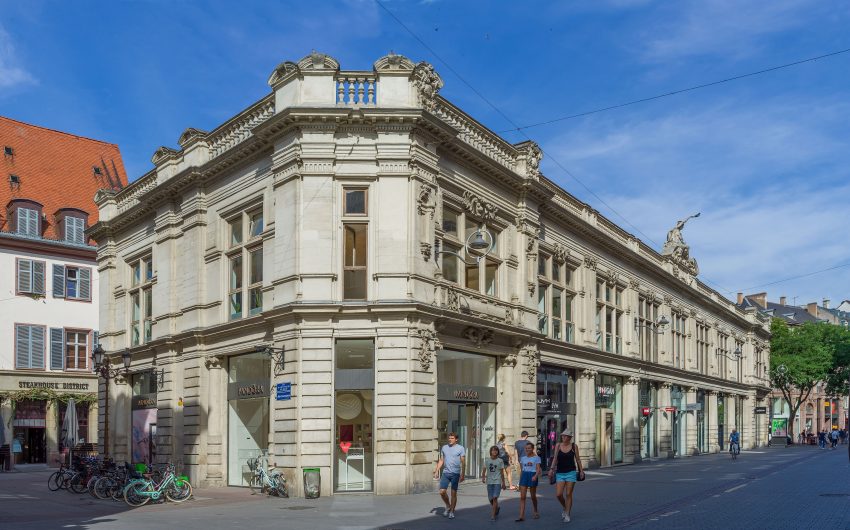
Rue des Grandes Arcades
CC BY-SA 2.5 / Wolfgang Moroder
Rue des Grandes Arcades is Strasbourg’s central shopping street, running through the Grande Île and linking Place Kléber with the area around Place Gutenberg. It grew out of the city’s medieval trading life, and its name recalls the covered arcades that once sheltered merchants and customers from rain and winter cold. Today you still feel that “gallery” rhythm at street level—columns, shopfront windows, and reflections—while many upper façades show 18th- and 19th-century remodeling with classical proportions and decorative stonework. The street is busy and practical rather than museum-like: international brands sit beside local cafés and bakeries, and side streets briefly frame the Cathedral spire as the crowd flows past.
Location: Rue des Grandes Arcades, 67000 Strasbourg, France | Hours: 24 Hours. | Price: Free. | Distance: 1km

11. Maison Kammerzell
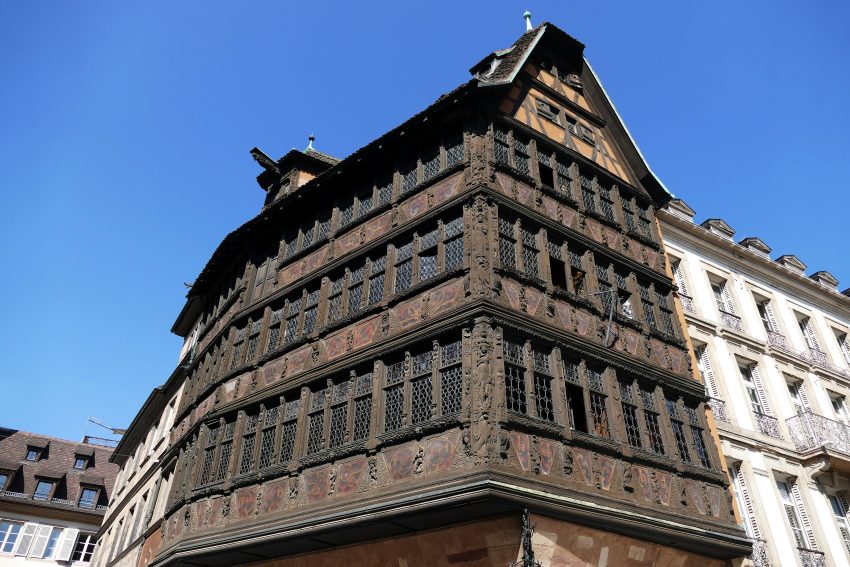
Maison Kammerzell
Maison Kammerzell
CC BY-SA 4.0 / Ralph Hammann
Maison Kammerzell is a 15th–16th century townhouse on Strasbourg’s Place de la Cathédrale, prized for its Alsatian Renaissance timber framing and dense, storybook carving work. Built on foundations laid in 1427, it kept a rebuilt ground floor from 1467 and gained its ornate upper stories in 1589, where sculpted beams, leaded windows, and panels mix biblical scenes with classical motifs. Inside, the restaurant’s rooms feel like a preserved set piece, reached by an original wooden spiral staircase whose walls are lined with photos of celebrity diners. Look for early-20th-century frescoes by Léo Schnug—pastoral scenes and Germanic figures, including a small, much-talked-about cat in a first-floor alcove. Many visitors come for choucroute served amid the dark woodwork.
Location: 16 Pl. de la Cathédrale, 67000 Strasbourg, France | Hours: Daily: 08:00–22:00. | Price: Free (to view the exterior); restaurant prices vary. | Website | Distance: 1km

12. Aubette Building
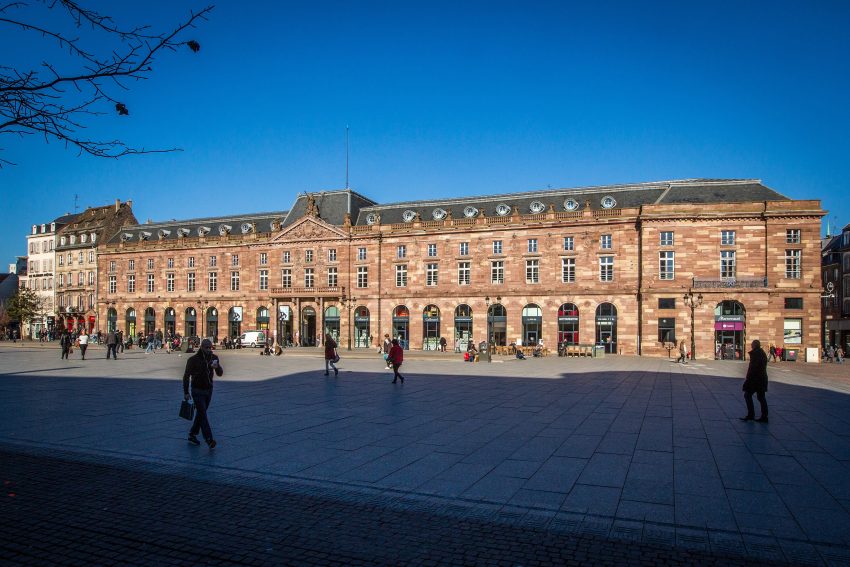
Aubette Building
Aubette Building
CC BY-SA 3.0 / Claude TRUONG-NGOC
On Place Kléber, the Aubette Building is an 18th-century former guardhouse (built 1765–1772) whose sober exterior hides one of Strasbourg’s most surprising interiors. Its name comes from “aube,” the dawn roll call once held here when French troops occupied the square after the city’s annexation under Louis XV. In 1928, artists Theo van Doesburg, Sophie Taeuber-Arp, and Hans (Jean) Arp transformed parts of the building into immersive abstract rooms, using strict geometry and sharply tuned color as architecture. Much was later covered or lost, but restorations revived key spaces, so you can step through a rare, room-scale De Stijl environment amid the city’s everyday cinemas, cafés, and shops.
Location: 31 Pl. Kléber, 67000 Strasbourg, France | Hours: Wednesday – Saturday: 14:00–18:00. Closed on Monday, Tuesday, Sunday. | Price: Free. | Website | Distance: 1.2km

13. Place Kléber

Place Kléber
Place Kléber
CC BY-SA 2.0 / Guilhem Vellut
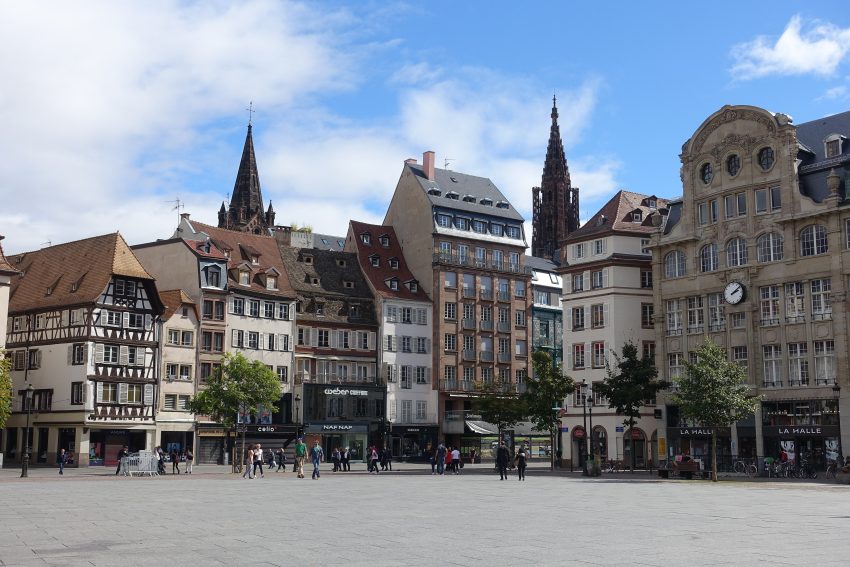
Place Kléber is Strasbourg’s largest central square, a pedestrian “living room” that has anchored civic life since the city reshaped its center after annexation by France under Louis XIV. First laid out as the Place d’Armes for drills and public gatherings, it was renamed in 1840 for Strasbourg-born General Jean-Baptiste Kléber; his ashes lie beneath the pyramid-like monument under the statue at the square’s center. The long Aubette façade on the north side recalls its 18th-century guardhouse origins, and inside is a restored 1928 modernist interior often likened to a “Sistine Chapel” of abstract art. Cafés, shopping frontages, and seasonal markets keep the square in constant motion, especially when the huge Christmas tree rises in winter.
Location: Pl. Kléber, 67000 Strasbourg, France | Hours: 24 Hours. | Price: Free. | Distance: 1.2km

14. Petite France

Petite France
Petite France
CC BY-SA 3.0 / Ignaz Wiradi
Petite France is Strasbourg, France’s canal-laced quarter on the Ill River, where narrow lanes slip between locks, footbridges, and tightly packed half-timbered houses. It matters because this pretty waterfront was once a working zone for tanners and millers, with water used to power mills and wash hides—an essential, not romantic, part of the medieval city. The name took hold in the 17th century from a hospice that treated syphilis, then called the “French disease,” a grim origin now mostly forgotten. Visitors remember the steep-roofed 16th–17th century façades, flowered balconies, and the way reflections ripple under the Covered Bridges toward the Vauban Dam.
Location: Petite-France, 67000 Strasbourg, France | Hours: 24 Hours. | Price: Free. | Website | Distance: 1.2km

15. Barrage Vauban

Barrage Vauban
Barrage Vauban
CC BY-SA 2.0 / Radek Kucharski
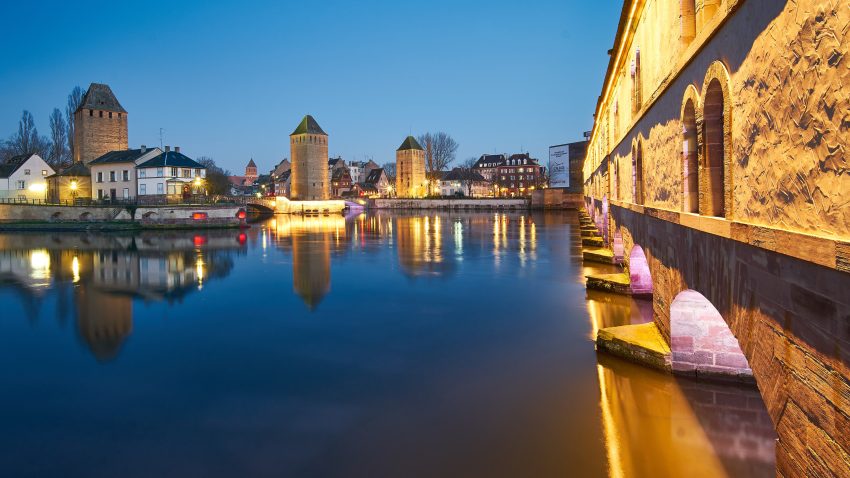
Barrage Vauban in Strasbourg, France is a late-17th-century stone dam-bridge on the Ill River, built (1681–1688) after the city’s annexation under Louis XIV to help defend the southern approaches by controlling water levels and flooding the riverbanks. Inside, you walk a long vaulted gallery where large arches once held wooden gates that regulated the flow. Two staircases—signed “terrasse panoramique”—and an elevator lead to a rooftop terrace with a wide view over Petite France’s canals and half-timbered roofs, with Strasbourg Cathedral’s spire on the horizon. Visitors often linger for the calmer atmosphere and reflections after dark.
Location: Pl. du Qur Blanc, 67000 Strasbourg, France | Hours: (Seasonal) March 1 – April 30: 08:00–19:00; May 1 – August 31: 07:15–21:00; September 1 – October 31: 08:00–19:00; November 1 – February 28/29: 08:30–16:00. Closed for renovation works in the 1st half of 2026; check for updates. | Price: Free. | Website | Distance: 1.2km

16. Pont Couverts

Pont Couverts
Pont Couverts
CC BY-SA 3.0 / Ignaz Wiradi
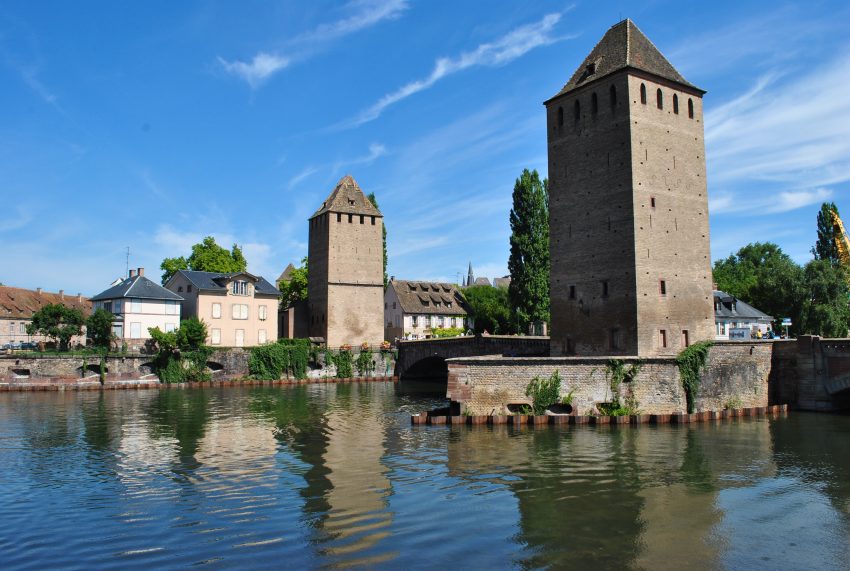
Pont Couverts in Strasbourg, France is a cluster of medieval bridges and three square defensive towers spanning the Ill where it splits into canals at the edge of Petite France. Built in the 13th century as part of the city’s fortifications, it once controlled river access and trade routes; the “covered” name refers to wooden roofed galleries that have long disappeared. Crossing the bridges, you look down into locks and channels and up at brick-and-stone towers marked by arrow slits and weathered masonry. The views toward half-timbered façades are especially photogenic, and after dark the subtle lighting on water and towers turns the scene quietly dramatic.
Location: Ponts Couverts, 67000 Strasbourg, France | Hours: 24 Hours. | Price: Free. | Website | Distance: 1.2km

17. Museum of Modern and Contemporary Art
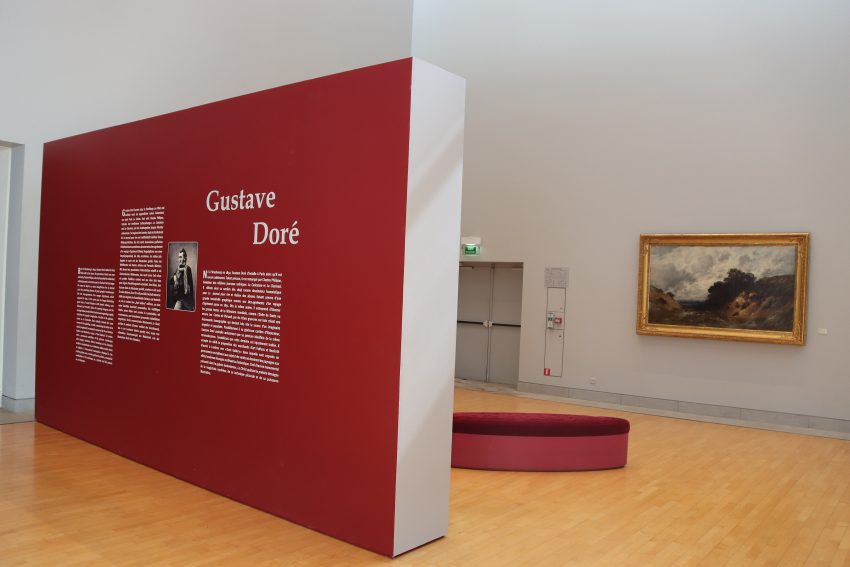
Museum of Modern and Contemporary Art
CC BY-SA 4.0 / FrDr
Strasbourg’s Museum of Modern and Contemporary Art (MAMCS) is a large, light-filled art museum on the left bank of the Ill, bringing work from around 1870 to today into a purpose-built building opened in 1998. Architect Adrien Fainsilber designed a dramatic, glass-roofed central “street” that runs 104 meters and rises 22 meters, giving the interior a calm, cathedral-like scale. On the roof, look for Mimmo Paladino’s horse sculpture, Hortus conclusus, an unexpected landmark against the skyline. The collection ranges across painting, sculpture, graphic arts, multimedia, and design, and includes Georges Braque’s 1911 Still Life, an early Cubist acquisition for a French public collection. Many visitors linger at the terrace café for views toward Petite France.
Location: 1 Pl. Hans-Jean-Arp, 67000 Strasbourg, France | Hours: Tuesday – Friday: 10:00–13:00 & 14:00–18:00. Saturday – Sunday: 10:00–18:00. Closed on Monday. | Price: Adults: €7.50; Reduced: €3.50; Under 18: free. | Website | Distance: 1.3km

18. Saint-Pierre-le-Jeune Catholic Church
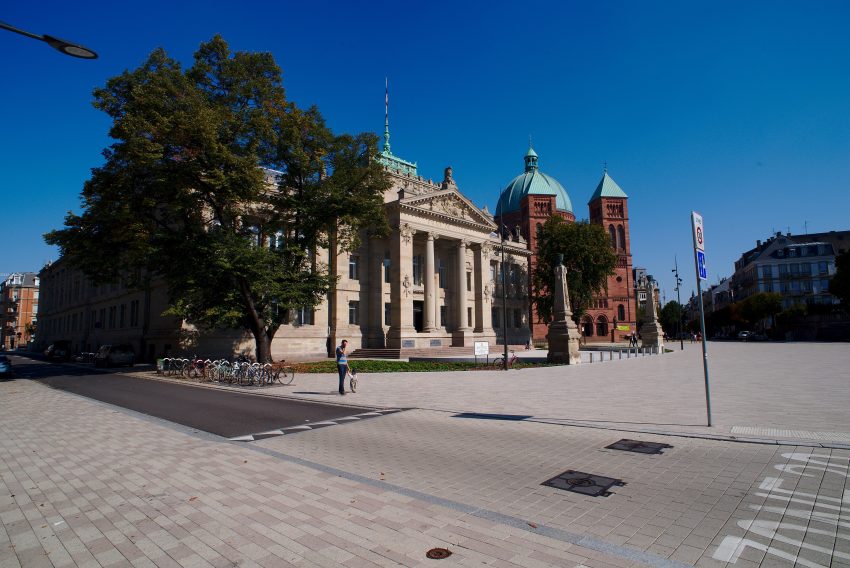
Saint-Pierre-le-Jeune Catholic Church
CC BY-SA 4.0 / Flocci Nivis
Saint-Pierre-le-Jeune Catholic Church is a late-19th-century Catholic church in Strasbourg’s Neustadt, built after Catholics relinquished their shared use of the city’s medieval Saint-Pierre-le-Jeune church in 1898. Set beside the Palais de Justice, it shares a designer with the courthouse: architect Skjold Neckelmann, who worked with August Hartel on the church. Visitors notice the warm rose-sandstone exterior and the commanding dome, whose interior spans about 18.5 meters and rises roughly 50 meters overhead. Inside, the space feels broad and quietly luminous, with mosaics, multiple altars, and a striking circular chandelier. A modern pipe organ installed in 2003 adds to the sense of a living parish rather than a museum.
Location: 7 Rue Saint-Léon, 67000 Strasbourg, France | Hours: Daily: 09:00 AM - 05:00 PM Weekends: 10:00 AM - 04:00 PM | Price: Free; donations appreciated. | Website | Distance: 1.4km

19. Église protestante Saint-Pierre-le-Jeune
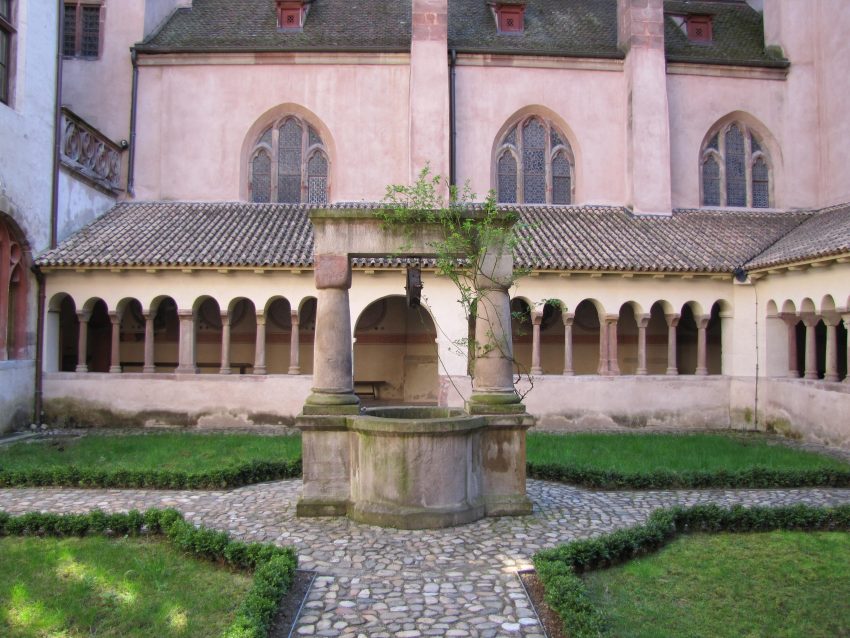
Église protestante Saint-Pierre-le-Jeune
CC BY-SA 4.0 / Ralph Hammann
Église protestante Saint-Pierre-le-Jeune in Strasbourg is a Gothic church built mainly in the 13th–14th centuries on a much older site, once home to a Merovingian church, and later known for a rare post-Reformation sharing arrangement between Catholics and Protestants until 1893. Outside, look for the fenced Romanesque-arched doorway on the south façade, with carved capitals and traces of earlier paint. Inside, visitors linger under the rib-vaulted nave, where 14th-century wall paintings—restored in the 20th century—cover pillars and the choir in vivid scenes. Near the carved wooden gallery and 18th-century organ, a side route leads to a quiet cloister garden, reached via a small room painted with winged saints and a winged horse.
Location: Pl. Saint-Pierre-le-Jeune, 67000 Strasbourg, France | Hours: (Summer) May 1 – October 31; Daily: 10:00–18:00. (Winter) November 1 – April 30; Daily: 12:00–18:00. | Price: Free; donations appreciated. | Website | Distance: 1.4km

20. Place Broglie
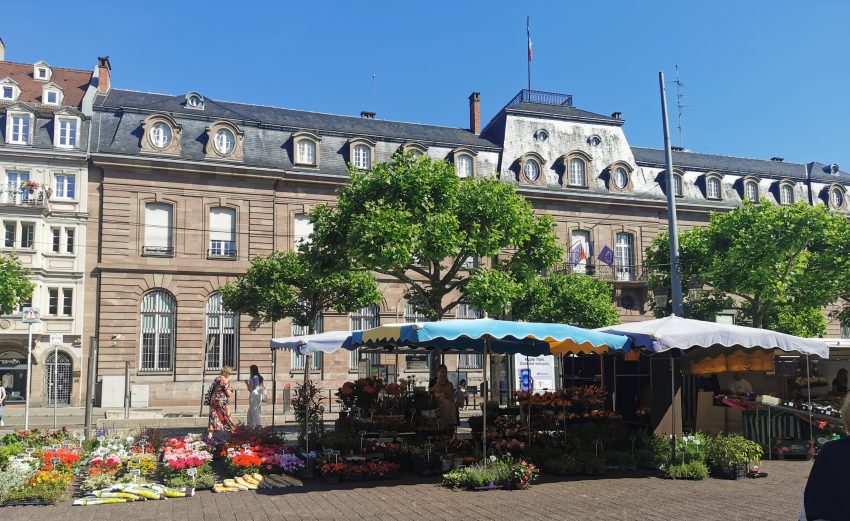
Place Broglie
Place Broglie
CC BY-SA 4.0 / Elekes Andor
Place Broglie is a long, tree-lined rectangular square in central Strasbourg on the UNESCO-listed Grande Île, shaped from a medieval horse market into a civic promenade. In 1740, Marshal François‑Marie de Broglie planted the rows of trees that still give it a shaded, boulevard-like feel. The Opéra national du Rhin anchors one end, while grand façades nearby range from Renaissance and Rococo to Art Nouveau, including the City Hall and the former Bank of France. In April 1792, “La Marseillaise” was first sung here in front of the City Hall, a moment marked by monuments such as the statue celebrating the anthem and the 1951 Leclerc Liberation Monument. On Wednesdays and Fridays it fills with outdoor stalls, and in winter it becomes a major Christmas market site.
Location: Pl. Broglie, 67000 Strasbourg, France | Hours: 24 Hours. | Price: Free. | Distance: 1.4km

21. Saint-Jean Church
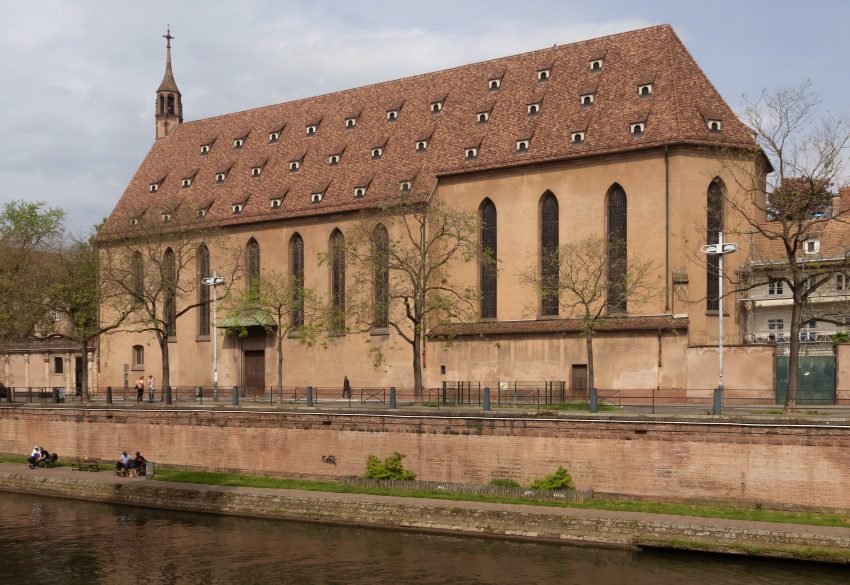
Saint-Jean Church
Saint-Jean Church
CC BY-SA 4.0 / Michielverbeek
Saint-Jean Church (Église Saint-Jean) is a Catholic church on Strasbourg’s Quai Saint-Jean in the Gare district, dedicated to Saint John the Baptist and protected as a Historic Monument since 1946. First built in 1477 by Dominicans and once linked to the Saint-Marc Convent, it carries a layered, working-city spirituality rather than a museum atmosphere. Much of the building was shattered in World War II bombings, yet the surviving walls and steeple still hint at what endured. Rebuilt in 1962–1964, today’s interior is a single, bright nave lit by two-lancet windows. Look for traces of fresco work on the eastern façade by Werle and Schwenkedel, small but memorable remnants of the earlier church.
Location: 13 Quai Saint-Jean, 67000 Strasbourg, France | Hours: Monday: 13:00–18:00. Tuesday: 07:00–12:40 & 18:30–19:30. Wednesday: 07:00–12:40 & 18:30–20:30. Thursday: 07:00–12:40 & 18:30–22:00. Friday: 07:00–12:40 & 18:30–19:30. Saturday: 08:00–12:15 & 13:00–18:00. Sunday: 08:00–11:00 & 19:00–20:30. | Price: Free; donations appreciated. | Website | Distance: 1.5km

Best Day Trips from Strasbourg

A day trip from Strasbourg offers the perfect opportunity to escape the urban rhythm and discover the surrounding region's charm. Whether you're drawn to scenic countryside, historic villages, or cultural landmarks, the area around Strasbourg provides a variety of easy-to-reach destinations ideal for a one-day itinerary. If you are looking to rent a car in France I recommend having a look at Discover Cars, first, as they compare prices and review multiple car rental agencies for you.

1. Baden-Baden

baden baden
baden baden
Baden-Baden, located in the region of Baden-Württemberg, is a spa town famous for its elegance, thermal baths, and cultural sophistication. Visitors come to relax in its world-renowned spas like the Caracalla Therme and Friedrichsbad, which offer a mix of Roman and modern bathing experiences. The town is surrounded by the natural beauty of the Black Forest, making it ideal for…
Visiting Baden-Baden

2. Colmar

Colmar France
Colmar France
Visiting Colmar feels like stepping into a storybook, with its cobblestone streets and charming half-timbered houses. The town’s picturesque canals and flower-lined bridges create an inviting atmosphere perfect for leisurely strolls. Whether you're exploring the colorful Little Venice area, admiring the scenic beauty of the old town, or enjoying the vibrant marketplace, there is no shortage of delightful places to…
Visiting Colmar
Powered by GetYourGuide

3. Freiburg im Breisgau

Freiburg im Breisgau
Freiburg im Breisgau, located in the region of Baden-Württemberg, is a charming city nestled at the edge of the Black Forest. Known for its sunny climate, eco-conscious vibe, and vibrant old town, Freiburg offers a laid-back atmosphere with stunning scenery. Cobblestone streets, small canals (Bächle), and a lively market square make it ideal for relaxed exploration on foot. The city…
Visiting Freiburg im Breisgau
Powered by GetYourGuide

4. Stuttgart

stuttgart castle
stuttgart castle
Stuttgart, located in the southwest of Germany in the region of Baden-Württemberg, is a city that blends modern innovation with green living. Known for its rolling hills, vineyards, and extensive parks, Stuttgart offers a refreshing mix of nature and urban life. Visitors can enjoy panoramic views from spots like the Killesberg Park or the TV Tower, while easily accessing the…
Visiting Stuttgart
Powered by GetYourGuide

5. Heidelberg

Heidelberg
Heidelberg
Heidelberg, located in the region of Baden-Württemberg, is one of Germany’s most picturesque and romantic cities. Nestled along the Neckar River and surrounded by forested hills, it offers a stunning natural setting paired with classic architecture. The city’s famous castle ruins, cobbled old town, and riverside walks create a relaxed yet inspiring atmosphere that appeals to couples, photographers, and curious…
Visiting Heidelberg
Powered by GetYourGuide

6. Nancy

Saint Nicolas Nancy France
Nancy, nestled in the Grand Est region of northeastern France, is a city that surprises visitors with its elegance and creative flair. It's best known for its stunning architecture and artistic vibe, where ornate buildings and leafy boulevards set the tone for a laid-back but visually rich experience. Whether you're strolling through manicured gardens or sipping coffee in a sunlit…
Visiting Nancy
Powered by GetYourGuide

7. Metz

Metz France
Metz France
Metz is a vibrant city located in northeastern France, offering a blend of history, culture, and natural beauty. Visitors can enjoy the stunning architecture of the Cathédrale Saint-Étienne, one of the most impressive Gothic cathedrals in France, and take a walk around the city’s many parks and gardens. The Centre Pompidou-Metz, a branch of the famous Parisian museum, offers a…
Visiting Metz
Powered by GetYourGuide

Where to Stay in Strasbourg

In the heart of Strasbourg’s UNESCO-listed Grande Île, narrow lanes and half-timbered façades house charming boutique hotels just steps from the Cathédrale. Hôtel Cour du Corbeau Strasbourg - MGallery occupies a 16th-century inn with exposed wooden beams and a cloistered courtyard, while Hôtel Régent Petite France & Spa blends contemporary comforts with traditional décor overlooking the canal. A little further on, Hôtel Rohan perches beside the Palais Rohan, offering elegant rooms in a historic residence.

Along the winding waterways of La Petite France and the quai banks, waterside lodgings capture the rhythms of passing péniches and bicycle traffic. Hôtel des Vosges sits on the edge of the canal, its minimalist rooms opening onto flower-draped balconies, while Hôtel Hannong occupies a renovated 18th-century pottery factory, offering loft-style suites and a sunlit terrace overlooking the water.

East of the river, in the grand boulevards of the Neustadt and the European Quarter, refined addresses combine stately façades with proximity to the Palais du Rhin and EU institutions. Sofitel Strasbourg Grande Île provides sleek contemporary rooms just off the Place Kléber, and Hilton Strasbourg offers panoramic city views and direct tram access to the European Parliament.

On the leafy outskirts near Parc de l’Orangerie, tranquil retreats and family-run B&Bs welcome guests seeking green spaces and riverbank strolls. Hôtel & Spa Le Bouclier d’Or combines home-style charm with spa facilities, while Les Haras Hôtel occupies a converted historic cavalry barracks beside the Orangerie gardens, with spacious rooms and an on-site brasserie.

Using the our Hotel and Accomodation map, you can compare hotels and short-term rental accommodations in Strasbourg. Simply insert your travel dates and group size, and you’ll see the best deals for your stay.

Strasbourg Accommodation Map

Best Time to Visit Strasbourg

Visiting Strasbourg in Spring

Spring (March to May) is an ideal season to visit Strasbourg, with mild temperatures, blooming flowers, and fewer tourists. It’s a perfect time to leisurely explore the city’s picturesque streets, parks, and canals. Springtime also offers visitors the chance to experience lively outdoor cafés and markets reopening after winter.

Visiting Strasbourg in Summer

Summer (June to August) brings warm weather and a vibrant atmosphere to Strasbourg. Outdoor activities, including boat cruises on the canals, cycling, and festivals, become highlights of this season. While it’s the busiest period, the lively ambiance and extended daylight hours enhance the experience.

Visiting Strasbourg in Autumn

Autumn (September to November) offers a quieter yet equally charming time to visit Strasbourg. Visitors can enjoy the city’s stunning fall foliage, stroll through local markets filled with seasonal produce, and sample hearty Alsatian dishes. The milder temperatures and reduced crowds make autumn an attractive period for leisurely exploration.

Visiting Strasbourg in Winter

Winter (December to February) transforms Strasbourg into a festive and enchanting destination, particularly famous for its Christmas markets. The city sparkles with decorations, festive stalls, and twinkling lights, creating a magical holiday atmosphere. Despite cooler temperatures, the warmth and charm of Strasbourg’s seasonal festivities draw many visitors during this period.

Annual Weather Overview

  • January 7°C
  • February 9°C
  • March 13°C
  • April 18°C
  • May 20°C
  • June 26°C
  • July 27°C
  • August 28°C
  • September 24°C
  • October 18°C
  • November 11°C
  • December 8°C

How to get to Strasbourg

Getting to Strasbourg

Strasbourg is well-connected and accessible through various modes of transportation. Whether you’re arriving by air, train, or car, planning your journey is straightforward.

By Air

The nearest airport is Strasbourg International Airport (SXB), located approximately 10 kilometers from the city center. Upon arrival, travelers can utilize taxis, shuttle services, or public transportation to reach their accommodations.

By Train

Strasbourg’s central railway station, Gare de Strasbourg, offers high-speed train services (TGV) connecting major French cities and neighboring European destinations. The station’s central location allows for easy access to hotels and attractions via the city’s efficient tram and bus networks. You can use SNCF Connect to check schedules, compare routes, and purchase tickets for National (SNCF ) and regional trains (TER). For a more streamlined experience, we recommend using Omio, which allows you to easily compare prices, schedules, and book tickets for both National and Regional travel across all of Europe, all in one place.

By Car

Driving to Strasbourg provides flexibility and the opportunity to explore the scenic routes of the Alsace region. Major highways such as the A35 and A4 connect Strasbourg to other French cities and neighboring countries. Parking facilities are available throughout the city, including park-and-ride options that allow visitors to park their vehicles and use public transportation to navigate the city center.

Renting a Car in Strasbourg

Exploring Strasbourg and its picturesque surroundings is best experienced with the freedom of a rental car. Having your own vehicle allows you to visit nearby attractions, charming villages, and vineyards at your own pace. If you are looking to rent a car in France I recommend having a look at Discover Cars, first, as they compare prices and review multiple car rental agencies for you.

By renting a car, you can fully immerse yourself in the rich culture and stunning landscapes that Strasbourg and the Grand Est region have to offer.
More from this area