Colmar, France: The Ultimate Travel Guide 2026
Colmar France
Colmar France

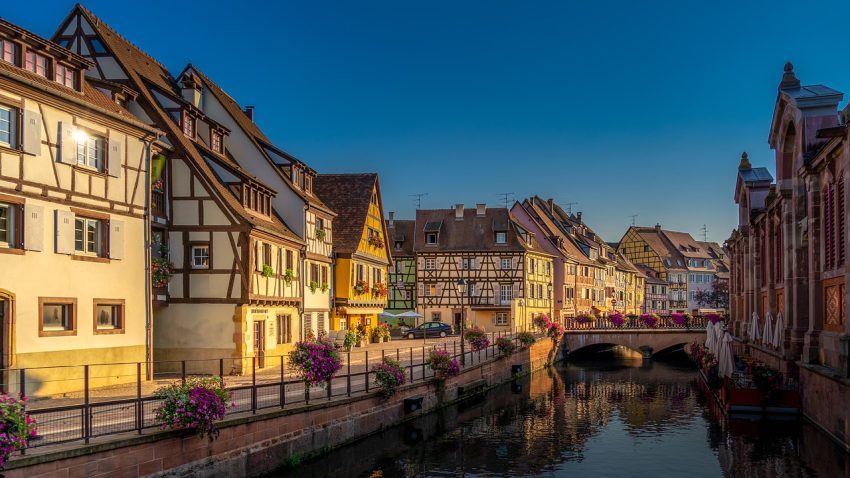
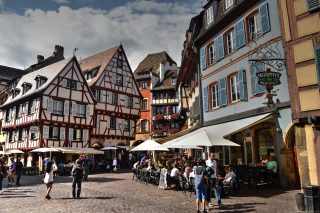
Visiting Colmar feels like stepping into a storybook, with its cobblestone streets and charming half-timbered houses. The town's picturesque canals and flower-lined bridges create an inviting atmosphere perfect for leisurely strolls. Whether you're exploring the colorful Little Venice area, admiring the scenic beauty of the old town, or enjoying the vibrant marketplace, there is no shortage of delightful places to discover. Colmar is also home to a number of excellent museums and galleries, showcasing its rich cultural heritage in a relaxed, easy-to-explore environment.

For those who love wine and gastronomy, Colmar is ideally located along the Alsace Wine Route. It's a great base for touring the surrounding vineyards and sampling some of the region's best wines, particularly the renowned white wines of Alsace. The town itself also offers an impressive selection of dining options, ranging from casual bistros to fine dining restaurants, where you can enjoy local dishes like tarte flambée or choucroute. Whether you're a foodie, a history enthusiast, or simply someone who enjoys scenic beauty, Colmar offers a perfect getaway.

History of Colmar

Early History of Colmar

Colmar’s history dates back to the Roman period, though the town’s official founding is typically attributed to the medieval period. During the 9th century, it began as a small settlement under the control of the Holy Roman Empire. Over the years, Colmar developed as a strategic trading hub, benefiting from its location near the Rhine River and its proximity to key trade routes. The town was granted imperial free city status in the 13th century, marking a period of growth and prosperity.

Colmar in the Middle Ages

In the Middle Ages, Colmar continued to grow and flourish, particularly during the 14th and 15th centuries. The town became an important center of commerce and craftsmanship, known for its textile production and wine trade. This period also saw the construction of some of Colmar’s most iconic structures, including the impressive St. Martin’s Church. Throughout this time, Colmar remained an independent city-state, with its own local government and jurisdiction, reflecting its importance in the region.

Renaissance and the Rise of Culture

The Renaissance period brought further prosperity to Colmar, marked by its thriving arts scene. The town became home to several influential artists, including Martin Schongauer, whose works contributed to the cultural growth of the region. During this time, Colmar also began to attract more attention for its architectural beauty, with the construction of various grand buildings. The influence of the Renaissance era remained strong throughout the 16th and 17th centuries, especially in its art and trade practices.

Modern History and Challenges

In the 19th and 20th centuries, Colmar underwent a number of significant changes, particularly with the rise of industrialization. The town’s location close to the border made it a focal point during both World Wars. After World War II, Colmar saw significant rebuilding and modernization, but it managed to retain much of its historical charm, especially in its old town. Today, Colmar is known for its well-preserved medieval and Renaissance architecture, which serves as a reminder of its long and rich history.

Moira & Andy
Moira & Andy

Hey! We're Moira & Andy. From hiking the Camino to trips around Europe in Bert our campervan — we've been traveling together since retirement in 2020!

Read our full story here

Visiting Colmar for the first time and wondering what are the top places to see in the city? In this complete guide, I share the best things to do in Colmar on the first visit. To help you plan your trip, I have also included an interactive map and practical tips for visiting!

This website uses affiliate links which earn a small commission at no additional cost to you.
Powered by GetYourGuide

35 Best places to See in Colmar

This complete guide to Colmar not only tells you about the very best sights and tourist attractions for first-time visitors to the city but also provide insights into a few of our personal favorite things to do.

This is a practical guide to visiting the best places to see in Colmar and is filled with tips and info that should answer all your questions!

1. Theatre Municipal
Theatre Municipal
Theatre Municipal
CC BY-SA 3.0 / Lionel Allorge
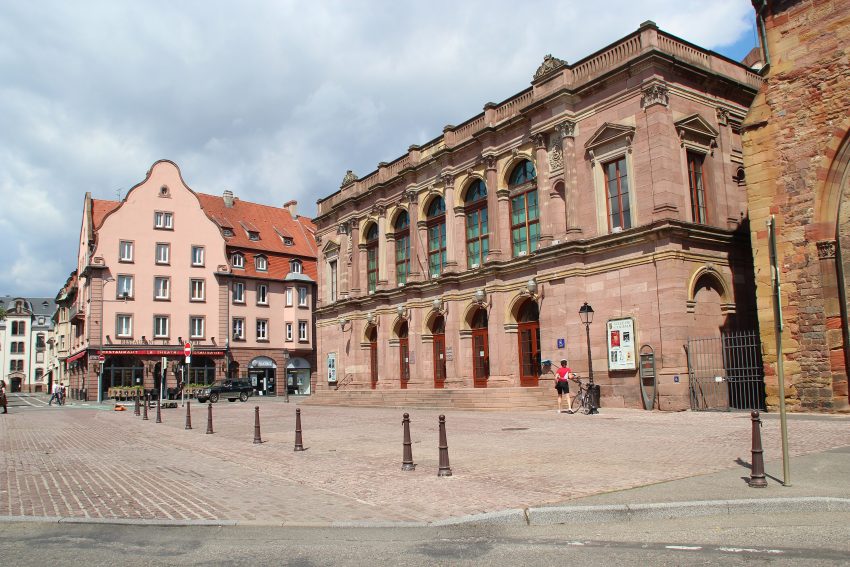
Colmar’s Theatre Municipal is a mid-19th-century city theatre on Place du 18‑Novembre, built in 1847–1849 by Louis‑Michel Boltz on former Unterlinden convent land and opened in 1849. Its restrained stone façade is laid out in five symmetrical arched bays—an “official” counterpoint to the town’s colorful timbered streets that some visitors notice in reviews. Inside, an Italian-style horseshoe auditorium wraps three tiers of galleries beneath a painted ceiling by the Paris decorator Boulange. Renovations in 1902 and 1999–2000 modernized comfort and reduced capacity from about 750 to roughly 550 seats. The programme remains busy, with theatre, dance, and concerts across around 120 events a year.
Location: 3 Rue des Unterlinden, 68000 Colmar, France | Hours: Tuesday – Friday: 10:00–13:00. Saturday: Closed. Sunday: Closed. Closed on Monday. | Price: Prices vary by show. | Website | Distance: 0.1km


We recommend to rent a car in France through Discover Cars, they compare prices and review multiple car rental agencies. Book your rental car here.

2. Musee Unterlinden

Musee Unterlinden
Musee Unterlinden
CC BY-SA 4.0 / AlineRockstud68
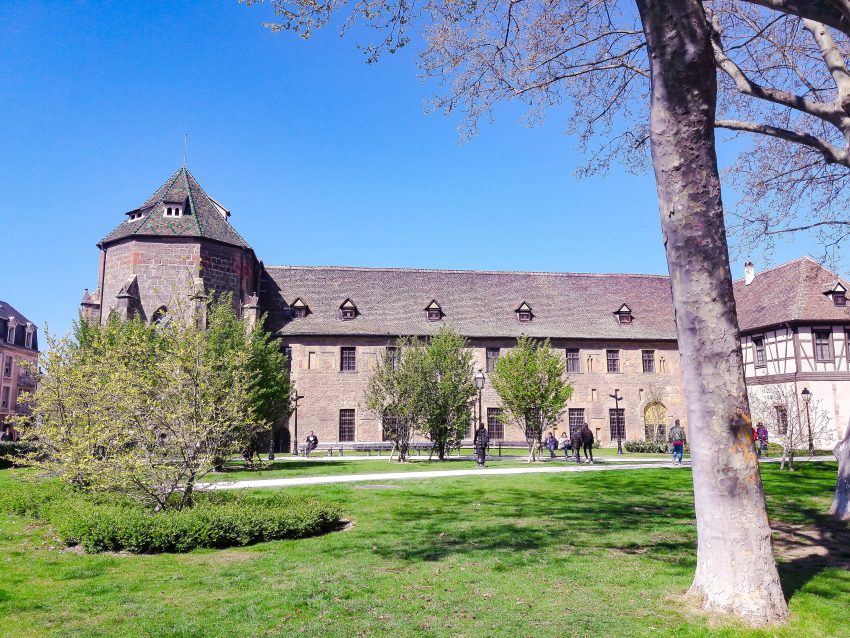
Musée Unterlinden is Colmar’s leading art museum, built into a 13th-century Dominican convent and later expanded by linking it to a former 1906 public bath, creating a large, airy complex that jumps between cloistered stone rooms and crisp modern spaces. The reason many visitors come is Matthias Grünewald’s Isenheim Altarpiece (1516), displayed to encourage slow, close looking at its scale and intensity. Beyond that centerpiece, the galleries range from Roman mosaics found near Bergheim to Rhenish medieval and Renaissance works, with strong holdings of Martin Schongauer alongside pieces by Dürer, Cranach, and Holbein. Expect detours into stained glass, weapons, instruments, and even toys—and, in winter, notably chilly interiors.
Location: Pl. des Unterlinden, 68000 Colmar, France | Hours: Wednesday – Monday: 09:00–18:00. Tuesday: Closed. December 24 & December 31: 09:00–16:00. Closed on January 1, May 1, November 1, December 25. | Price: Adults: €14; Reduced: €12; Ages 12–17 & students under 30: €9; Under 12: free; Audioguide: €3 per person. | Website | Distance: 0.1km

Here is a complete selection of hotel options in Colmar. Feel free to review each one and choose the stay that best suits your needs.

3. Musee Hansi de Colmar

Musee Hansi de Colmar
CC BY-SA 4.0 / Gzen92
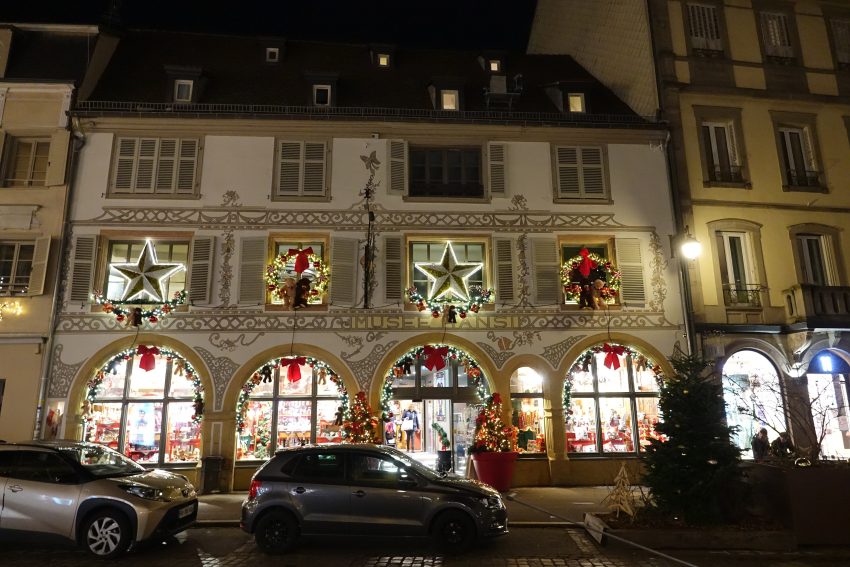
Musee Hansi de Colmar is a compact museum devoted to Jean-Jacques Waltz (“Hansi”), the Colmar-born illustrator and caricaturist whose images helped define a romantic vision of Alsace. Set in a former bookshop opposite the Maison des Têtes, it displays around 700 original works in roughly 250 square meters. The visit begins with a playful, walk-through Alsatian “village” scene—cobbled lanes and timber-framed façades—that echoes the world in his drawings. Upstairs, the mood shifts as you follow his development from early sketches and watercolors to wartime caricatures, advertising posters, and even hand-painted ceramics and textiles. A small boutique at the end focuses on prints and Hansi-themed keepsakes.
Location: 28 Rue des Têtes, 68000 Colmar, France | Hours: Monday – Sunday: 10:00–12:30 & 13:30–18:00. School holidays & public holidays: 10:00–18:30. Closed on January 1, December 25. | Price: Adults (14+): €5; Children (5–13) or groups (15+): €3; Under 5: free. | Website | Distance: 0.2km

Traveling to a country with a different currency? Avoid ATM transaction fees and pay in local currency with a Wise Card. Having used it for over 5 years, we've saved loads on fees!

4. Maison des Tetes

Maison des Tetes
Maison des Tetes
CC BY-SA 2.0 / Flominator
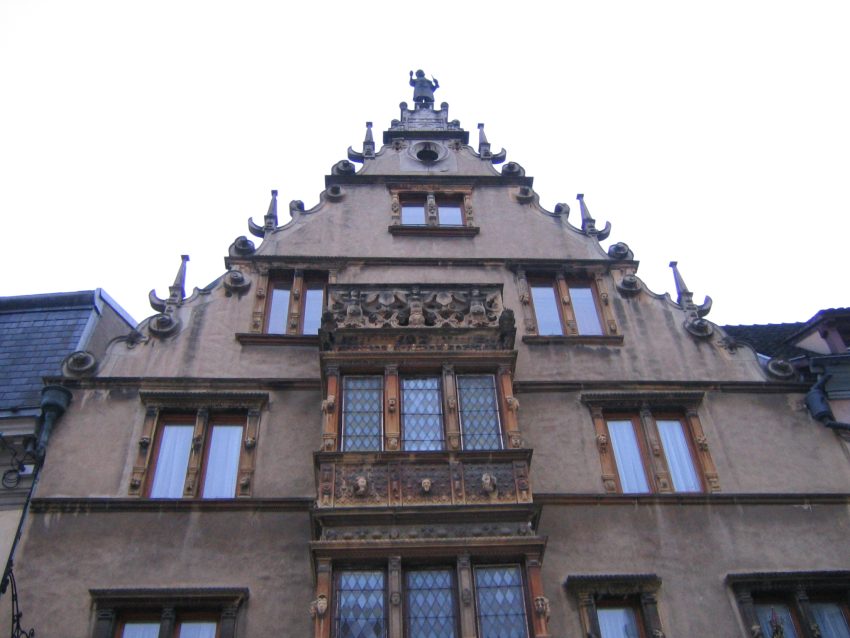
Maison des Têtes (House of Heads) in Colmar’s Old Town is a 1609 German Renaissance merchant house whose façade turns a simple street corner into a close-up spectacle. Architect Albert Schmidt stacked it with a tall, tiered gable, a commanding central oriel, and 106 carved stone heads and grotesques—some comic, some unsettling—that reward slow looking from across the street and up close. In 1902, sculptor Auguste Bartholdi added a silvery figure of an Alsatian cooper aloft on the gable, raising a wine bottle and a foaming beer mug in a nod to the building’s trading past. Today it’s a working address with a luxury hotel and dining, so the scene feels lived-in rather than museum-still.
Location: 19 Rue des Têtes, 68000 Colmar, France | Hours: Daily: Open 24 hours. | Price: Free (to view the exterior). | Website | Distance: 0.2km

Explore Colmar at your own pace with our self-guided walking tour! Follow our curated route to discover must-see sights and local secrets that makes Colmar one of the best places to visit in France.

5. Couvent des Dominicains de Colmar

Couvent des Dominicains de Colmar
CC BY-SA 2.5 / BRUNNER Emmanuel
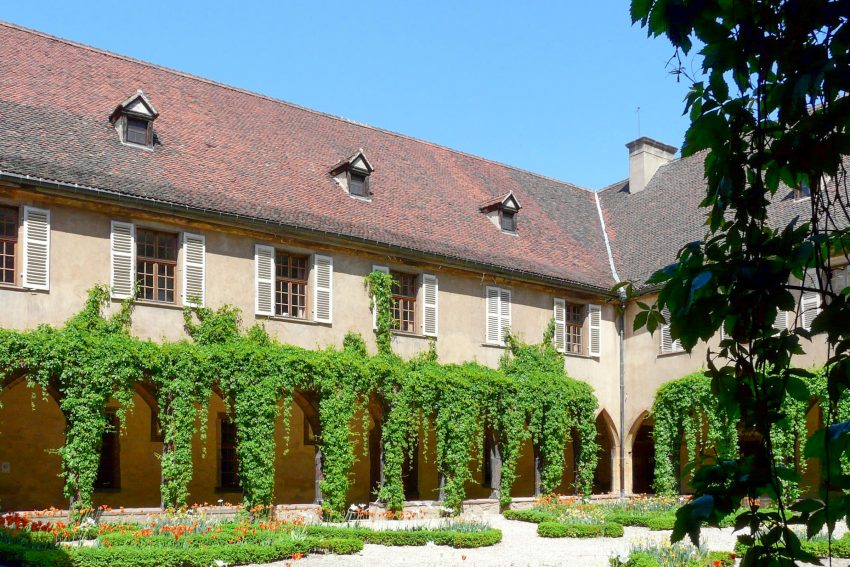
In Colmar, France, the Couvent des Dominicains is a medieval Dominican church and cloister whose spare Gothic interior was built for preaching rather than ornament. Founded after the friars arrived in 1260, the church rose from 1289 onward; the nave was completed in 1346, its surprisingly slender columns lifting a tall, clear space. Visitors remember the early-14th-century stained glass—scenes from the Life of Christ—that floods the nave with color. The focal artwork is Martin Schongauer’s 1473 “Virgin of the Rose Bush,” presented so you can study details and, at times, even view the reverse side. In the cloister, late-15th-century murals of the Passion linger on the walls, and the complex’s past includes stints as a Revolutionary storehouse and an 1807 corn exchange.
Location: 3 Pl. des Dominicains, 68000 Colmar, France | Hours: Monday: 13:00–18:00. Tuesday: 13:00–18:00. Wednesday: 10:00–18:00. Thursday: 13:00–18:00. Friday: 13:00–18:00. Saturday: 10:00–18:00. Sunday: Closed. | Price: Free. | Website | Distance: 0.3km

6. Place de la Cathédrale
Place de la Cathédrale
CC BY-SA 3.0 / fotogoocom
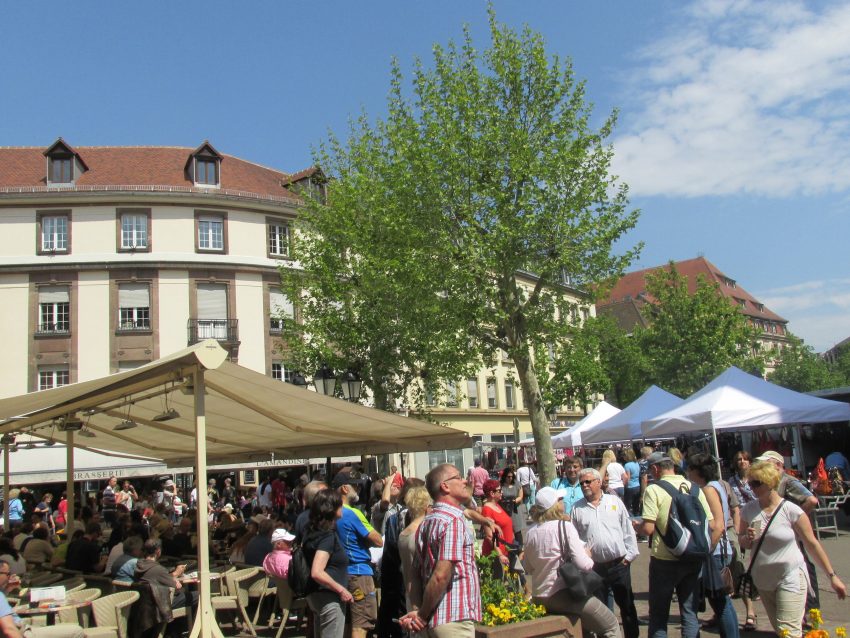
Place de la Cathédrale is Colmar’s central square beside the bulky Gothic mass of Saint‑Martin Church, where cobbles, cafés, and steady foot traffic make it a natural pause in the old town. Although the name “Cathedral Square” dates only to 1934, the space is far older—once the “New Square,” built over the Mount of Olives cemetery and partly cleared in 1553 to create a market beside an ossuary. Look for the former Saint James chapel, later transformed into the Guard House with a Renaissance portal and veranda after 1577. Just off the square, the Waldner‑Stephan Court shelters a Judas tree planted in 1791 behind iron railings and a plaque.
Location: Pl. de la Cathédrale, 68000 Colmar, France | Hours: 24 Hours. | Price: Free. | Website | Distance: 0.4km

7. Rapp Square and Monument to General Rapp
Rapp Square and Monument to General Rapp
CC BY-SA 2.0 / Morio60
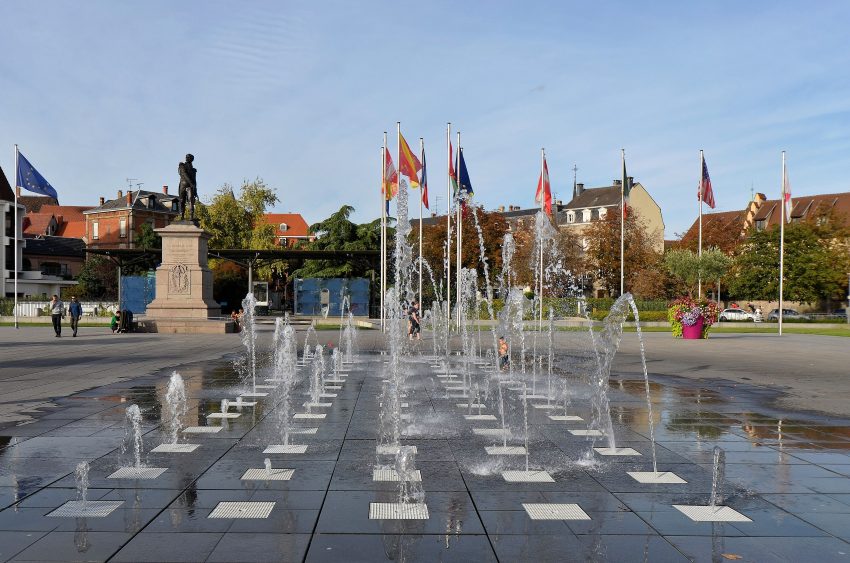
Place Rapp is one of Colmar’s main civic squares, a broad 19th-century plaza where city life and seasonal events play out around a single focal point: the Monument to General Jean Rapp. Inaugurated in 1856, the bronze statue—Rapp in full military dress—was sculpted by Colmar native Auguste Bartholdi, an early public commission that helped launch his career. The monument sits on a stone pedestal with reliefs and inscriptions recalling Rapp’s Napoleonic campaigns, including Austerlitz and Essling. Visitors tend to circle the base for details, then step back for wide photos across the open space, with fountains, a carousel, and café terraces animating the square in warmer months.
Location: 11 Bd du Champ de Mars 9, 68000 Colmar, France | Hours: 24 Hours. | Price: Free. | Distance: 0.4km

8. Corps de Garde de Colmar
Corps de Garde de Colmar
CC BY-SA 2.0 / stefano Merli
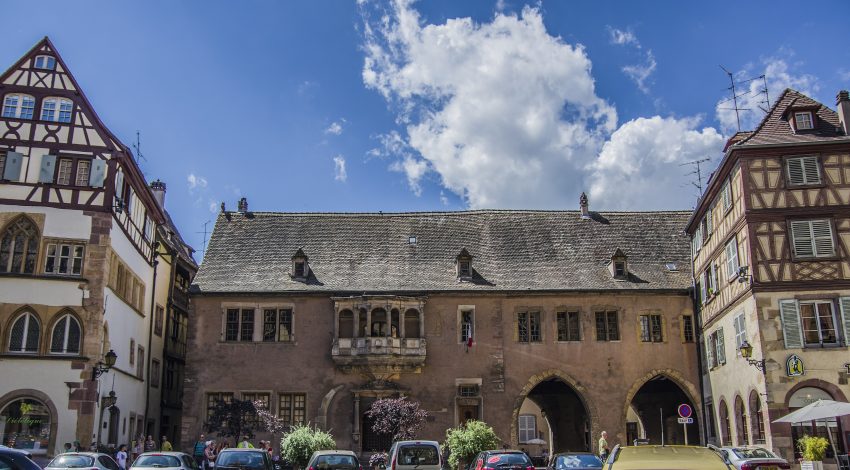
The Corps de Garde de Colmar (Ancien Corps de Garde) is a German/Upper Rhine Renaissance civic building on Place de la Cathédrale, facing the Collégiale Saint‑Martin. Built in 1575 by master builder Beier Melchior, it rose over the earlier Saint‑Jacques chapel; traces of the old ossuary arches can still be spotted in the rear wall. Visitors linger outside to study the ornamented loggia—added 1577–1582—where magistrates once delivered proclamations and even pronounced sentences, its Tuscan columns capped with lion-head capitals. If you step inside, a wooden spiral stair leads to a first-floor ceremonial room with surviving painted decoration and a beam dated MDLXXV. It’s a quick, photogenic pause that reads like a small stage set for civic life.
Location: 17 Pl. de la Cathédrale, 68000 Colmar, France | Hours: 24 Hours. | Price: Free. | Distance: 0.4km

9. Eglise Saint-Martin
Eglise Saint-Martin
Eglise Saint-Martin
CC BY-SA 2.0 / Philippe sosson
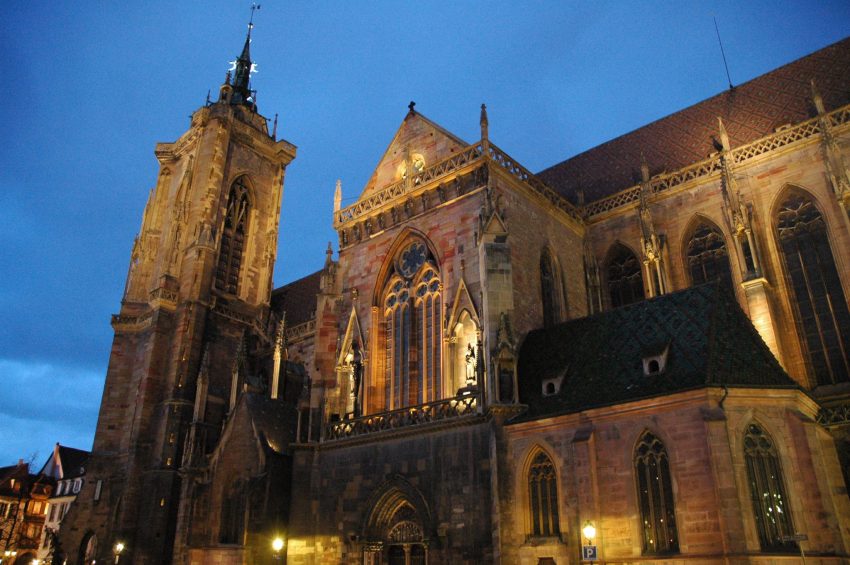
Eglise Saint-Martin (the Collégiale Saint-Martin) dominates Colmar’s old center with warm sandstone Gothic massing and a tower capped by a chunky 16th-century “helmet” roof added after a 1572 fire. Archaeological digs in 1972 revealed two earlier churches beneath it—one Carolingian from around the year 1000 and a later Romanesque phase—before the present building rose between 1234 and 1365. Outside, look for a mix of grand portals with carved tympanums and smaller, long-sealed entrances, plus patterned roof tiles and tall apse windows. Inside, the scale feels airy, with an ambulatory, medieval chapels, stained glass (including a rare beardless Christ), and a Baroque organ case dated 1755.
Location: 18 Pl. de la Cathédrale, 68000 Colmar, France | Hours: Monday – Saturday: 08:00–18:45. Sunday: 10:00–19:00. | Price: Free; donations appreciated. | Distance: 0.4km

10. Maison Schongauer
Maison Schongauer
Maison Schongauer
CC BY-SA 4.0 / FrDr
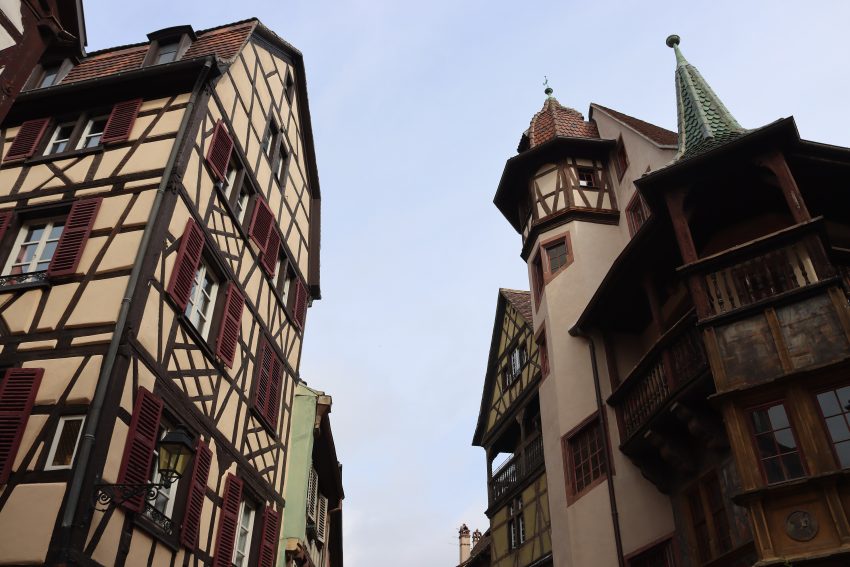
Maison Schongauer is a late-15th-century half-timbered house in Colmar’s Old Town, tied to the Schongauer family and the city’s late-medieval artistic world. Martin Schongauer acquired the building in 1477 and is said to have set up a workshop here, and the facade and roof have been protected as a Historic Monument since 1929. From the street, you’ll notice the ground-floor arcade, three overhanging upper levels, and a stepped, two-tier gable that gives the house its crisp silhouette. On the Rue Schongauer side, look for the carved entrance arch with leafy decoration and a small finial above. Later 17th–18th century changes add to its layered look.
Location: 36 Rue des Marchands, 68000 Colmar, France | Hours: 24 Hours. | Price: Free. | Distance: 0.5km

11. Parc du Champs de Mars
Parc du Champs de Mars
CC BY-SA 4.0 / AlineRockstud68
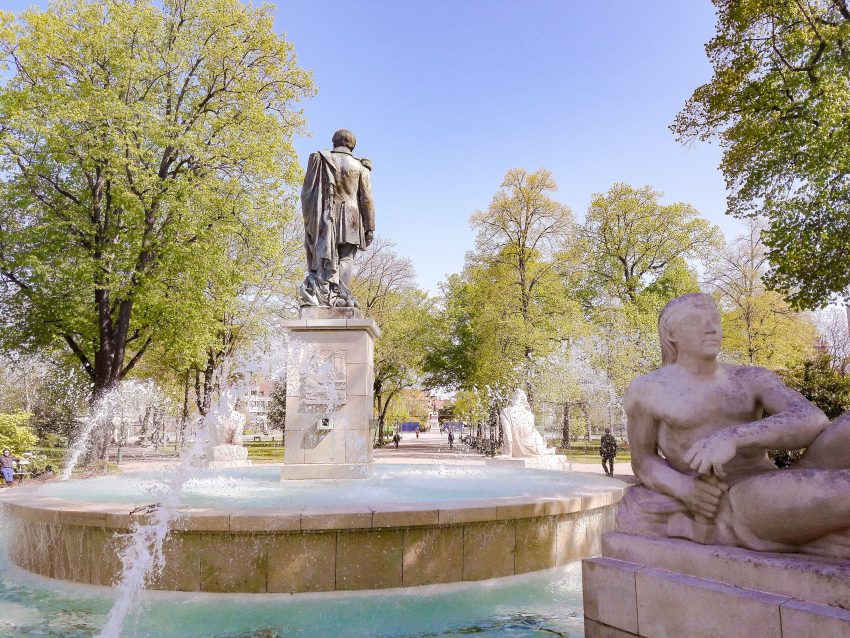
Parc du Champs de Mars is Colmar’s central park, a formal green break between the station side of town and the historic core near Place Rapp. Laid out in 1745, its broad avenues were later arranged in the shape of the Legion of Honour cross and planted with nearly 200 lime trees, so the walk feels deliberately ceremonial as well as relaxing. In the middle stands the Admiral Bruat fountain, topped by a bronze figure by Colmar-born sculptor Auguste Bartholdi (unveiled in 1864 and restored after WWII damage). Visitors linger on the lawns and benches, while families gravitate to the playground and the large 1900 carousel housed in a glass-and-iron gallery.
Location: Av. de la République, 68000 Colmar, France | Hours: 24 Hours. | Price: Free. | Distance: 0.5km

12. Fontaine Bruat
Fontaine Bruat
Fontaine Bruat
CC BY-SA 4.0 / Gzen92
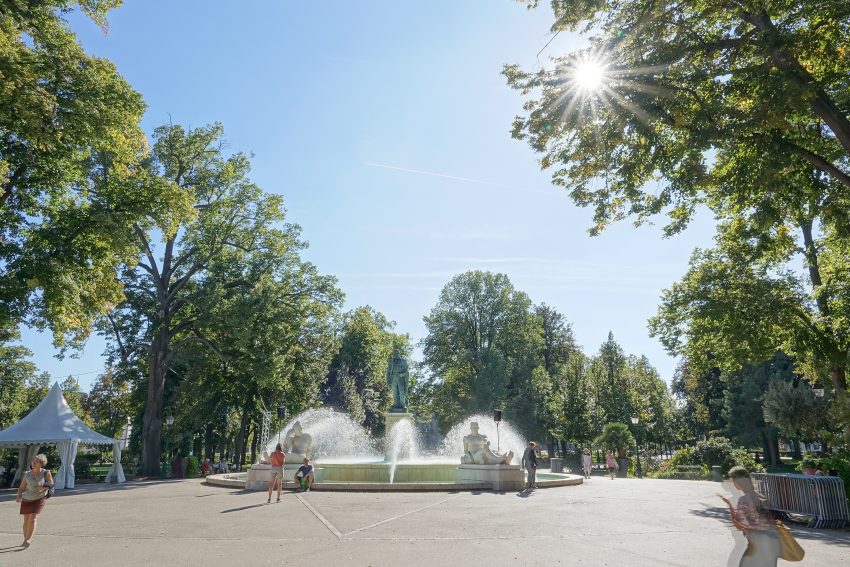
Fontaine Bruat is a commemorative fountain in Colmar’s Parc du Champ de Mars, centered on a bronze statue of Admiral Armand Joseph Bruat, a Colmar-born naval officer. Created by Auguste Bartholdi and inaugurated in 1864, it was originally surrounded by a basin where water spouted from four sea monsters. The fountain was destroyed by German forces in 1940, and in 1958 the statue was reinstalled on a redesigned fountain by sculptor Choain and architect Porte. Today, the newer base replaces the monsters with allegorical figures for the world regions Bruat traveled, while the original sandstone heads are kept at the Bartholdi Museum. It’s a calm park stop with easy paths and open lawns.
Location: 2 Av. de la Marne, 68000 Colmar, France | Hours: 24 Hours. | Price: Free. | Website | Distance: 0.5km

13. Maison Pfister
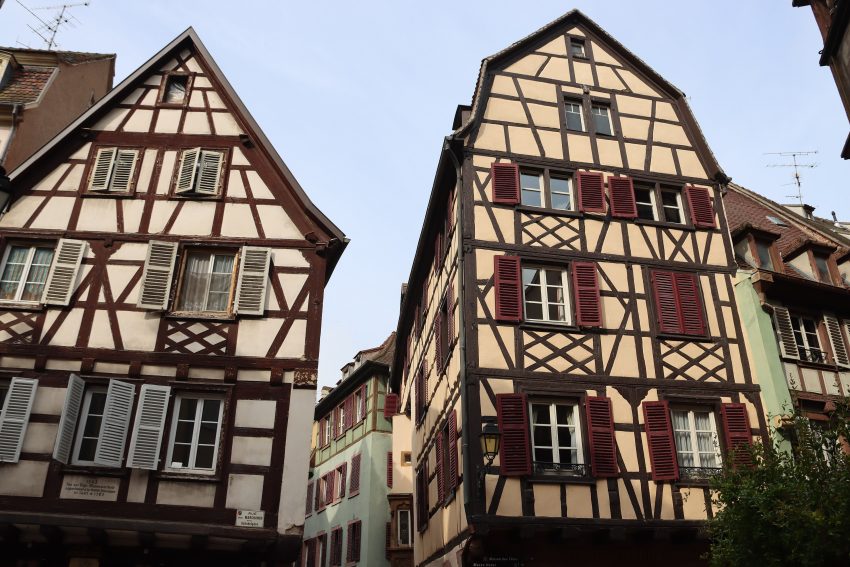
Maison Pfister
Maison Pfister
CC BY-SA 4.0 / FrDr
Maison Pfister is a 1537 corner house in Colmar’s Old Town that captures the city’s shift from medieval forms to Renaissance showmanship. Its yellow sandstone base supports timbered upper floors, while a two-storey oriel window juts over Rue des Marchands beneath a wooden loggia and an octagonal turret with a bulbous cap. What most people linger on is the painted facade: weathered murals attributed to Christian Vacksterffer depicting Germanic emperors, local coats of arms, the Evangelists, and scenes from Genesis. Set among busy shops, it still reads like a sixteenth-century status statement—some visitors call it fairytale-like, others shrug at “just a balcony.”
Location: 11 Rue des Marchands, 68000 Colmar, France | Hours: 24 Hours. | Price: Free. | Distance: 0.5km

14. Musee Bartholdi
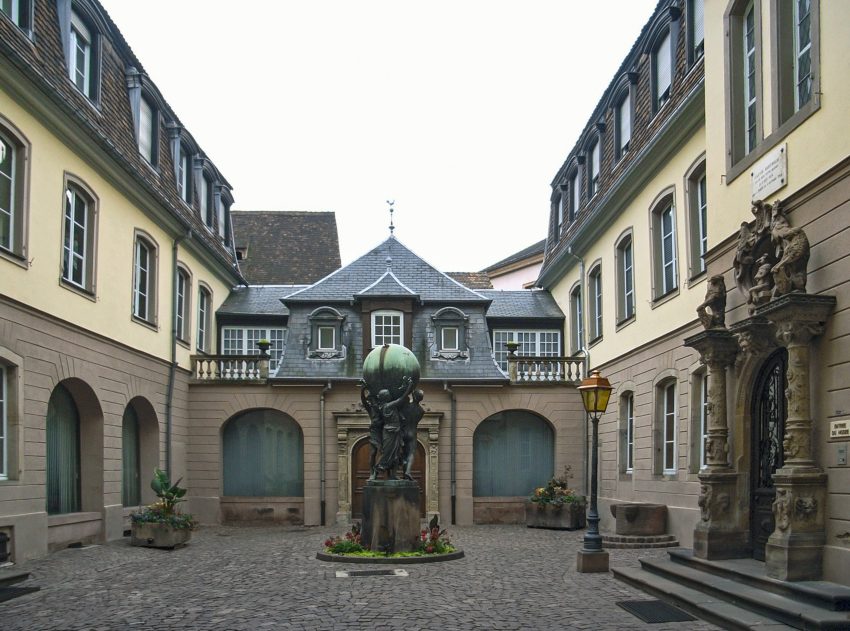
Musee Bartholdi
Musee Bartholdi
CC BY-SA 2.0 Germany / Manecke
Musée Bartholdi in Colmar is a compact art museum set in the sculptor Auguste Bartholdi’s birthplace, grounding his work in the rooms where he grew up. Inside, visitors linger over maquettes and preparatory sketches that reveal how large public monuments began as small studies, including early models for the Statue of Liberty and the Lion of Belfort. The collection also connects directly to Colmar through scale models for local figures such as General Rapp, Admiral Bruat at Fontaine Bruat, and Jean Roesselmann from the Roesselmann fountain. Don’t miss the building itself: 17th-century doors listed as historic monuments and a courtyard featuring the “Statue des Grands Soutiens du Monde.”
Location: 30 Rue des Marchands, 68000 Colmar, France | Hours: Tuesday – Sunday: 10:00–12:00 & 14:00–18:00. Closed on Monday. | Price: Adults: €5; Reduced: €4; Under 18: free. | Website | Distance: 0.5km

15. Manneken-Pis de Colmar
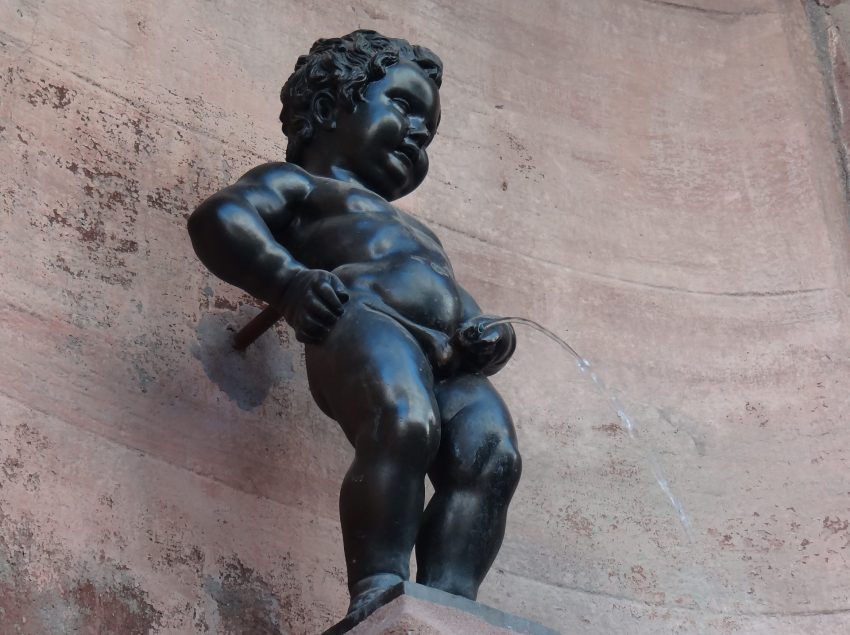
Manneken-Pis de Colmar
CC BY-SA 4.0 / Anne Jea.
Manneken-Pis de Colmar is a small bronze fountain figure tucked into the historic center, a cheeky counterpoint to the area’s formal façades and Gothic lines. Installed in 1922, it’s Colmar’s nod to Brussels’ urinating boy and is often cited as an early official replica, giving this tiny statue an outsized place in the Manneken Pis story. Visitors usually remember how modest it is—wall-mounted and easy to miss until you’re right in front of it—along with the quiet trickle of water and the mischievous pose. Created by a local sculptor linked to the Bartholdi family, it adds a flash of Alsatian humor to an otherwise storybook streetscape.
Location: Rue des Augustins, 68000 Colmar, France | Hours: 24 Hours. | Price: Free. | Distance: 0.6km

16. Maison des Chevaliers de Saint-Jean
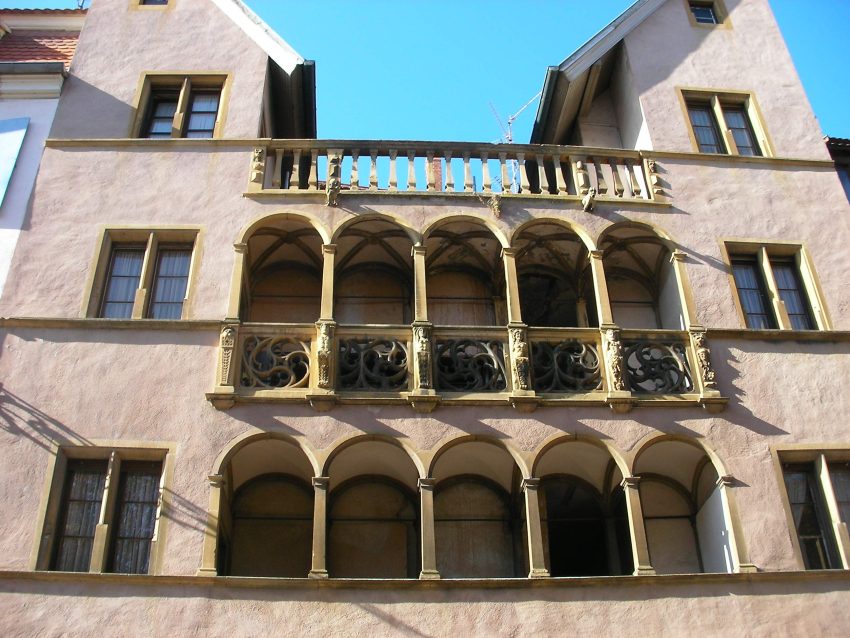
Maison des Chevaliers de Saint-Jean
CC BY-SA 4.0 / Gzen92
In Colmar’s old town, the Maison des Chevaliers de Saint-Jean is a late-Renaissance townhouse (1608) best remembered for a facade that looks borrowed from a Venetian palazzo. Its two-tier arcade gallery stacks graceful arches around a courtyard, with carved stone balustrades and small rose motifs that reward a closer look. The vaulting changes between levels—cross-vaulted below and ribbed above—adding texture to the otherwise calm rhythm of the arcades. Despite the romantic name, it was not built for the Knights of Saint John; the association remains uncertain. What you see today is also a careful 19th-century reassembly of the dismantled original frontage.
Location: 3 Rue Saint-Jean, 68000 Colmar, France | Hours: 24 Hours. | Price: Free. | Distance: 0.6km

17. Old Custom House Square and Schwendi Fountain
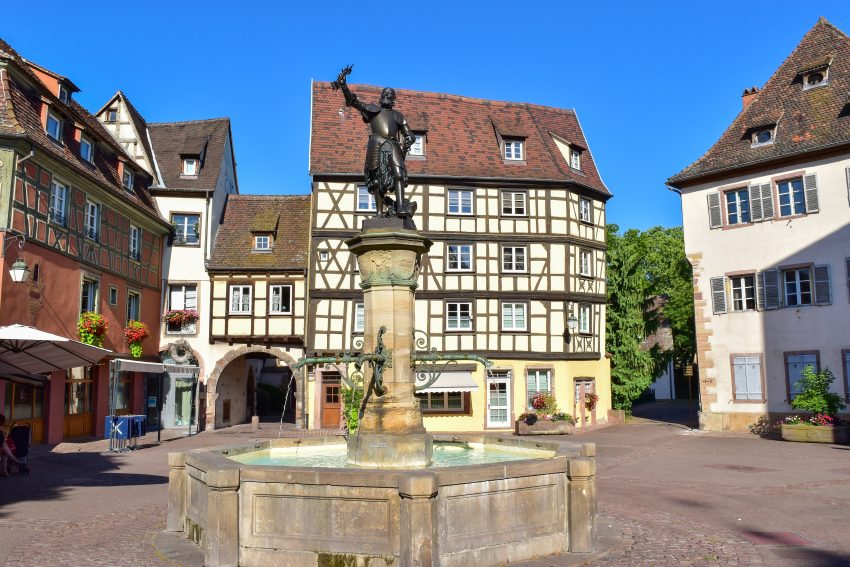
Old Custom House Square and Schwendi Fountain
CC BY-SA 2.0 / --sinava--
Old Custom House Square (Place de l’Ancienne Douane) is Colmar’s central medieval plaza, framed by half-timbered façades and the Koïfhus, a Gothic customs house built in 1489 to control trade and collect taxes. Today the building holds small shops and hosts events, and the square’s café tables and cobblestones make it feel like a civic stage. At the center stands the Schwendi Fountain, topped by Lazare de Schwendi in armor, sculpted from Auguste Bartholdi’s design (1898), with cannons spouting water into the basin. Schwendi raises a vine stock—an Alsatian wine legend—adding a quirky detail visitors remember. The original statue was destroyed in World War II and later rebuilt from Bartholdi’s models.
Location: 12 Pl. de l'Ancienne Douane, 68000 Colmar, France | Hours: 24 Hours. | Price: Free. | Distance: 0.6km

18. Domaine Viticole De La Ville De Colmar
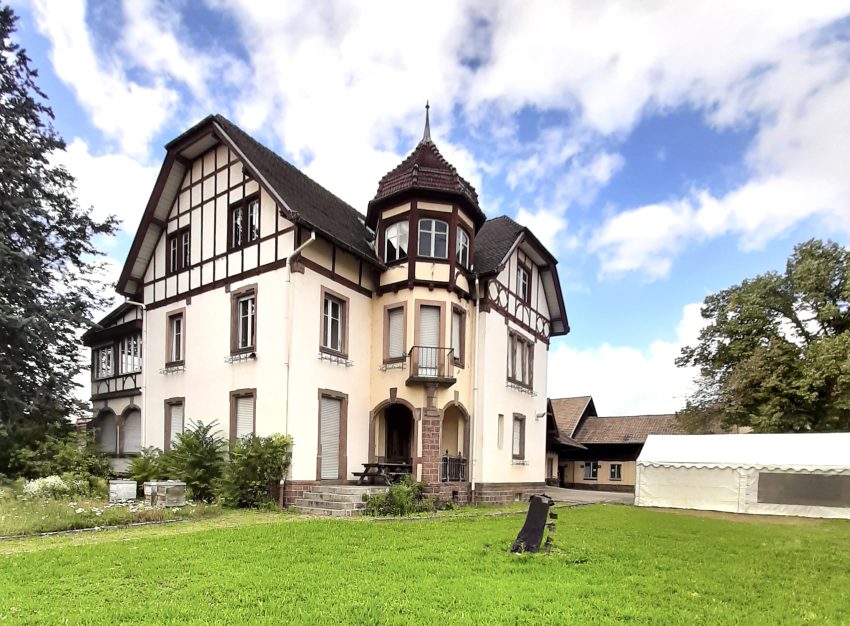
Domaine Viticole De La Ville De Colmar
CC BY-SA 4.0 / Jocelyne
Domaine Viticole De La Ville De Colmar is Colmar’s city-linked wine estate and boutique, founded in 1895 by botanist and viticulturist Chrétien Oberlin as both a place to sell wine and to teach locals how winemaking works. Today, visitors remember it as a compact tasting stop where you can ask questions at the counter, sample before buying, and leave with bottles that feel specifically Alsatian. The range spans aromatic whites like Riesling, Muscat, Gewurztraminer, Pinot Blanc, and Pinot Gris, alongside a signature Pinot Noir and Chardonnay, with several award-winning labels in the lineup. Beyond wine, the shelves include accessories and liqueurs, and reviews often mention warm, patient guidance for choosing a dry white.
Location: 27 Grand Rue, 68000 Colmar, France | Hours: Tuesday – Friday: 09:30–12:30 & 14:00–18:00. Saturday: 09:00–12:30. Closed on Monday, Sunday. | Price: Free to enter; tastings and special visits may have a fee. | Website | Distance: 0.6km

19. Église Saint-Matthieu de Colmar
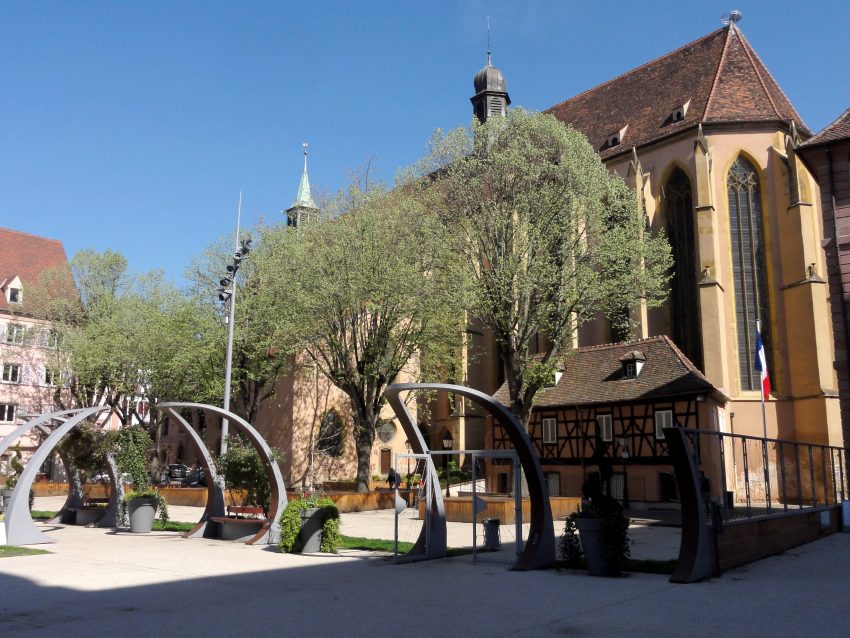
Église Saint-Matthieu de Colmar
CC BY-SA 4.0 / Ralph Hammann
Église Saint-Matthieu de Colmar is a late-13th-century Franciscan church in the city center, built in a mendicant style that feels spare, tall, and calm. Inside, look for pointed arches carried by octagonal columns and the unusual flat wooden ceilings painted in the 17th century with black vine patterns and carved faces. A surviving screen between nave and choir hints at earlier liturgical divisions, while the 1731 Silbermann organ dominates the upper gallery. Painted oil panels by Jean‑Baptiste Wulcken line the balcony railings, and stained glass mixes biblical scenes with figures such as Martin Luther. Visitors often remember the resonant acoustics—sometimes the space hosts concerts—and the photogenic exterior streetscape.
Location: 3 Grand Rue, 68000 Colmar, France | Hours: Tuesday: 15:00–17:00. Thursday: 15:00–17:00. Saturday: 15:00–17:00. Closed on Monday, Wednesday, Friday, Sunday. | Price: Free. | Website | Distance: 0.6km

20. Ancienne Douane
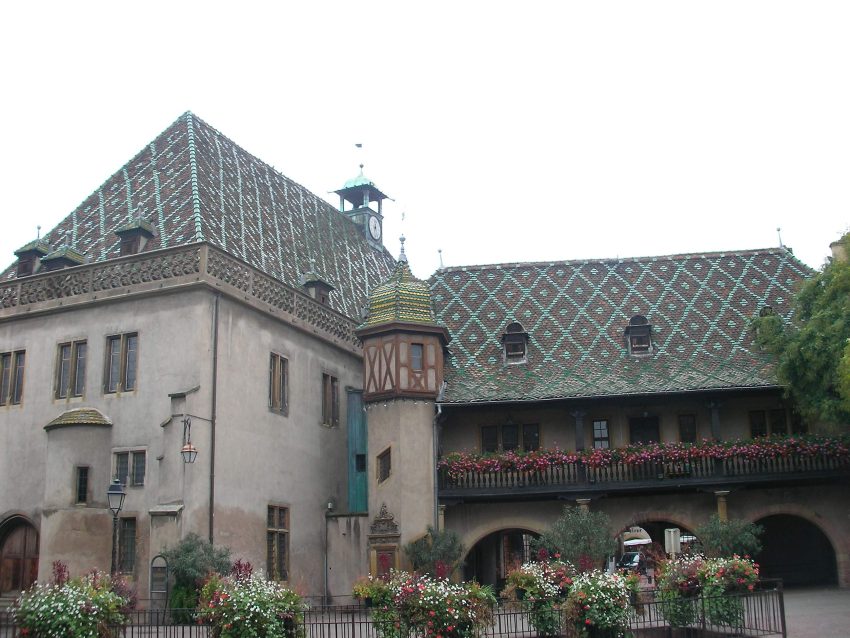
Ancienne Douane
Ancienne Douane
CC BY-SA 4.0 / Gzen92
Ancienne Douane (the Koïfhus) is Colmar’s former Old Custom House, built between 1433 and 1480 at the junction of the old High Street and Merchants’ Street. Visitors notice its sturdy civic massing, later crowned by a late-19th-century restoration that added a small turret and patterned glazed roof tiles, with a sandstone balustrade refreshed again in 2002. It once functioned as both warehouse and tax checkpoint for goods passing through town, and in 1534 it even hosted the Federation of the Ten Imperial Cities of Alsace. Its uses kept shifting—after the Revolution ended its trade privileges it became a theatre, then a bank office, and today it’s used for events. Look for the plaque marking Napoleon’s general Jean Rapp, born here.
Location: Koïfhus, Pl. de l'Ancienne Douane, 68000 Colmar, France | Hours: 24 Hours. | Price: Free. | Website | Distance: 0.6km

21. Musee du Jouet
Musee du Jouet
Musee du Jouet
CC BY-SA 4.0 / Gzen92
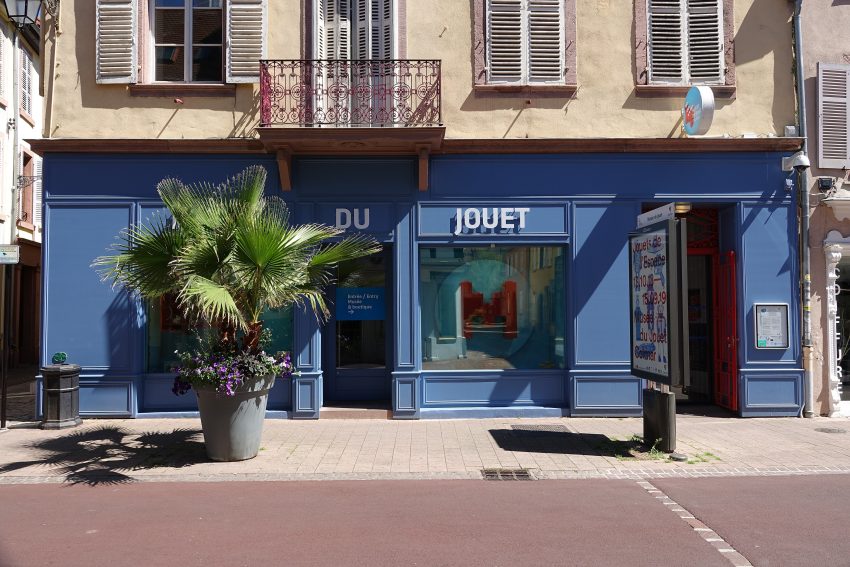
Musée du Jouet in Colmar, France is a three-level Toy Museum set in a former neighborhood cinema, tracing how play—and the materials and technology behind it—changed from the 19th century to today. The ground floor mixes early teddy bears, vintage cars, robots, construction toys, and elaborate Playmobil scenes, with a hands-on area for board games and puzzles. Upstairs, an entire level is devoted to a sprawling model railway with miniature towns and running trains that keep visitors lingering. The top floor leans into nostalgia with porcelain dolls, limited-edition Barbies, Alsatian figures, and mid-20th-century mechanical and electronic toys. Reviews often note it’s compact but easy to spend an hour or two inside.
Location: 40 Rue Vauban, 68000 Colmar, France | Hours: (January – November) Monday, Wednesday – Sunday: 10:00–17:00; Closed on Tuesday. (July, August, December & French school holidays) Daily: 10:00–18:00. Closed: January 1, May 1, November 1, December 25. | Price: Adults: €6.50; Youth (8–18): €5; Under 8: free. | Website | Distance: 0.6km

22. Grand Rue
Grand Rue
Grand Rue
CC BY-SA 2.0 / Jorge Franganillo
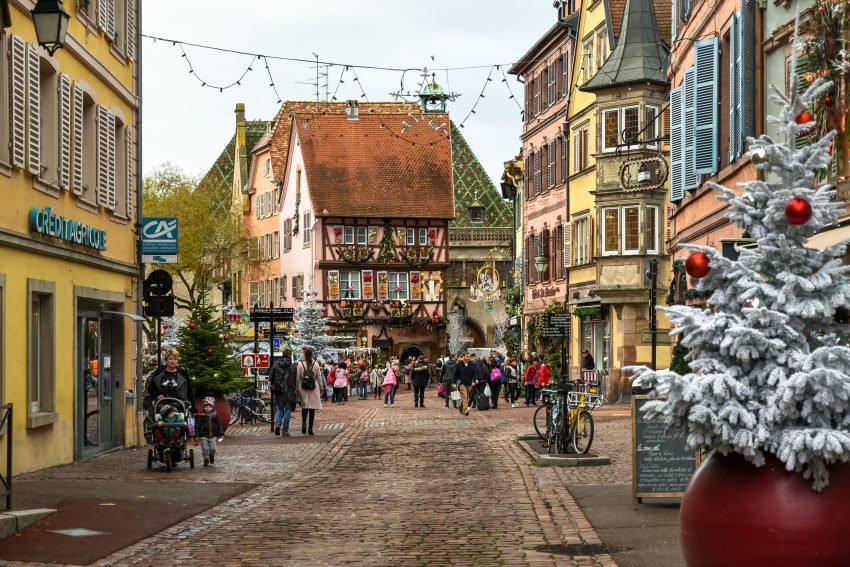
Grand Rue is Colmar’s old High Street, a roughly 1,600‑foot corridor that has served as the city’s commercial spine since the Middle Ages, running through the historic center between key squares. Walking it feels like paging through architecture: half‑timbered houses with Gothic, Renaissance, and Baroque touches, painted beams, and carved details that reward looking up. Along the way you’ll pass landmarks such as the Old Customs House area, the Church of Saint Matthew, the Sandherr and Kern houses, and the House of the Saint John’s Knights, plus the Roesselmann Fountain near Flower Market Square. Today it mixes everyday shopping with atmosphere—boutiques, local wine and cheese stops—and can be lively and crowded, especially in peak seasons.
Location: Grand Rue, 68000 Colmar, France | Hours: 24 Hours. | Price: Free. | Distance: 0.6km

23. Square de la Montagne-Verte
Square de la Montagne-Verte
CC BY-SA 4.0 / Gzen92
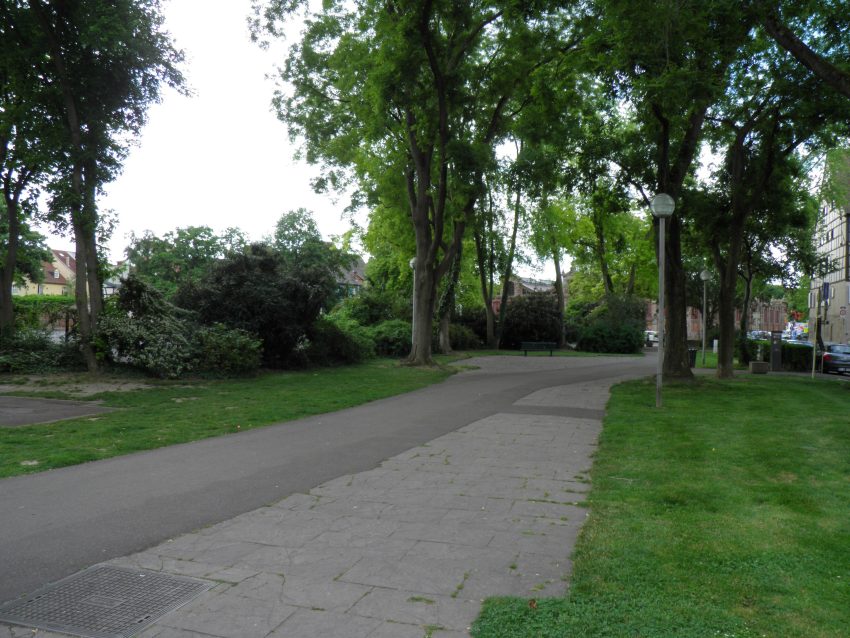
Square de la Montagne-Verte is a small, leafy public square in central Colmar, set between the Médiathèque Edmond Gerrer and the Covered Market at the edge of the Tanneurs quarter. Remade in 1975 on the site of a former school, it’s valued less as a formal garden than as a practical pause in the old town, with benches, paths, and a children’s playground. What visitors remember is the mature canopy, including a Japanese pagoda tree planted in 1877 and an Italian poplar dating to 1919, which noticeably cools the air on hot afternoons. A newer touch adds 24 curved steel arches threaded with rope supports for climbing vines, creating cloister-like green corridors.
Location: Square de la Montagne Verte, Rue de la Montagne Verte, 68000 Colmar, France | Hours: 24 Hours. | Price: Free. | Website | Distance: 0.7km

24. Synagogue de Colmar
Synagogue de Colmar
Synagogue de Colmar
CC BY-SA 3.0 / Poudou99 / aka Kootshisme
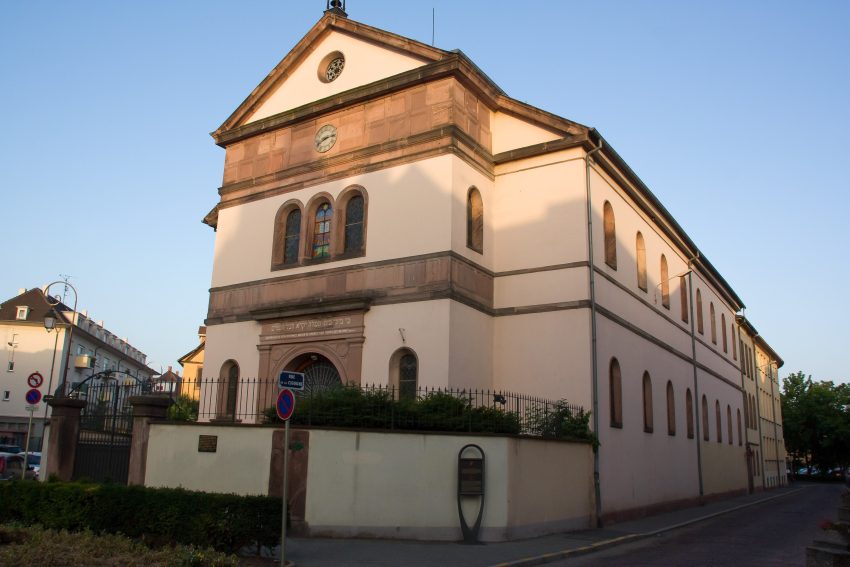
In Colmar, the Synagogue de Colmar is a neo-Romanesque house of worship built in 1839–1842 and inaugurated in 1843, created as the seat of the Israelite Consistory and Grand Rabbinate of Haut-Rhin. Its local sandstone façade is easy to spot, with a semicircular fanlight over the entrance, round-arched windows, and Hebrew and French inscriptions above the portal. Unusually for Alsace, it even has a small bell tower that marks the meeting of nearby streets. Inside, the rectangular prayer hall is lit by many arched windows, with a central bimah and a three-sided women’s gallery on simple columns. It also carries the community’s wartime scars—plundered during Nazi occupation and restored after 1945—and access can be limited, as some visitors note.
Location: 3 Rue de la Cigogne, 68000 Colmar, France | Hours: Monday: 09:00–18:00. Tuesday: 09:00–18:00. Wednesday: 09:00–18:00. Thursday: 09:00–18:00. Friday: 09:00–18:00. Saturday: 09:00–18:00. Sunday: 09:00–13:00. | Price: Check official website. | Distance: 0.7km

25. Statue du Petit Vigneron
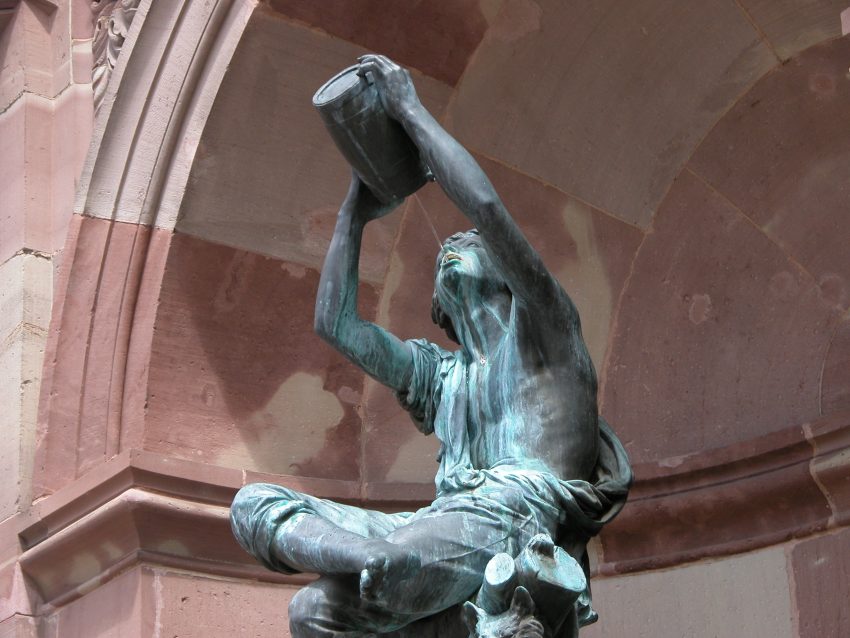
Statue du Petit Vigneron
CC BY-SA 2.0 / Jeffrey Bary
Tucked onto the southwest corner of Colmar’s Marché Couvert, the Statue du Petit Vigneron is a small fountain sculpture celebrating Alsace’s wine culture through an everyday figure rather than a grand hero. Atop the basin sits a bronze boy lifting a vessel over his head, posed with one leg crossed, while a patient bronze dog waits at his feet. Below, a simple pedestal spout feeds a worn, circular basin that still reads as a neighborhood detail more than a monument. Made in 1869 and linked to Colmar native Auguste Bartholdi, the original is kept in the Bartholdi Museum, while this is one of two casts made from it.
Location: 13 Rue des Écoles, 68000 Colmar, France | Hours: 24 Hours. | Price: Free. | Distance: 0.7km

26. Fontaine Roesselmann
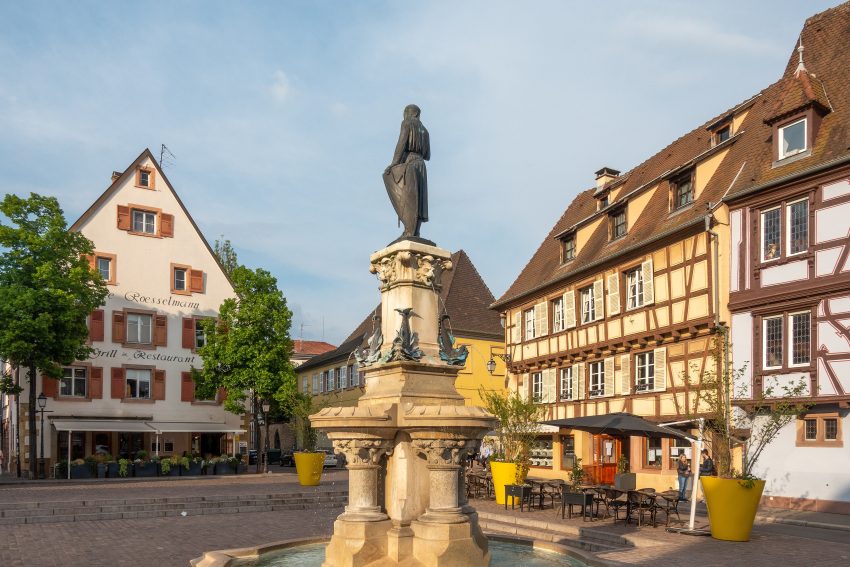
Fontaine Roesselmann
CC BY-SA 2.0 / Kent Wang
Fontaine Roesselmann is an ornate white-stone fountain on Place des Six Montagnes Noires in Colmar’s Old Town, crowned by a bronze statue of public judge Jean Roesselmann. Sculpted in 1888 by Colmar-born Auguste Bartholdi, it commemorates Roesselmann’s death in 1262 while defending the city’s municipal liberties against the Bishop of Strasbourg’s forces. Look closely at the pedestal: the figure rises above four columns, and water jets from the open mouths of fish and other fantastical creatures around the upper tier. After dark the monument is lit, giving the square a theatrical glow, and in winter the surrounding space often feels swept up in Christmas-market bustle.
Location: Pl. des 6 Montagnes Noires, 68000 Colmar, France | Hours: 24 Hours. | Price: Free. | Distance: 0.7km

27. Place des Six Montagnes Noires
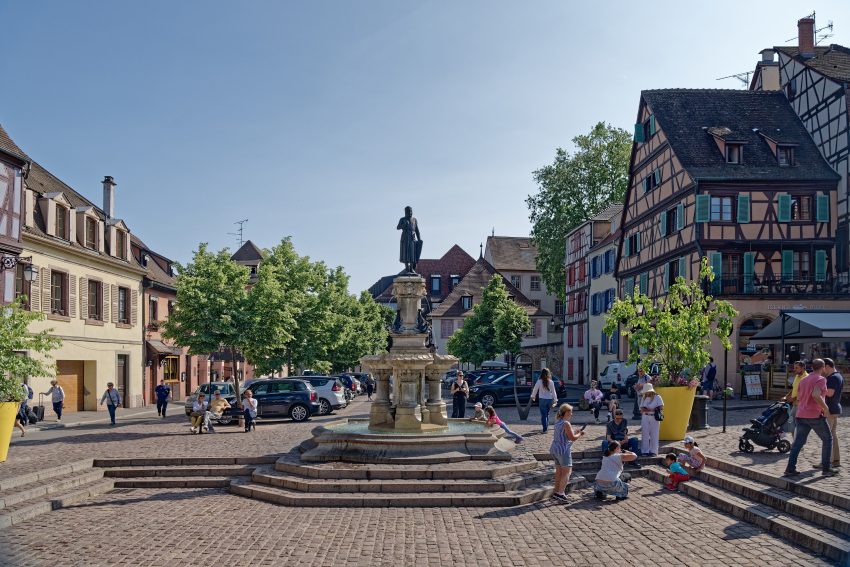
Place des Six Montagnes Noires
CC BY-SA 4.0 / Tilman2007
Place des Six Montagnes Noires is a small cobbled square on the edge of Colmar’s Old Town, acting as a natural threshold toward Petite Venise and its canal lanes. In the 14th century it hosted an elite inn whose guest list included figures like the Duke of Wellington and Cardinal Mazarin, until a fire destroyed the building in 1880. The city replaced the loss with the Roesselmann Fountain: a bronze Judge Jean Roesselmann, killed in 1262 defending Colmar’s independence, surrounded by four fish-weir forms that nod to Gothic fountain design. In winter, the square shifts mood entirely, becoming a children-focused Christmas market with tiny chalet façades, a carousel, and Santa’s oversized mailbox.
Location: Pl. des 6 Montagnes Noires, 68000 Colmar, France | Hours: 24 Hours. | Price: Free. | Distance: 0.7km

28. Marche Couvert
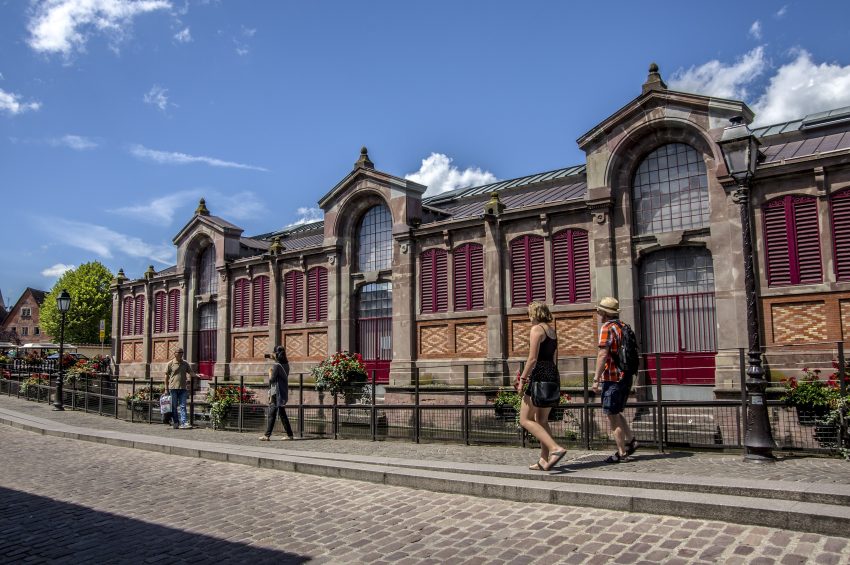
Marche Couvert
Marche Couvert
CC BY-SA 2.0 / stefano Merli
Marche Couvert is Colmar’s covered market hall, a 19th-century brick-and-stone building with a metal frame and cast-iron columns set right on the Lauch River in the Petite Venise/Fishmongers’ District. Designed by Louis‑Michel Boltz and opened in 1865, it still works as a daily food market, echoing the days when gardeners arrived by flat-bottomed boats to unload at river portals. Inside, the curve of stalls turns into a tasting walk: Alsatian cheeses and charcuterie, pastries, foie gras, wines, plus surprises like Moroccan tagines and Vietnamese pho. Outside, a riverside patio and Bartholdi’s 1869 statue The Little Wine Grower add memorable details to the bustle.
Location: 13 Rue des Écoles, 68000 Colmar, France | Hours: Tuesday – Thursday: 08:00–18:00. Friday: 08:00–19:00. Saturday: 08:00–17:00. Sunday: 10:00–14:00. Closed on Monday. | Price: Free. | Website | Distance: 0.7km

29. Musee d'Histoire Naturelle et d'Ethnographie
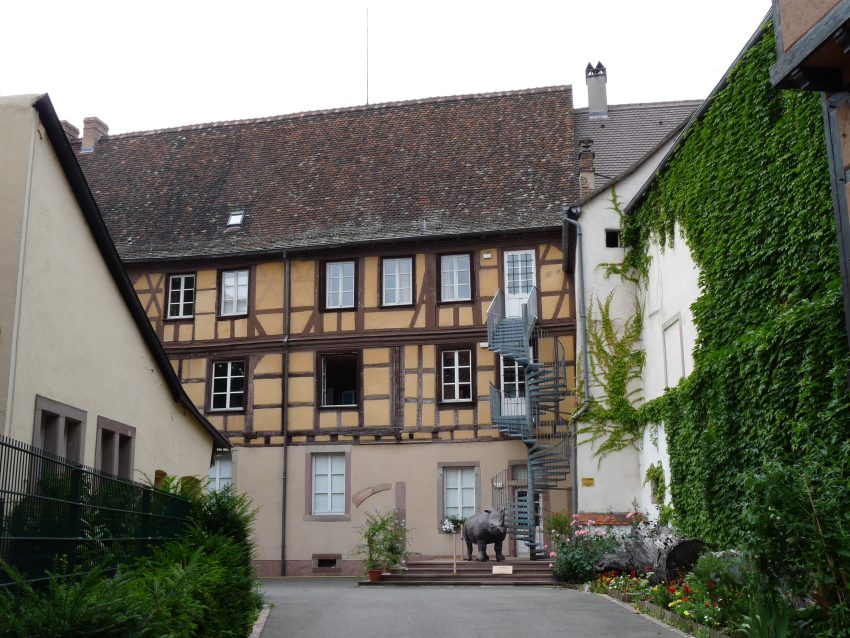
Musee d’Histoire Naturelle et d’Ethnographie
CC BY-SA 3.0 / Ji-Elle
Musee d’Histoire Naturelle et d’Ethnographie is a compact, two-floor museum in Colmar, created by a local learned society in 1859 and later awarded the “Museum of France” label. It feels like a small cabinet of curiosities: downstairs, vintage taxidermy ranges from regional animals like fox and boar to primates and marine creatures, alongside aquariums with reef scenes and Lake Malawi cichlids. Upstairs, geology and paleontology displays include local fossils, mammoth tusks, minerals, and even an ichthyosaur specimen. Many visitors remember the unexpected Egyptian rooms—mummies, sarcophagi, papyri, and Coptic textiles—paired with ethnographic objects from places such as Polynesia, China, Africa, and Latin America.
Location: 11 Rue Turenne, 68000 Colmar, France | Hours: (School period) Tuesday – Friday: 09:00–12:00 & 14:00–17:00; Saturday – Sunday: 10:00–12:00 & 14:00–18:00. (Vacation period, Zone B) Tuesday – Sunday: 10:00–12:00 & 14:00–18:00. Closed on Monday. | Price: Adults: €6.00; Reduced: €4.50; Under 7: free. | Website | Distance: 0.8km

30. Little Venice and Fishmongers’ Wharf
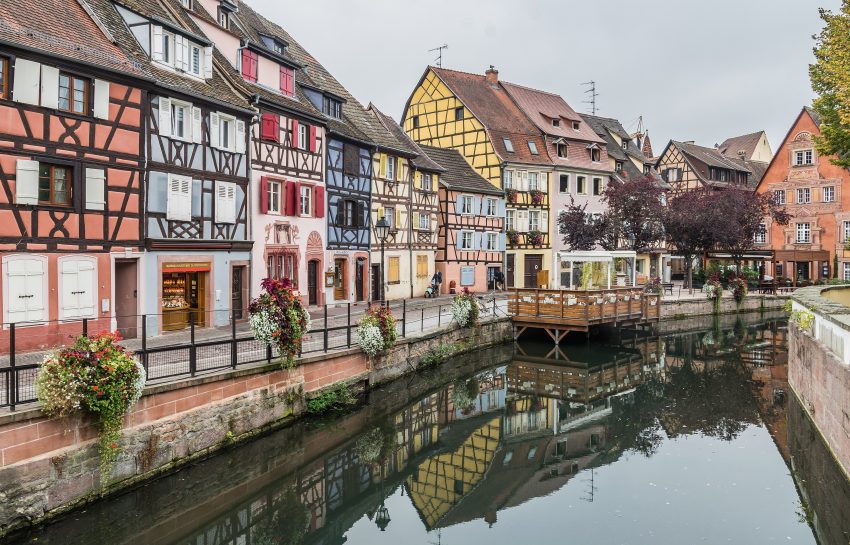
Little Venice and Fishmongers’ Wharf
CC BY-SA 4.0 / Krzysztof Golik
Little Venice and Fishmongers’ Wharf is Colmar’s canal-side quarter along the Lauch River, where cobbled lanes run between pastel-toned, half-timbered houses and flowered balconies reflected in the water. It matters because this was once the working edge of town: the Quai de la Poissonnerie grew around fishermen and boatmen, with trade tied directly to the canal. Today the most memorable views come from the small bridges—especially the frame from Saint-Pierre Bridge where rooftops, shutters, and the canal stack tightly together. You can also see the water from flat-bottomed boats steered under low bridges while the boatman shares local stories. Visitors often remember it as serene off-season and crowded in summer.
Location: 25 Quai de la Poissonnerie, 68000 Colmar, France | Hours: 24 Hours. | Price: Free. | Website | Distance: 0.8km

31. Cour d'Appel de Colmar
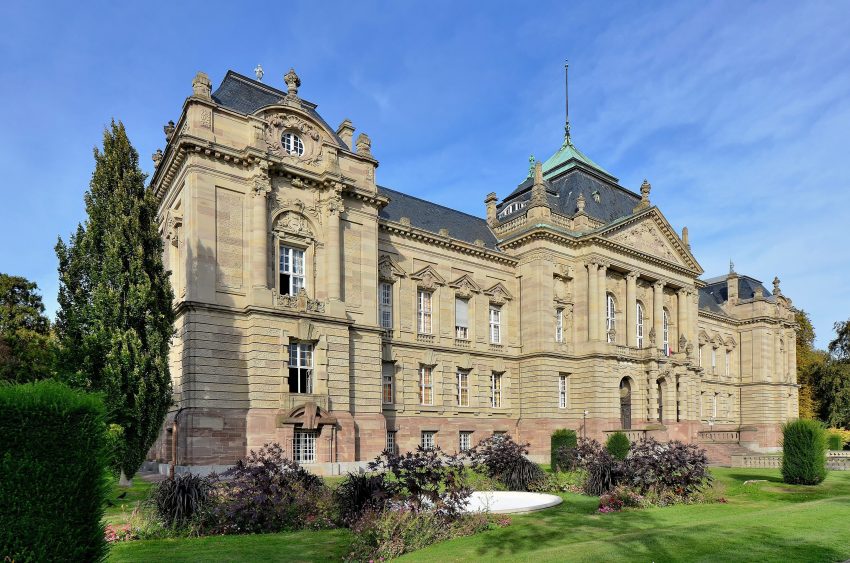
Cour d’Appel de Colmar
CC BY-SA 2.0 / Morio60
The Cour d’Appel de Colmar is Alsace’s top appellate court, a working institution that also reads as a statement of civic power in stone. Built in 1902–1906 by Richard Kuder and Joseph Muller during the German annexation, it borrows from German Baroque models, with a central block and two wings forming a formal, symmetrical front. Look for the granite base, pink Vosges sandstone, and the three main doors framed by fluted columns and Ionic supports beneath a triangular pediment. A steep pyramidal roof with balustrades and decorative finials gives it a ceremonial silhouette, and when public areas are accessible, the grand staircase and ornate hall are the memorable interior moments. Many visitors simply come for the “magnificent” exterior and gardens.
Location: 9 Av. Raymond Poincaré, 68000 Colmar, France | Hours: Monday – Friday: 08:00–12:00 & 13:45–17:00. | Price: Free. | Website | Distance: 1km

32. Chateau d'Eau de Colmar
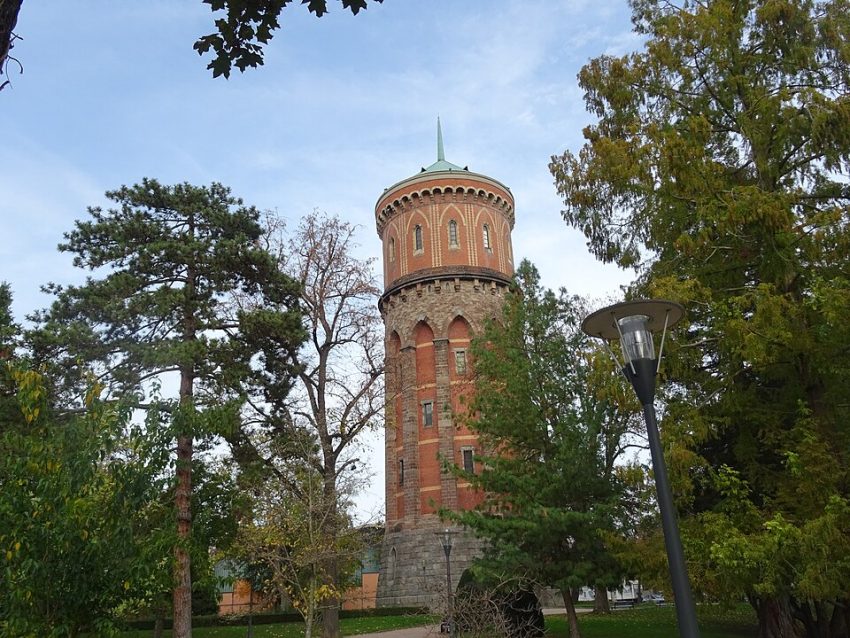
Chateau d’Eau de Colmar
CC BY-SA 2.0 / olive.titus
Chateau d’Eau de Colmar is a late-19th-century neo-Gothic water tower (1884–1886) that once managed the city’s drinking-water supply, built with an imposing, castle-like silhouette to turn infrastructure into civic architecture. About 53 meters tall, it’s detailed with pointed arches, machicolations, and rusticated stonework that reads more medieval than industrial. Decommissioned in 1984, it was later protected as a monument historique (1993) and remains the oldest preserved water tower in Alsace. Today it stands in Parc du Chateau d’Eau, a quiet 1.4-hectare garden with mature trees, a rosarium of 38 rose varieties, and the Bartholdi Monument near the southern entrance.
Location: Av. Raymond Poincaré, 68000 Colmar, France | Hours: 24 Hours. | Price: Free. | Distance: 1km

33. Monument Bartholdi
Monument Bartholdi
Monument Bartholdi
CC BY-SA 4.0 / Gzen92
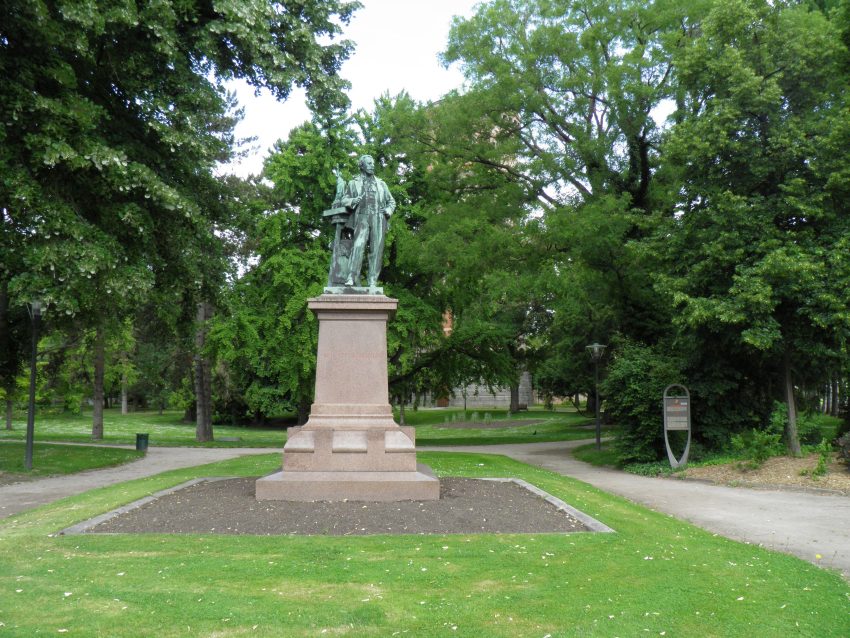
Monument Bartholdi in Colmar, France, honors Frédéric Auguste Bartholdi, the local sculptor behind the Statue of Liberty and the Lion of Belfort. Created in 1907 by his former students Hubert Louis Noel and Auguste Rubin, it shows a bronze Bartholdi standing on a pink-granite pedestal. You’ll find it at the south entrance of Water Tower Park (Parc du Château d’Eau), a calm green space known for a rose garden with 38 shrub varieties and paths passing swamp cypress and even redwoods. The park’s 24-hour access and evening lighting make it an easy, unhurried stop for a close look and a photo.
Location: Unnamed Road,68000, 68000 Colmar, France | Hours: 24 Hours. | Price: Free. | Distance: 1.1km

34. Musee des Usines Municipales de Colmar
Musee des Usines Municipales de Colmar
CC BY-SA 4.0 / Jocelyne
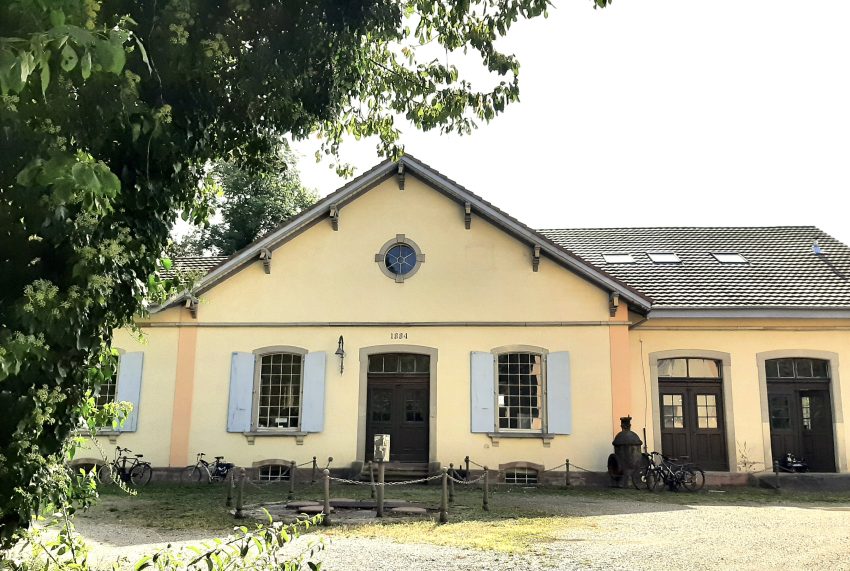
Musee des Usines Municipales de Colmar is a small museum in Colmar’s Neuland area, set inside the former municipal water pumping station built in 1884, where the city’s everyday infrastructure once ran. It matters because it traces how water, gas lighting, electricity, and transit systems quietly reshaped urban life. Rooms are organized by utility, with memorable objects like a 1903 water pump linked to an original steam engine, an 1896 gas street lamp, and a 1906 electric generator once kept as a department-store backup. Visits often include seeing historic machinery started up, giving the space the feel of a working technical site rather than a polished gallery.
Location: Rudenwadelweg, 68000 Colmar, France | Hours: (Seasonal) Open only during the Night of Museums (May) and European Heritage Days (September); group visits by appointment May – October. | Price: Free. | Website | Distance: 2.9km

35. Statue de la Liberte
Statue de la Liberte
CC BY-SA 4.0 / eric spenle
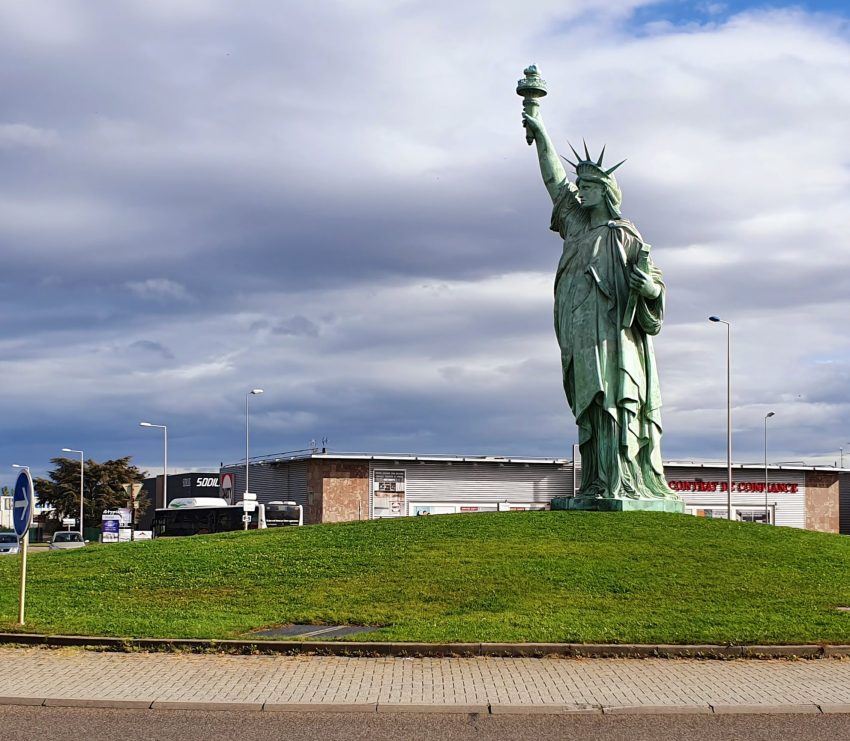
At Colmar’s northern entrance on the Strasbourg road, the Statue de la Liberte is a nearly 40‑foot (about 12 m) replica of “Liberty Enlightening the World,” standing in the middle of a traffic roundabout. Installed in 2004 for the 100th anniversary of local sculptor Frédéric Auguste Bartholdi’s death, it’s a roadside welcome that surprises many first-time visitors. Look closely and you’ll notice it isn’t copper: the surface is a composite built to mimic the original’s green patina, first shaped in terracotta and scaled up using pale green‑tinted clay. Four artists—Guillaume Roche, Pascal Bigel, Philippe Le Merrer, and Jean Christophe Mironneau—worked on the project, and the roundabout setting makes photos a quick, memorable stop.
Location: 45 Rte de Strasbourg, 68000 Colmar, France | Hours: 24 Hours. | Price: Free. | Website | Distance: 3.2km

Best Day Trips from Colmar

A day trip from Colmar offers the perfect opportunity to escape the urban rhythm and discover the surrounding region's charm. Whether you're drawn to scenic countryside, historic villages, or cultural landmarks, the area around Colmar provides a variety of easy-to-reach destinations ideal for a one-day itinerary. If you are looking to rent a car in France I recommend having a look at Discover Cars, first, as they compare prices and review multiple car rental agencies for you.

1. Freiburg im Breisgau
Freiburg im Breisgau
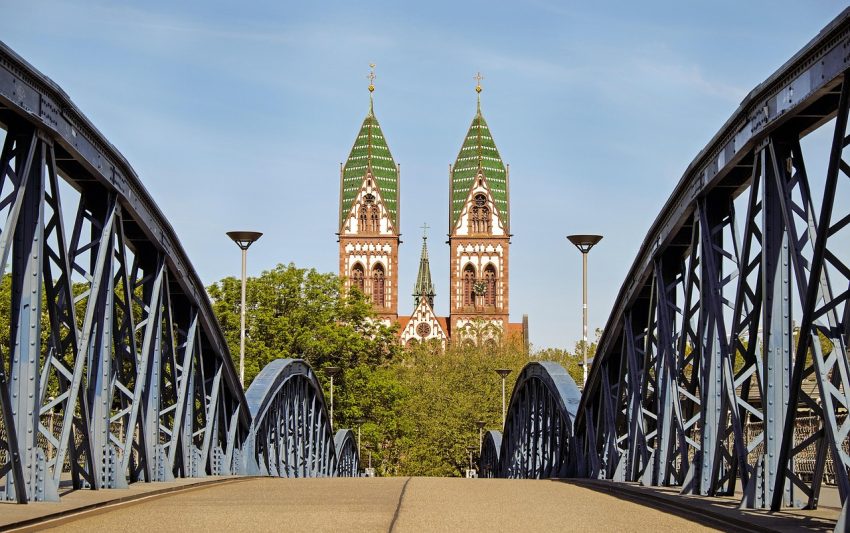
Freiburg im Breisgau, located in the region of Baden-Württemberg, is a charming city nestled at the edge of the Black Forest. Known for its sunny climate, eco-conscious vibe, and vibrant old town, Freiburg offers a laid-back atmosphere with stunning scenery. Cobblestone streets, small canals (Bächle), and a lively market square make it ideal for relaxed exploration on foot. The city…
Visiting Freiburg im Breisgau
Powered by GetYourGuide

2. Strasbourg

Strasbourg France
Strasbourg France
Strasbourg offers visitors a delightful blend of French and German influences, creating an atmosphere that is both charming and distinctly unique. Travelers can leisurely explore the picturesque half-timbered houses lining its canals, stroll along narrow cobblestone streets, and discover inviting cafés and boutiques throughout the city’s historic center. Highlights include the impressive Strasbourg Cathedral, vibrant local markets, and scenic boat…
Visiting Strasbourg
Powered by GetYourGuide

3. Baden-Baden

baden baden
baden baden
Baden-Baden, located in the region of Baden-Württemberg, is a spa town famous for its elegance, thermal baths, and cultural sophistication. Visitors come to relax in its world-renowned spas like the Caracalla Therme and Friedrichsbad, which offer a mix of Roman and modern bathing experiences. The town is surrounded by the natural beauty of the Black Forest, making it ideal for…
Visiting Baden-Baden

4. Nancy

Saint Nicolas Nancy France
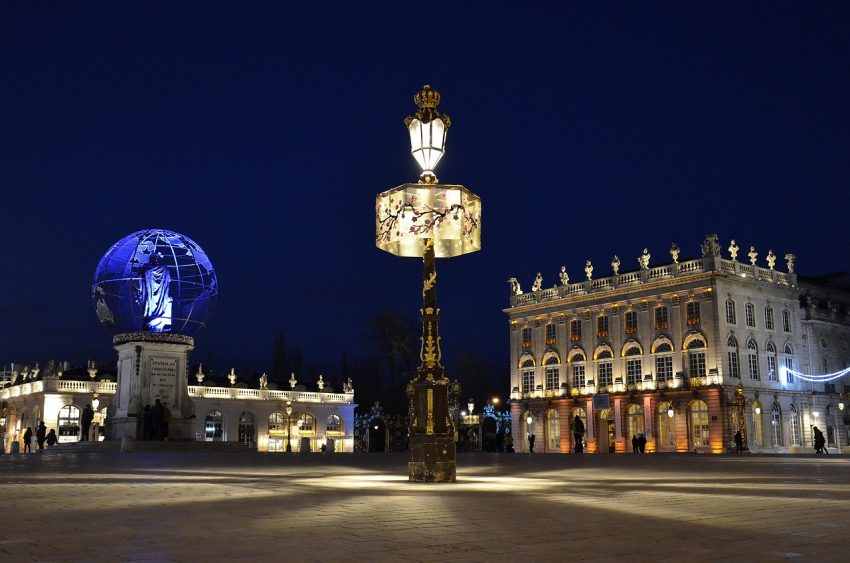
Nancy, nestled in the Grand Est region of northeastern France, is a city that surprises visitors with its elegance and creative flair. It's best known for its stunning architecture and artistic vibe, where ornate buildings and leafy boulevards set the tone for a laid-back but visually rich experience. Whether you're strolling through manicured gardens or sipping coffee in a sunlit…
Visiting Nancy
Powered by GetYourGuide

5. Bern

bern complete guide
bern complete guide
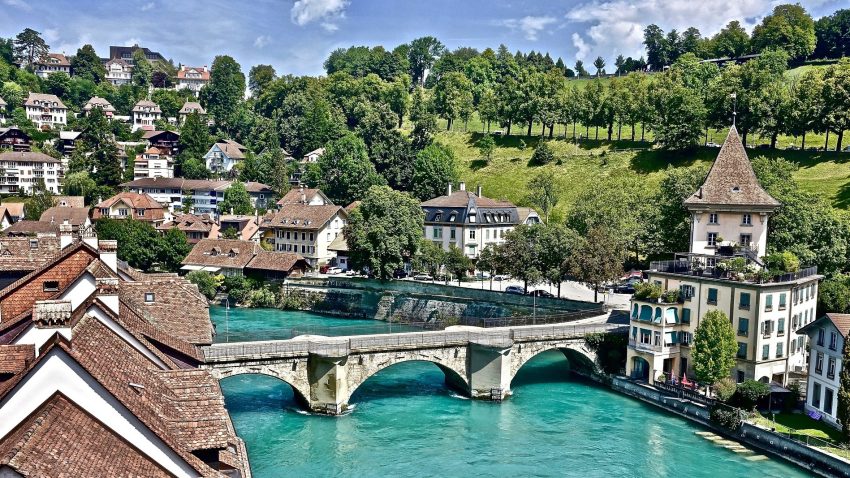
Bern, the capital of Switzerland, remarkably preserves its historic features, including its UNESCO-listed old town. Known for its 6 kilometers of arcades, known locally as 'Lauben,' Bern offers one of Europe's longest weather-sheltered shopping promenades. The city's medieval ambiance is complemented by numerous fountains, sandstone facades, narrow streets, and historic towers. Noteworthy viewpoints include the elevated Rose Garden above the…
Visiting Bern
Powered by GetYourGuide

6. Lucerne

lucerne
lucerne
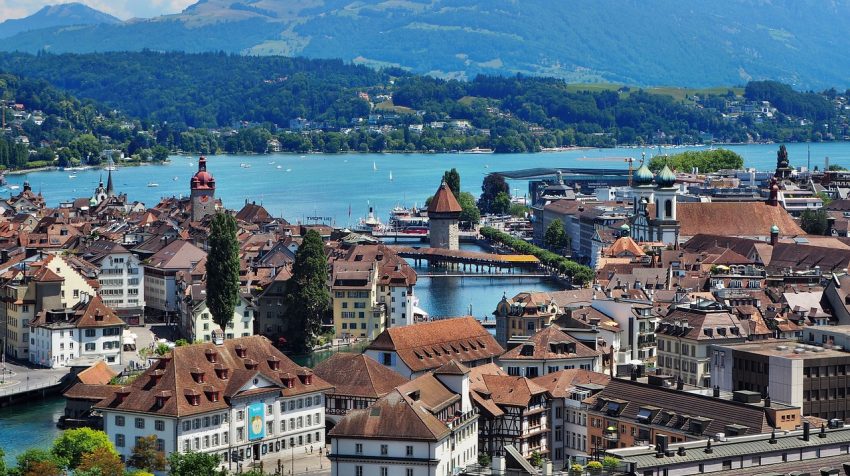
Luzern (loot-SAIRN, “Lucerne” in English) has served as Switzerland's premier destination for tourism for an extensive period. Nestled along the shoreline of a lake (also known as Vierwaldstätter See), and set against the stunning backdrop of the Alps, Luzern held a regular spot on the European Grand Tour circuit during the Romantic era. It welcomed illustrious visitors such as Mark…
Visiting Lucerne
Powered by GetYourGuide

7. Metz

Metz France
Metz France
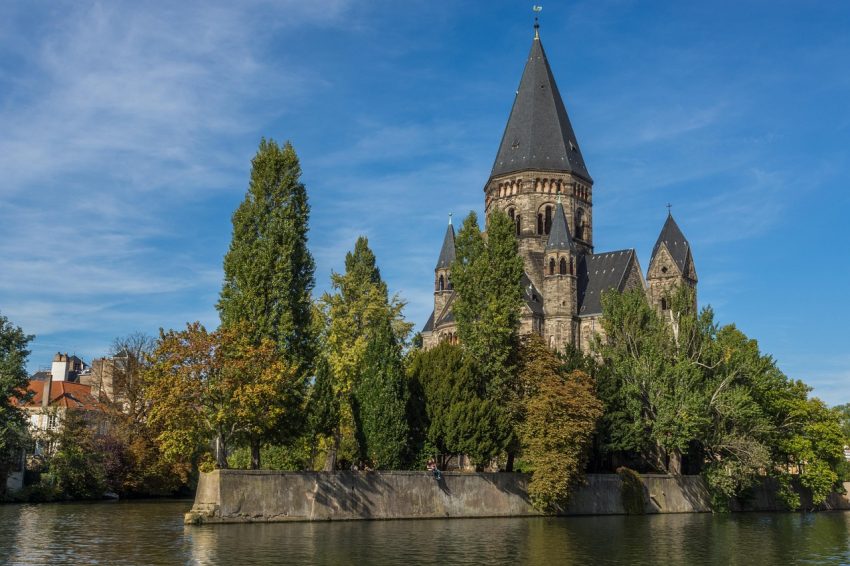
Metz is a vibrant city located in northeastern France, offering a blend of history, culture, and natural beauty. Visitors can enjoy the stunning architecture of the Cathédrale Saint-Étienne, one of the most impressive Gothic cathedrals in France, and take a walk around the city’s many parks and gardens. The Centre Pompidou-Metz, a branch of the famous Parisian museum, offers a…
Visiting Metz
Powered by GetYourGuide

8. Stuttgart

stuttgart castle
stuttgart castle
Stuttgart, located in the southwest of Germany in the region of Baden-Württemberg, is a city that blends modern innovation with green living. Known for its rolling hills, vineyards, and extensive parks, Stuttgart offers a refreshing mix of nature and urban life. Visitors can enjoy panoramic views from spots like the Killesberg Park or the TV Tower, while easily accessing the…
Visiting Stuttgart
Powered by GetYourGuide

Where to Stay in Colmar

For a quintessential Colmar experience, staying in the heart of the Old Town (Vieille Ville) is highly recommended. This area offers a unique blend of charm and convenience, with easy access to Colmar’s famous landmarks like the Little Venice district and the Unterlinden Museum. Here, you’ll find a range of boutique hotels, charming guesthouses, and traditional Alsatian inns housed in beautifully restored buildings. Strolling through the cobbled streets at night, with the town lit up, creates an unforgettable atmosphere, making it ideal for those wanting to fully immerse themselves in the beauty of Colmar.

For a quieter, more scenic stay, the area near the Parc du Champ de Mars or the outskirts of Little Venice offers a relaxing escape while still being within walking distance of Colmar’s main attractions. This area features comfortable hotels with picturesque views of the park and canals, perfect for visitors who prefer a peaceful atmosphere but still want to be close to the action. Whether you’re staying near the bustling heart of the Old Town or the serene surroundings of the parks, Colmar offers a variety of options for all types of visitors seeking a memorable stay.

Using the our Hotel and Accomodation map, you can compare hotels and short-term rental accommodations in Colmar. Simply insert your travel dates and group size, and you’ll see the best deals for your stay.

Colmar Accommodation Map

Best Time to Visit Colmar

Colmar in Spring (March to May)

Spring is a wonderful time to visit Colmar, as the city begins to bloom with colorful flowers and pleasant weather. Temperatures are mild, making it ideal for leisurely walks through the old town and the surrounding vineyards. Spring also marks the beginning of the wine season, so you can enjoy local wine tastings and outdoor activities.

Colmar in Summer (June to August)

Summer in Colmar is vibrant, with warm temperatures and long days. It’s perfect for exploring the city’s canals, historic sites, and beautiful parks. While it can be busier with tourists, the lively atmosphere and outdoor festivals, including the famous Colmar International Festival, make it a popular time to visit.

Colmar in Autumn (September to November)

Autumn is one of the most picturesque times to visit Colmar, as the surrounding vineyards turn into a stunning sea of red, orange, and gold. The weather remains mild, and the harvest season offers a chance to experience wine festivals and tastings. It’s a great time to visit if you prefer fewer crowds and cooler temperatures.

Colmar in Winter (December to February)

Winter in Colmar transforms the city into a fairytale destination, especially during the holiday season. The Christmas markets are a major attraction, with beautifully decorated stalls and festive lights throughout the town. While temperatures can drop, the charm of the city covered in snow and the cozy atmosphere make it a magical time to visit.

Annual Weather Overview

  • January 7°C
  • February 9°C
  • March 12°C
  • April 18°C
  • May 20°C
  • June 26°C
  • July 28°C
  • August 28°C
  • September 24°C
  • October 18°C
  • November 11°C
  • December 8°C

How to get to Colmar

How to Visit Colmar

Colmar is well-connected, making it relatively easy to reach from various points in Europe. Whether traveling by car, train, or plane, you’ll find convenient options for accessing this charming Alsace city.

Getting to Colmar by Train

Colmar is accessible by train through the French railway network (SNCF). The city's main train station, Gare de Colmar, is connected to major cities like Strasbourg and Mulhouse. High-speed trains (TGV) can also take you from Paris to Colmar in just under 3 hours, making it a convenient option for travelers coming from the capital. You can use SNCF Connect to check schedules, compare routes, and purchase tickets for National (SNCF ) and regional trains (TER). For a more streamlined experience, we recommend using Omio, which allows you to easily compare prices, schedules, and book tickets for both National and Regional travel across all of Europe, all in one place.

Getting to Colmar by Car

If you prefer to drive, Colmar is easily reachable via the A35 motorway, which links it to Strasbourg and Basel. The drive offers scenic views of the Alsace region, including vineyards and charming villages. Once in Colmar, parking is available at various locations throughout the city, though it's best to use public transportation or walk around the center to explore its beauty fully. If you are looking to rent a car in France I recommend having a look at Discover Cars, first, as they compare prices and review multiple car rental agencies for you.

Getting to Colmar by Plane

The nearest airport to Colmar is the EuroAirport Basel-Mulhouse-Freiburg, which is about an hour's drive away. Alternatively, you can fly into Strasbourg Airport, which is around 1.5 hours by car. Both airports offer international flights and convenient transport links to Colmar via shuttle services or train connections.
More from this area