Hallstatt, Austria: The Ultimate Travel Guide 2026
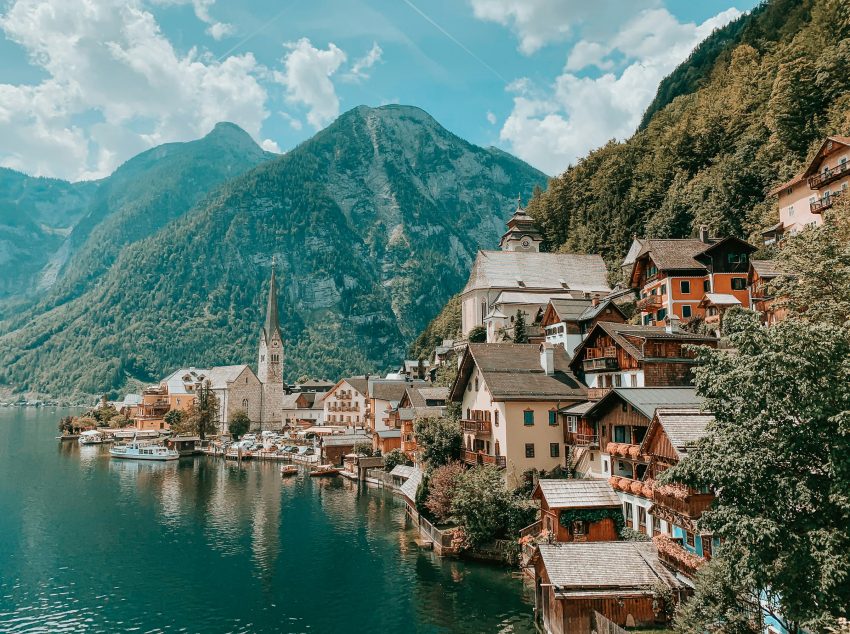
Hallstatt is one of the most memorable places to visit in the Salzkammergut region of Upper Austria, and much of its appeal comes from the way the village sits between the lake and the steep mountain slopes. It is compact enough to explore on foot, yet every corner seems to open onto another striking view, whether that is the waterfront, the pastel-painted houses, or the church towers rising above the lanes. The setting is what defines a visit here, and even without a packed sightseeing schedule Hallstatt feels special from the moment you arrive.
What makes Hallstatt rewarding for visitors is that it works on several levels at once. Some people come for the famous lake views and photographs, others for the mountain scenery and easy outdoor activities, and others simply to slow down for a night or two in a place that feels unlike anywhere else in Austria. The village centre is small, so it is easy to wander between the market square, the waterfront, the churches, and the museum without any rush, and that ease is part of the pleasure.
Hallstatt is at its best when you treat it as more than a quick stop. Staying overnight lets you enjoy the quieter early morning and evening hours after many day-trippers have left, and it also gives you time to combine the village itself with nearby walks, lake activities, and viewpoints in the surrounding Dachstein Salzkammergut area. Even when the weather changes, there is still enough here to make a visit feel full, from short scenic walks and museum time to a ferry crossing that is part of the experience rather than just transport.
Table of Contents
- History of Hallstatt
- Best things to do and See in Hallstatt
- Best things to do near Hallstatt: Explore Hallstatt’s Market Square
- Best things to do near Hallstatt: Visit the World Heritage Museum Hallstatt
- Best things to do near Hallstatt: See the Catholic Church and Bone House
- Best things to do near Hallstatt: Walk the lakeside and photograph the Evangelical Church
- Best things to do near Hallstatt: Take the ferry across Lake Hallstatt
- Best things to do near Hallstatt: Hire a boat on the lake promenade
- Best things to do near Hallstatt: Walk through the Echerntal
- Best things to do near Hallstatt: Hike to Waldbachstrub Waterfall
- Best things to do near Hallstatt: Relax at the bathing island and recreation area
- Best things to do near Hallstatt: Plan for the Salzberg, Skywalk, and Salt Mine
- 6 Best Day Trips from Hallstatt
- Where to Stay in Hallstatt
- Best Time to Visit Hallstatt
- How to get to Hallstatt
History of Hallstatt
Early Hallstatt History
Hallstatt’s story reaches back far beyond the medieval village that visitors see today. The area became important because of salt, and this resource shaped life here for thousands of years. Archaeological discoveries from the region gave their name to the Hallstatt period of the Early Iron Age, which shows just how significant the settlement was in prehistoric Europe. The wealth created by salt extraction helped turn what might otherwise have been a remote alpine community into a place of lasting historical importance.
Long before modern tourism, Hallstatt was already known for specialised work, difficult terrain, and a way of life built around mining. That legacy still defines the identity of the village. Even today, many of the sights that visitors associate with Hallstatt, from the mountain above the village to the museum collections and the famous burial finds, connect directly back to the centuries-long importance of salt.
Medieval Hallstatt History
During the Middle Ages, Hallstatt developed into a more recognisable settlement, with churches, houses, and trade linked to the salt industry. The limited flat ground between the mountain and lake forced the village into a tight, layered form, which is still visible in its narrow lanes and stacked buildings. This unusual layout was not created for picturesque effect; it was the practical result of people making a home in a very restricted landscape.
Religious life also became central to the community in these centuries, and the parish church area above the village remains one of Hallstatt’s most atmospheric places. The cemetery and bone house reflect the pressures of living in such a confined space, where burial ground was limited and older remains were carefully preserved. That custom, unusual to many visitors today, forms one of the most distinctive parts of Hallstatt’s heritage.
Modern Hallstatt History
In the modern era, Hallstatt gradually shifted from an industrial settlement with a mining tradition to an international visitor destination. Its extraordinary setting, well-preserved village core, and archaeological importance brought growing recognition, and that recognition expanded further with its inclusion in the Hallstatt-Dachstein/Salzkammergut World Heritage landscape. Tourism is now a defining part of Hallstatt’s economy and identity, but the older layers of the village are still very much present beneath its postcard image.
What is striking today is how Hallstatt balances fame with authenticity. Visitors come for the iconic lakeside views, but they encounter a place whose character has been shaped by mining, faith, adaptation to the landscape, and centuries of local tradition. That is why the village feels deeper than its appearance in photographs suggests: the scenery may bring people here, but the history is what gives Hallstatt its real weight.

Moira & Andy
Hey! We're Moira & Andy. From hiking the Camino to trips around Europe in Bert our campervan — we've been traveling together since retirement in 2020!
Visiting Hallstatt for the first time and wondering what are the top places to see in the city? In this complete guide, I share the best things to do in Hallstatt on the first visit. To help you plan your trip, I have also included an interactive map and practical tips for visiting!
This website uses affiliate links which earn a small commission at no additional cost to you.
Best things to do and See in Hallstatt
1. Best things to do near Hallstatt: Explore Hallstatt’s Market Square
The market square is the social and visual heart of Hallstatt, and it is the place where many visits properly begin. Surrounded by historic houses, cafés, and hotels, it has the kind of scale that invites you to linger rather than simply pass through. It is not a monumental square in the grand urban sense; its charm lies in how intimate it feels against such a dramatic alpine setting.
This is also one of the best places to absorb Hallstatt’s atmosphere without trying too hard to “do” anything. Sit with a coffee, look up at the façades, and notice how everyday village life and international tourism share the same small stage. Because the centre is compact, the square also works as a natural base for the museum, churches, lakefront, and nearby lanes. Entry cost: Free. Opening hours: Open at all times.
2. Best things to do near Hallstatt: Visit the World Heritage Museum Hallstatt
For visitors who want depth rather than just scenery, the World Heritage Museum is one of the most worthwhile stops in the village. It explains why Hallstatt matters historically and archaeologically, and it gives context to the salt-mining legacy that shaped the settlement for thousands of years. Without it, many travellers leave with photographs but little understanding of the place.
The museum is especially useful if the weather is poor or if you are visiting when mountain attractions are restricted. It turns Hallstatt from a beautiful destination into a meaningful one by linking the village to prehistoric Europe, mining, burial culture, and World Heritage status. Entry cost: Adults €12; seniors and guest card holders €11; children 6–14 €8; teenagers and students €9; families €25. Opening hours 2026: 1 January – 31 March daily 11:00–16:00; 1 April – 30 April daily 10:00–16:00; 1 May – 30 September daily 10:00–18:00; 1 October – 31 October daily 10:00–16:00; 1 November – 23 December Wednesday – Sunday 11:00–16:00; 24 December – 8 January 2027 daily 11:00–15:00.
3. Best things to do near Hallstatt: See the Catholic Church and Bone House
The Catholic church above the village is one of Hallstatt’s most atmospheric historic sites, and the climb up to it gives you a fine view back across the rooftops and lake. The setting alone makes it rewarding, with the churchyard, hillside position, and quiet contrast to the busier waterfront below.
What makes this stop especially memorable is the bone house, with its painted skulls preserved as part of a long local burial tradition shaped by limited cemetery space. It is unusual, moving, and unmistakably tied to Hallstatt rather than being a generic church visit. Entry cost: not clearly stated on the official tourism page; check locally on arrival. Opening hours: not clearly stated on the official tourism page; check locally on arrival.
4. Best things to do near Hallstatt: Walk the lakeside and photograph the Evangelical Church
The Evangelical Church is one of the defining visual symbols of Hallstatt, especially when seen from the lakefront with the mountain wall behind it. Even travellers who do not step inside usually end up spending time here because it forms part of the classic village panorama. The church dates to the nineteenth century and adds another historical layer to the compact centre.
This is less about formal sightseeing than about enjoying one of Hallstatt’s most recognisable views. Early morning and late afternoon are particularly good times to be here, when the light is softer and the village feels less crowded. Entry cost: Free to view from outside. Opening hours: Exterior view available at all times; interior access may vary.
5. Best things to do near Hallstatt: Take the ferry across Lake Hallstatt
The ferry between Hallstatt station and the village is not just a practical connection; it is one of the classic Hallstatt experiences. Approaching the village from the water gives you the layered view of church towers, lakeside buildings, and steep mountains that has made Hallstatt famous worldwide. For many rail travellers, this first approach is one of the highlights of the trip.
Even if you do not arrive by train, getting onto the water changes your sense of the place. Hallstatt is one of those destinations that looks different and arguably better from the lake than from the shore. Ferry timetable 2026: daily crossings are scheduled through the year, with departures coordinated with trains and subject to adjustment for delays. Entry cost: fare not clearly shown in the retrieved timetable material; check current local fares.
6. Best things to do near Hallstatt: Hire a boat on the lake promenade
Boat hire is one of the best ways to experience the landscape beyond the crowded centre. From the water, Hallstatt feels quieter and more spacious, and you get a fuller sense of the mountain walls, the dark green lake, and the famous village frontage. It is ideal for travellers who want a scenic activity without committing to a long hike.
This works particularly well in good weather when you want to slow the pace of the visit. It is also one of the few activities that lets you create your own viewpoint rather than share one with everyone else. Opening hours: 1 April – 30 September, Monday – Sunday, 10:00–18:00. Entry cost: price not shown in the retrieved official summary; check locally before hiring.
7. Best things to do near Hallstatt: Walk through the Echerntal
The Echerntal is one of the best answers to Hallstatt’s biggest problem, which is that many visitors never look beyond the postcard centre. This valley walk gives you a very different experience: quieter, greener, and more rooted in the surrounding landscape. It is a good option for those who want nature without tackling a serious mountain route.
One of the strengths of the Echerntal is that it feels accessible. Official tourism information describes it as suitable even for strollers on the easier walk, and it is often recommended for photography away from the densest crowds. Entry cost: Free. Opening hours: Open access, though the themed trail is recommended between April and November.
8. Best things to do near Hallstatt: Hike to Waldbachstrub Waterfall
If you want a stronger outdoor contrast to the village itself, the Waldbachstrub waterfall is one of the best nearby goals. The route takes you into a wilder, more romantic side of the landscape, and the waterfall itself is one of the standout natural sights close to Hallstatt. It appeals to visitors who want more than viewpoints and streetscapes.
The walk is described as family-friendly overall, though it still requires proper footwear and enough time. Depending on the route and pace, official material suggests around 1.5 hours from the centre to reach the waterfall, while some hiking descriptions give roughly 2 to 2.5 hours one way. Entry cost: Free. Opening hours: Open access in suitable conditions.
9. Best things to do near Hallstatt: Relax at the bathing island and recreation area
In warmer weather, the bathing island gives Hallstatt a lighter, more local side. Just outside the core village, it offers space to sit, swim, and enjoy the lake without constantly weaving through the centre. It is especially good for families or for travellers who want a break between sightseeing stops.
The wider recreation area outside the centre adds even more room and some of the best panoramic views back toward Hallstatt across the water. This is not the place for deep historical insight; it is the place for summer atmosphere and time outdoors. Entry cost: Free. Opening hours: Open access.
10. Best things to do near Hallstatt: Plan for the Salzberg, Skywalk, and Salt Mine
Under normal circumstances, the Salzberg attractions are among the signature things to do in Hallstatt. The Skywalk gives a dramatic elevated view over the village and lake, and the salt mine connects directly to the deep history that made Hallstatt important in the first place. Together they are among the most complete “Hallstatt” experiences because they combine scenery and heritage.
At the moment, however, this is also the key attraction where timing matters. The official tourism and operator pages state that the salt mine, Skywalk access, and cable car were closed for reconstruction from September 2025, with reopening scheduled for 30 June 2026, subject to change. Once operating again in 2026, the cable car is scheduled from 09:00 with last descent at 18:00 from 30 June – 24 October, and the salt mine tours are scheduled from 09:30 to 16:30 over the same period. Entry cost after reopening: adults €49 with funicular, €33 without funicular; children €23 with funicular, €16 without funicular.