Academia Istropolitana, Bratislava
Attraction, Historic Building and Historic Site in Bratislava
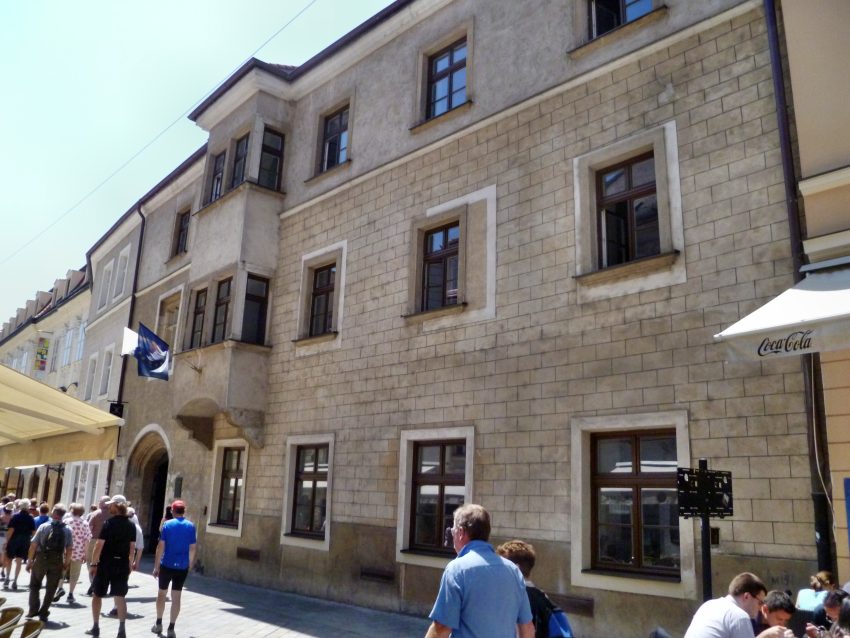
Academia Istropolitana is one of those Old Town Bratislava sights you can easily miss unless you know the story: this late-Gothic complex on Ventúrska Street is tied to the first university founded on the territory of today's Slovakia. Even if you only have a few hours in the city, it's a meaningful stop that adds depth to a classic “castle-to-river” walk.
You'll find it in the pedestrian-friendly Historic Centre (Staré Mesto), close to other headline landmarks and ideal to visit as part of a guided walking tour. It's best appreciated from the street and nearby courtyards and passages, with Ventúrska Street itself being one of the nicest stretches for architecture-spotting and café breaks.
Table of Contents
- History and Significance of the Academia Istropolitana
- Things to See and Do in the Academia Istropolitana
- How to Get to the Academia Istropolitana
- Practical Tips on Visiting the Academia Istropolitana
- Where to Stay Close to the Academia Istropolitana
- Is the Academia Istropolitana Worth Visiting?
- For Different Travelers
- FAQs for Visiting Academia Istropolitana
History and Significance of the Academia Istropolitana
Academia Istropolitana is commonly associated with the Universitas Istropolitana, founded by King Matthias Corvinus in 1465 and opened shortly after, marking the beginning of higher-education history on the territory of present-day Slovakia. While the institution itself did not last long, the legacy is significant: it represents Bratislava's role as a serious intellectual center in the late medieval Kingdom of Hungary.
The site’s story is also about continuity. The historic buildings survived and remain part of the city’s living fabric rather than becoming a sealed-off monument. Today, the complex is connected with Bratislava’s arts and education scene, which is a fitting modern echo of its original academic purpose.
Because it sits right in the Old Town's core, Academia Istropolitana works as a “micro-history stop”: a place where a guide (or a good plaque and a bit of context) can turn a simple façade into a memorable chapter of the city's past.
Things to See and Do in the Academia Istropolitana
Start by slowing down on Ventúrska Street and looking closely at the building details. The appeal here is architectural and atmospheric rather than “museum-style”: portals, stonework, and the sense of layered history in a compact space.
Next, treat it as a waypoint in a self-guided Old Town route. It pairs naturally with nearby squares, churches, and the short walk toward the Danube, so you can fold it into a broader itinerary without adding travel time.
If you’re visiting with a guide, ask for the quick version of the university’s rise and fall and how the site fits into Bratislava’s medieval and Renaissance-era development. That context is what makes the stop feel substantial, even if you only spend a few minutes here.
How to Get to the Academia Istropolitana
The nearest major airports are Bratislava Airport (BTS) and Vienna International Airport (VIE), with Vienna often offering more flight options and easy onward connections to Bratislava. For the best deals and a seamless booking experience, check out these flights to Bratislava on Booking.com.
Bratislava is well connected by rail, and arriving at Bratislava hlavná stanica (Main Station) makes it straightforward to continue by public transport or a short taxi ride into the Old Town. Train schedules and bookings can be found on Omio.
If you’re traveling by car, aim for a garage on the edge of the pedestrian zone (Old Town driving and parking can be restrictive), then walk the last stretch to Ventúrska Street.
Practical Tips on Visiting the Academia Istropolitana
- Official website: https://acadistr.sk
- Entrance fee: Free.
- Opening hours: 24 Hours.
- Best time to visit: Go in the morning for quieter streets and better light on the façades, or in late afternoon when the Old Town feels most atmospheric.
- How long to spend: Plan 10-20 minutes as a standalone stop, or 30 minutes if you’re photographing details and pairing it with nearby landmarks.
- Accessibility: The surrounding Old Town streets are mostly flat but can be uneven with cobblestones; step-free access into interior areas may be limited depending on what’s open.
- Facilities: There are plenty of cafés, restrooms, and services nearby in the Historic Centre, but on-site visitor facilities are limited.
Where to Stay Close to the Academia Istropolitana
Base yourself in Bratislava Old Town (Staré Mesto) for the easiest walkable access to Academia Istropolitana and the city's main sights.
Marrol’s Boutique Hotel This is a strong pick for travelers who want a quieter boutique feel while staying within an easy walk of the Historic Centre’s pedestrian streets.
Radisson Blu Carlton Hotel, Bratislava A classic, central landmark hotel that’s ideal if you want to step out directly into the Old Town’s most scenic promenade areas.
LOFT Hotel Bratislava Great for comfort and value with a slightly calmer setting just outside the densest Old Town lanes, while still being walkable to Ventúrska Street.
Park Inn by Radisson Danube Bratislava A practical choice if you want to combine Old Town sightseeing with quick access to the riverfront and Bratislava Castle area.
Ibis Bratislava Centrum A budget-friendly, no-fuss option that keeps you close to the Old Town and makes it easy to build a walking itinerary around the center.
Is the Academia Istropolitana Worth Visiting?
Yes, it’s worth visiting if you enjoy places where a small stop delivers a big historical payoff. It won’t take much time, it’s right on a beautiful Old Town street, and it adds an important “first university” layer to Bratislava’s story that many visitors otherwise miss.
Honest Pivot: if you prefer attractions with guaranteed interior access, curated exhibits, or a structured visitor route, you may find this stop underwhelming on its own. In that case, keep it as a quick photo-and-context moment on a walking tour rather than a dedicated destination.
What Other Travellers Say...
Reviews are very positive overall, with visitors describing it as a pleasant, worthwhile stop and emphasizing its importance as a historic piece of Bratislava tied to the founding of a university in the 15th century. People appreciate the sense of heritage and the feeling of seeing a meaningful fragment of the city’s past right in the Old Town. A recurring downside is that it’s more of an exterior/quick-look landmark than a fully curated attraction, so travelers expecting a museum-style visit may find there’s limited “to do” on site.





For Different Travelers
Academia Istropolitana works best as a flexible add-on: it's easy to include, easy to skip, and most rewarding when you're already exploring the Historic Centre on foot.
Families with Kids
For families, this is a short stop that won’t test anyone’s patience, especially if you frame it as a “spot the medieval details” challenge while walking through the Old Town. Pair it with a treat break nearby to keep the pace fun.
If your kids need hands-on exhibits, treat this as a quick exterior look and spend more time at interactive-friendly attractions elsewhere in the center. It’s most successful as part of a broader walking loop rather than a main event.
Couples & Romantic Getaways
Couples will like the setting: Ventúrska Street is one of those Old Town lanes that feels made for slow strolling, photos, and spontaneous café stops. The story behind the site adds a thoughtful, “hidden-history” vibe to a romantic day out.
Visit in the golden hour, then continue toward nearby squares for dinner or wine. It’s a small moment, but it can be a memorable one when the Old Town is glowing and less crowded.
Budget Travelers
Budget travelers get a lot of value here because it’s a meaningful sight that doesn’t require a ticket. It also sits among many other free-to-see Old Town highlights, so you can build a full day of sightseeing with minimal spend.
To keep costs down, combine it with a self-guided walking route and choose one paid attraction elsewhere (like a museum or tower) as your “splurge,” using the rest of the day for architecture and viewpoints.
History Buffs
History buffs should absolutely include it, but with context. The key is understanding why a short-lived university still matters and how Bratislava fit into the region’s political and cultural networks in the 15th century.
If you can, visit with a guide or read up beforehand, then connect the stop to other medieval-era sites in the Old Town. That way, it becomes part of a coherent historical narrative rather than just another pretty façade.
FAQs for Visiting Academia Istropolitana
Getting There
Tickets & Entry
Visiting Experience
Tours, Context & Itineraries
Photography
Accessibility & Facilities
Food & Breaks Nearby
Safety & Timing
The Academia Istropolitana appears in our Complete Guide to Visiting Bratislava!

Moira & Andy
Hey! We're Moira & Andy. From hiking the Camino to trips around Europe in Bert our campervan — we've been traveling together since retirement in 2020!
This website uses affiliate links which may earn a commission at no additional cost to you!
Planning Your Visit
24 Hours.
Free.
Nearby Attractions
- Palace of Erdody (0) km
Attraction, Historic Building and Palace - Johann Pálffy Palace (0) km
Historic Building, Museum and Palace - Palace of Zichy (0.1) km
Arts Venue, Historic Building and Palace - Leopold de Pauli’s Palace (0.1) km
Historic Building, Library and Palace - St. Martin's Cathedral (0.1) km
Cathedral, Church and Religious Building - Schone Naci Statue (0.2) km
Attraction, Sculpture and Statue - Napoleon's Army Soldier Statue (0.2) km
Attraction, Sculpture and Statue - Cumil Statue (0.2) km
Attraction, Sculpture and Statue - Hlavne Namestie (0.2) km
Area, Attraction and Square - Old Town Hall (0.2) km
Historic Building, Museum and Town Hall