Self-Guided Walking Tour of Sorrento (2026)
This website uses affiliate links which earn a small commission at no additional cost to you.
Sorrento is compact, walkable, and packed with viewpoints, hidden lanes, and little moments that make the town feel unmistakably Italian. A self-guided route is the easiest way to see it all at your own pace, without worrying about tour times or keeping up with a group. In a single stroll you can cover the best things to see in Sorrento while still leaving space for an espresso stop or an impromptu gelato break.
This walking tour focuses on the everyday Sorrento you'll actually remember: cliff-edge terraces above the Bay of Naples, quiet backstreets lined with artisan shops, and small churches that still feel local even in peak season. You'll pass through the historic centre, duck into shaded courtyards, and find viewpoints that are especially good in the softer light of early morning or late afternoon.
Plan on around two to three hours at a relaxed pace, longer if you like browsing ceramics, tasting limoncello, or lingering at scenic lookouts. Comfortable shoes help because the pavements can be uneven, and the route includes a few gentle rises. The reward is a tour that feels flexible and personal, with plenty of chances to pause, detour, and make the walk your own.
How to Get to Sorrento
By Air: The nearest major airport is Naples International Airport, and from there Sorrento is a straightforward onward journey. The simplest approach is to travel into central Naples (usually Napoli Centrale / Piazza Garibaldi) and continue by rail or road depending on your timing and comfort level. If you're arriving with luggage, allow extra time for transfers, especially in summer when queues and traffic are common. For the best deals and a seamless booking experience, check out these flights to Sorrento on Booking.com.
By Train: Sorrento is most commonly reached by rail from Naples via the Circumvesuviana line, which runs from Napoli Porta Nolana and Napoli Centrale (Piazza Garibaldi) to Sorrento at the end of the line. It's inexpensive and frequent, but it can be crowded and has limited luggage space, so try to travel outside peak commuter hours if you can. For a more comfortable experience, some travellers choose the Campania Express (seasonal, with fewer stops) or take a mainline train to Naples and then switch to a private transfer if they prefer. Use Omnio to easily compare schedules, book train tickets, and find the best prices all in one place for a hassle-free journey across Italy.
By Car: Driving to Sorrento can be scenic, but it's often slower than you expect because the roads are narrow, winding, and busy-particularly in high season and on weekends. Parking in and around the historic centre is limited and can be expensive, so this option works best if you're staying outside the centre, have pre-booked parking, or plan to continue exploring the Amalfi Coast and surrounding areas. If you do drive, build in time for traffic and consider dropping bags first, then parking once you're settled. If you are looking to rent a car in Italy I recommend having a look at Discover Cars, first, as they compare prices and review multiple car rental agencies for you.
A Short History of Sorrento
Sorrento in the Ancient Era
Sorrento’s earliest centuries were shaped by seafaring trade, fertile hinterland agriculture, and the constant need to protect a valuable coastline. Reminders of that defensive mindset echo today in the Ancient Walls and Parsano Bastion, which hint at an older urban edge where access could be controlled and lookout points mattered. Even the town’s dramatic natural cuts in the landscape feel like part of its early story-nowhere more evocative than the Valley of the Mills, where waterpower and industry later took hold in a deep gorge that still reads like a geological footnote to the past.
Sorrento in the Medieval Period
During the medieval centuries, Sorrento's identity became increasingly defined by faith institutions, local patronage, and a tightening of the historic core. The spiritual heart of the town can be traced through places such as the Chiesa di Sant'Antonino, associated with civic devotion and local legend, and the Cattedrale di Sorrento, which gathered authority and community life around its evolving complex. Elements like the Cathedral's Bell Tower speak to this period's priorities: visibility, ritual timekeeping, and a skyline punctuated by structures that were both religious and quietly strategic.
Sorrento in the Renaissance and Early Modern Centuries
As Renaissance ideas and early modern prosperity filtered through the region, Sorrento saw a gradual refinement of its civic spaces and elite meeting places. Sedile Dominova and Sedile di Porta reflect traditions of local governance and communal gathering-spaces where decisions, status, and social life converged. Religious architecture continued to expand in parallel, with churches such as the Church of Carmine and Chiesa Del Rosario adding to a landscape where confraternities, processions, and neighbourhood identity left a lasting imprint on the town's built fabric.
Sorrento in the 18th and 19th Centuries
By the 18th and 19th centuries, Sorrento’s public realm increasingly took on the character visitors recognise today: walkable promenades, viewpoints, and a more outward-facing civic pride. The Villa Comunale Park and Piazza della Vittoria capture that shift toward curated public spaces designed for strolling and social display, while Marina Grande remained tied to working life on the water even as the idea of leisure travel grew. Over time, the town’s central arteries began to formalise into the routes that still organise movement and commerce, setting the stage for the modern “main street” feel that defines the centre.
Sorrento in the 20th Century to Today
In the 20th century, Sorrento's historic core evolved into a lively blend of everyday town life and visitor culture, with the main spaces acting as both local meeting points and landmarks. Piazza Tasso became the emblematic crossroads-part orientation point, part social hub-while Corso Italia carried the town's commercial pulse and daily rhythm. Smaller lanes like Via San Cesareo preserved an older street texture of workshops and local shopping, and cultural venues such as Teatro Tasso reinforced the idea of Sorrento as a place that performs its identity as much as it lives it, balancing tradition with an economy increasingly shaped by travel.
A Short History of Sorrento
Sorrento in the Ancient Era
Sorrento’s earliest centuries were shaped by seafaring trade, fertile hinterland agriculture, and the constant need to protect a valuable coastline. Reminders of that defensive mindset echo today in the Ancient Walls and Parsano Bastion, which hint at an older urban edge where access could be controlled and lookout points mattered. Even the town’s dramatic natural cuts in the landscape feel like part of its early story-nowhere more evocative than the Valley of the Mills, where waterpower and industry later took hold in a deep gorge that still reads like a geological footnote to the past.
Sorrento in the Medieval Period
During the medieval centuries, Sorrento's identity became increasingly defined by faith institutions, local patronage, and a tightening of the historic core. The spiritual heart of the town can be traced through places such as the Chiesa di Sant'Antonino, associated with civic devotion and local legend, and the Cattedrale di Sorrento, which gathered authority and community life around its evolving complex. Elements like the Cathedral's Bell Tower speak to this period's priorities: visibility, ritual timekeeping, and a skyline punctuated by structures that were both religious and quietly strategic.
Sorrento in the Renaissance and Early Modern Centuries
As Renaissance ideas and early modern prosperity filtered through the region, Sorrento saw a gradual refinement of its civic spaces and elite meeting places. Sedile Dominova and Sedile di Porta reflect traditions of local governance and communal gathering-spaces where decisions, status, and social life converged. Religious architecture continued to expand in parallel, with churches such as the Church of Carmine and Chiesa Del Rosario adding to a landscape where confraternities, processions, and neighbourhood identity left a lasting imprint on the town's built fabric.
Sorrento in the 18th and 19th Centuries
By the 18th and 19th centuries, Sorrento’s public realm increasingly took on the character visitors recognise today: walkable promenades, viewpoints, and a more outward-facing civic pride. The Villa Comunale Park and Piazza della Vittoria capture that shift toward curated public spaces designed for strolling and social display, while Marina Grande remained tied to working life on the water even as the idea of leisure travel grew. Over time, the town’s central arteries began to formalise into the routes that still organise movement and commerce, setting the stage for the modern “main street” feel that defines the centre.
Sorrento in the 20th Century to Today
In the 20th century, Sorrento's historic core evolved into a lively blend of everyday town life and visitor culture, with the main spaces acting as both local meeting points and landmarks. Piazza Tasso became the emblematic crossroads-part orientation point, part social hub-while Corso Italia carried the town's commercial pulse and daily rhythm. Smaller lanes like Via San Cesareo preserved an older street texture of workshops and local shopping, and cultural venues such as Teatro Tasso reinforced the idea of Sorrento as a place that performs its identity as much as it lives it, balancing tradition with an economy increasingly shaped by travel.
By Bus: Long-distance and regional buses can be a practical alternative when trains are crowded or you're travelling from places without a simple rail connection. Services commonly run between Sorrento and Naples, and you'll also find routes linking Sorrento with towns on the Sorrentine Peninsula and parts of the Amalfi Coast, though frequencies can vary by season and road conditions. Buses are often more comfortable for luggage than the Circumvesuviana, but journey times can be unpredictable in summer due to traffic, so it's best to travel early in the day and keep a little buffer if you're connecting with a ferry, tour, or dinner booking. [bus]
Where to Stay in Sorrento
To make the most of visiting Sorrento and this walking tour, you should consider staying overnight in or very near the centre so you can start early, walk everywhere, and easily return for a break in the heat. For the most convenient base, look for accommodation around Piazza Tasso and the lower part of Corso Italia, where you'll be within minutes of the old town lanes, viewpoints, cafés, and the main transport hubs. Good, walk-first options here include Hotel Plaza Sorrento, Grand Hotel De La Ville, and Hotel Antiche Mura.
If you want the classic Sorrento atmosphere with restaurants right outside your door, staying inside the historic centre is ideal. You'll have the tight grid of lanes, small shops, and many key sights on your doorstep, which suits an early-morning or late-evening stroll when the crowds thin out. In the heart of the old town, consider Hotel Palazzo Jannuzzi Relais, Hotel La Favorita, and Maison Tofani.
For a more local, waterfront feel, base yourself near Marina Grande. It's quieter at night than the centre, you're close to the sea, and the walk up into town gives you those cliffside views that make Sorrento special-just note you'll be tackling steps or a steeper climb each time you return. Strong choices in this area include Grand Hotel Excelsior Vittoria, Bellevue Syrene, and Hotel Del Mare.
If you want better value while still being close enough to walk into town, look just east or west of the centre along Corso Italia, including the Sant’Agnello side. You’ll typically get slightly larger rooms, a calmer feel, and an easy 15-25 minute walk to the start points of most central routes, often with good bus and train access too. Practical picks for this base include Majestic Palace Hotel, Hotel Villa Garden, and Grand Hotel La Pace.
For a quieter stay with a more residential vibe, consider the neighbouring towns of Piano di Sorrento and Meta. You'll usually find better prices, more space, and a less touristic evening scene, while still being a short train, bus, or taxi ride from the centre to begin the walking tour. Suitable options in this corridor include Hotel Albatros, Sisters Hostel, and Hotel Mega Mare.
If you're prioritising views, pools, and a more resort-like feel, the hillside outskirts above Sorrento can be excellent, especially in warmer months. The trade-off is that you'll likely rely on hotel shuttles or taxis to reach the centre to start the walking tour, so it works best if you're happy to “commute in” once per day and then retreat back to quieter surroundings. Consider Grand Hotel Aminta, Hotel La Vue d'Or, and Relais Regina Giovanna.
Your Self-Guided Walking Tour of Sorrento
1. Piazza Tasso
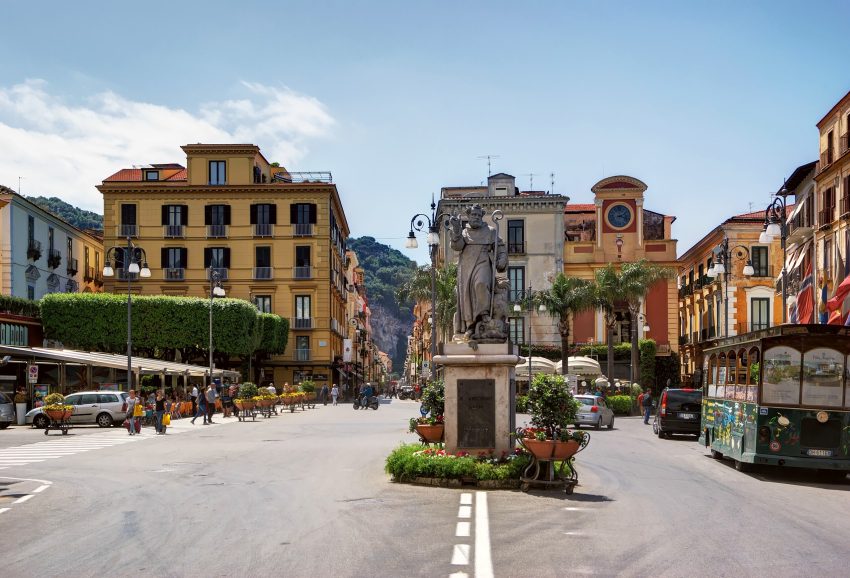
Piazza Tasso is Sorrento’s modern “front room,” laid out in the late 19th and early 20th centuries as the town expanded beyond its older core. Named for the poet Torquato Tasso, it sits on ground shaped by Sorrento’s dramatic geology: parts of the square edge a deep natural gorge that once carried water and mills below.
What makes it memorable is the contrast between everyday bustle and sudden views. Stand by the railings and you can look down into the cleft where the town drops away, a reminder that Sorrento is built on a tufa plateau. Around you, cafés and hotels occupy buildings that reflect Sorrento’s turn-of-the-century confidence as a resort town.
For things to see, treat it as a hub rather than a monument. Look for the small civic details—church façades at the edges, old hotel frontages, street life under the plane trees—and use the viewpoints to get your bearings. Early morning is calm; in the evening it’s at its liveliest, with the best atmosphere for a drink and people-watching.
Location: Piazza Tasso, Sorrento, Metropolitan City of Naples, Italy | Hours: 24 Hours | Price: Free

2. Valley of the Mills
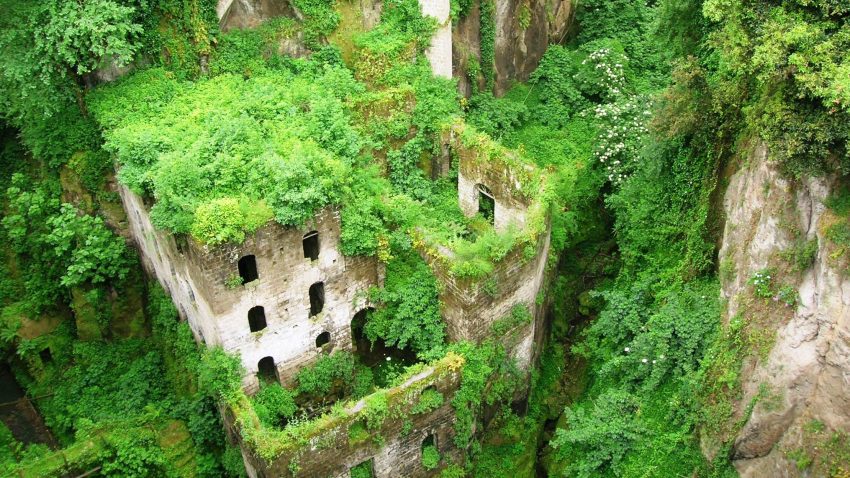
The Valley of the Mills is a quiet, overgrown ravine that preserves one of Sorrento’s most evocative industrial traces. Flour mills operated here for centuries, powered by water and sheltered by the steep, damp walls of the gorge. When transport routes and industry shifted, the mills were gradually abandoned, and nature took over.
Its particular microclimate is part of the story. Moist air lingers in the valley, encouraging ferns, mosses, and dense vegetation that make the ruins feel almost theatrical. The scene is less about a single building and more about a whole landscape reclaiming human work—stone arches, broken walls, and mill structures softened by greenery.
The main “sight” is the view itself, typically enjoyed from street-level lookout points above the ravine. Bring a zoom lens if you like details: you can pick out masonry, window openings, and the line of former water channels. Go after rain for the most atmospheric effect, but keep expectations realistic—this is a viewpoint experience, not a site you wander through.
Location: Vallone dei Mulini, Sorrento, Metropolitan City of Naples, Italy | Hours: 24 Hours | Price: Free.
3. Cattedrale di Sorrento
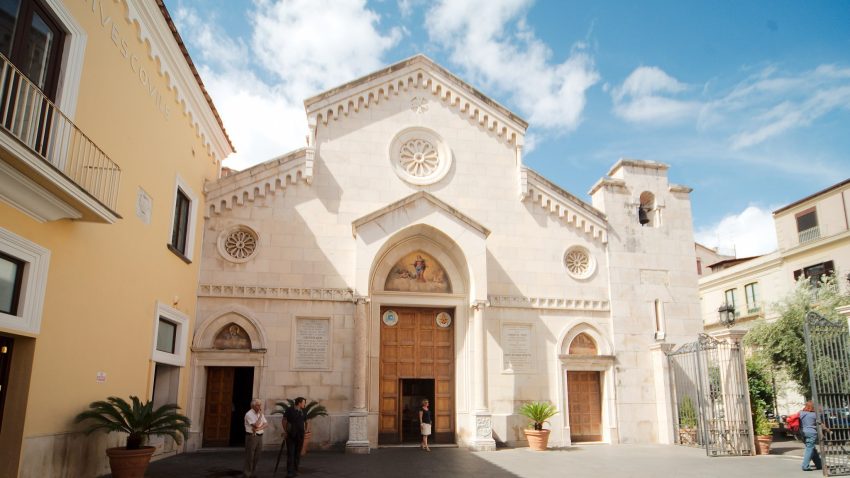
Sorrento Cathedral is rooted in the town’s early Christian past, though what you see today reflects centuries of rebuilding and stylistic change. Like many southern Italian cathedrals, it evolved in layers—medieval foundations, later renovations, and decorative updates that mirror Sorrento’s shifting fortunes and tastes.
Inside, the appeal is the calm and craftsmanship. Look for the interplay of architectural lines and devotional art, and note how chapels and altars often reflect local patrons, confraternities, and long-standing religious traditions. Even if you’re not focused on art history, the cathedral gives you a sense of Sorrento as more than a seaside resort: it’s a living town with deep rituals.
Spend time on the exterior too, especially where the cathedral meets the surrounding lanes of the historic centre. Notice the contrast between quiet ecclesiastical space and the hum of nearby streets. If you visit around a service time, the experience feels more grounded—less “attraction,” more part of daily Sorrentine life.
Location: Cattedrale di Sorrento, Via Santa Maria della Pietà, Sorrento, Metropolitan City of Naples, Italy | Hours: Daily: 08:00–12:30 & 16:30–20:30. | Price: Free. | Website
4. Corso Italia
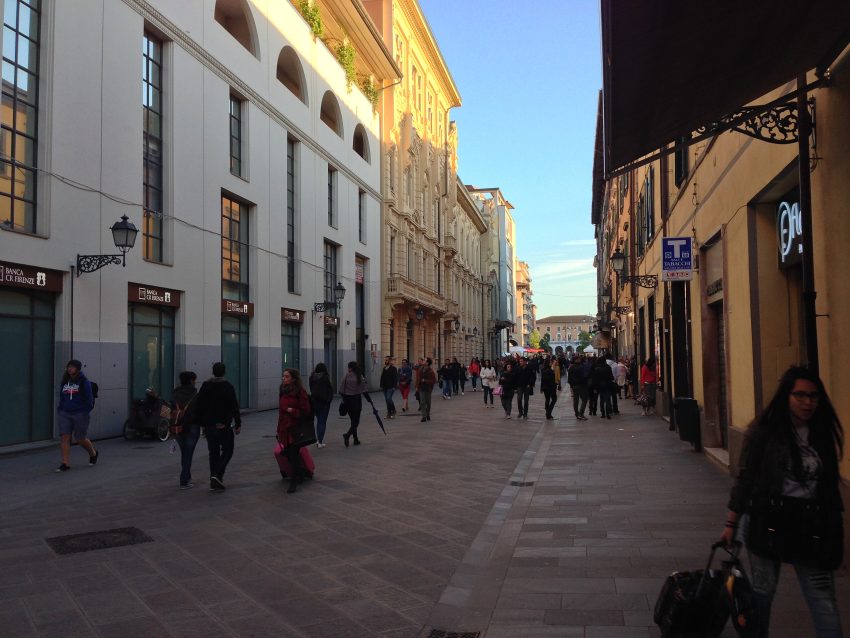
Corso Italia is Sorrento’s main artery, shaped by modern development and the town’s role as a gateway to the peninsula. As tourism grew in the 19th and 20th centuries, this became the commercial spine—where hotels, transport, and retail naturally clustered to serve visitors and locals alike.
What to “see” here is the urban rhythm: storefronts, patisseries, ceramics and inlay-wood shops, and the steady flow of people. Architecturally it’s a mix—some older façades, plenty of later frontages—so it’s not a street you visit for one historic monument, but for the sense of Sorrento in motion.
Pick your moment. In the afternoon it can feel busy and practical; later it becomes a promenade with a more relaxed, evening energy. Dip into side streets for older corners and quieter courtyards, then return to Corso Italia when you want cafés, shopping, and an easy, central route between key parts of town.
Location: Corso Italia, Pisa, Province of Pisa, Italy | Hours: The street itself is always open, but individual shops usually close for a few hours at lunchtime and in the evening, so plan shopping for standard Italian business hours. | Price: There is no entrance fee; Corso Italia is a public street that you can explore freely at any time.
5. Via San Cesareo
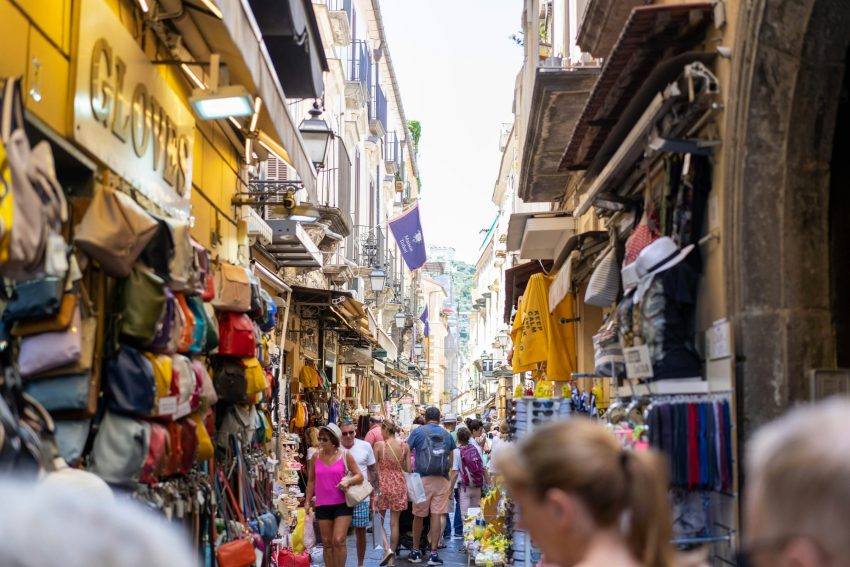
Via San Cesareo runs through the historic centre and still feels like an older Sorrento—narrower, more intimate, and layered with small-scale commerce. Streets like this formed the everyday network of the town long before modern boulevards, linking homes, workshops, churches, and small markets within the defensive footprint of the old settlement.
The street’s character comes from its textures: stone thresholds, shop signs, and the way buildings press close overhead. Many businesses here specialise in local food products, limoncello, and artisan goods, and even when it’s busy the street can feel more “local lane” than “main drag” because of its proportions.
To make the most of it, look beyond the merchandise. Watch for old doorways, small shrines, and glimpses into courtyards when doors are open. It’s also one of the best places to pick up edible souvenirs—citrus treats, olive oil, and confectionery—then pause at a small bar for an espresso before continuing into the quieter backstreets.
Location: Via S. Cesareo, 80067 Sorrento NA, Italy | Hours: 24 Hours. | Price: Free.
6. Chiesa di Sant'Antonino
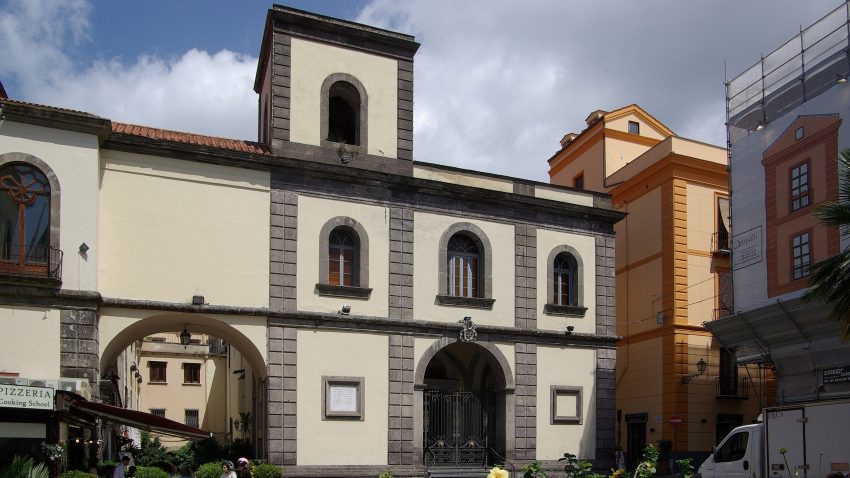
The church dedicated to Sant’Antonino honours Sorrento’s patron saint and reflects the town’s long continuity of local devotion. The site and cult grew over centuries, tying the community’s identity to a figure associated with protection and intercession—exactly the kind of relationship coastal towns often developed with their saints.
Inside, the atmosphere tends to be more intimate than grand. Look for devotional objects, side chapels, and the sense of a living sanctuary used by residents rather than curated for visitors. The building’s details—stonework, marble, carved elements—often reveal incremental patronage over time, with additions and restorations that mark different eras.
When you visit, slow down and pay attention to the quieter corners: votive offerings, candle stands, and the way locals move through the space. It’s also worth stepping outside and observing how the church fits into the surrounding streets and piazzas—religious life here is woven into daily movement, not separated from it.
Location: Basilica di Sant'Antonino, Piazza Sant'Antonino, Sorrento, Metropolitan City of Naples, Italy | Hours: (Summer) Daily: 07:00-21:00. (Winter) Daily: 07:00-19:00. | Price: Free.
7. Chiostro di San Francesco
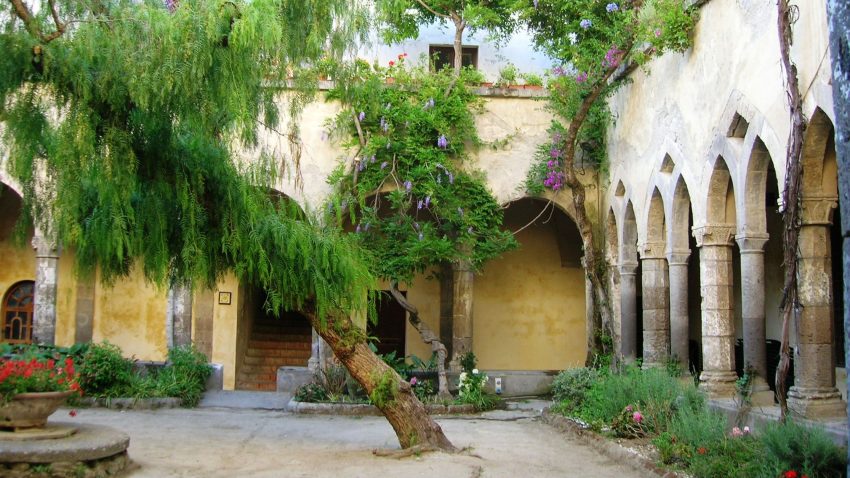
The Cloister of San Francesco is one of Sorrento’s most atmospheric historic spaces, reflecting monastic life and the quiet order of religious architecture. Cloisters were designed as places of reflection and circulation—an in-between world of arcades and gardens—linking church, monastery, and community functions.
Architecturally, it’s the arches and columns that draw you in. Over time, restorations and adaptations have layered different styles, giving the cloister an eclectic but harmonious look. Even if you arrive with no interest in monastic history, the geometry and shade make it an easy place to linger.
What to see is both structural and sensory: the stonework, the courtyard garden, the play of light, and the framing of views through the arcades. Visit when it’s quieter to hear the ambience—footsteps, distant bells, a muted hush that contrasts with nearby streets—then step into the adjacent church spaces if you want a fuller sense of the complex.
Location: Chiostro di San Francesco, Via San Francesco, Sorrento, Metropolitan City of Naples, Italy | Hours: Daily: 07:00–19:00. | Price: Free entry (some exhibitions may charge a small fee).
8. Piazza della Vittoria
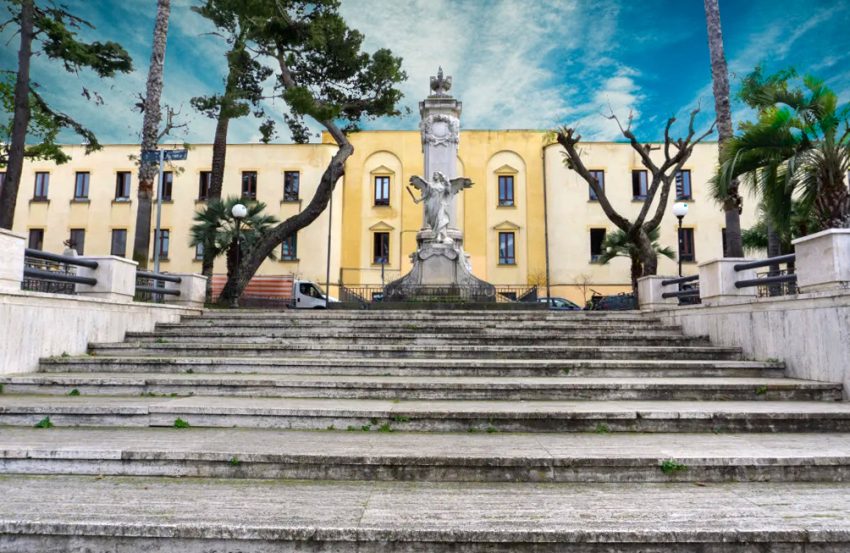
Piazza della Vittoria is a smaller, calmer square that feels more like a viewpoint and a pause than a central hub. Its name reflects a broader Italian tradition of commemorative “Victory” spaces, many of which gained symbolic weight in the modern era, even when the physical square itself remained modest.
What distinguishes it is its position near the cliff edge and gardened areas, giving it a more open, airy feeling than the tighter lanes of the historic centre. It’s the kind of place locals pass through routinely, but it rewards visitors who slow down and notice the setting.
For things to see, focus on the outlook and the framing of the landscape. From nearby edges you can often catch sea views and look toward the marina area below. It’s also a good place to sit briefly—less crowded than the main squares—before you continue into the old town streets or back toward the terraces.
Location: Piazza della Vittoria, Sorrento, Metropolitan City of Naples, Italy | Hours: 24 Hours | Price: Free.
9. Marina Grande
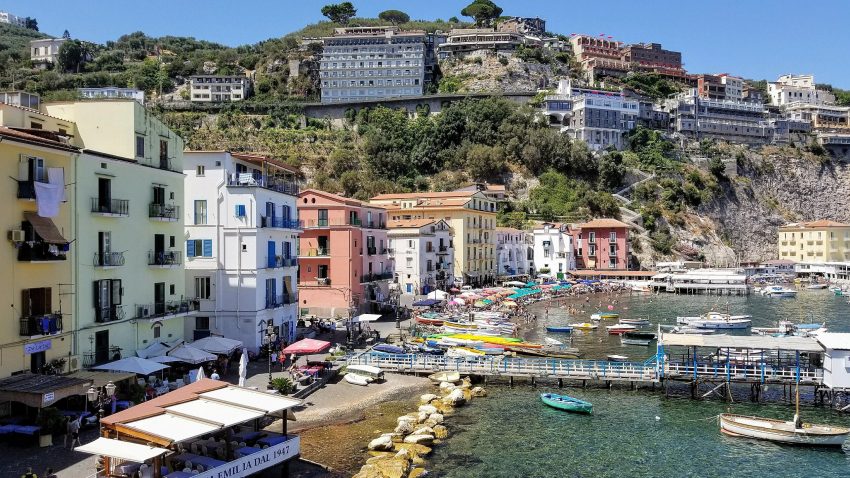
Marina Grande is Sorrento’s historic fishing harbour, and it preserves a stronger sense of the town’s pre-tourism life. Before Sorrento became a celebrated resort, the shoreline was where work happened: boats, nets, and the daily rhythm of fishing and coastal trade.
The setting is picturesque, but the appeal is also cultural. The cluster of pastel buildings, waterfront restaurants, and small boats gives you a layered scene—part working harbour, part lived-in neighbourhood, part visitor-friendly shore. It’s easy to imagine how this area once connected Sorrento to nearby coastal communities long before modern roads dominated movement.
When you visit, look for the details that signal continuity: boat names, net repairs, shrines, and the way locals use the waterfront outside peak dining times. The best “sights” are the harbour views and the shoreline perspective back toward the cliffs of Sorrento. If you’re there around golden hour, the light on the water and façades is often the highlight.
Location: Marina Grande, Sorrento, Via Marina Grande, Sorrento, Metropolitan City of Naples, Italy | Hours: 24 Hours | Price: Free. | Website
10. Teatro Tasso
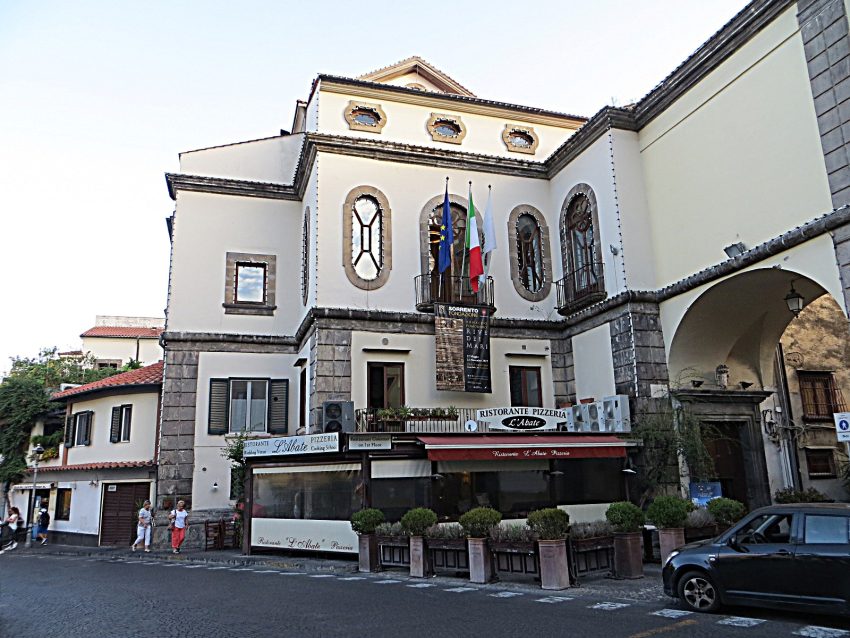
Teatro Tasso reflects Sorrento’s cultural confidence as a town that attracted visitors and cultivated civic entertainment. Small Italian theatres often emerged in the 19th and early 20th centuries as places for opera, drama, and community events—spaces where local identity and broader Italian cultural life met.
Its significance is less about lavish scale and more about function: a local venue that ties Sorrento to the tradition of Italian performance. The name again nods to Torquato Tasso, reinforcing how the town foregrounds its literary heritage in public life.
What to see depends on access and programming. If you can go inside, pay attention to the classic theatre proportions—auditorium layout, decorative elements, and stage framing. Even from outside, it’s worth noting as part of the town’s cultural landscape: a reminder that Sorrento isn’t only scenery, but also social and artistic life.
Location: Piazza Sant'Antonino, 25, 80067 Sorrento NA, Italy | Hours: Tuesday – Saturday: 10:00–14:00. | Price: Prices vary by show. | Website
11. Sedile Dominova
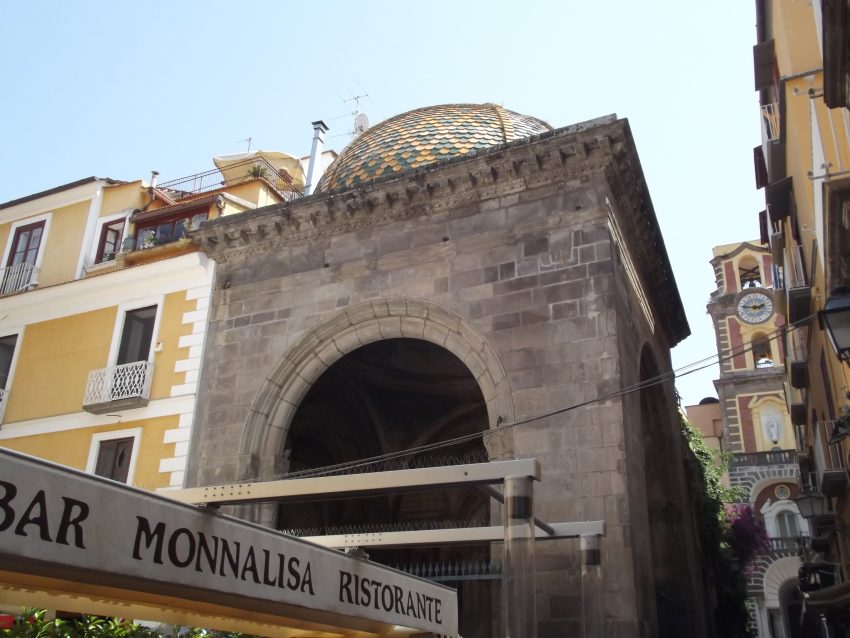
Sedile Dominova is one of Sorrento’s most distinctive survivals of medieval and early modern civic life. “Sedili” were meeting places associated with local nobility or governing groups, and this one retains a strong sense of continuity—an echo of a time when municipal identity was enacted through relatively small, well-defined institutions.
What makes it visually appealing is its pavilion-like form and decorative details. It’s not a grand palace, but it has presence: a compact civic monument that’s both functional in concept and symbolic in survival. Its location within the old town fabric underlines how governance once sat physically amid everyday streets rather than in a distant administrative district.
When you visit, spend time on the exterior details and the setting. Look at the roofline, any heraldic or decorative elements, and how the structure frames the small square around it. It’s also a good place to pause and imagine the social boundaries of the past—who gathered here, who didn’t, and how civic power was spatially expressed.
Location: Via S. Cesareo, 70, 80067 Sorrento NA, Italy | Hours: Monday: 11:00–15:00 & 19:00–23:59. Tuesday: 11:00–15:00 & 19:00–23:59. Wednesday: 11:00–15:00 & 19:00–23:59. Thursday: 11:00–15:00 & 19:00–23:59. Friday: 11:00–15:00 & 19:00–23:59. Saturday: 11:00–15:00 & 19:00–23:59. Sunday: 11:00–15:00 & 19:00–23:59. | Price: Free. | Website
12. Church of Carmine
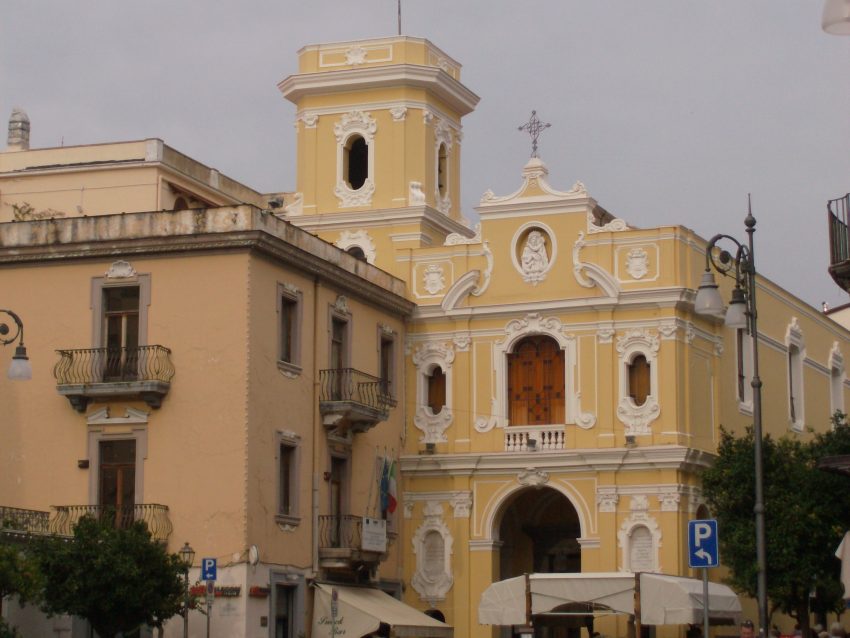
The Church of Carmine reflects a familiar Italian pattern: a local church tied to Carmelite devotion and to neighbourhood-level religious life. Over centuries, such churches often served particular communities—sailors, artisans, confraternities—becoming anchors for festivals, processions, and private devotion.
Architecturally, churches like this often combine restrained exteriors with richer interior elements. Look for altars, painted devotional imagery, and any distinctive chapels that hint at patronage by local families or religious groups. The details can be subtle, but they tend to reward close viewing.
To decide what to see, give yourself a few minutes inside rather than a quick glance. Observe the atmosphere—light, silence, candle glow—and check for any notable artworks or memorials. Step back outside and take in how the church sits within its streetscape; in Sorrento, these smaller churches often feel like punctuation marks in the town’s daily flow.
Location: Corso Italia, 193, 80067 Sorrento NA, Italy | Hours: Monday – Sunday: 07:00–12:00 & 16:30–19:00. | Price: Free; donations appreciated.
13. The Cathedral’s Bell Tower
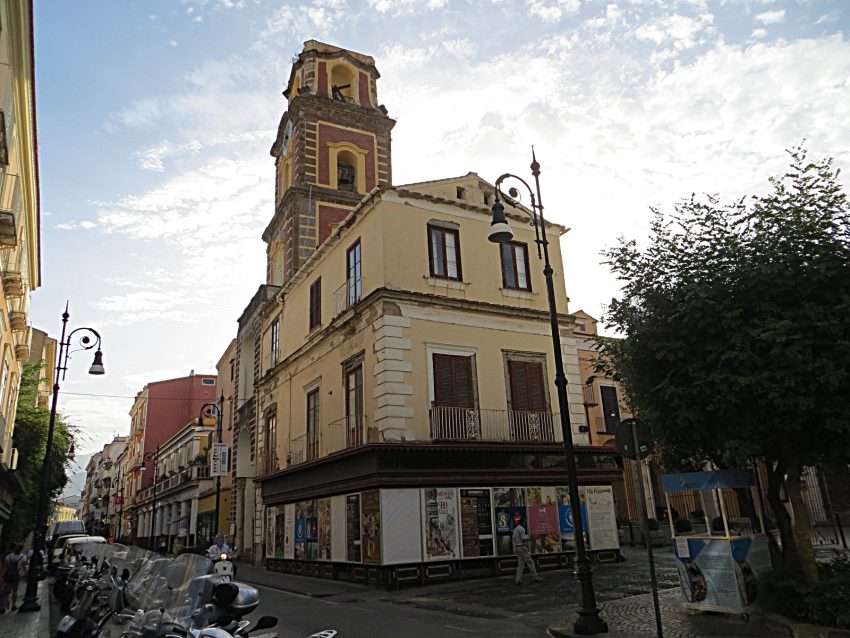
The Cathedral’s bell tower is a vertical marker of Sorrento’s religious and civic history. Bell towers were more than architectural flourishes: they regulated time, called communities to worship, and served as audible symbols of presence. In historic towns, the sound of bells stitched together neighbourhood life long before modern clocks and phones.
As an architectural element, a bell tower often preserves older construction phases even when the adjoining church changes. Details like stone type, openings, and proportions can hint at different periods of repair or enhancement. It’s also a helpful orientation point—once you spot it, you can navigate the centre more intuitively.
For what to see, study it from multiple angles. Look for changes in masonry, the profile of the belfry openings, and how it meets the roofline of the cathedral complex. If you’re nearby when bells ring, pause and listen—the experience connects architecture to lived function in a way that static viewing doesn’t.
Location: Via Santa Maria della Pietà, 44, 80067 Sorrento NA, Italy | Hours: Monday – Friday: 10:00–11:30 & 17:30–19:00. Saturday: Closed. Sunday: Closed. | Price: Free; donations appreciated. | Website
14. Chiesa Del Rosario
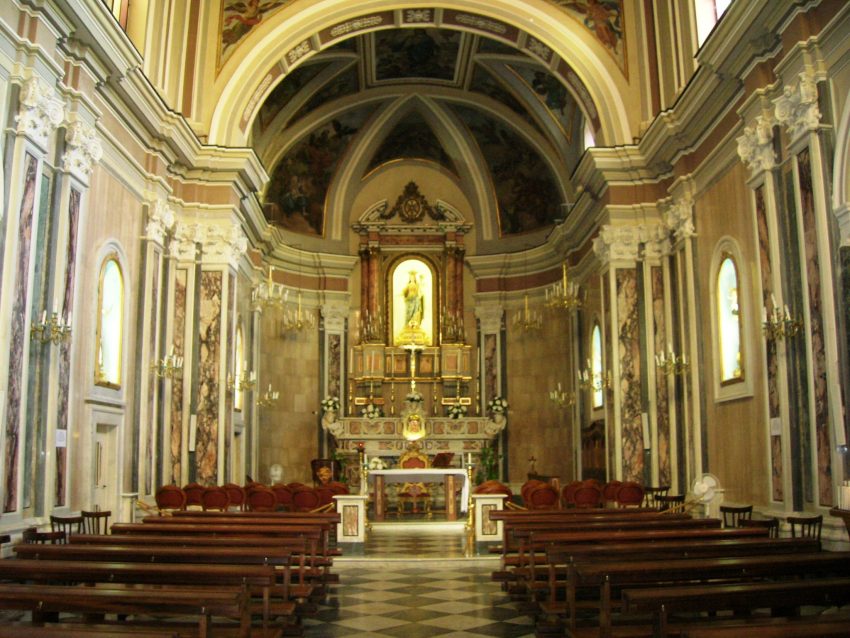
Chiesa Del Rosario reflects the widespread devotion to the Rosary that intensified in various periods of Italian religious life, often tied to confraternities and community prayer. Churches dedicated to the Rosary frequently served as neighbourhood anchors, hosting regular devotions and sometimes processional traditions that connected faith to public space.
The interest lies in its devotional character: a place built to support repeated, rhythmic prayer rather than monumental display. Interiors commonly emphasise Marian imagery, side chapels, and artworks that reinforce the themes of protection and intercession associated with Rosary devotion.
For what to see, pay attention to altars and iconography—especially any paintings or sculptures that local worshippers return to over generations. If it’s open and quiet, sit for a moment to absorb the atmosphere; these smaller churches often convey Sorrento’s spiritual life more directly than larger, more visited sites.
Location: Via Calata Punta Capo, 5, 80067 Sorrento NA, Italy | Hours: Check official website. | Price: Free; donations appreciated.
15. Ancient Walls and Parsano Bastion
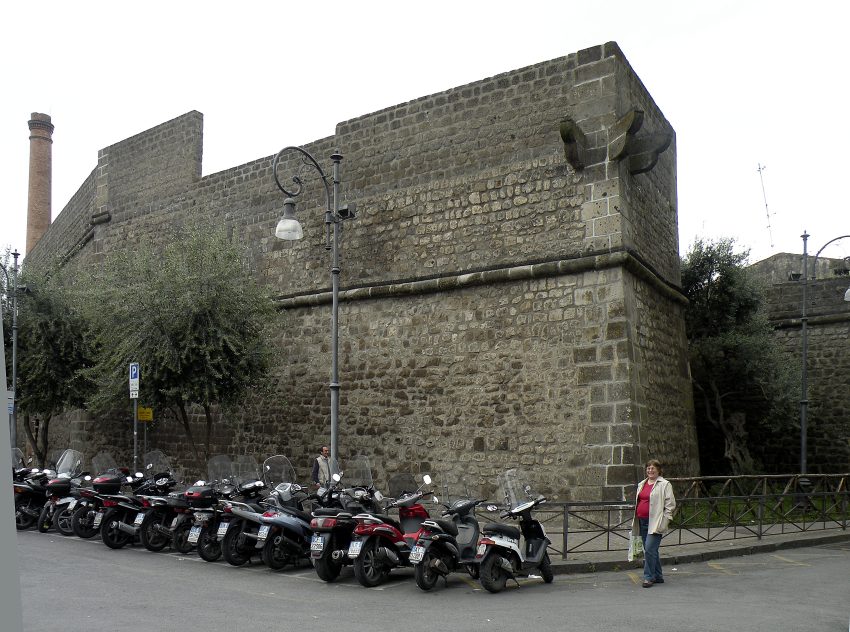
Sorrento’s ancient walls and the Parsano Bastion speak to the town’s long history of defence. Perched above the sea, Sorrento needed protection from coastal raids and conflict, and fortifications were a practical response: controlled entry points, thick masonry, and strengthened corners where attackers might test the perimeter.
Over time, defensive structures were modified to match changing threats and technology. Bastions reflect a later phase of fortification thinking—angular forms designed to better resist artillery and improve lines of sight. Even when only fragments remain, they tell you where the town’s edge once was and how tightly the historic centre was organised.
When you visit, focus on reading the town through its edges. Look for surviving stonework, changes in wall thickness, and the way modern streets align with older defensive lines. The best experience comes from connecting the pieces—spot a wall segment, then trace how it relates to gates, lanes, and viewpoints—so you see Sorrento not only as a scenic place, but as a settlement shaped by strategy and survival.
Location: Via degli Aranci, 18, 80067 Sorrento NA, Italy | Hours: Daily: 10:00–13:00 & 19:00–23:00. | Price: Free.

Moira & Andy
Hey! We're Moira & Andy. From hiking the Camino to trips around Europe in Bert our campervan — we've been traveling together since retirement in 2020!
This website uses affiliate links which earn a small commission at no additional cost to you.
Walking Tour Summary
Distance: 1.5 km
Sites: 15