Self-Guided Walking Tour of Carcassonne (2026)
This website uses affiliate links which earn a small commission at no additional cost to you.
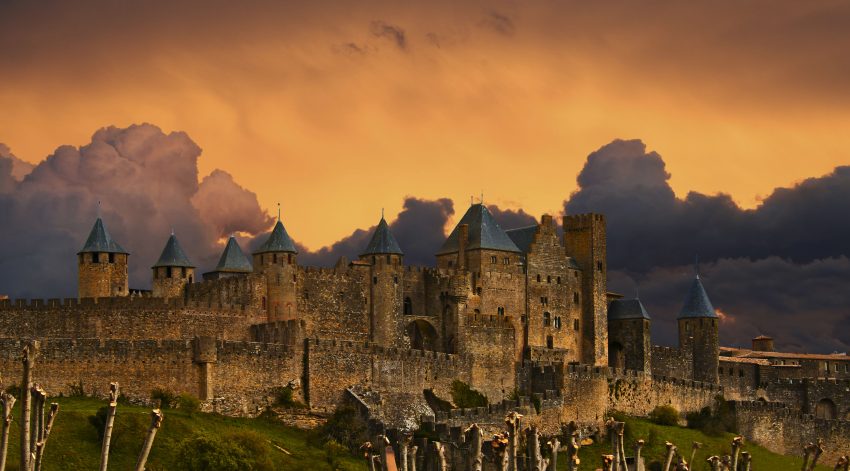
Carcassonne is one of those places that feels made for slow exploration on foot. With its dramatic ramparts, stone lanes, and storybook towers, the city invites you to wander without rushing, stopping whenever something catches your eye. A self-guided route gives you the freedom to enjoy the atmosphere, take photos, and discover some of the best things to see in Carcassonne at your own pace.
This self-guided walking tour is ideal for travelers who want structure without being tied to a group schedule. You can start when it suits you, pause for coffee or lunch, and spend longer at the places that interest you most, whether that is a historic gate, a quiet square, or a viewpoint over the walls. It is a flexible way to experience the city while still covering its main highlights.
As you walk through Carcassonne, you will move between major landmarks and smaller details that give the city its character, from fortified entrances to charming streets lined with shops and restaurants. The route is easy to adapt, so you can shorten it or add extra stops depending on your time and energy. Whether it is your first visit or a return trip, exploring on foot is one of the most rewarding ways to experience this remarkable medieval city.
How to Get to Carcassonne
By Air: Carcassonne is served by Carcassonne Airport (CCF), a small airport just outside the city, which makes arrivals relatively straightforward for a walking-tour trip. The airport has regular and seasonal flights (including UK routes such as London Stansted, depending on the season), and airport shuttle services are timed around flight arrivals and departures, with stops including the city centre and Carcassonne SNCF station. This is the easiest option if you want a quick transfer and minimal travel time on arrival. For the best deals and a seamless booking experience, check out these flights to Carcassonne on Booking.com.
By Train: Carcassonne is well connected by rail, and arriving by train is one of the most convenient ways to visit if you are already in France. Services run through Carcassonne station on regional and intercity routes, making it practical to travel in from cities such as Toulouse and continue on foot or by local transport to your accommodation and the historic centre. Train travel is a good choice for a relaxed arrival, especially if you want to avoid driving and parking. You can use SNCF Connect to check schedules, compare routes, and purchase tickets for National (SNCF ) and regional trains (TER). For a more streamlined experience, we recommend using Omio, which allows you to easily compare prices, schedules, and book tickets for both National and Regional travel across all of Europe, all in one place.
By Car: Driving to Carcassonne is a flexible option if you are combining the visit with a wider road trip in southern France, and it makes it easier to explore beyond the city before or after your walk. Once you arrive, it is usually best to park and explore on foot, especially around the medieval core where streets can be busy. By Bus: budget travelers can also reach Carcassonne by coach or use local shuttle/bus links, including airport-to-city transport, which can be useful if flight and train times do not line up neatly. If you are looking to rent a car in France I recommend having a look at Discover Cars, first, as they compare prices and review multiple car rental agencies for you.
A Short History of Carcassonne
Carcassonne in the Ancient and Early Medieval Periods
The history of Carcassonne begins long before its famous medieval skyline took shape. The hilltop settlement was occupied in antiquity and later developed under Roman influence, when defensive walls were established to protect an already strategic stronghold. Parts of the later fortifications preserve this deep past, and the enduring importance of the site can still be felt when visiting the Château et Remparts, where layers of construction reflect centuries of adaptation and rebuilding.
After the decline of Roman authority, Carcassonne passed through the hands of different powers during the early medieval period, including Visigothic and then Frankish rule. During these centuries, the fortified settlement remained important as a defensive and administrative centre, with gates and walls continuing to define daily life. The later monumental gateways, including the Porte de l'Aude and Porte Narbonnaise, stand on a long tradition of controlled entry and military protection that reaches back to these earlier eras.
Religion also became increasingly central to the life of Carcassonne as Christianity spread and ecclesiastical institutions gained influence. Over time, sacred buildings and local traditions helped shape the city's identity alongside its military role. The foundations for the later importance of Basilique Saint-Nazaire were laid in this long transitional period, as Carcassonne evolved from an ancient fortified settlement into a medieval stronghold with both political and spiritual significance.
Carcassonne in the High Middle Ages and the Cathar Era
By the High Middle Ages, Carcassonne had become a powerful fortified city associated with regional lords and competing feudal interests. Its walls, towers, and defended entrances were strengthened as warfare and political rivalry intensified across the region. The dramatic scale of the Château et Remparts today reflects this period of expansion, when Carcassonne's fortifications were not only practical military structures but also symbols of authority and prestige.
Carcassonne is also closely tied to the history of the Cathars and the conflicts that transformed southern France in the 12th and 13th centuries. During the Albigensian Crusade, the city became a key target, and the struggle for control brought siege, upheaval, and a major shift in power. Later sites such as the Musee de L'Inquisition and the Musée de l'Ecole, while much more recent in origin, help visitors connect with the social and religious tensions of medieval life, including the way belief, discipline, and education were shaped by the era's institutions.
The medieval city that visitors admire today was also a lived-in urban environment, not just a fortress. Wells, streets, workshops, churches, and homes made Carcassonne a functioning community within its walls. Features such as La Grand Puit (the big well) point to the practical realities of survival in a fortified city, especially during times of siege, while the growing importance of Basilique Saint-Nazaire reflects the close relationship between civic identity, worship, and artistic patronage in medieval Carcassonne.
Carcassonne in the Late Medieval and Early Modern Periods
After the major crusading conflicts, Carcassonne continued to function as a stronghold, but its political and military role gradually changed as borders, kingdoms, and strategic priorities shifted. The city remained fortified and important, yet over time some of its military prominence declined relative to earlier centuries. Even so, its gates and walls, including the imposing Porte Narbonnaise, continued to define the image of Carcassonne and preserve its defensive heritage.
Religious and architectural life continued to develop during this period. Basilique Saint-Nazaire was expanded and embellished over time, blending Romanesque and Gothic elements that reveal the changing tastes and ambitions of different centuries. This makes it one of the clearest places to see how Carcassonne evolved culturally after its most turbulent medieval chapters, with art and worship leaving a lasting mark alongside the military architecture.
As life changed, parts of Carcassonne adapted to new social and economic patterns, while older structures remained in use or fell into varying states of repair. The medieval core endured, but like many historic fortified towns, it faced the pressures of changing times. The result was a city rich in memory and built fabric, where practical spaces such as wells, gates, and defensive works remained as reminders of earlier centuries even as the world around Carcassonne moved on.
Carcassonne in the 19th Century Restoration and Modern Era
By the 19th century, Carcassonne’s medieval fortifications were in a poor state, and there were serious concerns about decay and loss. A major restoration campaign transformed the future of the city, preserving and rebuilding key sections of the Château et Remparts and helping secure Carcassonne’s place as one of the most recognisable historic urban landscapes in Europe. Although restoration choices have sometimes been debated, the work was crucial in preventing the disappearance of a remarkable architectural legacy.
This period also saw growing interest in history, memory, and public commemoration. The Jean-Pierre Cros-Mayrevieille Monument reflects the role of local advocates and scholars who helped champion the preservation of Carcassonne and its heritage. Their efforts contributed to a broader appreciation of the city not only as a former fortress but as a cultural treasure whose medieval streets, churches, and defences deserved long-term protection.
In the modern era, Carcassonne has continued to reinterpret its past through museums, performance spaces, and heritage sites. Places such as the Musée de l'Ecole, Musee de L'Inquisition, and Jean Deschamps Theatre show how the city presents different aspects of its history and identity to visitors, from everyday life and institutions to cultural events staged within a historic setting. Together with landmarks like the Porte de l'Aude, Porte Narbonnaise, Basilique Saint-Nazaire, La Grand Puit, and the Château et Remparts, they help tell the long and layered story of Carcassonne across the centuries.
Where to Stay in Carcassonne
To make the most of visiting Carcassonne and this walking tour, then you should consider staying overnight near the centre so you can explore at a relaxed pace in the morning and evening, when the atmosphere is often at its best. The best base depends on your style of trip: inside the medieval citadel for character and convenience, near the bridge between the two centres for easy access to both sides, or in the lower town if you want rail links, shops, and better-value stays.
If you want the most atmospheric stay, choose accommodation in or right beside the medieval citadel (La Cité). This area is ideal if your priority is stepping straight out into the historic streets and getting an early start before day visitors arrive. A classic splurge option is Hôtel de la Cité Carcassonne - MGallery, while a popular nearby mid-range choice is Hôtel l'Aragon. For a comfortable stay close to the citadel entrance, you can also look at Hôtel du Pont Vieux.
A very practical area for this walking tour is around the river crossing and Pont Vieux / Rue Trivalle side, which gives you easy access to both the medieval city and the lower town. This is a strong choice if you want views, restaurants nearby, and a shorter walk between the two main parts of Carcassonne. Good options here include TRIBE Carcassonne and Hôtel du Pont Vieux, both well placed for walking without needing a car during your stay.
For a more budget-friendly and transport-friendly base, stay in Bastide Saint-Louis (the lower town), especially if you are arriving by train or want more everyday shops and dining close by. You will usually get better value here while still being able to walk to the main sights and the start of your route. Reliable options often considered in this area include Hôtel de la Bastide, ibis Carcassonne Centre - La Cité, and Hotel Astoria.
If you are driving, it can also be worth choosing a hotel just outside the busiest historic streets where parking is simpler, then walking into the centre for the tour. In that case, focus on places on the edge of La Cité or near the lower town’s main avenues, so you keep a good balance between access and convenience. For most visitors doing this walking tour, the best overall compromise is to stay either near Pont Vieux (easy access to both areas) or in Bastide Saint-Louis (better value and transport links), while La Cité is best if the medieval setting is the main reason for your trip.
Your Self-Guided Walking Tour of Carcassonne
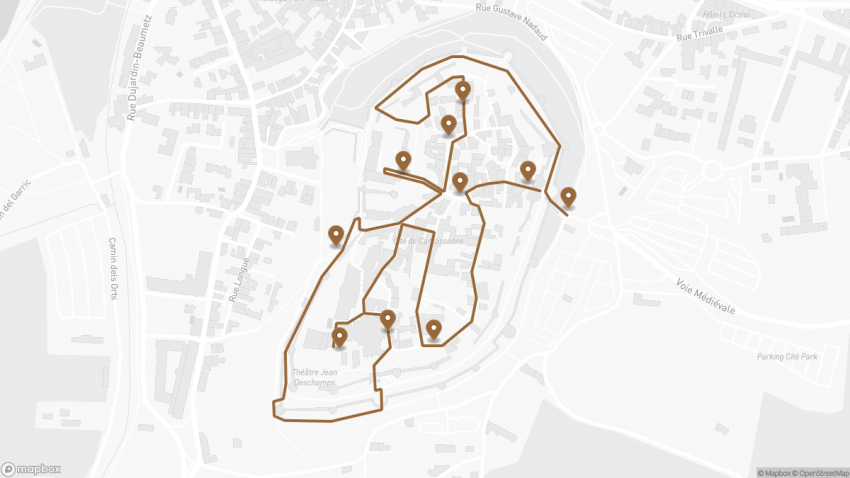
Discover Carcassonne on foot with our walking tour map, which guides you from one stop to the next as you explore its medieval streets, fortified gates, and historic landmarks at your own pace. As this is a self-guided walking tour, you are free to skip places, linger longer at the sights that interest you most, and take coffee stops whenever you want.
1. Dame Carcas
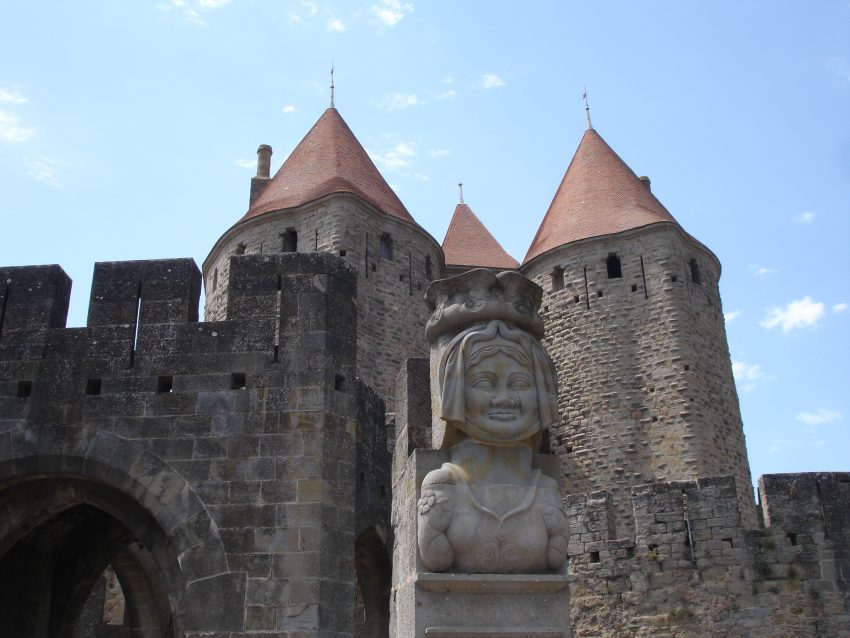
Dame Carcas is the legendary heroine most closely associated with the identity and name of Carcassonne. According to local tradition, she defended the city during a siege and used a clever ruse to convince the attackers that the citadel still had abundant supplies, leading them to withdraw. The legend is not treated as literal history, but it is a central part of Carcassonne’s cultural memory and is still actively told in local tourism interpretation.
What makes Dame Carcas especially interesting for visitors is how the story blends myth, medieval imagery, and civic identity. She is presented as a symbolic protector of the city, and the tale is woven into how people experience the cité today, especially around the main entrance. The official tourism material explicitly connects her legend to the city name and encourages visitors to “greet” her at the Narbonnaise Gate, which shows how deeply the figure remains embedded in the visitor experience.
When you visit, the key thing to see is the statue associated with Dame Carcas near the Narbonnaise Gate, one of the best-known arrival points into the medieval citadel. It is a good place to pause and take in the story before continuing into the fortified city, because it frames Carcassonne not only as a military monument but also as a place of legend. If you are interested in the material history behind the icon, local tourism information also notes that the original statue can be seen in the lapidary museum, while the one by the gate is a reproduction.
Location: Buste de Dame Carcas, Carcassonne, France | Hours: Open 24 hours. (Outdoor public monument at the entrance to the Cité.) | Price: Free. | Website

2. Musee de L'Inquisition
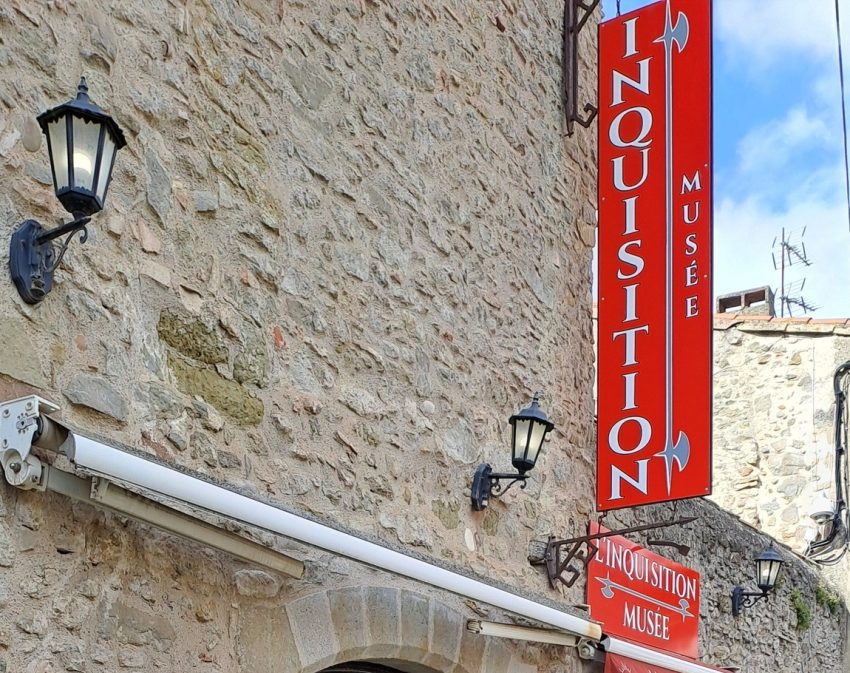
The Musée de l’Inquisition in Carcassonne is a private museum in the heart of the medieval city that focuses on the history and imagery associated with the Inquisition and judicial punishment. Tourism listings describe it as being housed in a large historic building and emphasize its collection of instruments and interpretive displays covering the medieval period through later centuries.
Historically, the subject matter links to the wider religious and political history of southern France, including the medieval conflicts and repression often associated in popular memory with this region. The museum presents this theme in a dramatic way, so it is best approached as a themed historical attraction rather than a comprehensive academic museum. That distinction helps set expectations before you go in.
What to see is mainly the collection itself: displays of instruments, character figures, and explanatory material about the period. If you are interested in darker aspects of medieval history and historical justice systems, it can be an engaging stop; if not, it may feel intense compared with the basilica, ramparts, or civic-history sites. It is most rewarding when visited with a critical, historical mindset.
Location: 7 Rue Saint-Jean, Pl. du Grand Puits 9 rue du, 11000 Carcassonne, France | Hours: (Winter) January 2 – June 30; September 1 – December 31; Daily: 10:00–17:00. (Summer) July 1 – August 31; Daily: 10:00–19:00. | Price: Adults: €12; Students: €9.50; Children: €8.50. | Website
3. La Grand Puit
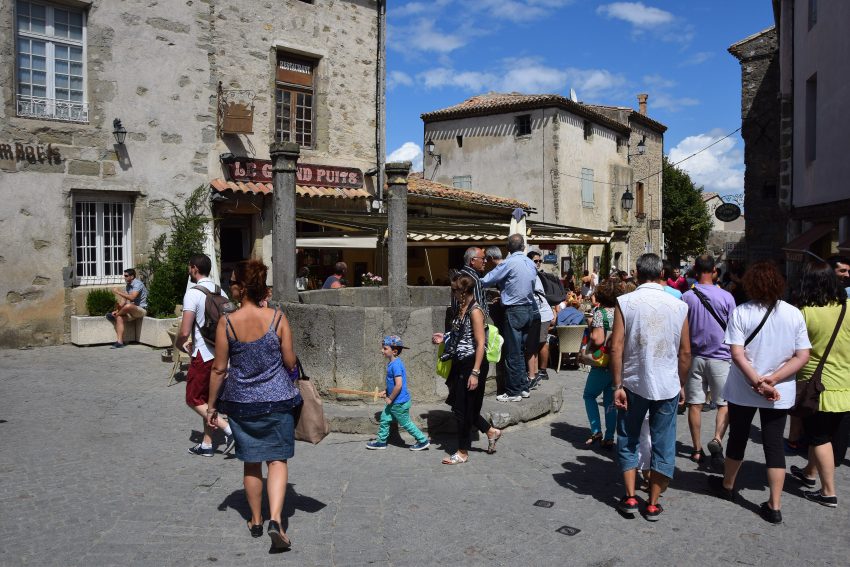
La Grand Puit (Le Grand Puits, the Big Well) is one of the best-known wells inside the Cité de Carcassonne and is often described as the oldest and most mysterious of the city’s wells. Wells were essential to life in a fortified settlement, especially during periods of siege, so even a seemingly modest feature like this connects directly to the citadel’s survival and day-to-day functioning.
Part of its appeal comes from the visible historic details: accounts commonly note medieval elements in the well structure alongside later decorative features, including Renaissance-era additions. It also carries local legend, which adds to its long-standing aura and explains why it attracts attention beyond its practical purpose. In a place full of walls and towers, the well offers a different angle on how the cité actually worked.
When visiting, look closely at the stone surround, ironwork, and the way the well sits within the street space around it. It is an easy site to pass quickly, but it becomes more interesting if you treat it as infrastructure history rather than only a photo stop. It also sits in a lively part of the cité, so it works well as a point to pause and observe the atmosphere around you.
Location: Pl. du Grand Puits, 11000 Carcassonne, France | Hours: 24 Hours. | Price: Free.
4. Château et Remparts
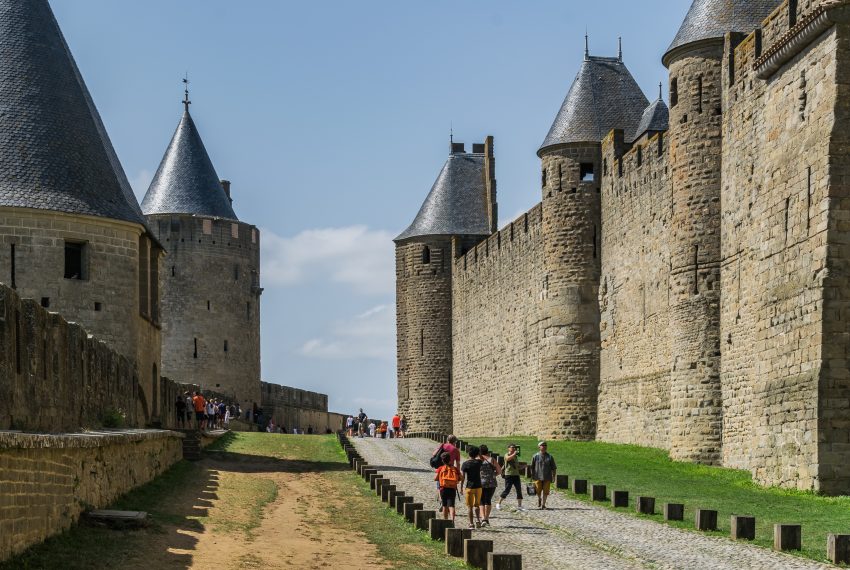
The Château et Remparts de la Cité de Carcassonne is the core defensive complex of the medieval city and one of France’s major fortified monuments. The château comtal (count’s castle) emerged from the seigneurial residence of the Trencavel family, while the surrounding ramparts preserve centuries of military architecture. The site as a whole reflects a very long timeline, from early settlement to medieval fortification and later restoration.
Carcassonne’s scale is a major part of its historical importance: the cité is famous for its double walls, towers, and extensive defensive circuit, and the castle-ramparts visit is where that system becomes easiest to understand. Rather than seeing only the exterior silhouette, the monument lets you move through towers, curtain walls, and strategic passages that reveal how the fortress functioned.
What to see here depends on your interests, but the main draw is the rampart circuit and the shifting views across the citadel, lower town, and surrounding landscape. The castle interiors and defensive features provide context, while the elevated walkways give the cinematic panoramas most visitors remember. This is the place to spend time if you want the clearest sense of Carcassonne as a military stronghold, not just a picturesque old quarter.
Location: 1 Rue Viollet le Duc, 11000 Carcassonne, France | Hours: (Summer) April 1 – September 30: 10:00–18:30. (Winter) October 1 – March 31: 09:30–17:00. | Price: Adults: €19 (June 2 – September 30) or €13 (October 1 – March 31); Under 18: free; Ages 18–25 (EU nationals and regular non-EU residents in France): free. | Website
5. Porte de l'Aude
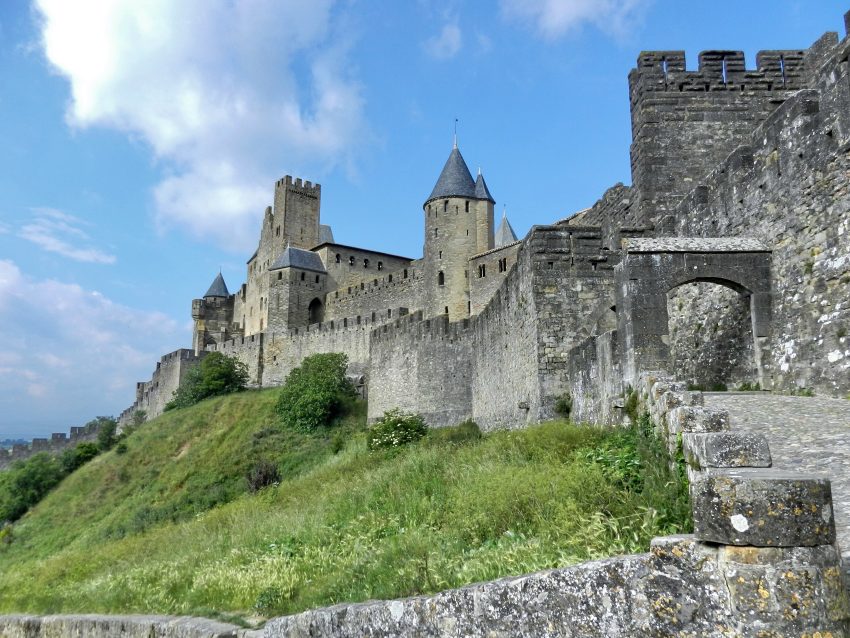
Porte de l’Aude is one of the two principal gateways into the medieval citadel of Carcassonne, and it is the more dramatic, defensive-looking approach. Set on the side facing the River Aude, it was designed as part of the fortified system that made the cité so formidable, with steep access and strong masonry controlling entry. Carcassonne’s wider fortifications preserve layers of history from the medieval period and later restorations, especially the 19th-century campaign that helped save the citadel.
What makes this gate especially memorable is the approach itself. Instead of a broad ceremonial entrance, you get a more rugged and atmospheric arrival, with stone walls rising above you and views down toward the river and lower town. It feels less like an urban entrance and more like passing through a defensive choke point, which helps you understand how the city’s military architecture worked in practice.
When visiting, take time to look back as well as forward. The angles around the gate offer some of the best close-up views of towers, walls, and the slope beneath the cité, and the stonework is particularly striking in changing light. It is also a good place to appreciate the contrast between the citadel’s monumental silhouette and the more intimate lanes once you are inside.
Location: 30 Côte de la Cité, 11000 Carcassonne, France | Hours: 24 Hours. | Price: Free. | Website
6. Basilique Saint-Nazaire
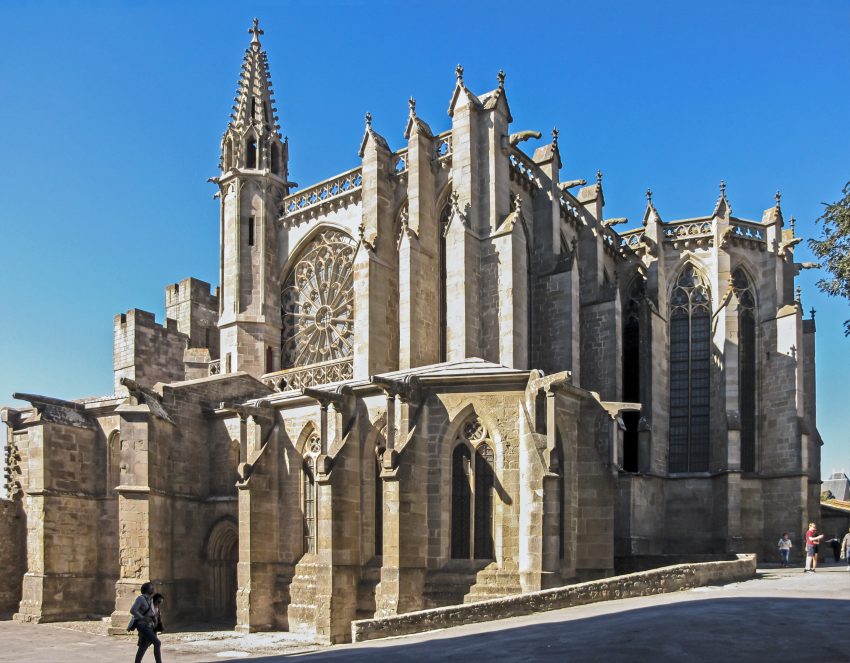
Basilique Saint-Nazaire (more fully Saints Nazarius and Celsus) is one of the great historic monuments inside the Cité de Carcassonne. Built and rebuilt between the 11th and 14th centuries on an earlier sacred site, it reflects Carcassonne’s importance in the medieval period and the patronage of local lords and clergy. It later lost cathedral status, but it remains one of the defining monuments of the citadel.
Architecturally, the basilica is notable for the meeting of Romanesque and Gothic styles in a single building. The older, heavier Romanesque forms contrast with the lighter Gothic additions, especially in the choir and apse. This blend is part of what makes the church so rewarding to visit, because you can read different building phases directly in the stone, vaulting, and overall proportions.
Inside, the main highlights are the stained glass and the change in atmosphere from nave to choir. The basilica is often described as one of the jewels of the cité, and even visitors with little interest in church history usually respond to the light and color in the Gothic sections. Look closely at the sculptural details and take a slower circuit around the interior rather than just stepping in and out.
Location: La Cité, Pl. Saint-Nazaire, 11000 Carcassonne, France | Hours: Daily: 09:00–17:00. Sunday: 09:00–10:45 & 12:15–17:00. Saturday: 09:00–17:00. (Notes) No public visits during services. | Price: Free; donations appreciated.
7. Jean Deschamps Theatre
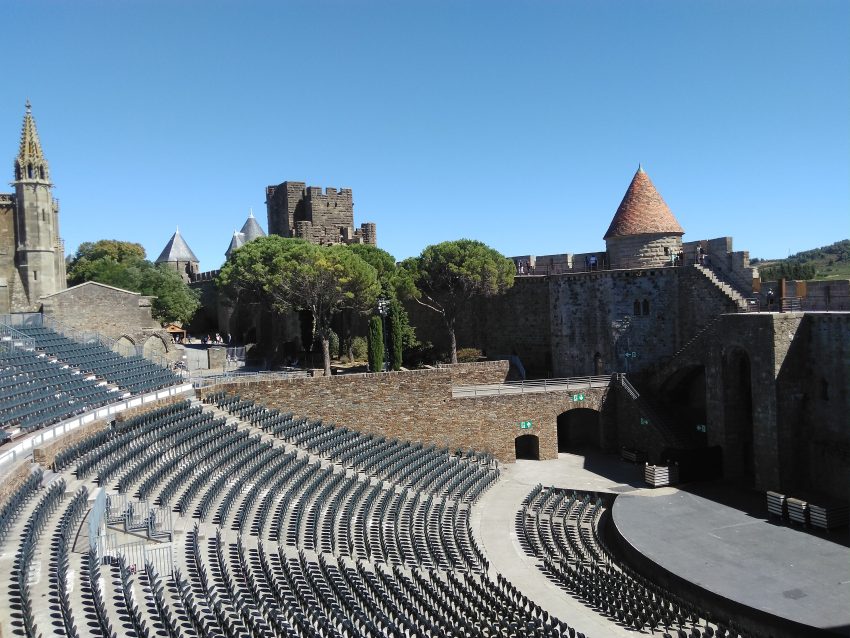
The Jean Deschamps Theatre is an open-air performance venue inside the medieval citadel, known historically as the Grand Théâtre de la Cité before taking its current name in 2006. It was created in the early 20th century (1908) and occupies a remarkable position near the basilica, giving it an unusual mix of heritage setting and live cultural use. That combination is part of what makes it distinctive in Carcassonne.
Its setting is the real draw, even when there is no performance on. The theatre sits within the stone fabric of the cité and is closely tied to the historic surroundings, which means the approach feels very different from a modern arts venue. During festival periods it becomes one of the city’s best-known stages, but outside event times it is still worth seeing as part of the citadel’s layered life beyond purely medieval monuments.
When you are there, pay attention to the relationship between the seating area, stage, and the enclosing stone architecture around it. It helps explain why performances here are so popular: the theatre feels intimate while still being monumental. If you visit in summer, it is also worth checking whether anything is scheduled at the Festival de Carcassonne, since the venue is a key festival stage.
Location: 1 Pl. Saint-Nazaire, 11000 Carcassonne, France | Hours: Check event schedule; on show nights, ticket office typically opens 2 hours before showtime. | Price: Prices vary by show. | Website
8. Musée de l'Ecole
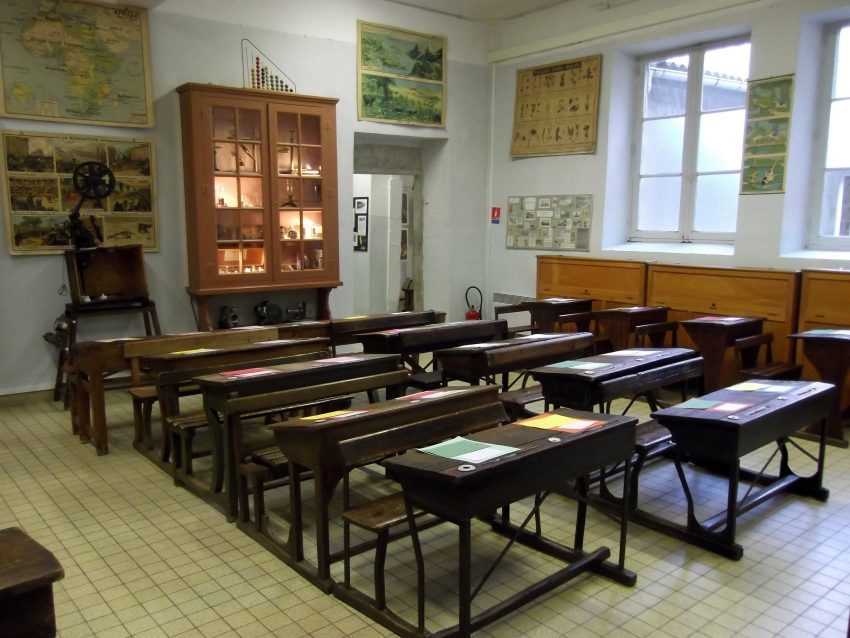
The Musée de l’Ecole (School Museum) is one of the most characterful small museums inside the cité because it shifts the focus away from knights and fortifications toward everyday life and education. It recreates the atmosphere of French communal schooling during the Third and Fourth Republics, covering a period that was central to the development of modern primary education in France.
The museum’s collections include classroom materials used from the late 19th century through to the 1960s, and the displays are spread across several rooms. It is not only about nostalgia; it also gives context for how teaching, discipline, handwriting, and classroom technology evolved. This makes it an unexpectedly useful stop if you want a broader picture of French social history, not just medieval Carcassonne.
What visitors usually enjoy most is the interactive side: old desks, ink-writing practice, and period teaching tools that make the experience feel lived-in rather than static. The collection of vintage projectors is another highlight. If you have an interest in schools, childhood history, or French civic life, this museum is much more rewarding than its small size suggests.
Location: 3 Rue du Plo, 11000 Carcassonne, France | Hours: (Summer) April 1 – September 30; Daily: 09:45–12:30 & 13:30–18:15. (Winter) October 1 – March 31; Tuesday – Saturday: 09:45–12:30 & 13:30–18:15. Closed on Monday, Sunday. | Price: Adults: €4; Reduced: €3. | Website
9. Jean-Pierre Cros-Mayrevieille Monument
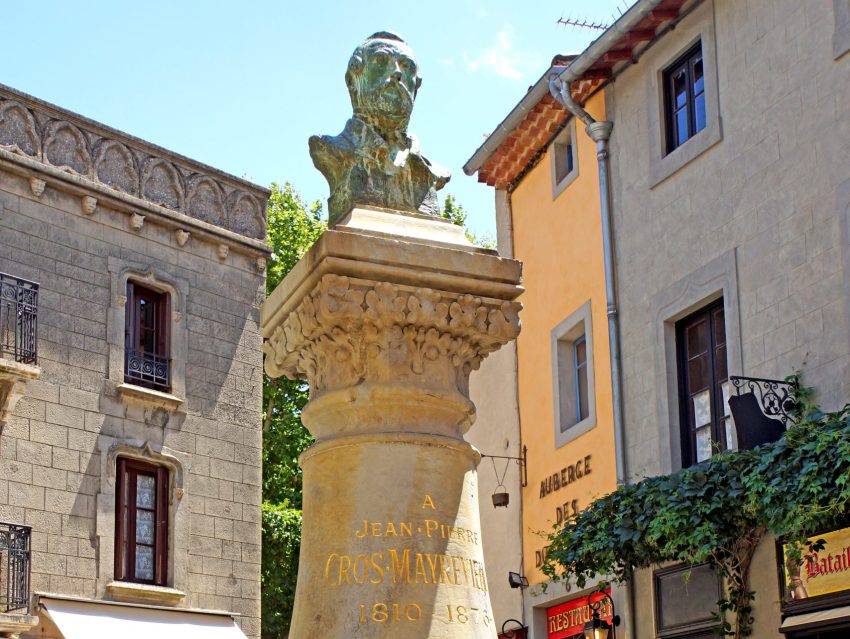
The Jean-Pierre Cros-Mayrevieille Monument honors one of the key figures in the preservation of Carcassonne’s medieval citadel. Cros-Mayrevieille, a local historian and archaeologist, was central to the 19th-century campaign that opposed demolition of the fortifications and helped secure their protection and restoration. Without that preservation movement, the citadel would look very different today.
The monument itself is a bust, and it is more than a simple commemorative statue. The base is known for detailed sculptural work representing the city’s fortifications, which is a fitting tribute to someone so closely associated with saving them. It stands as a reminder that Carcassonne’s survival as a historic site was not inevitable but the result of political and civic action.
When you stop here, it is worth treating it as a historical pause rather than just another photo point. Read the monument as part of the story of heritage conservation in France: the medieval walls belong to one era, but the decision to preserve them belongs to another. It is a small site, but an important one for understanding why the cité still exists in such a complete form.
Location: Le Grand-Puits, 11000 Carcassonne, France | Hours: 24 Hours. | Price: Free.
10. Porte Narbonnaise
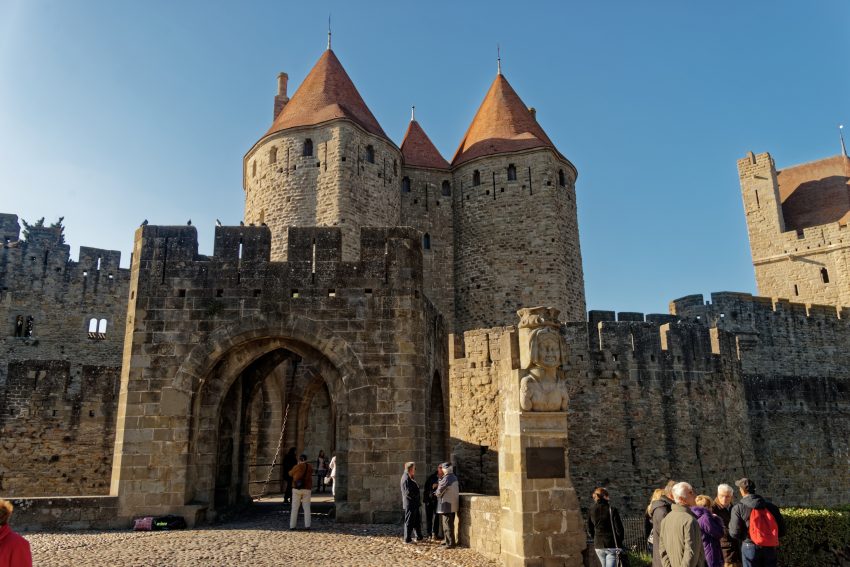
Porte Narbonnaise is the principal and most famous entrance to the Cité de Carcassonne, and for many visitors it is the first image they associate with the city. This monumental gateway, with its twin towers and heavily defended passage, forms a classic medieval statement of power and control. It is one of the key points through which the citadel is accessed today.
Historically, the gate was part of the fortified system that made Carcassonne one of Europe’s most celebrated walled cities. Tourism descriptions often highlight defensive features such as portcullises and murder holes, which are exactly the details that make the entrance so effective at conveying the military logic of the place. The gate does not just look impressive; it shows how architecture was used to intimidate and defend.
When you are there, spend a little time before entering to take in the full facade and towers from outside, then notice how the experience changes once you pass through the gateway into the busier streets inside. It is a strong contrast between fortress exterior and living historic quarter. If you visit at quieter times of day, the gate’s scale and geometry are even easier to appreciate.
Location: Prte Narbonnaise, 11000 Carcassonne, France | Hours: 24 Hours. | Price: Free. | Website

Moira & Andy
Hey! We're Moira & Andy. From hiking the Camino to trips around Europe in Bert our campervan — we've been traveling together since retirement in 2020!
This website uses affiliate links which earn a small commission at no additional cost to you.
Walking Tour Summary
Distance: 2 km
Sites: 10
Walking Tour Map