Self-Guided Walking Tour of Calais (2026)
This website uses affiliate links which earn a small commission at no additional cost to you.
Calais is often seen as a gateway city, but once you slow down and explore on foot, it reveals a much richer character. This self-guided walking tour of Calais is designed to help you experience the city beyond the port, with a route that connects grand civic monuments, historic churches, lively squares, and stretches of seafront that show off Calais's maritime identity. It is an easy way to get your bearings while also discovering places many travelers miss.
As you walk, you will see how Calais blends different layers of history, from medieval roots and wartime memory to its 19th-century civic pride and modern waterfront spaces. The route gives you time to pause, look around, and enjoy the details, whether that is a statue in a public square, a striking town hall façade, or a quiet street leading toward the old quarter. For first-time visitors, this is one of the best things to see in Calais if you want a broad introduction to the city in just a few hours.
This tour also works well because it is flexible. You can follow it in one go, stop for coffee or lunch along the way, or break it into shorter sections depending on your schedule. Whether you are in Calais for a day trip, a ferry stopover, or a longer stay on the Opal Coast, a self-guided walk is one of the most rewarding ways to understand the city and enjoy its atmosphere at your own pace.
How to Get to Calais
By Air: Calais does not have a major commercial airport, so most visitors arrive via nearby airports and continue overland. The most practical options are usually airports in Paris, Lille, Brussels, or London, depending on your route and onward transport plans. From the airport, you can continue to Calais by train, coach, or hire car, and the journey is generally straightforward if you plan connections in advance. For the best deals and a seamless booking experience, check out these flights to Calais on Booking.com.
By Train: Calais is well connected by rail, with services linking it to other French cities and onward connections from larger hubs such as Lille and Paris. Depending on your route, you may arrive at Calais-Ville (closer to the town centre) or Calais-Fréthun (used by some high-speed and international connections). Train travel is one of the easiest ways to reach the city if you want to avoid driving and arrive close to the main sights. You can use SNCF Connect to check schedules, compare routes, and purchase tickets for National (SNCF ) and regional trains (TER). For a more streamlined experience, we recommend using Omio, which allows you to easily compare prices, schedules, and book tickets for both National and Regional travel across all of Europe, all in one place.
By Car: Calais is one of the easiest cities in France to reach by road, especially if you are arriving from the UK via ferry or the Channel Tunnel, and it also has good motorway links to northern France, Belgium, and beyond. Driving gives you the most flexibility if you plan to explore the Opal Coast or nearby towns before or after your visit. Long-distance coach and bus services can also be a budget-friendly option on some routes, usually arriving near the centre or transport hubs. If you are looking to rent a car in France I recommend having a look at Discover Cars, first, as they compare prices and review multiple car rental agencies for you.
A Short History of Calais
Early Calais and Medieval Foundations
Calais began as a small fishing and trading settlement that grew in importance because of its coastal position and access to maritime routes. Over time, it developed defensive structures and a more organised urban core, with places such as the area around Place d'Armes reflecting its role as a commercial and civic meeting point. The Tour du Guet, one of the city's oldest surviving landmarks, points to the need for watchfulness and defence in a town whose fortunes were closely tied to trade, conflict, and control of the coast.
During the Middle Ages, Calais became increasingly significant in regional power struggles. Its port activity and fortified character made it strategically valuable, and this led to repeated contests for control. The old street pattern and key religious buildings, including the early foundations of what became Eglise Notre-Dame de Calais, grew out of this period, when the city was shaped by merchants, sailors, clergy, and military interests all at once.
Calais Under English Rule and the Early Modern Period
One of the defining chapters in the history of Calais came in the 14th century, when it was taken by the English after a long siege during the Hundred Years' War. This moment left a deep mark on the city's memory and identity, later immortalised in the story commemorated by Les Bourgeois de Calais. Under English rule, Calais served as a major continental stronghold and trading outpost, and its political and military importance remained high for more than two centuries.
Even after the city changed hands again in the 16th century, Calais continued to evolve as a fortified town with a strong commercial character. Streets such as Rue Royale reflect the later urban development of the city, while churches and civic spaces were reshaped by changing regimes, warfare, and reconstruction. This long period gave Calais a layered identity, with medieval, military, and mercantile influences all visible in the historic fabric.
Calais in the 19th Century and the Rise of Civic Identity
The 19th century brought major transformation, as Calais expanded, modernised, and developed a stronger civic and cultural identity. Public buildings, boulevards, and institutions became symbols of urban ambition, and this was the period in which many of the city's grander architectural statements took shape. Boulevard Lafayette and other planned streets reflected changing ideas about movement, public space, and modern city life.
Calais also became internationally known for its lace industry, which transformed the local economy and social structure. The story of textile craftsmanship and industrial skill is central to understanding the city's modern history, and it is now preserved through the Museum of Lace and Fashion. At the same time, institutions linked to art and performance, such as the Fine Arts Museum and the Grand Theater de Calais, show how the city developed beyond trade and defence into a place with a confident cultural life.
Calais in the 20th Century to Today
The 20th century brought both hardship and rebuilding, with war causing severe damage to parts of Calais and forcing another period of renewal. Many historic areas were affected, but key landmarks and civic symbols continued to anchor the city's identity. Eglise Notre-Dame de Calais, the Hôtel de Ville, and the monument of Les Bourgeois de Calais became especially important as places through which memory, resilience, and public life could be expressed.
In the decades since, Calais has continued to reinvent itself while preserving links to its past. Historic squares, older streets, museums, and public buildings tell the story of a city shaped by conflict, trade, industry, and culture over many centuries. Walking through places such as Place d'Armes, Rue Royale, and the civic quarter around the Hôtel de Ville reveals how Calais carries its history in layers, with each era still visible in the cityscape.
Where to Stay in Calais
To make the most of visiting Calais and this walking tour, then you should consider staying overnight near the centre so you can start early, walk at a relaxed pace, and easily pause for meals or coffee. For the most atmospheric base, Calais-Nord and the streets around Rue Royale work especially well, as you are close to several historic stops on the route and can explore on foot without relying much on transport. Good options here include ibis Styles Calais Centre, Hôtel Meurice, and Citadel Hôtel.
If you want a practical base with easy rail access, the area around Calais-Ville station and the Hôtel de Ville quarter is a strong choice for this walking tour. It is convenient for arriving by train, and you can still walk to the main sights while having more choice for quick stopovers and onward travel. Two reliable picks in this area are Metropol'Hôtel Calais Centre and B&B HOTEL Calais Centre Saint-Pierre, which suit travellers looking for a straightforward overnight stay before or after exploring the city on foot.
If you are arriving by car, ferry, or the Channel Tunnel and prefer easier parking and road access, staying just outside the historic centre in the Coquelles/Cité Europe area can make the logistics simpler, even if you will need a short drive or local transport into town to begin the walk. This area is especially useful for road trips and short stopovers, and a popular option is Holiday Inn Calais - Coquelles. You can use it as a comfortable base, then head into central Calais for the walking tour itself.
Your Self-Guided Walking Tour of Calais
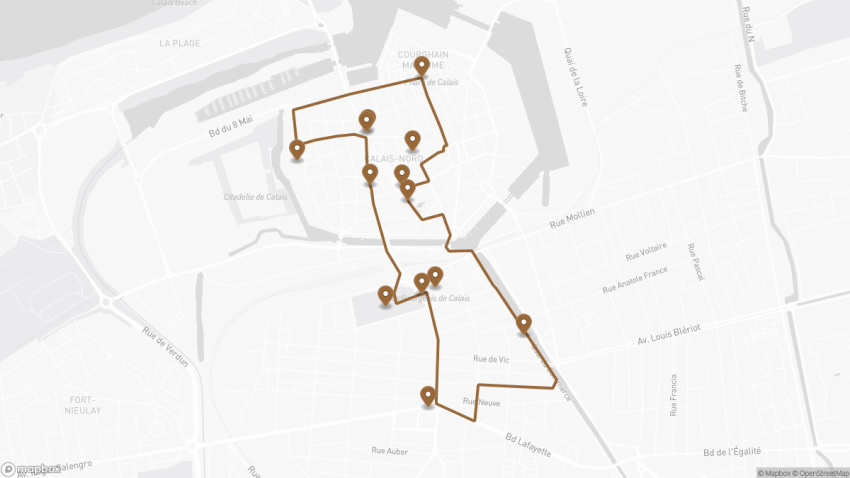
Discover Calais on foot with our walking tour map, which guides you between each stop as you explore the city at your own pace. Because this is a self-guided walking tour, you are free to skip places and take coffee stops whenever you want.
1. Citadelle de Calais
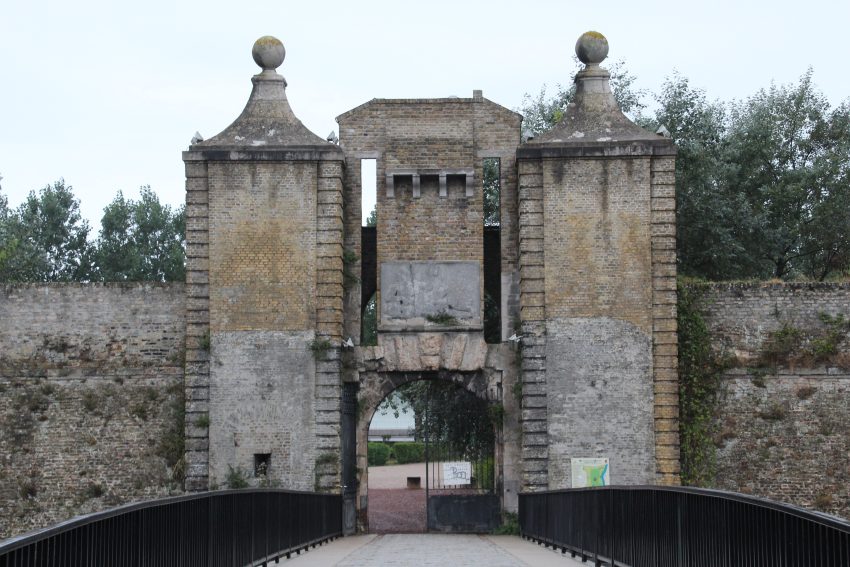
The Citadelle de Calais is one of the city’s key defensive sites, with origins tied to the French recovery of Calais from English rule in 1558. The medieval castle that once stood here was replaced by a new artillery-era fortress better suited to gunpowder warfare, and construction began in the 16th century as the French crown worked to secure this strategically vital Channel port. Over time, the site was reinforced and adapted, including later improvements associated with Vauban-era military planning, which reflects how important Calais remained in French border defense.
Its history is layered and often violent. The citadel was caught up in major conflicts, including the 1596 Spanish capture of Calais, and it continued to serve military functions for centuries, later housing barracks, magazines, and other installations. During the Second World War, the citadel was heavily damaged in the 1940 siege and fighting around Calais, and much of what had stood inside was destroyed. That wartime destruction is an important part of the site’s identity today, because the citadel is not just a Renaissance fortress but also a place of remembrance.
What to see today is a mix of surviving fortification elements and the broader landscape of the old defensive enclosure. The gates, ramparts, ditches, and remaining masonry help you read the shape of the fortress, even where inner structures no longer survive, and the setting gives a strong sense of Calais as a fortified frontier city. The site has also been reused as a public and sporting area, so it feels less like a sealed monument and more like a lived part of the city. When visiting, focus on the surviving entrances and earthworks, and take time to imagine how the citadel once anchored the defense of Calais alongside the other fortifications.
Location: Av. Pierre de Coubertin, 62100 Calais, France | Hours: Daily: Daylight hours. | Price: Free.

2. Phare de Calais
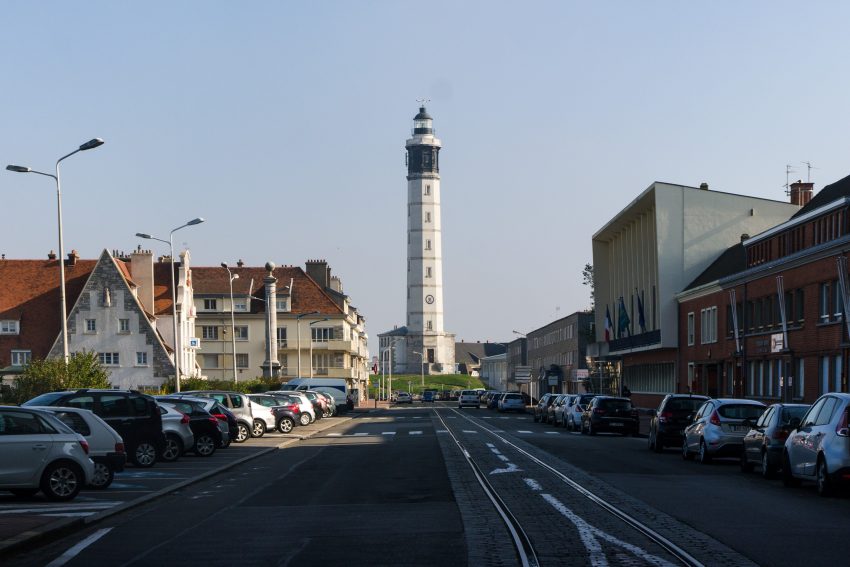
The Phare de Calais is one of the city’s most recognizable landmarks and an important part of its maritime history. The current lighthouse entered service in 1848, replacing the earlier light that had operated from the medieval Tour du Guet, and it was built as shipping traffic through the Strait of Dover increased and safer navigation became more urgent. Its construction reflects Calais’s long role as a strategic port facing one of the busiest sea passages in Europe.
The lighthouse is also interesting because of how it combines engineering function with the city’s layered urban history. It was built on the remains of old fortifications, which helps explain why it rises so prominently even though it stands within the town rather than directly on an exposed pier. Over time it was modernized, including electrification in the 19th century and later automation, but it remains a strong symbol of the period when Calais was expanding its port infrastructure and modern civic identity.
What to see here is both the tower itself and the views it offers. The octagonal masonry tower, white shaft, and dark lantern make it visually distinctive, and if it is open you can climb the 271 steps for wide views over the port, the city, and the coastline. Even from ground level, it is worth visiting for the setting and for the way it connects Calais’s port activity, defensive past, and 19th-century modernization in a single monument.
Location: Pl. Henri Barbusse, 62100 Calais, France | Hours: (Summer) June 1 – September 30; Daily: 10:00–12:00 & 14:00–18:00. (Winter) October 1 – May 31; Wednesday, Saturday, Sunday: 10:00–12:00 & 14:00–17:30. | Price: Adults: €6; Children under 15 (with an adult): €2; Family pass (up to 2 adults + 4 children under 15): €12; Under 5: free. | Website
3. Eglise Notre-Dame de Calais
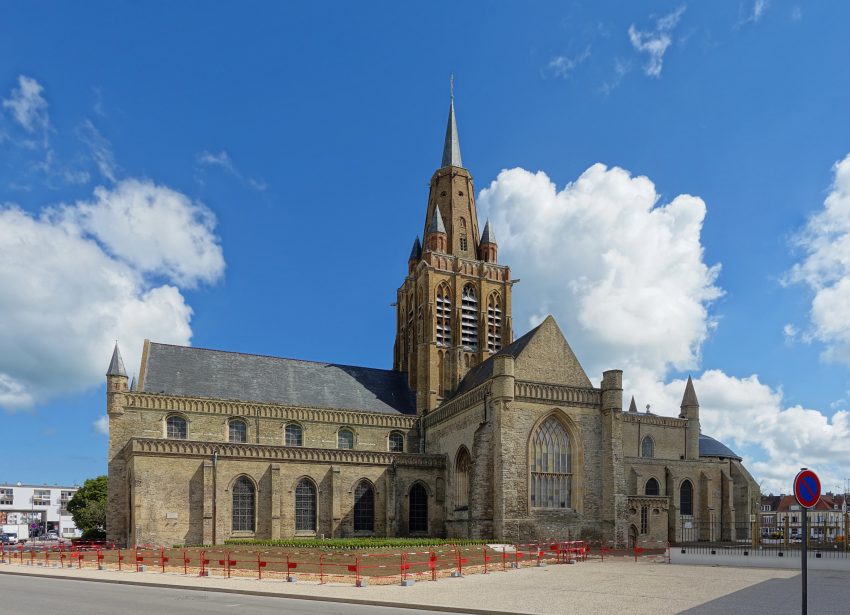
Eglise Notre-Dame de Calais is one of the city’s most historically distinctive churches, with roots in the late medieval period and major phases of construction and rebuilding over time. It is especially notable because it was built during the period of English occupation, and its architecture is often described as showing strong English Perpendicular Gothic influence, something unusual in France. This makes it one of the most interesting buildings in Calais for anyone curious about the city’s cross-Channel past.
The church also carries important personal and national associations. It is known as the place where Charles de Gaulle married Yvonne Vendroux, which adds a modern historical layer to a much older monument. Inside, the building reflects centuries of additions and restorations, with a mix of Gothic and regional influences that tell the story of a port city shaped by trade, conflict, and reconstruction. Its survival and restoration history is part of the broader story of Calais itself.
When you visit, pay attention to the overall silhouette, the tower, and the interior atmosphere rather than rushing through. The church is best appreciated as a place where architecture and memory meet: medieval foundations, cross-Channel influences, and 20th-century historical associations all in one space. It also sits close to other key landmarks, so it works well as part of a deeper look at central Calais.
Location: 17 Rue Notre Dame, 62100 Calais, France | Hours: Daily: 14:00–17:30. | Price: Free; donations appreciated. | Website
4. Fine Arts Museum
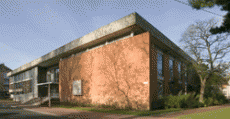
The Fine Arts Museum of Calais (Musée des Beaux-Arts) represents a different chapter of the city’s history: postwar reconstruction and cultural renewal. The current museum building dates from the reconstruction era (opened in the 1960s), and the institution evolved over time, especially after the lace collections were transferred to the separate Lace and Fashion museum in 2009. That shift helped define the museum more clearly as a fine arts venue while preserving the city’s industrial textile heritage elsewhere.
The museum is particularly important in Calais because it connects local identity with wider art history. It is known for collections spanning several centuries and for works linked to Auguste Rodin, whose connection to Calais is central because of Les Bourgeois de Calais. The museum’s position near other historic sites also reinforces how art, civic memory, and urban reconstruction are closely tied in the city. Official and tourism sources also highlight the building itself as a noteworthy example of modern architecture.
When you are there, focus on two things: the Rodin-related material and the sense of the museum as a reconstruction-era landmark. The galleries give context to Calais beyond its port image, showing the city as a place of artistic collecting and cultural ambition. If you have limited time, even a shorter visit is worthwhile because it adds depth to what you see at the town hall square and the Burghers monument.
Location: 25 Rue Richelieu, 62100 Calais, France | Hours: (Summer) April 1 – October 31; Tuesday – Sunday: 13:00–18:00. (Winter) November 1 – March 31; Tuesday – Sunday: 13:00–17:00. | Price: Check official website. | Website
5. Parc Richelieu
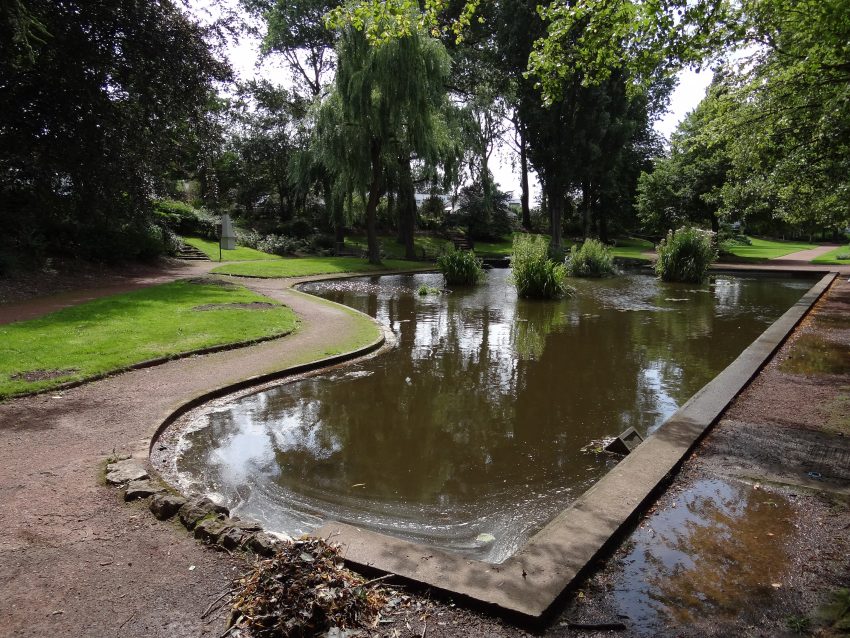
Parc Richelieu is one of the oldest public green spaces in Calais and has a history that is closely tied to the city’s former defenses. The park was created in the 19th century (commonly dated to 1862) on the old ramparts of Calais-Nord, so it is not just a landscaped garden but a reused military space shaped by the city’s fortified past. It was later redesigned in the mid-20th century, which helps explain why it combines historic foundations with a more modern public-park layout.
Its historical significance also comes from the memorial landscape within the park. Parc Richelieu is linked to remembrance in Calais, including monuments associated with the world wars, and it sits within a part of the city where public memory and reconstruction are especially visible. The park also has an indirect connection to one of Calais’s most famous artworks: Rodin’s Les Bourgeois de Calais was originally unveiled near Parc Richelieu before being moved to its current position by the town hall.
What to see here is the combination of greenery, memorials, and traces of the old fortification setting rather than one single landmark. It is a good place to slow down and notice how Calais has turned defensive ground into civic space, with trees, paths, and quieter corners that contrast with the city’s busier streets. As you walk through, pay attention to the monuments and the overall shape of the park, because they help tell the story of Calais as a city of fortifications, war, rebuilding, and everyday local life.
Location: France, 185 Rue Richelieu, 62100 Calais, France | Hours: 24 Hours. | Price: Free.
6. Museum of Lace and Fashion
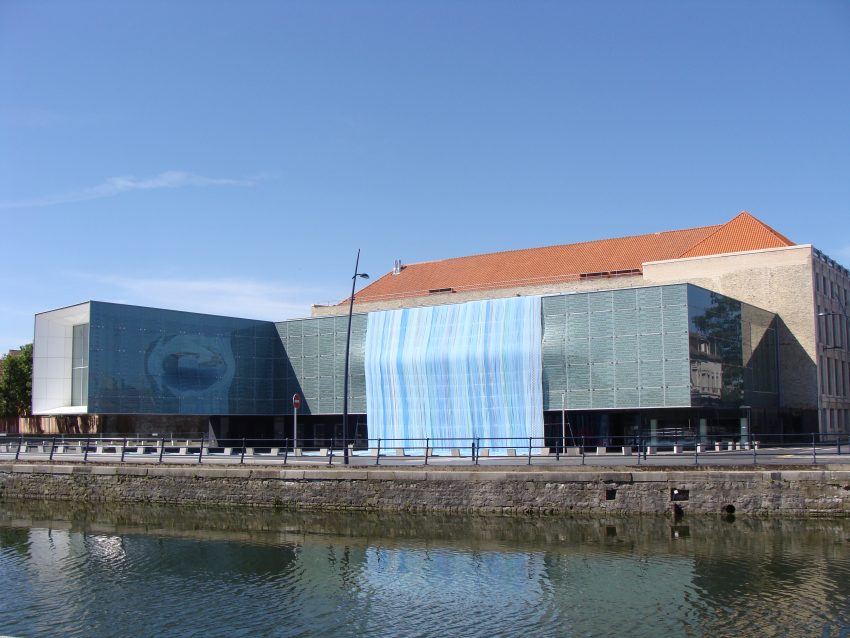
The Museum of Lace and Fashion (Cité de la Dentelle et de la Mode) is essential for understanding Calais because lace-making was one of the industries that shaped the city’s economy, identity, and international reputation. The museum is housed in a former lace factory complex, which already tells part of the story before you even enter: this is industrial heritage preserved in the place where it actually happened. The site reflects the rise of Calais as a major lace center over the 19th and 20th centuries.
The museum also bridges industry and design in a very effective way. It presents the technical side of lace production, including machinery and know-how, while connecting it to fashion history and contemporary creation. Sources describing the museum emphasize both the restored factory building and the modern extension, which visually express the link between heritage and innovation. That combination is one of the reasons it stands out among textile museums.
When visiting, focus on both the architecture and the collections. The building itself helps you imagine the scale and organization of lace production, while the exhibits explain why Calais lace became globally valued. If you want to understand the city beyond its port and war history, this is one of the most informative places to spend time because it reveals the industrial craftsmanship that defined Calais for generations.
Location: 135 Quai du Commerce, 62100 Calais, France | Hours: (Summer) April 1 – October 31; (Winter) November 1 – March 31. Monday: 10:00–18:00. Wednesday – Sunday: 10:00–18:00. Closed on Tuesday. (Winter) Monday: 10:00–17:00. Wednesday – Sunday: 10:00–17:00. Closed on Tuesday. | Price: Adults: €7 (permanent collections + temporary exhibition); Reduced: €5; Temporary exhibition only: €4 (reduced €3); Under 5: free. | Website
7. Grand Theater de Calais
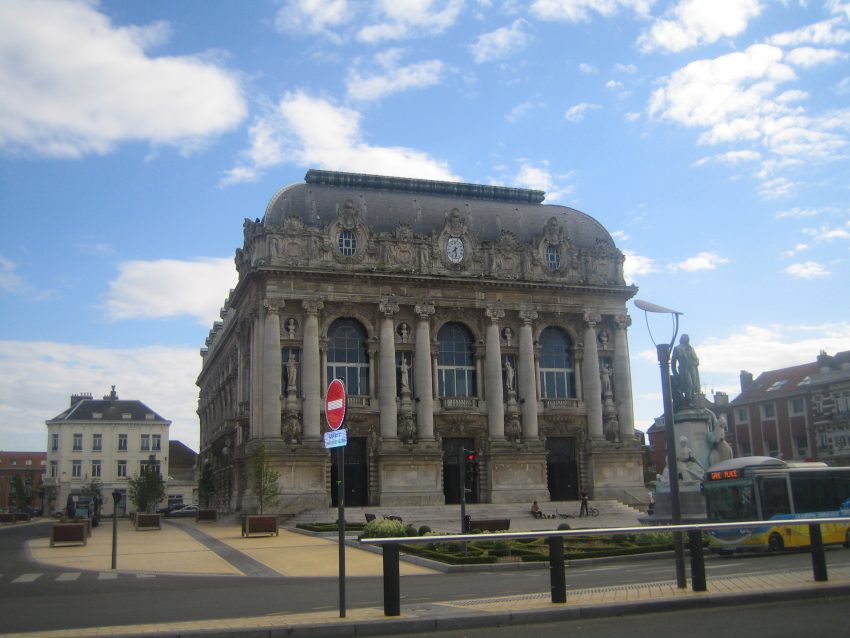
The Grand Théâtre de Calais (Théâtre Municipal) belongs to the Belle Époque and reflects the city’s cultural ambitions in the early 20th century. It was built in the first years of the 1900s and opened shortly afterward, during a period when Calais was developing major civic and cultural institutions after the merger of Calais and Saint-Pierre. Its presence in the city center shows that Calais was investing not only in commerce and industry, but also in public culture and performance.
The theater’s setting is part of its appeal. It stands in the boulevard district and is associated with a more elegant urban ensemble, including period residences and monuments linked to the lace industry, such as the Jacquard monument nearby. This makes it an excellent example of how Calais’s artistic life and industrial history were not separate worlds but developed side by side in the same urban spaces.
When you are there, take time to study the exterior details and the wider streetscape around it, not just the entrance. The theater is one of those buildings that helps you read the aspirations of a city at a particular moment in time. If you can attend a performance, even better, but the building is worth seeing for its façade and historical presence alone.
Location: Pl. Albert 1er, 62100 Calais, France | Hours: Tuesday – Friday: 13:00–18:30. Saturday: 10:00–13:00. Sunday: Closed. Closed on Monday. | Price: Prices vary by show. | Website
8. Les Bourgeois de Calais
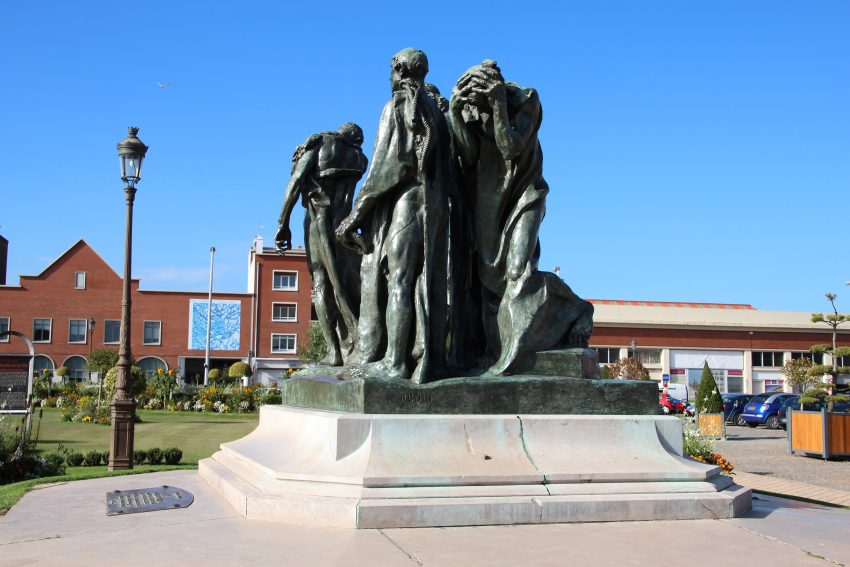
Les Bourgeois de Calais is one of the city’s most famous monuments and one of the most powerful public sculptures in France. Created by Auguste Rodin and installed in Calais in the late 19th century, it commemorates the six burghers who, according to the medieval account associated with Jean Froissart, offered themselves to Edward III during the siege of Calais in 1347. The monument turns a legendary episode of sacrifice into a deeply human scene rather than a triumphal one.
What makes this work so important is Rodin’s interpretation. Instead of heroic poses, he emphasized uncertainty, grief, and moral weight, which was strikingly modern for a public monument. In Calais, that emotional realism fits the city’s wider history of siege, war, destruction, and survival. The sculpture does not just tell a medieval story; it has become part of how the city represents courage and loss across different eras.
When you see it, spend time walking around the sculpture rather than viewing it from the front only. Each figure has a different expression and posture, and the composition is designed to be experienced in the round. Its placement near the Hôtel de Ville is also significant, creating a dialogue between civic authority, public memory, and one of the defining historical narratives of Calais.
Location: Pl. du Soldat Inconnu, 62100 Calais, France | Hours: 24 Hours. | Price: Free.
9. Hôtel de Ville
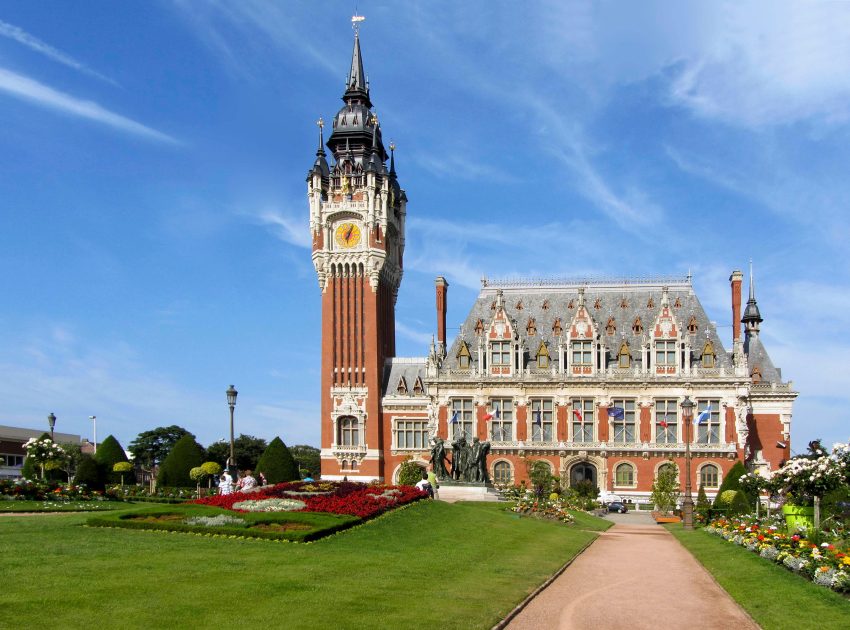
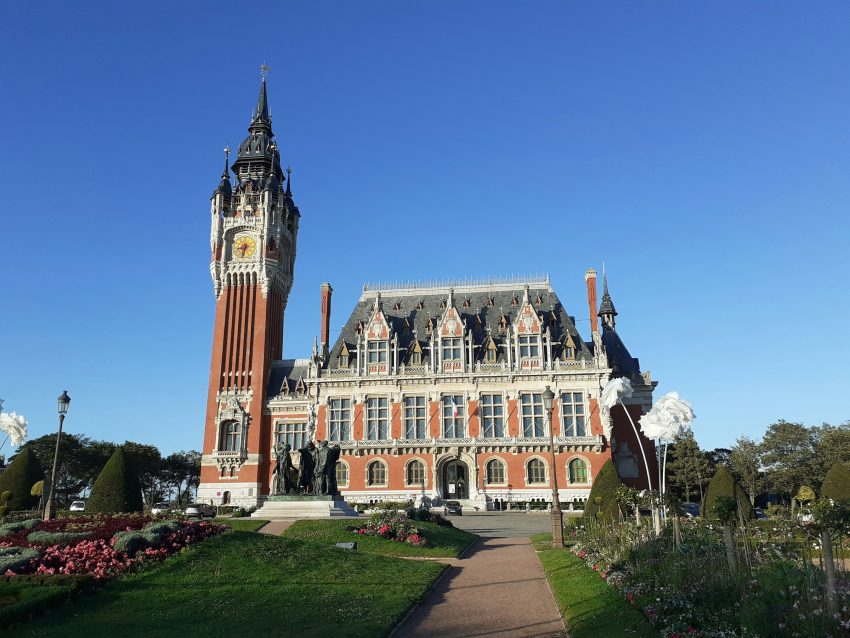
The Hôtel de Ville of Calais is one of the city’s architectural showpieces and a symbol of modern Calais as much as historic Calais. Built in the Flemish Renaissance Revival style between 1911 and 1925, it commemorates the unification of Calais and Saint-Pierre-lès-Calais (merged in 1885). That makes it not just a town hall, but a statement building marking a new civic identity for a growing and industrializing city.
Its style is important to notice: ornate, highly visible, and designed to impress. The building and belfry reflect regional architectural influences while also expressing municipal ambition in the early 20th century. In a city often associated with ferries and crossings, the town hall reminds visitors that Calais developed a strong civic and cultural center of its own, especially in the period before the world wars reshaped the region.
When you visit, take in the full façade and the belfry, then look at how the square in front is organized around the Rodin monument. This area is one of the best places in Calais to understand how architecture, memory, and public space are staged together. If you can, view it from a little distance first, then move closer to appreciate the decorative details.
Location: Pl. du Soldat Inconnu, 62100 Calais, France | Hours: Monday – Friday: 08:30–12:00 & 14:00–17:30. Saturday: 10:00–12:00. Sunday: Closed. | Price: Free. | Website
10. Musée Mémoire 39-45 de Calais
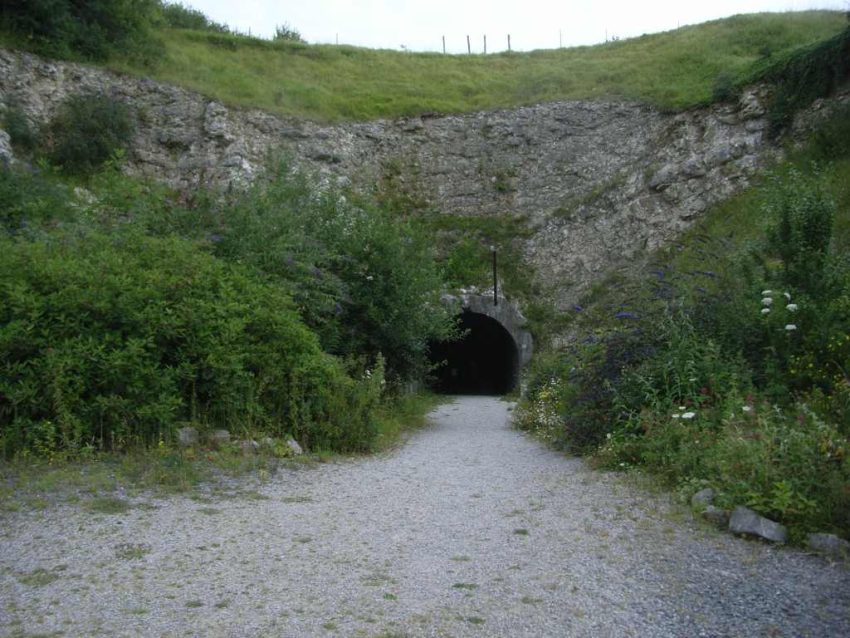
The Musée Mémoire 39-45 de Calais is one of the city’s most important historical sites for understanding the Second World War, and its setting is a major part of its significance. The museum is housed inside an authentic German bunker in Parc Saint-Pierre, built in 1941 and used as a command post by the German navy during the occupation. Because the bunker survived the wartime bombing that damaged so much of Calais, the museum preserves not just wartime objects but the atmosphere of a real military structure from the period.
What makes this museum especially compelling is the way it tells the story of Calais as a frontline Channel city facing England, where occupation, military control, and civilian hardship were part of daily life. The museum presents the war chronologically through a series of exhibition rooms in the former bunker, with period photographs, newspapers, posters, uniforms, weapons, and everyday objects that help explain both military events and civilian experience. Local tourism descriptions highlight the scale of the site and the exhibition layout, which is one reason it feels more immersive than a standard gallery museum.
When you visit, the main thing to see is the bunker itself as much as the collections inside it. Pay attention to the long corridor, the room layout, and the heavy concrete construction, because the architecture helps you understand how the site originally functioned. Then take time with the exhibits on occupation and liberation, which give context to many other places in Calais linked to wartime history. Set within Parc Saint-Pierre near the town hall area, it also fits well into a broader visit to the city’s civic and memorial landmarks.
Location: Parc Saint Pierre, 62100 Calais, France | Hours: (Summer) April 1 – November 11: Daily: 10:00–18:30. (Winter) Christmas & February school holidays (French zones B & C; except official holidays): Daily: 10:00–18:00. | Price: Adults (17+): €8.50; Children (6–16): €5.50. | Website
11. Rue Royale
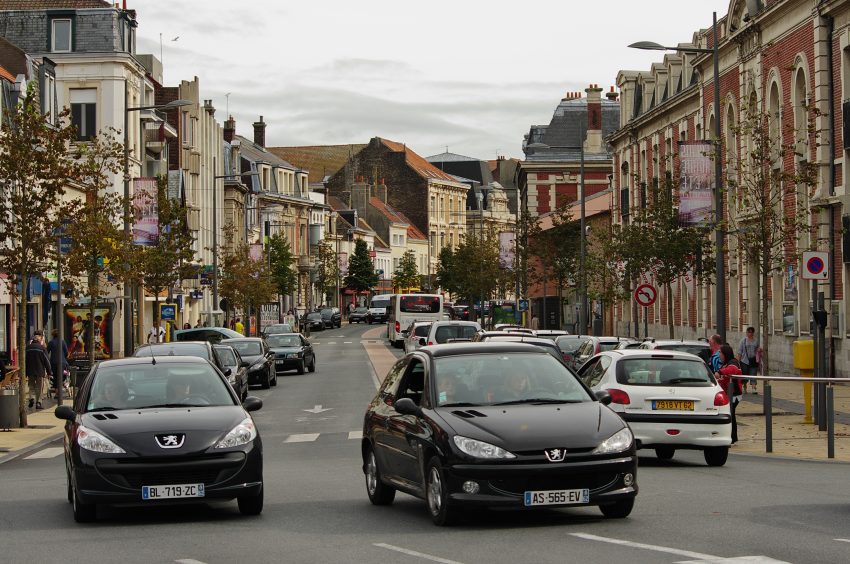
Rue Royale is one of the historic streets of Calais-Nord and has long functioned as an important commercial and urban route within the older part of the city. Streets like this matter in Calais because they preserve the lived texture of the town beyond the headline landmarks. In a port city shaped by trade, travel, and repeated rebuilding, principal streets such as Rue Royale were the places where daily business, social life, and movement between squares and quays played out.
Historically, Rue Royale reflects Calais’s role as a gateway city between France and England. Even when specific buildings have changed, the street’s importance as part of the old center helps explain how visitors and locals moved through the city. It is also part of the story of Calais as more than a transit point: a place with its own urban identity, markets, shops, and civic life rooted in the older town.
When visiting, the best approach is to treat Rue Royale as a street to observe slowly. Look at the shopfronts, façades, and junctions with nearby historic spaces, and notice how it links the old-town landmarks. It is a good place to understand everyday Calais rather than only monument Calais, and it often gives a stronger feel for the city’s character than a single museum or square alone.
Location: Rue Royale, 62100 Calais, France | Hours: 24 Hours. | Price: Free.
12. Place d’Armes
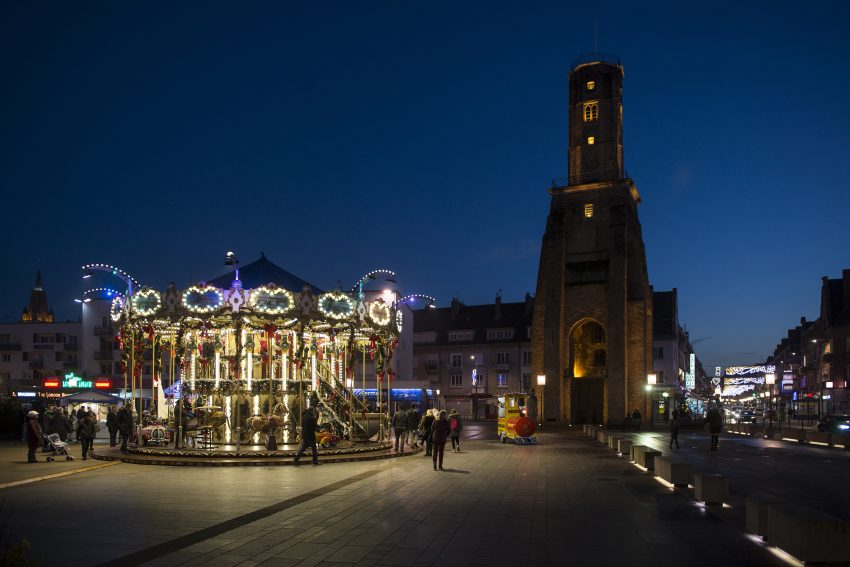
Place d’Armes has been one of the historic hearts of Calais for centuries, and its importance goes back to the medieval period when this part of the city was the main civic and commercial center. During the long period of English rule in Calais (1347–1558), the square functioned as the market square, and after the French reconquest it continued to play a central role in public life, including fairs and regular markets. Its long continuity as a gathering place is one of the reasons it still feels like a “real” city square rather than just a monument space.
What makes the square especially interesting is how it brings together layers of Calais history in one compact area. It sits beside the Tour du Guet, and the surrounding streets still preserve the atmosphere of old Calais-Nord more than many parts of the city rebuilt after wartime destruction. If you are interested in understanding the older urban fabric of Calais, this is one of the best places to start because the square’s scale and layout still reflect its historic role.
When you are there, take time to look beyond the open space itself. Watch the rhythm of local life, look at the façades around the square, and then pair your visit with the nearby watchtower and Notre-Dame church to see how military, religious, and civic history overlap in the same district. It is also a good place to pause and absorb the contrast between medieval origins and the modern city that grew around it.
Location: Pl. d'Armes, 62100 Calais, France | Hours: 24 Hours. | Price: Free.
13. Tour du Guet
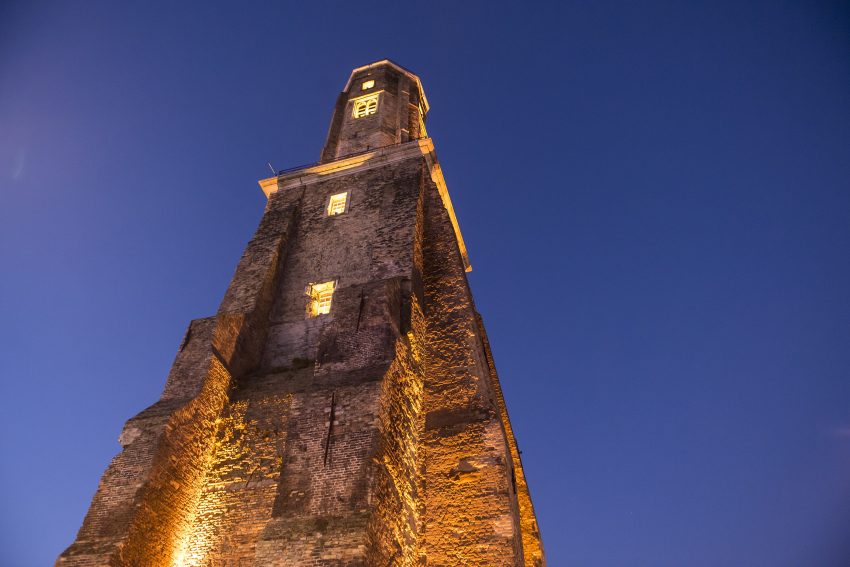
The Tour du Guet is one of the oldest surviving monuments in Calais and one of the rare structures that connects directly to the medieval fortified town. Its origins go back to the 13th century, and it formed part of the city defenses. Over time, it took on several roles, including use as a lookout and, later, as a lighthouse before a newer lighthouse replaced that function in the 19th century. The tower’s long working life makes it more than just a relic; it was an active part of how Calais watched the sea and protected itself.
The tower’s history is marked by damage and repair, which is part of what makes it compelling. It reportedly suffered structural damage from an earthquake in 1580 and later from fire, but it was restored and continued to serve the city in practical ways. That survival story matters in Calais, where so much of the older town was lost or rebuilt over time, especially after the destruction of the Second World War. The tower stands as a visible reminder of the city’s endurance.
When visiting, look up at the tower from different angles in Place d’Armes, because its form is easiest to appreciate in relation to the square. It is not only a monument to photograph but also a useful landmark for reading the old town. Even if you cannot go inside, seeing it in context with nearby historic streets and buildings gives a strong sense of medieval Calais and the city’s maritime vigilance.
Location: Pl. d'Armes, 62100 Calais, France | Hours: 24 Hours. | Price: Free.

Moira & Andy
Hey! We're Moira & Andy. From hiking the Camino to trips around Europe in Bert our campervan — we've been traveling together since retirement in 2020!
This website uses affiliate links which earn a small commission at no additional cost to you.
Walking Tour Summary
Distance: 5.5 km
Sites: 13
Walking Tour Map