Torre dell'Orologio, Padova
Tower in Padova
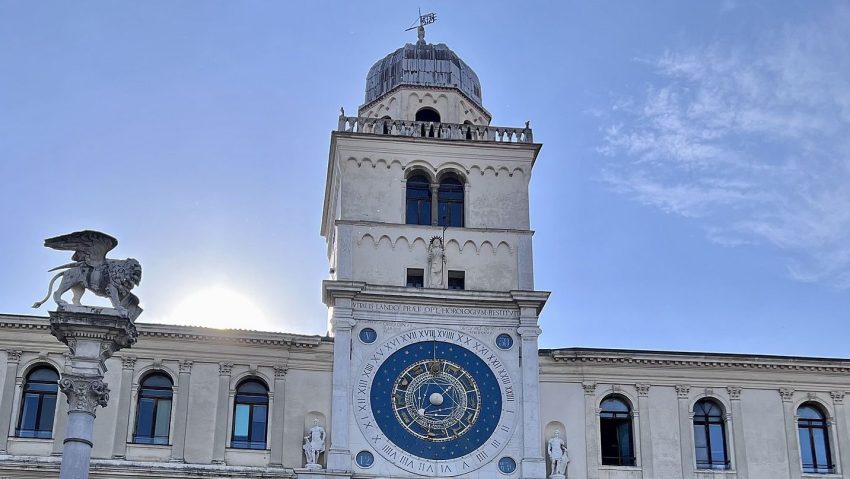
Rising over Piazza dei Signori between the Palazzo del Capitanio and Palazzo dei Camerlenghi, the Torre dell'Orologio is one of the top sights in Padua and the visual star of this elegant civic square. The tower began life in the 14th century as an eastern gate of the Carraresi palace complex and later became the showcase for Padua's extraordinary astronomical clock. Today it links centuries of science, politics and public life, as people still gather beneath its arch for markets, concerts and evening passeggiate.
The clock itself is a marvel. Based on a 14th-century design by the physician and astronomer Jacopo Dondi, and later rebuilt by his descendants and local clockmakers, it shows much more than just the time: its great 5.6 m dial tracks the phases of the moon, the passage of the sun through the zodiac and the calendar months, all according to a geocentric universe. One delightful quirk is the missing Libra sign, reflecting an older zodiac system where Scorpio and Libra formed a single, larger constellation. Standing beneath the triumphal arch added in 1531 by architect Giovanni Maria Falconetto, it is easy to see why this tower is a highlight of any walking tour of Padua.
Table of Contents
- History and Significance of the Torre dell’Orologio
- Things to See and Do in the Torre dell’Orologio
- How to Get to the Torre dell’Orologio
- Practical Tips on Visiting the Torre dell’Orologio
- Where to Stay close to the Torre dell’Orologio
- Is the Torre dell’Orologio Worth Visiting
- FAQs for Visiting Torre dell’Orologio
- Nearby Attractions to the Torre dell’Orologio
History and Significance of the Torre dell’Orologio
The Torre dell'Orologio grew out of Padua's medieval power politics. In the first half of the 14th century, the Carraresi lords built their Reggia Carrarese palace complex here, and the structure that would become the clock tower served as its fortified eastern gate. Its position at the edge of what is now Piazza dei Signori made it both a defensive point and a ceremonial entrance into the seat of government.
In 1344, Jacopo Dondi, a professor of medicine and astronomy at the University of Padua, designed a large public astronomical clock for the palace gate, one of the earliest of its kind. The clock displayed the hours (likely from 1 to 24), the age and phase of the moon and the position of the sun in the zodiac. Its fame became so great that “dell’Orologio” - “of the clock” - was added to the Dondi family name. The original tower and mechanism were later damaged and destroyed during conflicts with the Visconti in the late 14th century, but the concept of a monumental civic clock had already taken root.
The current tower’s appearance dates largely from a 15th-century rebuilding and the inauguration of a reconstructed astronomical clock in the 1430s, with further embellishment in 1531 when Falconetto added the grand triumphal arch at the base. Over the centuries the clock mechanism has been repaired and restored many times, but it still follows the original Ptolemaic geocentric model and remains one of the oldest functioning astronomical clocks in Europe still in its original tower. Today, volunteers from the Salvalarte group help keep the tower accessible to the public on selected days, maintaining a direct link between Padua’s medieval scientific heritage and curious visitors in the present.
Things to See and Do in the Torre dell’Orologio
Most visitors encounter the Torre dell'Orologio first from the centre of Piazza dei Signori, where the clock's huge dial fills your field of view above the archway. Take a moment to identify the zodiac ring, the calendar indications and the moon-phase display, then notice the absence of Libra between Scorpio's “claws” - a detail that often surprises modern viewers used to the standard twelve-sign layout.
If you join a guided visit (usually offered on specific days and times), you can climb inside the tower to see the restored 15th-century mechanism housed on the upper floors. From here, you appreciate just how intricate the gearing is and how advanced Padua’s clockmaking was in the 14th and 15th centuries. Some tours also explain the bell system on the lantern above, which still strikes the hours with the traditional “botto” and “ribotto” pattern.
Back at ground level, stand beneath Falconetto's triumphal arch and look back into Piazza dei Signori. This vantage point brings together the tower, the square's harmonious façades and the life of the city: market stalls in the morning, locals chatting over coffee, and the flow of people heading towards nearby Piazza delle Erbe and Piazza dei Frutti. For many travellers, the experience of simply lingering here, watching the shadows move across the square as the clock marks time, is one of the best places to see in Padua.
How to Get to the Torre dell’Orologio
The Torre dell'Orologio stands on Piazza dei Signori in the very heart of Padua's historic centre, so the easiest way to reach it is on foot once you are in the city.
Most international visitors arrive via Venice Marco Polo or Treviso airports, both of which offer shuttle buses and other transfers to Padova city, making it straightforward to include the Torre dell'Orologio as part of a wider Veneto trip. For the best deals and a seamless booking experience, check out these flights to Padova on Booking.com.
By train, travel to Padova railway station, a major stop on the Venice-Milan and Venice-Bologna lines, with frequent regional and high-speed services from cities such as Venice, Verona, Bologna and Milan. Use Omnio to easily compare schedules, book train tickets, and find the best prices all in one place for a hassle-free journey across Italy. From the station, you can walk to Piazza dei Signori in about 15-20 minutes, or take the tram or a city bus towards the historic centre and then follow signs to the main piazzas.
Local buses and trams run regularly across the city, but much of central Padua is pleasantly walkable, so once you are near Caffè Pedrocchi or Palazzo della Ragione it is just a short stroll to the clock tower. If you are arriving by car, it is best to park in one of the car parks or garages on the edge of the centre and continue on foot, as many streets around Piazza dei Signori are pedestrianised or restricted to residents. If you are looking to rent a car in Italy I recommend having a look at Discover Cars, first, as they compare prices and review multiple car rental agencies for you.
Practical Tips on Visiting the Torre dell’Orologio
- Suggested tips: Combine your visit to the Torre dell'Orologio with time in Piazza dei Signori, Piazza delle Erbe and Piazza dei Frutti to really feel how Padua's civic life has revolved around these squares for centuries.
- Best time to visit: Late morning for lively market scenes or early evening for a softer light on the façades and a more relaxed atmosphere under the illuminated clock.
- Entrance fee: Adult 14,00€
- Opening hours: VISIT IN ENGLISH Mondays at 11.00 and 14.00 Tuesdays and Wednesday at 12.00 and 14.00 Thursdays at 12.00 Fridays at 11.00, 14.00 and 16.00 Saturdays at 14.00 and 16.00 Sundays at 11.00
- Official website: https://torreorologio.visitmuve.it/
- How long to spend: Plan around 20-30 minutes to admire the tower, explore the square and take photos; allow longer if you join a guided visit inside the tower or combine it with nearby museums.
- Accessibility: Piazza dei Signori is largely level and paved, but access inside the tower involves stairs and confined spaces and may not be suitable for all visitors; check accessibility details before booking a tour.
- Facilities: There are no facilities inside the tower itself, but cafés, bars, restaurants and shops all around Piazza dei Signori and the neighbouring squares provide plenty of options for restrooms and refreshments.
- Photography tip: For a classic shot, stand towards the centre of the square and frame the Clock Tower head-on; for a more atmospheric angle, shoot from under the arcades or at dusk when the clock face is lit.
- Guided tours: Consider joining a guided tour that includes both the Torre dell'Orologio and nearby landmarks; local guides often share stories about the Carraresi lords, Venetian rule and the clock's symbolism that you will not find on basic info panels.
- Nearby food options: Use the visit as an excuse to enjoy a coffee or aperitivo at a bar on Piazza dei Signori or head to the surrounding streets for trattorias and wine bars popular with locals and students.
Where to Stay close to the Torre dell’Orologio
Staying near Piazza dei Signori puts you right at the heart of Padua's history, with the Torre dell'Orologio just steps away and most major sights within an easy stroll. A refined option is Hotel Majestic Toscanelli, a long-standing central hotel tucked into the old town’s narrow streets, ideal if you want character and convenience. For a contemporary feel with wellness facilities, Le Camp Suite & Spa offers stylish rooms and a spa only a short walk from the main squares and Caffè Pedrocchi. Travellers who prefer staying closer to the station but still within walking distance of the tower might choose Hotel Europa Padova, which balances easy transport connections with quick access to the historic centre.
Is the Torre dell’Orologio Worth Visiting
The Torre dell'Orologio is absolutely worth visiting, especially if you are drawn to history, architecture or the science of timekeeping. This is not just a pretty clock face: it is a working astronomical timepiece that embodies Padua's medieval blend of scholarship and civic pride, tied to figures such as Jacopo Dondi and the Carraresi lords. Standing beneath it, you are literally looking at a 15th-century reconstruction of a 14th-century idea of the cosmos, still ticking away above a square that has hosted markets, celebrations and political events for hundreds of years.
Because it is so central, visiting the tower fits neatly into almost any Padua itinerary, whether you are in the city for Giotto's frescoes, the university's scholarly heritage or simply the pleasure of wandering its piazzas. Even a short stop to watch the clock mark the hour and take in the view of Piazza dei Signori will give you a strong sense of place and a deeper appreciation for Padua's layered history.
What Other Travellers Say...
Reviews Summary
Torre dell'Orologio in Piazza dei Signori, 28, Padova is an astronomical clock tower between the Palazzo del Capitanio and Palazzo dei Camerlenghi that visitors can view and tour; its dial features Earth at the center, Roman-hour numerals, copper stars and zodiac signs (traditionally showing eleven symbols with Scorpio occupying two squares and Libra absent), and volunteers help keep the site open to the public — guided English tours are available by reservation at set times, and staff can provide printed information if you miss a tour.
FAQs for Visiting Torre dell’Orologio
Nearby Attractions to the Torre dell’Orologio
- Piazza dei Signori - Historic civic square surrounding the tower, once the stage for tournaments, festivals and official ceremonies, now full of cafés and market life.
- Palazzo della Ragione - Monumental medieval hall between Piazza delle Erbe and Piazza dei Frutti, famed for its vast frescoed interior and historic covered market at ground level.
- Piazza delle Erbe and Piazza dei Frutti - Lively neighbouring market squares offering fresh produce, local products and a buzzing atmosphere throughout the day.
- Caffè Pedrocchi - Legendary 19th-century café known for its eclectic interiors and role in Padua's intellectual and political life, just a short walk from the tower.
- Palazzo Bo - Historic seat of the University of Padua, home to Galileo's lectern and the world's oldest permanent anatomical theatre, easily reached on foot from Piazza dei Signori.
The Torre dell'Orologio appears in our Complete Guide to Visiting Padova!

Moira & Andy
Hey! We're Moira & Andy. From hiking the Camino to trips around Europe in Bert our campervan — we've been traveling together since retirement in 2020!
This website uses affiliate links which may earn a commission at no additional cost to you!
Planning Your Visit
VISIT IN ENGLISH Mondays at 11.00 and 14.00 Tuesdays and Wednesday at 12.00 and 14.00 Thursdays at 12.00 Fridays at 11.00, 14.00 and 16.00 Saturdays at 14.00 and 16.00 Sundays at 11.00
Adult 14,00€
Nearby Attractions
- Piazza dei Signori (0.1) km
Square - Duomo di Padova (0.1) km
Cathedral - Palazzo della Ragione (0.2) km
Historic Building and Market - Cafe Pedrocchi (0.3) km
Historic Building - Palazzo Bo (0.3) km
Historic Building and Palace - Ponte Molino (0.4) km
Bridge and Historic Building - Chiesa degli Eremitani (0.6) km
Church - Palazzo Zuckermann (0.6) km
Historic Building and Museum - Roman Arena of Padua (0.6) km
Amphitheatre - MUSME - Museum of the History of Medicine (0.6) km
Museum