Teatro Romano de Cartagena
Museum, Roman Site and Theatre in Cartagena
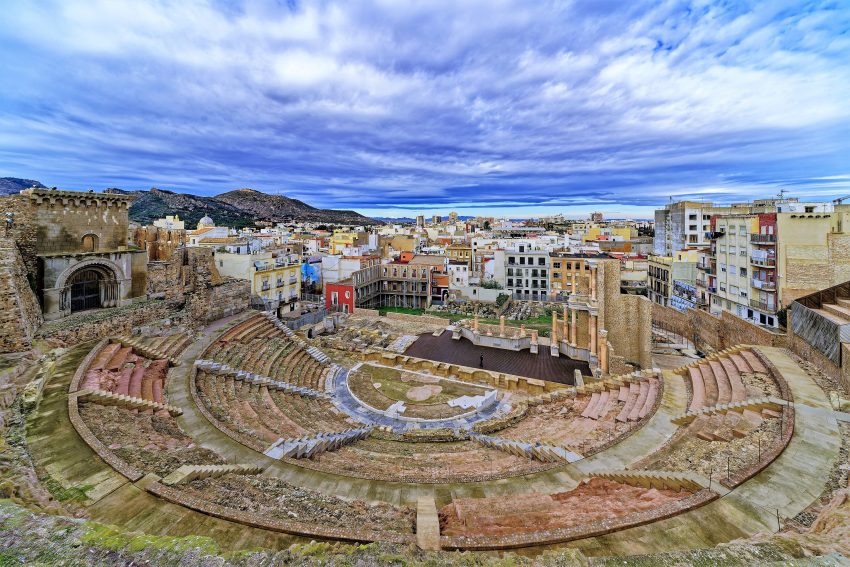
The Teatro Romano de Cartagena is one of the city's headline sights: a remarkably preserved Roman theatre revealed in the heart of Cartagena's old town, with a museum route that builds anticipation before you step out into the open-air seating bowl.
It's easy to include on a walking tour of central Cartagena, and it pairs perfectly with nearby viewpoints and plazas for a half-day of history, photos, and café stops. If you're deciding what's truly unmissable in the city center, this is usually the first recommendation.
Table of Contents
- History and Significance of the Teatro Romano de Cartagena
- Things to See and Do in the Teatro Romano de Cartagena
- How to Get to the Teatro Romano de Cartagena
- Practical Tips on Visiting the Teatro Romano de Cartagena
- Where to Stay Close to the Teatro Romano de Cartagena
- Is the Teatro Romano de Cartagena Worth Visiting?
- For Different Travelers
- FAQs for Visiting Teatro Romano de Cartagena
- Nearby Attractions to the Teatro Romano de Cartagena
History and Significance of the Teatro Romano de Cartagena
Built during the Roman era, the theatre is a powerful reminder that Cartagena (ancient Carthago Nova) was a major Mediterranean port city with wealth, political importance, and a taste for monumental public architecture. Its scale and setting make it feel less like a “ruin” and more like a living piece of the city.
What makes the experience especially memorable is how the site is presented today: you don’t just arrive at a fenced-off monument. Instead, you move through curated spaces that explain the theatre’s story and the archaeology behind it, and then the route opens dramatically into the theatre itself.
The restoration and integration into the old town is part of the attraction’s significance. You’re seeing not only an ancient performance venue, but also a modern example of how a dense historic city can protect, interpret, and showcase archaeology without isolating it from everyday urban life.
Things to See and Do in the Teatro Romano de Cartagena
Start with the museum sequence, which provides context and sets up the “reveal” at the end. Even if you’re not usually a museum person, the layout is designed to be approachable and to guide you naturally toward the main monument.
Inside the theatre, take time to walk the perimeter and look back across the seating tiers to appreciate the geometry and the way the site sits within modern Cartagena. The upper edges and surrounding streets can also offer excellent angles for photos, especially in softer morning or late-afternoon light.
If you’re short on time, focus on the museum-to-theatre route and then linger in the open-air section for views and atmosphere. If you have more time, combine the visit with a slow stroll through the nearby historic center to connect the Roman layer with Cartagena’s later architecture and plazas.
How to Get to the Teatro Romano de Cartagena
The nearest major airports are Región de Murcia International Airport (RMU) and Alicante-Elche Airport (ALC), both of which are commonly used for reaching Cartagena and the Costa Cálida. For the best deals and a seamless booking experience, check out these flights to Cartagena on Booking.com.
Cartagena is also reachable by train, and arriving by rail is convenient if you're coming from other cities in the region; from the station, you can continue by taxi or local bus, or walk if you're traveling light and enjoy a longer city stroll. Train schedules and bookings can be found on Omio.
If you’re traveling by car, aim for parking on the edge of the center and finish on foot, since the old town streets can be narrow and traffic patterns may be restricted. If you are looking to rent a car in Spain I recommend having a look at Discover Cars, first, as they compare prices and review multiple car rental agencies for you.
Practical Tips on Visiting the Teatro Romano de Cartagena
- Entrance fee: Adults: €7
- Opening hours: (Summer) May 1 – September 30; Tuesday – Saturday: 10:00–20:00. Sunday: 10:00–14:00. Closed on Monday. (Winter) October 1 – April 30; Tuesday – Saturday: 10:00–18:00. Sunday: 10:00–14:00. Closed on Monday.
- Official website: https://teatroromano.cartagena.es/
- Best time to visit: Go early for calmer galleries and cleaner photos, or later in the day for warmer light on the stone.
- How long to spend: Plan around 60-90 minutes for the museum route and theatre, longer if you like to read every panel.
- Accessibility: Expect steps and uneven surfaces in parts of the monument; the museum route is generally easier than the open-air seating areas.
- Facilities: You’ll find visitor services typical of a major attraction (ticketing and museum-style amenities), plus plenty of cafés nearby in the center.
Where to Stay Close to the Teatro Romano de Cartagena
Base yourself in central Cartagena (Old Town) for the easiest walk to the theatre, waterfront, restaurants, and most major sights.
Sercotel Alfonso XIII A reliable, comfortable option that’s well-located for walking into the historic center while still feeling straightforward for arrivals and departures.
NH Campo Cartagena A practical pick if you want a quieter stay and a more modern hotel feel, with an easy route into the center for sightseeing days.
Hotel Los Habaneros Good value close to the action, ideal for travelers who want to be near the old town without paying top-tier boutique prices.
Hotel Sercotel Carlos III A solid mid-range base that works well for short stays, especially if you’re balancing sightseeing with transport connections.
Hotel Cartagena Puerto A convenient choice near the waterfront and central streets, great if you like evening strolls and quick access to cafés and tapas spots.
Is the Teatro Romano de Cartagena Worth Visiting?
Yes, it's absolutely worth visiting. The combination of a well-designed museum approach and the sudden arrival into a large, open-air Roman theatre creates a “wow” moment that even casual sightseers tend to remember, and it's one of the most rewarding stops you can make in Cartagena.
Honest Pivot: If you dislike museums entirely, are traveling with someone who struggles with steps, or you’re visiting on a peak cruise-ship day and hate crowds, you may prefer to admire the theatre from surrounding viewpoints and spend your time on lighter, open-air walking routes instead.
What Other Travellers Say...

Google reviewers are overwhelmingly positive, highlighting the dramatic museum-to-theatre walkthrough and the “wow” moment of stepping into a large, ancient venue that feels impressively preserved and well cared for. Many mention it’s clean, easy to explore, and especially photogenic, with beautiful views and great light for pictures. Common downsides are crowding at peak times (often due to multiple tour groups) and the feeling that you can still get some worthwhile views from outside without paying if you’re skipping the museum experience.


For Different Travelers
Different travel styles get different value here: some people come for archaeology and architecture, others come for the spectacle, the photos, and the sense of stepping into an ancient venue in the middle of a living city.
Families with Kids
Kids often enjoy the “journey” aspect of the visit, where you move through indoor spaces and then emerge into the big outdoor theatre. It helps to frame it as a discovery mission: find the best viewpoint, spot the stage area, and imagine the crowd.
To keep energy up, plan a snack stop before or after, and avoid the busiest midday window if you can. A shorter, focused visit can be more fun than trying to read every detail with younger children.
Couples & Romantic Getaways
For couples, the theatre is a strong shared experience: dramatic setting, beautiful light, and an easy transition into a stroll through the old town afterward. It’s especially photogenic in the late afternoon when the stone warms up.
Pair it with a relaxed tapas plan nearby and a waterfront walk to turn it into a low-stress, high-reward day. If you enjoy architecture, take your time noticing how the site is woven into the city.
Budget Travelers
Budget travelers can still get a great experience here by planning smart: visit at a quieter time to avoid feeling rushed, and combine it with free wandering in the surrounding streets, plazas, and viewpoints.
If you’re watching spending closely, prioritize what matters most to you: the full museum-and-theatre route is the complete experience, but you can still appreciate the monument’s scale from outside angles while keeping the rest of the day focused on free city walks.
History Buffs
History lovers will appreciate that this isn’t just a quick photo stop; the museum route adds context and makes the theatre feel connected to Cartagena’s broader Roman story. The site rewards slow looking, especially if you enjoy archaeology and urban history.
To deepen the day, treat the theatre as your anchor and then build an itinerary around other historic layers nearby. You’ll get more out of it if you arrive with a little background on Roman theatres and how they functioned as civic spaces.
FAQs for Visiting Teatro Romano de Cartagena
Getting There
Tickets & Entry
Visiting Experience
Tours, Context & Itineraries
Photography
Accessibility & Facilities
Food & Breaks Nearby
Safety & Timing
Nearby Attractions to the Teatro Romano de Cartagena
- Cartagena City Hall (Palacio Consistorial): A landmark modernist building right in the center, perfect for architecture fans and quick photos.
- Calle Mayor: Cartagena's main pedestrian street, great for a stroll, shops, and classic city atmosphere.
- Cartagena Harbour waterfront: An easy walk for sea views, breezes, and a relaxing break after sightseeing.
- Castillo de la Concepción: A hilltop castle area with panoramic views over the city and port.
- Muralla Púnica (Punic Wall): A fascinating older layer of Cartagena's past that complements the Roman theatre visit.
The Teatro Romano de Cartagena appears in our Complete Guide to Visiting Cartagena!

Moira & Andy
Hey! We're Moira & Andy. From hiking the Camino to trips around Europe in Bert our campervan — we've been traveling together since retirement in 2020!
This website uses affiliate links which may earn a commission at no additional cost to you!
Planning Your Visit
(Summer) May 1 - September 30; Tuesday - Saturday: 10:00-20:00. Sunday: 10:00-14:00. Closed on Monday.
(Winter) October 1 - April 30; Tuesday - Saturday: 10:00-18:00. Sunday: 10:00-14:00. Closed on Monday.
Adults: €7
Nearby Attractions
- Old Cathedral of Cartagena (0.1) km
Cathedral, Historic Site and Ruins - Museo del Teatro Romano de Cartagena (0.1) km
Museum, Roman Site and Theatre - Ayuntamiento Cartagena (0.1) km
Attraction, Historic Building and Town Hall - Castillo de la Concepción (0.2) km
Castle, Museum and Viewing Point - Calle Mayor (0.3) km
Area and Street - Civil War Shelters Museum (0.3) km
Museum - Cartagena’s Panoramic Elevator (0.3) km
Viewing Point - Naval Museum Cartagena (0.3) km
Museum - Augusteum (0.3) km
Historic Site, Museum and Roman Site - National Museum of Underwater Archaeology (0.4) km
Attraction and Museum