Statue of the Unknown Partisan, Tirana
Monument in Tirana
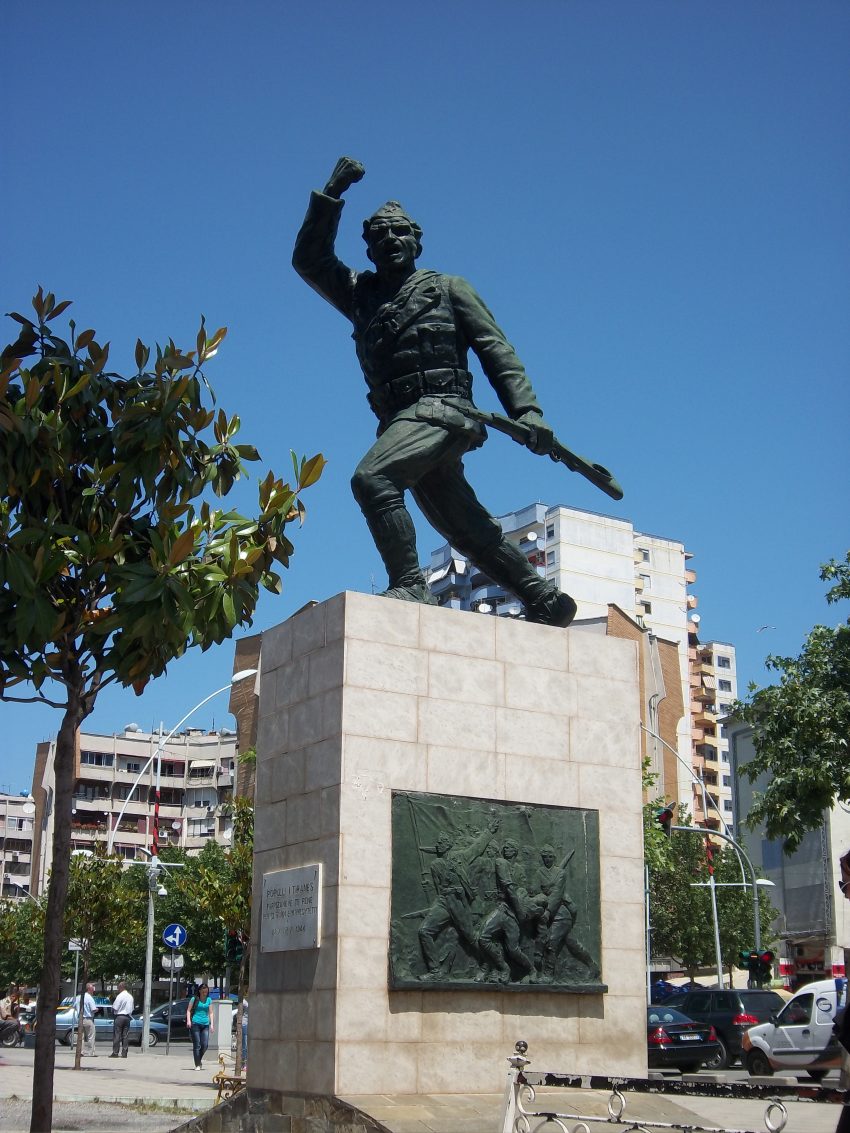
The Unknown Partisan Statue, sometimes called the Unknown Soldier, stands proudly in the heart of Tirana as a tribute to the Albanian partisans who fought and died resisting occupation during the Second World War. Located beside the Albanian Parliament and near Kapllan Pasha's tomb, this striking monument captures the spirit of defiance and national pride that characterized Albania's struggle for freedom. The bronze figure depicts a soldier mid-action, with one arm extended and a weapon aimed forward - symbolizing courage, vigilance, and the ongoing fight for liberty. It remains one of the top sights in Tirana for visitors seeking to connect with the country's turbulent 20th-century history.
The monument was erected by Albania's postwar communist government, which used such memorials to honor resistance fighters and reinforce national unity. Yet beyond its ideological origins, the Unknown Partisan stands as a timeless tribute to those who sacrificed their lives for their homeland. The statue's location is especially significant: it occupies the former site of Tirana's oldest mosque, linking centuries of the city's spiritual and civic evolution. This layered history makes the monument a great place to visit on a walking tour of Tirana, offering both historical depth and symbolic resonance.
Table of Contents
- History and Significance of the Unknown Partisan Statue
- Things to See and Do at the Unknown Partisan Statue
- How to Get There
- Practical Tips on Visiting the Unknown Partisan Statue
- Is the Unknown Partisan Statue Worth Visiting?
- FAQs for Visiting the Unknown Partisan Statue
- Nearby Attractions to the Unknown Partisan Statue
History and Significance of the Unknown Partisan Statue
The Unknown Partisan Statue was built in the aftermath of World War II, during Albania’s communist era, as part of a broader effort to commemorate the country’s wartime resistance. The monument’s creation reflected the regime’s emphasis on heroism and collective sacrifice, celebrating the anonymous fighters whose bravery helped liberate Albania from fascist occupation.
Its placement carries added historical weight. The site was once home to the Sylejman Pasha Mosque, built in 1614 by the Ottoman-Albanian general Sulejman Bargjini - the very founder of Tirana. Alongside the mosque, Bargjini constructed a hamam and bakery to encourage settlement and growth in what was then a small town. Unfortunately, the mosque was severely damaged during World War II and later demolished entirely in 1967 under Enver Hoxha's campaign against religion. Only Kapllan Pasha's tomb, across the street, remains as a vestige of the original complex. The juxtaposition of the tomb and the statue creates a poignant reflection of Tirana's evolving identity - from Ottoman foundations to modern national consciousness.
Things to See and Do at the Unknown Partisan Statue
The statue itself is the focal point, but its surroundings offer layers of history worth exploring. Standing before the monument, visitors can appreciate the bold realism of the sculpture - the tense muscles, determined expression, and forward-thrusting motion that evoke both struggle and triumph. It’s an excellent spot for photography, particularly with the Parliament building and nearby greenery as a backdrop.
Across the road lies Kapllan Pasha's tomb, an intricately designed Ottoman-era monument that contrasts sharply with the modernist simplicity of the Partisan statue. Together, they represent two distinct eras of Albanian history: one spiritual, one revolutionary. The area is also close to several key landmarks such as the National Art Gallery and the Rruga Murat Toptani pedestrian street, making it easy to include the monument as part of a larger exploration of Tirana's historical core.
How to Get There
The Unknown Partisan Statue is centrally located near the Albanian Parliament on Dëshmorët e Kombit Boulevard. It's about a 10-minute walk from Skanderbeg Square and easily accessible on foot from most central attractions. If you are looking to rent a car in Albania I recommend having a look at Discover Cars, first, as they compare prices and review multiple car rental agencies for you. Taxis are inexpensive and can drop visitors directly beside the monument. If you're touring Tirana's historic sites, it's a natural stop along with the Et'hem Bey Mosque, the Clock Tower, and the National History Museum.
Practical Tips on Visiting the Unknown Partisan Statue
- Best time to visit the Unknown Partisan Statue: Year-round; early morning or sunset offers the best light for photos.
- Entrance fee in Euros: Free.
- Opening hours: Open 24 hours, as it’s a public monument.
- Official website: None.
- How long to spend: 15-20 minutes.
- Accessibility: Fully accessible from the main road; flat terrain.
- Facilities: None directly at the site; cafés nearby on Rruga Murat Toptani.
- Photography tip: Frame the statue with the Parliament in the background to capture its symbolism of national defense.
- Guided tours: Included in some Tirana history or communist-era walking tours.
- Nearby food options: Many restaurants and coffee bars in the surrounding Blloku and city-center areas.
Is the Unknown Partisan Statue Worth Visiting?
Yes - though small, the monument holds great historical and emotional significance. It's one of the things to do in Tirana that offers insight into both the city's wartime resilience and its shifting cultural landscape. Its location - on ground that has witnessed Tirana's founding, destruction, and rebirth - makes it a moving stop for anyone exploring the Albanian capital's story.
What Other Travellers Say...

A powerful bronze monument dedicated to the soldiers who fought for Albania's liberation during WWII, located near the center of Tirana.


FAQs for Visiting the Unknown Partisan Statue
Nearby Attractions to the Unknown Partisan Statue
- Kapllan Pasha's Tomb - The last surviving remnant of Tirana's original mosque complex.
- Parliament of Albania - The country’s legislative building located adjacent to the statue.
- National Art Gallery - Showcasing Albanian art from the 19th century to the socialist era.
- Rruga Murat Toptani - A lively pedestrian street lined with cafés and public art.
- Skanderbeg Square - The vibrant heart of Tirana, surrounded by its most important landmarks.
The Statue of the Unknown Partisan appears in our Complete Guide to Visiting Tirana!

Moira & Andy
Hey! We're Moira & Andy. From hiking the Camino to trips around Europe in Bert our campervan — we've been traveling together since retirement in 2020!
This website uses affiliate links which may earn a commission at no additional cost to you!
Planning Your Visit
Nearby Attractions
- Kapllan Pasha's Tomb (0.0) km
Monument - Fortress of Justinian (0.2) km
Ruins - Clock Tower In Tirana (0.2) km
Tower - Rruga Murat Toptani (0.2) km
Street - Et’hem Bey Mosque (0.2) km
Mosque - Bunk'Art 2 (0.2) km
Historic Building and Museum - National Art Gallery (0.2) km
Gallery - Palace of Culture (0.2) km
Notable Building - Skanderbeg Square (0.3) km
Square - New Bazaar (0.3) km
Bazaar