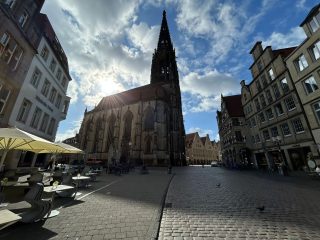
St. Peter’s Church (St. Petri-Kirche), Lübeck
Church in Lübeck

St. Peter's Church (St. Petri-Kirche) is one of the top attractions in Lübeck if you want to see the city from above and understand how its skyline has grown around medieval spires and red-brick roofs. Originally built in the 13th century, this Gothic church rose alongside Lübeck's Hanseatic fortunes, its tall tower acting as a navigational point for sailors and merchants approaching the city. Today, the glass elevator ride to the viewing platform gives you a thrilling, modern way to experience that same sense of arrival, with sweeping views over the Old Town, the River Trave, and on clear days the distant Baltic Sea.
What makes St. Petri especially compelling is the way it has been reimagined after the devastation of World War II. Heavily damaged in the 1942 air raids and left roofless for decades, it was eventually restored not as a traditional parish church, but as a flexible cultural space for exhibitions, installations, and concerts. The result is a striking blend of Gothic shell and contemporary use: bare walls, changing artworks, and atmospheric light create a space that feels both reflective and dynamic, a highlight of any walking tour of Lübeck if you're interested in how old buildings can find new roles.
Table of Contents
- History and Significance of St. Peter’s Church
- Things to See and Do in St. Peter’s Church
- How to Get to St. Peter’s Church
- Practical Tips on Visiting St. Peter’s Church
- Where to Stay close to St. Peter’s Church
- Is St. Peter’s Church
- FAQs for Visiting St. Peter’s Church
- Nearby Attractions to St. Peter’s Church
History and Significance of St. Peter’s Church (St. Petri-Kirche)
St. Peter's Church was established in the 13th century, when Lübeck was emerging as one of the key cities of the Hanseatic League. Built in the Gothic style with tall, slender proportions and a commanding tower, it reflected the city's confidence and prosperity. Its position close to the commercial heart of the Old Town meant that merchants, craftsmen, and city officials all passed beneath its shadow, making it an important spiritual and visual anchor in daily life.
Over the centuries, St. Petri served as a parish church for local residents, hosting baptisms, marriages, and funerals, as well as special services for civic occasions. Its interior would once have been filled with altars, sculptures, and painted decoration, mirroring the changing tastes and religious practices of the town. Like many Lübeck churches, it stood not only as a house of worship, but also as a symbol of the city's collective identity, visible from far beyond the walls.
The turning point in its history came in 1942, when Allied bombing caused heavy damage, destroying the roof and much of the interior. For a long time, the ruined shell stood as a stark reminder of war, until later 20th-century restoration work stabilised and partially rebuilt the structure. Instead of returning to full parish use, St. Peter’s was given a new role as a cultural venue and viewing tower, allowing it to remain part of Lübeck’s living fabric while acknowledging the scars and changes that shaped it.
Things to See and Do in St. Peter’s Church (St. Petri-Kirche)
The star attraction at St. Petri is the viewing platform, reached via a glass elevator that whisks you up the massive tower. From the top, you get a 360-degree panorama over Lübeck: the clustered spires of the Old Town churches, the tracery of streets and courtyards, the bend of the Trave, and, on clear days, a faint line of the Baltic Sea on the horizon. It is one of the best places to see how the UNESCO-listed city is laid out, and a perfect spot for orienting yourself before exploring further at ground level.
Back inside the main space, the stripped-back interior offers a very different experience from Lübeck’s richly furnished parish churches. High walls, simple finishes, and changing art or photography exhibitions create a gallery-like atmosphere that still carries a hint of the building’s former sacred role. Depending on the programme, you might encounter installations, sculpture, or mixed-media works that respond to the unusual setting, using light and height in imaginative ways.
St. Peter’s also functions as a versatile events venue, hosting concerts, seasonal markets, and special happenings such as Christmas or light festivals. During these times, the church fills with sound, colour, and people, demonstrating how a once-ruined structure can be woven back into the city’s cultural life. Even if you visit on a quiet day, take time to walk around the interior, study the remaining architectural details, and reflect on how the building has travelled from medieval parish church to modern cultural hub.
How to Get to St. Peter’s Church (St. Petri-Kirche)
For most international visitors, the easiest way to reach Lübeck is via Hamburg Airport (HAM), which has frequent connections from across Europe and beyond and lies around an hour away by onward transport. For the best deals and a seamless booking experience, check out these flights to Lübeck on Booking.com.
From Hamburg, regular regional trains run to Lübeck Hauptbahnhof in roughly 45-60 minutes; from the station, it is about a 10-15 minute walk through the Old Town to St. Petri, which stands close to the market square and Town Hall. Train schedules and bookings can be found on Omio.
Long-distance and regional buses also serve Lübeck from other northern German cities, usually stopping near the main station or at bus terminals on the edge of the Old Town; from there, well-signposted streets lead you towards the central squares and the easily recognisable tower of St. Peter's.
If you are travelling by car, take the A1 motorway towards Lübeck and follow signs for Lübeck-Zentrum and then for the Altstadt; park in one of the city-centre car parks and walk a few minutes into the historic core, where St. Petri's tall tower soon comes into view above the surrounding buildings. If you are looking to rent a car in Germany I recommend having a look at Discover Cars, first, as they compare prices and review multiple car rental agencies for you.
Practical Tips on Visiting St. Peter’s Church (St. Petri-Kirche)
- Suggested tips: Plan your visit for a time when the viewing platform is open and, if possible, combine it with a cultural event or exhibition inside for a full experience.
- Best time to visit: Clear days are ideal for the tower views, with late afternoon or early evening offering particularly beautiful light over Lübeck’s rooftops.
- Entrance fee: Adults: €5
- Opening hours: Tower + Permanent Exhibition "St. Petri and the City": Daily from 10:00 a.m. to 6:00 p.m
- Official website: https://st-petri-luebeck.de/
- How long to spend: Allow 45-90 minutes to take the elevator, enjoy the views, and explore the interior, longer if you stay for a concert or special event.
- Accessibility: The glass elevator makes the tower more accessible than many historic viewpoints, though some areas may still involve steps or uneven surfaces.
- Facilities: Toilets are usually available on-site or nearby, and the central location means cafés, restaurants, and shops are just a short walk away.
- Photography tip: Bring a camera or phone with a good wide-angle option for the viewing platform; inside, focus on contrasts between Gothic structure and contemporary art.
- Guided tours: Some city tours include St. Petri as a viewpoint or cultural stop, combining historical background with a visit to the tower.
- Nearby food options: The streets around the market square are full of cafés and restaurants, making it easy to pair your visit with a coffee, cake, or meal afterwards.
Where to Stay close to St. Peter’s Church (St. Petri-Kirche)
Because St. Petri stands right in the heart of Lübeck’s Old Town, almost any central hotel will put you within easy walking distance. A convenient, design-forward option is Motel One Lübeck, just steps from the market square and a short stroll from the church. If you prefer a more classic, historic atmosphere, Klassik Altstadt Hotel offers characterful rooms in a period building within comfortable walking range of St. Petri and other key sights. For those who like a riverside feel combined with quick access to the centre, Radisson Blu Senator Hotel Lübeck provides modern comfort across the Trave, only a few minutes’ walk from the Old Town core.
Is St. Peter’s Church (St. Petri-Kirche) Worth Visiting?
St. Peter's Church is absolutely worth visiting, especially if you want a single place that combines views, history, and contemporary culture. The tower alone would justify the stop, giving you a bird's-eye perspective on Lübeck's churches, streets, and waterways that you simply can't get from ground level. Add in the story of wartime destruction and thoughtful repurposing, and the building becomes a powerful symbol of how cities adapt their heritage to new realities.
For many visitors, St. Petri ends up being one of the must-see places in Lübeck precisely because it feels different from the city's more traditional churches. Instead of staying frozen in time, it has embraced exhibitions, events, and creative uses that keep people coming back. Whether you're drawn by the promise of a panoramic view, an art show, or just the chance to stand inside a Gothic shell filled with modern life, it is a memorable stop on any Lübeck itinerary.
What Other Travellers Say...

St. Peter's Church, on Königstraße 104 in Lübeck, is a restored evangelical church with a largely whitewashed, serene interior that now serves as an events and art space; visitors praise the staffed tower viewing platform reached by lift for offering 360-degree views of Lübeck (for a small fee) and note there are souvenirs and a café for light fare.


FAQs for Visiting St. Peter’s Church (St. Petri-Kirche)
Nearby Attractions to St. Peter’s Church (St. Petri-Kirche)
- Lübeck Market Square (Marktplatz) - The historic central square, framed by the Town Hall and merchants' houses, just steps away from St. Petri.
- St. Mary's Church (Marienkirche) - A towering Brick Gothic church that showcases Lübeck's medieval ambition and artistry.
- Holsten Gate (Holstentor) - Lübeck's iconic western gate, with a museum and classic photo opportunities along the River Trave.
- Heiligen-Geist-Hospital - One of Europe's oldest social institutions, offering a fascinating look at medieval charity and Brick Gothic architecture.
- Schiffergesellschaft - The former sailors' guild house, now a restaurant where Lübeck's maritime heritage comes alive in a richly decorated hall.
The St. Peter’s Church (St. Petri-Kirche) appears in our Complete Guide to Visiting Lübeck!

Moira & Andy
Hey! We're Moira & Andy. From hiking the Camino to trips around Europe in Bert our campervan — we've been traveling together since retirement in 2020!
This website uses affiliate links which may earn a commission at no additional cost to you!
Planning Your Visit
Tower + Permanent Exhibition “St. Petri and the City”: Daily from 10:00 a.m. to 6:00 p.m
Adults: €5
Nearby Attractions
- Lübeck’s Old Market Square (Marktplatz) (0.1) km
Market - Lübeck Town Hall (0.2) km
Town Hall - Café Niederegger (0.2) km
Historic Building - Salzspeicher (0.2) km
Historic Building - Devil Statue at St. Marien-Kirche (0.2) km
Sculpture - St. Marien-Kirche (0.2) km
Church - Holstentor (0.2) km
City Gate - St. Annen Museum (0.5) km
Museum - Lübeck Cathedral (Lübecker Dom) (0.6) km
Cathedral - Half-Tower (Halbenturm) in Lübeck (0.6) km
Historic Building