St. Elizabeth's Church, Marburg
Church in Marburg
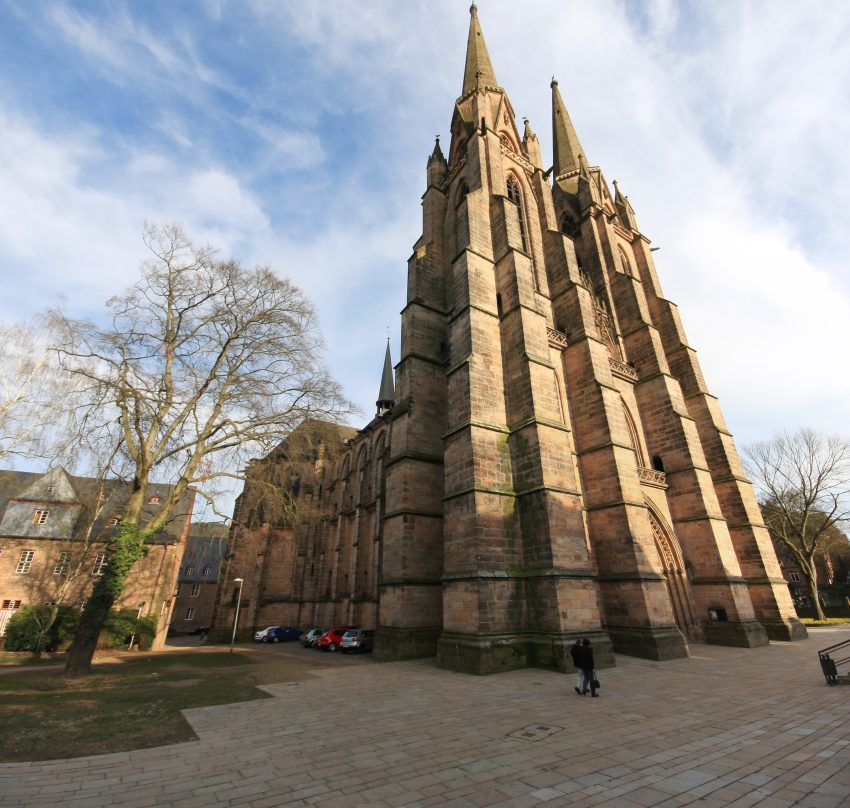
St. Elizabeth's Church in Marburg is one of the top attractions in Marburg for anyone interested in medieval architecture, saints' cults, and the early flowering of Gothic style in Germany. Built between 1235 and 1283, this towering church was dedicated to Saint Elizabeth of Hungary, the compassionate princess whose acts of charity to the poor and sick made her one of the most beloved figures of her age. Its clean, “pure” Gothic lines, 20-metre-high vaults, and twin-towered silhouette helped set the template for later cathedrals, including mighty Cologne.
Step inside and you're met by a cool, lofty interior that still feels like a place of pilgrimage. The famous Gothic shrine of St. Elizabeth, a masterpiece of medieval goldsmithing containing her relics, draws visitors and worshippers alike, while the luminous modern stained-glass window by Charles Crodel (1957) adds a surprising 20th-century note to the medieval space. The church is a highlight of any walking tour of Marburg, linking the castle-crowned hill, old town lanes, and riverfront into one coherent story.
Table of Contents
- History and Significance of St. Elizabeth’s Church
- Things to See and Do in St. Elizabeth’s Church
- How to Get to St. Elizabeth’s Church
- Practical Tips on Visiting St. Elizabeth’s Church
- Where to Stay close to St. Elizabeth’s Church
- Is St. Elizabeth’s Church Worth Visiting?
- FAQs for Visiting St. Elizabeth’s Church
- Nearby Attractions to St. Elizabeth’s Church
History and Significance of St. Elizabeth’s Church
Construction of St. Elizabeth's Church began in 1235, the same year that Elizabeth of Hungary was canonised, and was completed in 1283. Built by the Teutonic Order on the site of her grave, it quickly became one of the most important pilgrimage destinations in Central Europe. Elizabeth, a Hungarian princess married into the Thuringian nobility, became renowned for her radical charity-caring personally for the poor, the sick, and lepers-before dying young and being declared a saint. Her cult was so powerful that a church of exceptional stature was needed to house her shrine.
Architecturally, St. Elizabeth’s is one of the earliest and clearest examples of pure Gothic architecture in Germany. Its plan, vertical emphasis, and use of ribbed vaulting and pointed arches mark a decisive break from earlier Romanesque forms. The church’s design later helped inspire the builders of Cologne Cathedral, which picked up many of the same Gothic ideas on a much larger scale. Walking around the exterior, you can see how the buttresses, window tracery, and sculpted portals all work together to create a sense of lightness and height, even though the stonework is substantial.
Inside, the church’s importance is anchored by the Gothic shrine of St. Elizabeth, created by master goldsmiths in the 13th century. Intricate carvings, tiny figures, and delicate architectural details turn the shrine into a miniature cathedral in its own right. Over the centuries, the church has weathered religious change, war, and restoration, but it remains both an active place of worship and a powerful symbol of Marburg’s role in the history of faith, art, and Gothic architecture.
Things to See and Do in St. Elizabeth’s Church
The first impression of St. Elizabeth’s is all about verticality. Step through the ornate main portal, with its Gothic carvings and sculpted figures, and the 20-metre-high vaulted ceiling pulls your gaze upwards. The ribbed vaults and slender columns create a rhythmic progression down the nave, leading you naturally towards the choir and the shrine. Take a moment to walk slowly along the central aisle and side aisles to appreciate how the architecture choreographs your movement and attention.
The Gothic shrine of St. Elizabeth is the devotional and artistic heart of the building. This gilded, jewel-like reliquary is covered with tiny figures, architectural pinnacles, and narrative scenes worked in metal, showing off some of the finest medieval goldsmithing in Germany. It originally contained the saint’s relics, brought here in the 13th century, and still radiates the sense of awe that medieval pilgrims must have felt. Even if you’re not religious, the craftsmanship and the way the shrine interacts with the surrounding space are deeply compelling.
Don't miss the stained-glass windows, especially the modern window by Charles Crodel from 1957. This colourful work depicts scenes from the life of St. Elizabeth in a modern visual language, yet it harmonises with the older stone and glass around it. The contrast between medieval shrine and mid-20th-century glass highlights how the church continues to evolve while respecting its roots. As you explore, look for side chapels, carved details on capitals and portals, and the play of light across stone-small moments that make St. Elizabeth's one of the must-see places in Marburg for lovers of art and architecture.
How to Get to St. Elizabeth’s Church
Most international visitors reach Marburg via Frankfurt Airport, one of Europe's major hubs, located roughly an hour to an hour and a half away by road or train. For the best deals and a seamless booking experience, check out these flights to Marburg on Booking.com.
From Frankfurt, the easiest way to reach Marburg is by train: frequent regional and InterCity services run from Frankfurt (Main) Hauptbahnhof to Marburg (Lahn) station, from where it's a pleasant walk or short bus ride up towards the old town and St. Elizabeth's Church. Train schedules and bookings can be found on Omio.
If you prefer to drive, you can follow the autobahns north from Frankfurt towards Gießen and then continue on main roads to Marburg, with signposts directing you into the city centre and towards parking areas within walking distance of the church. If you are looking to rent a car in Germany I recommend having a look at Discover Cars, first, as they compare prices and review multiple car rental agencies for you.
Regional buses also connect Marburg with nearby towns and villages, making it straightforward to include a visit to St. Elizabeth's as part of a wider exploration of the Lahn valley.
Practical Tips on Visiting St. Elizabeth’s Church
- Suggested tips: Bring a small leaflet or guide (often available at the entrance) to help you identify key features like the shrine, Crodel’s window, and significant chapels as you walk around.
- Best time to visit: Weekday mornings or late afternoons are usually quieter, allowing you to enjoy the space with fewer crowds and softer light filtering through the stained glass.
- Entrance fee: Entry to the main church space is typically free, though small donations towards maintenance are appreciated.
- Opening hours: Generally open daily during daylight hours, with possible restrictions during services and special events; check locally for current times.
- How long to spend: Plan on 30-60 minutes for a relaxed visit, more if you want to sit, reflect, or study the details of the shrine and stained glass.
- Accessibility: The area around the church is mostly level, but historic steps and thresholds may be present; visitors with reduced mobility should check current access options in advance.
- Facilities: Basic visitor information is usually available at the entrance; cafés, toilets, and shops can be found in the streets nearby and towards the old town.
- Photography tip: Use a higher ISO setting for interior shots to avoid flash, and try framing the shrine or rose windows with glimpses of the soaring vaults above.
- Guided tours: Consider joining a guided tour or audio guide, which can illuminate the church’s role as a model for Cologne Cathedral and explain the symbolism in the shrine and windows.
- Nearby food options: After your visit, head towards the old town or riverside, where you’ll find plenty of cafés and restaurants for coffee, cake, or a full meal.
Where to Stay close to St. Elizabeth’s Church
Staying near the centre of Marburg makes it easy to visit St. Elizabeth's Church in the quiet of early morning or in the evening glow. A comfortable riverside option with good access to both the old town and the church is VILA VITA Rosenpark, which combines modern comfort with a pleasant walk along the Lahn and up into the historic core. For a more central city feel, Welcome Hotel Marburg sits close to the pedestrian zone, making it easy to explore shops, cafés, and the church on foot. Travellers who prefer a quieter neighbourhood setting might choose Hotel Im Kornspeicher, a short drive or bus ride from the centre but well placed for exploring both town and countryside.
Is St. Elizabeth’s Church Worth Visiting?
St. Elizabeth's Church is absolutely worth visiting, whether you're an architecture enthusiast, a pilgrim, or simply a curious traveller. As one of Germany's earliest and purest Gothic churches, it offers a rare chance to see the style in a relatively unadulterated form and to understand how it influenced later giants like Cologne Cathedral. The combination of soaring vaults, carefully composed elevations, and the luminous shrine creates an atmosphere that feels both grand and intensely focused.
Beyond its architectural significance, the church tells a powerful human story. Saint Elizabeth's life of radical charity, the medieval pilgrims who came to her tomb, the later additions like Crodel's stained glass, and the ongoing role of the church in Marburg's spiritual and cultural life all layer together. For many visitors, this blend of history, art, and living faith makes St. Elizabeth's one of the best places to visit in Marburg and a highlight of any trip to the Lahn valley.
What Other Travellers Say...

St. Elizabeth's Church on Elisabethstraße in Marburg is a spire-topped Gothic church known for its art-filled interior and the shrine of St. Elisabeth; visitors praise its impressive, mystical grandeur and decorative walls, note a souvenir shop inside, and say it's a must-see within walking distance of the rail station, though parts of the chancel are currently under renovation and there may be a small extra-charge exhibition to view the works.


FAQs for Visiting St. Elizabeth’s Church
Nearby Attractions to St. Elizabeth’s Church
- Marburg Castle (Landgrafenschloss) - A hilltop fortress and former princely residence with panoramic views over the town and exhibitions on regional history.
- Marburg Old Town (Oberstadt) - A maze of steep cobbled streets, half-timbered houses, and lively squares just a short walk from the church.
- University of Marburg and Old University Buildings - Historic university structures that showcase Marburg's long academic tradition.
- Old Botanical Garden - A peaceful green space near the university, ideal for a quiet stroll among trees and plant collections.
- Lahn Riverside Promenade - A scenic riverside path perfect for walking or cycling, offering a more relaxed perspective on Marburg’s landscape and skyline.
The St. Elizabeth's Church appears in our Complete Guide to Visiting Marburg!

Moira & Andy
Hey! We're Moira & Andy. From hiking the Camino to trips around Europe in Bert our campervan — we've been traveling together since retirement in 2020!
This website uses affiliate links which may earn a commission at no additional cost to you!
Planning Your Visit
Generally open daily during daylight hours, with possible restrictions during services and special events; check locally for current times.
Entry to the main church space is typically free, though small donations towards maintenance are appreciated.
Nearby Attractions
- Marburg Castle (0.6) km
Castle and Museum - Marburg Rathaus (0.7) km
Town Hall - Lahn Wasserfall Viewpoint (1.3) km
Viewing Point and Waterfalls - Kaiser Wilhelm Tower (1.3) km
Tower - Botanischer Garten Marburg (3.1) km
Gardens - Alsfeld Fairy Tale House (35.9) km
Historic Building and Museum - Regional Museum Alsfeld (35.9) km
Museum - Dreifaltigkeitskirche (35.9) km
Historic Building - Neurathhaus (35.9) km
Historic Building and Museum - Schwälmer Brunnen (35.9) km
Statue