Sé Velha de Coimbra
Cathedral in Coimbra
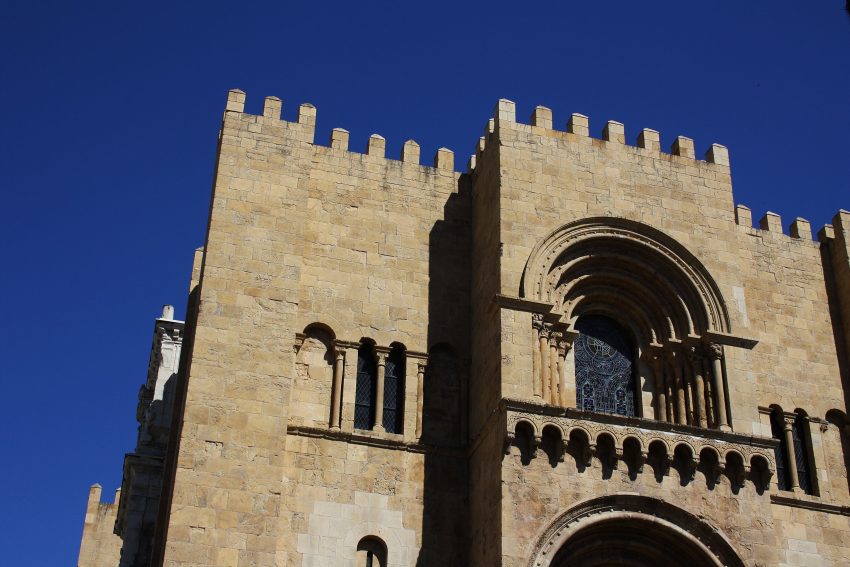
The Sé Velha de Coimbra is one of the must-see places in Coimbra, a rare Romanesque cathedral that has stood largely unchanged since the era of the Portuguese Reconquest. Its fortress-like silhouette, intricate carvings, and centuries-old cloister offer visitors a vivid journey through the city's medieval past. This atmospheric cathedral is also a great place to visit on a walking tour of Coimbra, especially for travelers interested in architecture, history, and sacred art.
Constructed beginning in 1164, the cathedral witnessed coronations, royal ceremonies, and the evolution of Portugal’s early Christian identity. Today, its mix of Romanesque foundations, Gothic expansions, and Renaissance additions tells the story of Coimbra’s long-standing spiritual and cultural influence.
Table of Contents
- History and Significance of Sé Velha de Coimbra
- Things to See and Do in Sé Velha de Coimbra
- How to Get to Sé Velha de Coimbra
- Practical Tips on Visiting Sé Velha de Coimbra
- Where to Stay close to Sé Velha de Coimbra
- Is Sé Velha de Coimbra Worth Visiting?
- FAQs for Visiting Sé Velha de Coimbra
- Nearby Attractions to Sé Velha de Coimbra
History and Significance of Sé Velha de Coimbra
Coimbra, known in Roman times as Aeminium, became an Episcopal seat in the 5th century after the decline of the ancient city of Conímbriga. Despite this early ecclesiastical importance, the city had no documented cathedral until Santa Maria de Coimbra-today known as Sé Velha-began construction in 1164 under Bishop Miguel Salomão. Though incomplete, the cathedral was consecrated in 1184, and in 1185 it hosted the coronation of King Sancho I.
The design is attributed to Master Roberto, a French architect also involved in Lisbon Cathedral. Construction leadership then passed from Master Bernardo to Master Soeiro, who brought experience from the churches of the Porto region. The result was a new architectural style for Portugal: the so-called Cathedrals of the South, including those of Coimbra, Lisbon, and Évora. The structure features three naves, a slightly projecting transept, a tripartite sanctuary, and a distinctive lantern-tower above the crossing.
The cathedral’s cloister began in 1218, making it one of the earliest Gothic structures in Portugal. Large and airy, it required excavation of the hillside to accommodate its size. The pointed arches, fine colonnades, and decorative openings give it a serene and refined character that contrasts beautifully with the heavier Romanesque mass of the main building.
Things to See and Do in Sé Velha de Coimbra
The Porta Especiosa, added in the 16th century, is one of the cathedral’s finest Renaissance elements. Designed by João de Ruão and sculpted by Nicolau de Chanterenne, it exemplifies the elegant classicism that swept through Portugal during this period. Its refined detailing provides a striking visual counterpoint to the building’s older Romanesque stonework.
Inside, visitors will find numerous notable chapels. The Chapel of the Blessed Sacrament, also by João de Ruão, and the Chapel of St. Peter, attributed to Nicolau de Chanterenne, showcase rich Renaissance artistry. The gilded main altarpiece, crafted in a flaming Gothic style by Flemish artists Olivier de Gand and Jean d’Ypres, adds dramatic luminosity to the sanctuary.
A highlight of the cathedral's Romanesque heritage is the set of chancels decorated with floral and animal motifs-remarkably free of human figures. This absence likely reflects the influence of Mozarabic artists who settled in Coimbra during the Middle Ages. In the side aisles, visitors can also see medieval tombs from the Gothic period, including that of Vataça Lascaris, a Byzantine lady who accompanied Queen Isabel of Aragon to Portugal in the early 14th century.
How to Get to Sé Velha de Coimbra
Most travelers arrive in Coimbra by flying into Porto Airport or Lisbon Airport, both of which offer reliable rail and coach connections to the city. For the best deals and a seamless booking experience, check out these flights to Coimbra on Booking.com.
Coimbra-B station is the city's main railway hub, receiving frequent trains from Lisbon, Porto, and other regions. From the station, buses and taxis make it easy to reach the historic center, where the cathedral is located on a hillside near the university district. Train schedules and bookings can be found on Omio.
Visitors arriving by car will find parking areas around the lower part of the old town. From there, it’s a short but steep walk up to the cathedral, whose tower and façade are visible from many streets. If you are looking to rent a car in Portugal I recommend having a look at Discover Cars, first, as they compare prices and review multiple car rental agencies for you.
Practical Tips on Visiting Sé Velha de Coimbra
- Best time to visit Sé Velha de Coimbra: Mornings for quiet exploration and soft light in the cloister.
- Entrance fee in Euros: A small ticket fee applies, including access to the cloister.
- Opening hours: Typically open daily; times may vary seasonally.
- Official website: Check the cathedral or Coimbra tourism site for updated schedules.
- How long to spend: Plan for 45-60 minutes to explore the cathedral and cloister.
- Accessibility: The steep approach and uneven stone surfaces may pose challenges for some visitors.
- Facilities: Nearby cafés and restrooms can be found in the surrounding historic streets.
- Photography tip: The cloister’s arches create beautiful shadows and symmetry throughout the day.
- Guided tours: Often available and helpful for understanding the cathedral’s layered history.
- Nearby food options: Several small restaurants and cafés lie just downhill toward the old town.
Where to Stay close to Sé Velha de Coimbra
For a stay immersed in the historic quarter, Sapientia Boutique Hotel offers stylish rooms and rooftop terraces near the university. Travelers who prefer intimate heritage properties may enjoy Solar Antigo Luxury Coimbra, located within a beautifully restored medieval building. For a modern and comfortable option, Tivoli Coimbra Hotel provides easy access to the old town and wider city.
Is Sé Velha de Coimbra Worth Visiting?
Absolutely. Sé Velha is one of Portugal’s finest Romanesque monuments, offering unmatched historical depth and architectural beauty. Its cloister, chapels, sculptural details, and medieval atmosphere make it a memorable stop for anyone exploring Coimbra’s rich cultural heritage.
What Other Travellers Say...

Old Cathedral of Saint Mary of Coimbra, located at Largo da Sé Velha, is a well-preserved Romanesque cathedral with a fortress-like, crenellated exterior and notable architecture; visitors highlight its striking exterior, the peaceful and charming cloister (one of the oldest in Portugal), a functioning church atmosphere, interior features such as a Gothic altarpiece, and a modest entrance fee making it a worthwhile stop for architecture and history enthusiasts.


FAQs for Visiting Sé Velha de Coimbra
Nearby Attractions to Sé Velha de Coimbra
- Paço das Escolas: The ceremonial heart of the University of Coimbra.
- Biblioteca Joanina: A magnificent Baroque library with rare manuscripts.
- Machado de Castro National Museum: Featuring Roman ruins and fine art collections.
- Botanical Garden of the University of Coimbra: A peaceful scientific garden with rare species.
- Santa Cruz Monastery: Burial place of Portugal's first kings and home to impressive Manueline art.
The Sé Velha de Coimbra appears in our Complete Guide to Visiting Coimbra!

Moira & Andy
Hey! We're Moira & Andy. From hiking the Camino to trips around Europe in Bert our campervan — we've been traveling together since retirement in 2020!
This website uses affiliate links which may earn a commission at no additional cost to you!
Planning Your Visit
10am-6pm Mon-Sat, 1-6pm Sun
€2.50
Nearby Attractions
- University Tower (0.1) km
Historic Building and Tower - Museu Nacional de Machado de Castro (0.1) km
Historic Building, Historic Site and Museum - Porta de Barbacã (0.2) km
City Gate and Tower - Paço das Escolas (0.2) km
Historic Building - Biblioteca Joanina (0.2) km
Historic Building and Library - Sé Nova (0.2) km
Cathedral - Church of St. Bartholomew (0.2) km
Church - University of Coimbra (0.2) km
Historic Site - Largo da Portagem (0.3) km
Square - Santa Cruz Monastery (0.3) km
Monastery