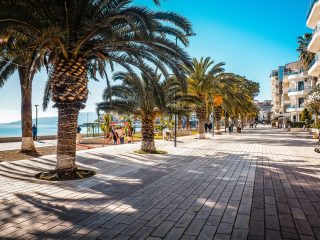
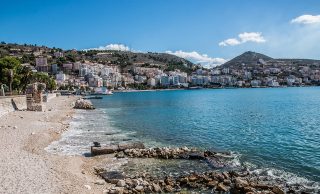
Synagogue Complex, Sarandë
Ruins in Sarandë
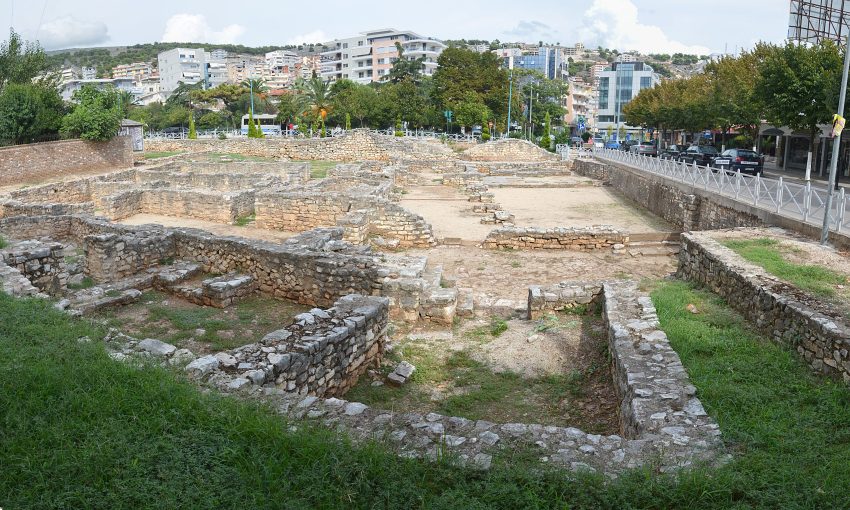
Right in the middle of Sarandë, the Synagogue Complex (often described as the Synagogue-Basilica archaeological remains) is one of those places you can easily stroll past without realising how significant it is. Set beside modern streets and everyday city life, these open-air ruins preserve a rare, tangible story of faith and community on the Ionian coast-complete with mosaic floors that still feel surprisingly vivid when the light hits them.
What I love most is how effortless it is to visit: you can drop in for ten minutes on your way to the waterfront, or linger and let the details sink in. It's one of the best places to visit in Sarandë if you want a meaningful stop that doesn't require a big time commitment, and it also fits naturally into a walking tour of Sarandë because it sits so close to the city's main footpaths and promenade rhythm.
Table of Contents
- History and Significance of the Synagogue Complex
- Things to See and Do in the Synagogue Complex
- How to Get to the Synagogue Complex
- Practical Tips on Visiting the Synagogue Complex
- Where to Stay Close to the Synagogue Complex
- Is the Synagogue Complex Worth Visiting?
- For Different Travelers
- FAQs for Visiting the Synagogue Complex
- Nearby Attractions to the Synagogue Complex
History and Significance of the Synagogue Complex
The ruins here trace a fascinating sequence of use, with the most celebrated phase dating to Late Antiquity, when a Jewish community established a synagogue complex in ancient Onhezmus (the earlier settlement that became modern Sarandë). The standout finds are the mosaic floors, including Jewish ritual symbols that make this site one of the most important synagogue discoveries in the Balkans. Even in fragmentary form, the iconography gives the place a clear identity-this was not just a generic civic building, but a space shaped by worship, community gathering, and tradition.
In later centuries, the complex was adapted and repurposed into a Christian basilica, reflecting the shifting religious landscape of the region. That transition is part of what makes the site so compelling: rather than presenting a single frozen moment in time, it shows how sacred spaces can evolve, absorbing new layers of meaning while still carrying traces of what came before. It’s a small site, but it tells a big story about continuity and change along a coastline that has always been connected to wider Mediterranean currents.
Things to See and Do in the Synagogue Complex
Start with the mosaics. Look for panels where geometric borders frame symbolic motifs, and take a moment to spot the details that feel distinctly “of their tradition” rather than decorative for decoration’s sake. The most famous imagery is tied to Jewish ritual life, and even if you’re not an expert, the presence of clearly recognisable symbols makes the archaeology feel personal and direct.
After that, walk the perimeter slowly and imagine the complex as a lived space rather than a museum exhibit. Because the ruins sit in the open, you can also use them as a quiet pause in the middle of a busy day-an ideal reset between the waterfront, cafés, and the next stop on your itinerary. If you visit near golden hour, the low light makes the textures of stone and mosaic stand out and gives the whole place a calmer, more reflective mood.
How to Get to the Synagogue Complex
If you're already in Sarandë, getting here is simple: the site is centrally located and easy to reach on foot from the promenade, the bus stops, and the main streets around the waterfront. It's an easy add-on before dinner, or a quick cultural stop between beach time and an evening stroll.
If you're arriving from outside the city, the nearest airports are Corfu International Airport (CFU), which connects via the Corfu-Sarandë ferry, and Tirana International Airport (TIA) for onward travel south by road. For the best deals and a seamless booking experience, check out these flights to Sarandë on Booking.com. There’s no practical train service to Sarandë, so buses, minibuses, and taxis are the realistic public-transport options for reaching the city. Driving is straightforward once you’re in Sarandë, and a car can be useful if you’re combining the visit with beaches and Butrint in the same day. If you are looking to rent a car in Albania I recommend having a look at Discover Cars, first, as they compare prices and review multiple car rental agencies for you.
Practical Tips on Visiting the Synagogue Complex
- Entrance fee: Free Entrance
- Opening hours: 8am-8pm Apr-Oct, to 5pm Nov-Mar
- Official website: https://www.visitsaranda.net/see/synagogue-complex/
- Best time to visit: Late afternoon is ideal for softer light on the mosaics and a quieter feel once the day’s pace slows down in the centre.
- How long to spend: 20-45 minutes is perfect for a focused visit, or up to an hour if you like reading the site slowly and taking photos.
- Accessibility: The setting is central, but surfaces can be uneven; supportive shoes help, and mobility may be limited in places due to the nature of the ruins.
- Facilities: There are no major visitor facilities on-site, so treat it as a quick open-air stop and plan cafés and restrooms around the nearby waterfront area.
Where to Stay Close to the Synagogue Complex
For most travellers, basing yourself along Sarandë’s central waterfront promenade is the best choice for easy walking access to sights, restaurants, and evening atmosphere, while still keeping day trips simple.
If you want to be steps from the centre and close enough to wander out early or return after sunset, Saranda Residence is a strong, practical base right on one of the city’s key streets. For a more classic hotel setup with easy access to beaches and the main boulevard, Hotel Brilant Saranda works well for travellers who want convenience with a more resort-like feel. If your plans lean toward combining Sarandë with frequent trips down the coast toward Ksamil, Hotel Iliria puts you in a good position for quick southern escapes.
Is the Synagogue Complex Worth Visiting?
Yes, especially if you enjoy small sites with real historical weight. It’s not a grand, curated museum experience, but that’s part of the charm: you’re seeing rare archaeological remains in the living city, with mosaics that connect you directly to Sarandë’s multicultural past.
It's also an excellent “high value for time spent” stop. Even a short visit adds depth to a Sarandë itinerary that might otherwise revolve around beaches and waterfront cafés, and it gives the city a richer context beyond the Riviera vibe.
What Other Travellers Say...

Synagogue - Basilica, Archeological Remains sits in the middle of Sarandë and is a free, open archaeological site where visitors can view the remains of a basilica and synagogue from antiquity within the medieval fortress walls; it's small and easy to see while walking through the central area near the main square, tourism office and bus station, but informational panels are faded or damaged and mosaics on display are replicas (the originals are in the Sarandë Museum of Archaeology).


For Different Travelers
Families with Kids
This is an easy cultural stop for families because it’s short, central, and doesn’t demand a long attention span. Turn it into a quick “treasure hunt” for patterns and symbols in the mosaics, then reward everyone with a promenade snack afterward.
If you have a stroller, be prepared for uneven surfaces and keep the visit flexible. It works best as a brief pause in a bigger walk rather than the main event of the day.
Couples & Romantic Getaways
For couples, the appeal is the atmosphere: ancient stone and mosaic underfoot, modern city life around you, and the sea just a short stroll away. Visit in the early evening, then continue straight into a waterfront walk for a simple, well-paced mini-date.
It’s also a great pairing with a sunset viewpoint later, because the site itself is calm and reflective rather than dramatic. You get a meaningful cultural moment without over-structuring your day.
Budget Travelers
Budget travellers will appreciate that it’s central and easy to include without transport costs. It’s the kind of stop you can slot between free waterfront viewpoints and low-cost local eateries, adding substance without adding spend.
Because it's quick, it's also ideal if you're doing Sarandë on a tight timeline. Combine it with nearby walks and save paid tickets for bigger day trips like Butrint.
History Buffs
If you’re drawn to layered sites, this one is especially satisfying: few places show such a clear transition from synagogue to basilica in a single footprint. Spend time with the mosaics and layout, and read a little context beforehand so you can connect the visual details to the broader story.
History lovers should also treat this as a gateway rather than a standalone stop. It sets you up perfectly for deeper heritage visits nearby, especially Butrint, where the region’s long timeline becomes even more vivid.
FAQs for Visiting the Synagogue Complex
Getting There
Tickets & Entry
Visiting Experience
Tours, Context & Itineraries
Photography
Accessibility & Facilities
Nearby Attractions to the Synagogue Complex
- Lekursi Castle: A hilltop fortress with wide panoramic views over Sarandë and the Ionian Sea, especially atmospheric at sunset.
- Sarandë Promenade: The city's waterfront walk, lined with cafés and evening energy, perfect for a relaxed stroll after sightseeing.
- Sarandë Museum of Archaeology: A compact museum that adds context to what you've seen on the streets, with artefacts from the region's long timeline.
- Monastery of the 40 Saints: A historic hilltop monastery site with sweeping views and a quieter, more reflective feel than the waterfront.
- Butrint National Park: A major archaeological site and UNESCO-listed highlight near Sarandë, combining ancient ruins with a beautiful natural setting.
The Synagogue Complex appears in our Complete Guide to Visiting Sarandë!

Moira & Andy
Hey! We're Moira & Andy. From hiking the Camino to trips around Europe in Bert our campervan — we've been traveling together since retirement in 2020!
This website uses affiliate links which may earn a commission at no additional cost to you!
Planning Your Visit
8am-8pm Apr-Oct, to 5pm Nov-Mar
Free Entrance
Nearby Attractions
- Sarandë Museum of Archaeology (0.2) km
Museum - Sarandë Beach (0.2) km
Beach - Museum of Archaeology (0.2) km
Museum - Sarandë Museum of Tradition (0.2) km
Museum - Museum of Traditions (0.2) km
Museum - Monastery of Forty Saints (1.2) km
Ruins - Lekursi Castle (1.9) km
Castle - Monastery’s Beach (6.8) km
Beach - Saint George Monastery (7.1) km
Monastery - Mirror Beach (7.8) km
Beach