Santuário de Santa Luzia, Viana do Castelo
Basilica in Viana do Castelo
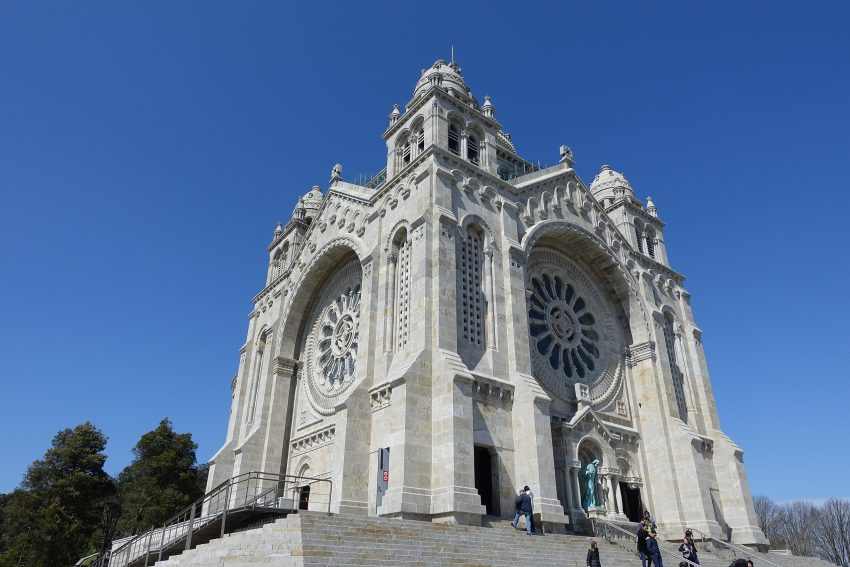
The Santuário de Santa Luzia crowns Monte de Santa Luzia above Viana do Castelo, rising like a stone lighthouse you can spot from across the river and the coastal plain. Up close, it feels even more impressive: broad terraces, crisp granite lines, and those huge rose windows that immediately pull your eyes upward. It's not just a church you “pop into” on the way somewhere else-it's the kind of landmark that shapes the whole city skyline and becomes the moment you remember most from the trip.
What makes the visit special is the combination of architecture and altitude. The basilica itself is beautifully atmospheric, but the real magic comes from stepping outside and watching the Lima River valley open out toward the Atlantic. It's easily one of the top sights in Viana do Castelo, and it also pairs naturally with a walking tour of Viana do Castelo-do the historic centre first, then head up for the wide-angle finale.
Table of Contents
- History and Significance of the Santuário de Santa Luzia
- Things to See and Do in the Santuário de Santa Luzia
- How to Get to the Santuário de Santa Luzia
- Practical Tips on Visiting the Santuário de Santa Luzia
- Where to Stay Close to the Santuário de Santa Luzia
- Is the Santuário de Santa Luzia Worth Visiting?
- For Different Travelers
- FAQs for Visiting Santuário de Santa Luzia
- Nearby Attractions to the Santuário de Santa Luzia
History and Significance of the Santuário de Santa Luzia
Construction began in 1904 and the sanctuary wasn’t completed until 1959, a long timeline that reflects how ambitious the project was for a city of this size. The design is associated with architect Miguel Ventura Terra, with Miguel Nogueira continuing the work after Terra’s death, and the result is a revivalist statement piece that still feels intentionally monumental today.
Architecturally, it leans into a Romanesque-Byzantine mood-solid massing, rhythmic arches, and a sense of symmetry that feels both historical and theatrical. The rose windows are a headline feature: they’re widely described as the largest in the Iberian Peninsula and among the largest in Europe, and they give the building its unmistakable “cathedral-on-a-hill” identity.
Religiously, the sanctuary is dedicated to Santa Luzia (Saint Lucy) and the Sacred Heart of Jesus, and it functions as both a place of worship and a civic symbol-part pilgrimage stop, part viewpoint, part cultural landmark. The hilltop setting is not accidental: it turns a spiritual site into a geographic anchor, linking the city below with the landscapes that define northern Portugal-river, mountain, and ocean.
Things to See and Do in the Santuário de Santa Luzia
Start with the exterior terraces and take your time walking the perimeter. The shifting angles give you different “frames” of the same panorama-city rooftops and bridges, the Lima River threading through green lowlands, and the Atlantic horizon when the air is clear. If you arrive when the light is soft (late afternoon is ideal), the granite warms up and the views look almost painted.
Inside, look for the way light moves through the rose windows and across the interior volumes. Even if you’re not typically a church-visitor, this is one of those spaces where scale does the storytelling: it’s designed to feel elevated, calm, and slightly otherworldly after the climb up. If a service is underway, it’s worth sitting quietly for a few minutes-the acoustics and atmosphere are part of the experience.
For the best “wow” moment, consider the dome viewpoint (zimbório). The route is narrow and involves stairs, but the payoff is a true 360-degree lookout that makes you understand why people talk about this hill as the city’s ultimate vantage point. On windy days, bring a layer-the top can feel dramatically cooler than the streets below, especially outside summer.
How to Get to the Santuário de Santa Luzia
The nearest major airport is Porto Airport (OPO), which is the most practical arrival point for most international travellers connecting onward to Viana do Castelo. For the best deals and a seamless booking experience, check out these flights to Viana do Castelo on Booking.com. If you’re coming from Spain, Vigo Airport (VGO) can also be a useful option depending on schedules and where you’re starting from. For the best deals and a seamless booking experience, check out these flights to Viana do Castelo on Booking.com.
Viana do Castelo's train station is central, and rail is one of the simplest ways to arrive without dealing with parking-especially if you're travelling from Porto or other towns in the north. Train schedules and bookings can be found on Omio. From the station area, you can either take a taxi/rideshare up the hill or use the funicular as a scenic, low-effort ascent.
Intercity buses (often via Porto or Braga) are a solid budget choice, but they can take longer than the train and schedules vary more by day and season-still, they're perfectly workable if you plan around departures. Once you're in town, the uphill approach is the main “logistics” piece: the funicular is a classic solution, connecting the railway area to the sanctuary and turning the climb into part of the fun.
If you’re driving, the sanctuary is reachable by road and the hill approach is straightforward, but it’s smartest to time it outside peak midday hours when parking pressure is highest. If you are looking to rent a car in Portugal I recommend having a look at Discover Cars, first, as they compare prices and review multiple car rental agencies for you.
Practical Tips on Visiting the Santuário de Santa Luzia
- Entrance fee: Free (basilica); Dome viewpoint (zimbório) €2.
- Opening hours: (Summer) Daily: 09:00–18:00. (Winter) Daily: 09:00–17:00.
- Official website: https://templosantaluzia.org/
- Best time to visit: Late afternoon into early evening gives the best light over the Lima valley and a more relaxed feel than midday peak times.
- How long to spend: Plan 60-90 minutes for the basilica and terraces, or closer to 2 hours if you add the dome viewpoint and linger for photos.
- Accessibility: The terrace level is generally manageable, but the dome viewpoint involves tight stairs and is not suitable for limited mobility or anyone uncomfortable in confined spaces.
- Facilities: Expect basic visitor conveniences around the sanctuary area; bring water in warm months and a layer for windier days at the top.
Where to Stay Close to the Santuário de Santa Luzia
For a culture-heavy itinerary, base yourself in Viana do Castelo's historic centre and riverside; if your priority is sunrise views and effortless access to the sanctuary, Monte de Santa Luzia is the most convenient base.
If you want the classic “wake up on the hill” experience, the Pousada de Viana do Castelo puts you right by the sanctuary setting, with the bonus of panoramic outlooks that feel like a private preview of the viewpoint. For a central stay that keeps restaurants, the station, and the old town easy, Hotel Rali Viana is a practical choice with walkable access to the city’s everyday life. If you’d rather mix the sanctuary visit with coastal time and sea air, Hotel Flôr de Sal works well as a comfortable base for oceanfront mornings and quick trips back into town.
Is the Santuário de Santa Luzia Worth Visiting?
Yes-especially if you enjoy places where architecture and geography amplify each other. Even if you spend just an hour here, you get a concentrated “Viana do Castelo moment”: dramatic design, a sense of pilgrimage history, and a viewpoint that explains the city's relationship to river and sea in a single glance.
It’s also a high-value stop because it scales to your travel style. You can do it as a quick funicular-and-terrace visit, or turn it into a slower half-day by adding the dome viewpoint, nearby ruins, and a relaxed descent back into town for coffee and wandering.
What Other Travellers Say...

Sanctuary of the Sacred Heart of Jesus / Mount of Santa Luzia in Viana do Castelo is a mountaintop church with a small museum and dome that reward visitors with panoramic views of the city, river and Atlantic; the granite exterior gives way to an airy, mural- and stained-glass-filled interior with notable acoustics, and visitors can reach the site by foot, taxi or cable car, buy tickets from an on-site machine, climb a narrow stair to the top for sweeping vistas (small fee), and find plenty of parking available at the summit.


For Different Travelers
Families with Kids
The sanctuary works well for families because the big open terrace space gives kids room to move without the “museum hush” pressure. If you use the funicular or drive, it becomes a low-effort, high-reward outing with an instant payoff when you reach the views.
Keep the dome viewpoint as an optional add-on rather than a must: the stair sections can feel tight and tiring for younger kids, and it’s better when everyone is comfortable with narrow passages. Build in a snack break and treat the hilltop as a mini-adventure rather than a checklist stop.
Couples & Romantic Getaways
For couples, this is one of those places where the atmosphere does the work for you-arrive when the light softens and the view turns cinematic. The terrace is perfect for slow walking, quiet conversation, and that “we should stay five more minutes” feeling.
If you want a memorable shared moment, time your visit for golden hour and plan a simple follow-on: dinner back in town or a coastal walk. The contrast between hilltop calm and city buzz is part of what makes the experience feel complete.
Budget Travelers
This is a strong budget stop because the basilica itself is free, and you can shape the cost around your priorities. Walk up if you want to keep spending minimal and don’t mind the climb, or choose the funicular as a small splurge that saves time and energy.
Bring your own water and snacks, and treat the visit as your “big view” of the day-then spend the rest of your time exploring Viana do Castelo on foot. It's an easy way to get a premium experience without needing paid attractions.
FAQs for Visiting Santuário de Santa Luzia
Getting There
Tickets & Entry
Visiting Experience
Tours, Context & Itineraries
Photography
Accessibility & Facilities
Food & Breaks Nearby
Safety & Timing
Nearby Attractions to the Santuário de Santa Luzia
- Citânia de Santa Luzia: Hilltop archaeological ruins nearby that add an easy layer of Iron Age history to your visit.
- Elevador de Santa Luzia (Funicular): A classic ride that turns the climb into a scenic experience and connects neatly with the station area.
- Praça da República: The city's main historic square, ideal for cafés, people-watching, and a gentle post-hill wander.
- Navio Hospital Gil Eannes: A memorable museum ship that gives Viana do Castelo's maritime identity a hands-on, walk-through feel.
- Forte de Santiago da Barra: A coastal fortress area that pairs well with a seaside walk and views back toward the city.
The Santuário de Santa Luzia appears in our Complete Guide to Visiting Viana do Castelo!

Moira & Andy
Hey! We're Moira & Andy. From hiking the Camino to trips around Europe in Bert our campervan — we've been traveling together since retirement in 2020!
This website uses affiliate links which may earn a commission at no additional cost to you!
Planning Your Visit
(Summer) Daily: 09:00-18:00.
(Winter) Daily: 09:00-17:00.
Free (basilica); Dome viewpoint (zimbório) €2.
Nearby Attractions
- Citania de Santa Luzia (0.4) km
Historic Site - Elevador de Santa Luzia (0.7) km
Railway - Igreja da Misericórdia de Viana do Castelo (1.0) km
Church - Praça da República (1.1) km
Square - Museu de Artes Decorativas (1.1) km
Historic Building and Museum - Sé Catedral de Viana do Castelo (1.1) km
Cathedral - Casa dos Nichos (1.2) km
Historic Site and Museum - Navio Hospital Gil Eannes (1.3) km
Museum - Forte de Santiago da Barra (1.4) km
Castle - Castro de S. Lourenço (17.2) km
Historic Site