Navio Hospital Gil Eannes, Viana do Castelo
Museum in Viana do Castelo
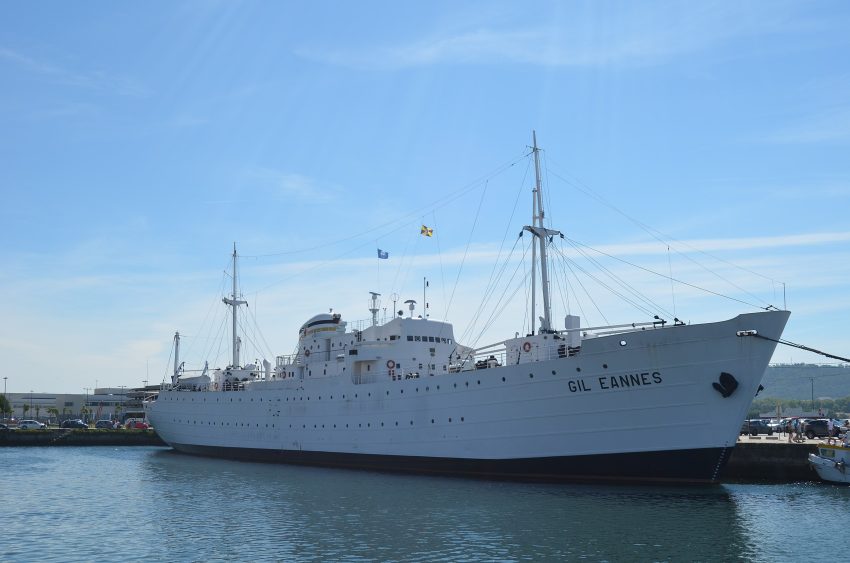
Navio Hospital Gil Eannes in Viana do Castelo, Portugal, is a museum ship moored at the waterfront on Doca Comercial. Built in 1955, it once supported the Portuguese cod-fishing fleet and now lets visitors walk through a full floating vessel rather than look at exhibits in a conventional gallery.
Inside, the ship is laid out with bridge, cabins, engine spaces, kitchen, chapel, communications room, and medical areas including treatment and operating rooms. Visitors notice how compact and functional the ship is, and how clearly it shows the daily routines behind the Atlantic cod campaigns. It suits travellers who like maritime history, technical spaces, and places that feel physically real rather than staged.
Table of Contents
- History and Significance of the Navio Hospital Gil Eannes
- Things to See and Do in the Navio Hospital Gil Eannes
- How to Get to the Navio Hospital Gil Eannes
- Practical Tips on Visiting the Navio Hospital Gil Eannes
- Where to Stay Close to the Navio Hospital Gil Eannes
- Is the Navio Hospital Gil Eannes Worth Visiting?
- For Different Travelers
- FAQs for Visiting Navio Hospital Gil Eannes
History and Significance of the Navio Hospital Gil Eannes
The ship was built in Viana do Castelo in 1955 to support Portugal's cod-fishing fleet working the harsh waters off Newfoundland and Greenland. While it's remembered as a floating infirmary, its real importance was broader: it functioned as a flagship and support hub, delivering supplies, mail, and practical assistance to smaller fishing boats that couldn't operate independently for long stretches.
That multi-role identity is what makes the Gil Eannes such a compelling museum today. The cod campaigns were industrial and remote, and this ship was the connective tissue-part hospital, part logistics base, part morale booster-helping a scattered fleet keep moving in conditions that were often punishing.
After its service years, the vessel drifted into an uncertain afterlife: used briefly as a cargo ship, decommissioned in the 1980s, and left deteriorating in Lisbon. Its return to Viana do Castelo and restoration in 1998 turned it into a symbol of local maritime pride, now maintained and interpreted by the Gil Eannes Foundation as both a museum ship and a living memory of the city's seafaring identity.
Things to See and Do in the Navio Hospital Gil Eannes
Begin at the stern with the Centro do Mar, the smaller exhibition area that’s free to enter and sets the context for what you’re about to explore. It’s a smart warm-up: fishing nets, ropes, navigational tools, and rotating displays help you read the ship not as a curiosity, but as a working node in a much larger Atlantic system.
Once you move into the ticketed sections, the experience becomes delightfully hands-on and surprisingly extensive. The ship’s bridge is a highlight-standing where decisions were made gives you an instant sense of the responsibility carried by a relatively small crew. Below decks, the officers’ and sailors’ cabins, mess areas, kitchen spaces, and the engine room reveal how tightly life was organized and how physical the day-to-day realities were.
The medical spaces are what most people remember: treatment rooms, a pharmacy, a radiology (X-ray) room, and the operating theatre feel both historic and strangely immediate, especially with mannequins and equipment displays bringing the routines to life. Look out for the smaller “everyday” rooms too-a bakery, barber’s, chapel, and communications area-because those are what turn the visit from “ship museum” into a believable portrait of floating community.
How to Get to the Navio Hospital Gil Eannes
The ship is moored at the commercial dock area on the waterfront, a short and pleasant walk from the historic centre along the riverside promenade. If you're already sightseeing around Praça da República or the marina, you can reach it on foot without any planning beyond following the water.
The nearest major airport is Porto Airport (OPO), with Vigo Airport (VGO) also useful if you're combining northern Portugal with Galicia. For the best deals and a seamless booking experience, check out these flights to Viana do Castelo on Booking.com.
Viana do Castelo is served by rail connections (commonly via Porto Campanhã), and from the train station you can walk or take a quick taxi to the waterfront depending on luggage and weather. Train schedules and bookings can be found on Omio.
Intercity buses are also a practical option for day trips or point-to-point travel in the north, especially if your schedule lines up better than the trains.
If you’re driving, access via the A28 is straightforward; park once near the centre or waterfront and do the last stretch on foot to avoid circling for a close quay-side space. If you are looking to rent a car in Portugal I recommend having a look at Discover Cars, first, as they compare prices and review multiple car rental agencies for you.
Practical Tips on Visiting the Navio Hospital Gil Eannes
- Entrance fee: €5 (adult); €12 (family ticket); free for children aged 0–6.
- Opening hours: (Summer) April – October: Daily: 09:30–19:00. (Winter) November – March: Daily: 09:30–18:00. Closed on 25 December & 01 January.
- Official website: https://www.fundacaogileannes.pt
- Best time to visit: Arrive close to opening for the calmest experience, then follow a top-to-bottom route so you’re not doubling back on staircases.
- How long to spend: Allow 60-90 minutes if you want to explore properly, especially the medical areas, bridge, and engine spaces.
- Accessibility: Expect steep stairs and ladder-like steps between decks, which can be challenging for reduced mobility and difficult with strollers.
- Facilities: Bring grippy shoes and keep hands free for railings; the ship is spacious overall, but moving between levels is the demanding part.
Where to Stay Close to the Navio Hospital Gil Eannes
For a culture-heavy itinerary, stay in the historic centre around Praça da República so evenings are easy and walkable; if your trip is more about sea air, sunsets, and long promenades, base yourself on the seafront side of town near the waterfront.
For a central, no-fuss base that keeps you close to restaurants and the old town streets, AP Dona Aninhas works well for a classic city stay. If you like being right by the water with a promenade-on-your-doorstep feel, Hotel Flôr de Sal is ideal for early walks and a relaxed pace. For a modern option with wellness downtime built in, Axis Viana Business & SPA Hotel suits travellers who want comfort and easy logistics.
Is the Navio Hospital Gil Eannes Worth Visiting?
Yes, especially if you like museums that feel immersive rather than observational. The Gil Eannes is effectively a full-scale time capsule: you can trace daily life from bridge to bunk to operating theatre, which makes the history feel tangible in a way a traditional gallery rarely manages.
It’s also worth it because it tells a very specific local story-Viana do Castelo’s relationship with the Atlantic and the cod campaigns-without requiring specialist knowledge. Even if you come “just for a look,” you’ll likely stay longer than planned once you realize how many rooms there are to explore.
What Other Travellers Say...
The Gil Eannes Foundation in Viana do Castelo preserves a century‑old vessel that served as a supply ship, floating hospital and icebreaker and now functions as a well‑maintained museum moored at the commercial dock; visitors praise the detailed restoration and exhibits that recreate life and work aboard the hospital ship, note narrow steep steps between decks, recommend allowing about an hour (earlier on weekends or weekdays), and mention a small onboard bookstore and friendly staff with a modest entrance fee.





For Different Travelers
Families with Kids
This is a strong family stop because it’s basically structured exploration: kids can understand “bridge,” “engine room,” and “hospital” instantly, and the ship layout turns the visit into a gentle scavenger hunt. Keep the pace flexible, and consider doing the upper decks first while energy is high, then finishing with the calmer exhibit areas.
If you’re visiting with a stroller, plan for a partial visit or a tag-team approach, because the stairs between decks are steep and not stroller-friendly. A good compromise is to focus on a few standout areas (bridge, cabins, medical spaces) and treat the rest as a bonus rather than a must.
Couples & Romantic Getaways
For couples, the charm is in the atmosphere and the waterfront setting: arrive mid-afternoon, explore the ship, then step back outside for a slow riverside stroll and a drink nearby. It’s a date-friendly museum because it naturally creates moments to pause, compare details, and imagine the realities of life at sea.
If you like photography, you can build a very simple, satisfying loop-ship, promenade, and sunset viewpoint-without needing to hop in taxis or plan reservations. It’s a compact experience with a memorable sense of place.
Budget Travelers
The value here is high because you get a lot of content for a modest ticket, and the free Centro do Mar section means you can still have a worthwhile visit even if you’re being strict with spending. It’s also walkable from most of the central sights, so you’re not adding transport costs to your day.
To keep things efficient, combine the ship with a DIY waterfront route and a walk through the old town rather than paying for tours. If you time it well, you can cover the ship and several nearby highlights in one day without spending much beyond food.
History Buffs
This is one of the most satisfying “working history” visits in the region because the ship’s roles-hospital, supply base, communications point, and fleet support-are all readable in the physical layout. You’re not just learning what the cod campaigns were; you’re seeing how they were managed, sustained, and humanly endured.
Spend extra time in the medical and communications spaces, and look for original photos and documents that anchor the rooms in real routines. The contrast between the utilitarian crew areas and the clinical treatment spaces is the detail that makes the ship’s mission feel fully credible.
FAQs for Visiting Navio Hospital Gil Eannes
Getting There
Tickets & Entry
Visiting Experience
Tours, Context & Itineraries
Photography
Accessibility & Facilities
Food & Breaks Nearby
Safety & Timing
The Navio Hospital Gil Eannes appears in our Complete Guide to Visiting Viana do Castelo!

Moira & Andy
Hey! We're Moira & Andy. From hiking the Camino to trips around Europe in Bert our campervan — we've been traveling together since retirement in 2020!
This website uses affiliate links which may earn a commission at no additional cost to you!
Planning Your Visit
(Summer) April - October: Daily: 09:30-19:00.
(Winter) November - March: Daily: 09:30-18:00.
Closed on 25 December & 01 January.
€5 (adult); €12 (family ticket); free for children aged 0-6.
Nearby Attractions
- Casa dos Nichos (0.3) km
Historic Site and Museum - Museu de Artes Decorativas (0.3) km
Historic Building and Museum - Praça da República (0.4) km
Square - Sé Catedral de Viana do Castelo (0.4) km
Cathedral - Igreja da Misericórdia de Viana do Castelo (0.5) km
Church - Forte de Santiago da Barra (0.7) km
Castle - Elevador de Santa Luzia (0.7) km
Railway - Santuário de Santa Luzia (1.3) km
Basilica - Citania de Santa Luzia (1.7) km
Historic Site - Castro de S. Lourenço (15.9) km
Historic Site