Santuari de Lluc, Pollenca
Monastery near Pollenca
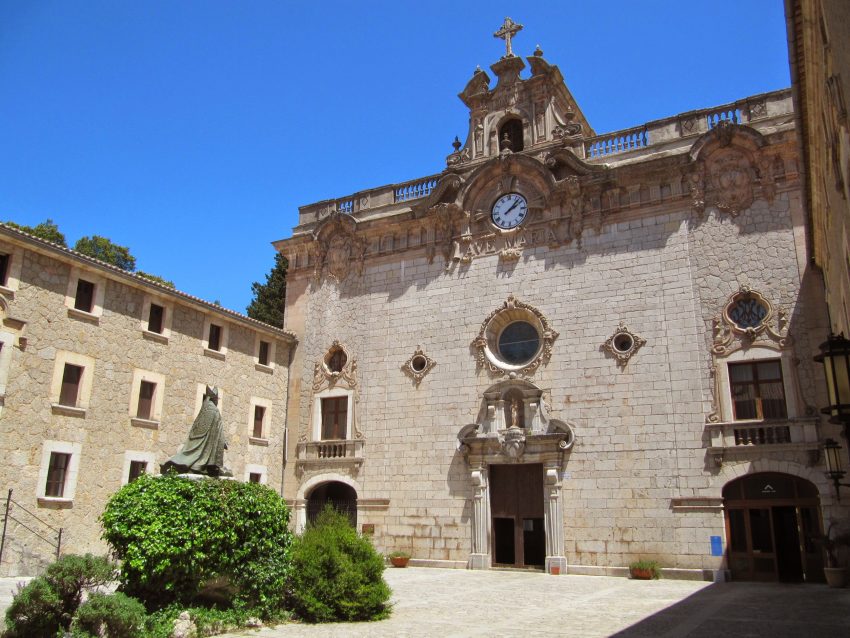
Tucked high in the Serra de Tramuntana, Santuari de Lluc is one of the best places to visit in Mallorca if you want to balance mountain hiking with a deep sense of history and spirituality. The sanctuary sits in a natural bowl of peaks and terraces, surrounded by old olive, almond, and citrus groves that speak to generations of careful farming. For many visitors, the appeal is twofold: peaceful stone cloisters and church interiors on one side, and a web of hiking trails on the other, including sections of the famous Dry Stone Route and the demanding Torrent de Pareis trek down to Sa Calobra.
Getting here is a journey in itself. The road winds through hairpin bends with viewpoints over terraced hillsides, where stone walls hold ancient fields in place and mountain goats can sometimes be seen picking their way across the rock. Once you arrive, you find a compact village-like complex with restaurants, a café, bakery, pharmacy, souvenir shop, and even one of the island's few official campsites, making Lluc a practical base as well as a spiritual one. The sanctuary is a highlight of any walking tour of Mallorca's Tramuntana interior, especially if you stay long enough to hear the renowned Blauets choir sing.
Table of Contents
- History and Significance of the Santuari de Lluc
- Things to See and Do in the Santuari de Lluc
- How to Get to the Santuari de Lluc
- Practical Tips on Visiting the Santuari de Lluc
- Where to Stay close to the Santuari de Lluc
- Is the Santuari de Lluc Worth Visiting
- FAQs for Visiting Santuari de Lluc
- Nearby Attractions to the Santuari de Lluc
History and Significance of the Santuari de Lluc
Local tradition roots the story of Lluc in the years following the Reconquista of Mallorca in 1229, when King Jaume I wrested the island from Muslim rule. According to legend, a shepherd boy named Lluc found a statue of the Virgin Mary in the Tramuntana mountains and took it to the village priest, who placed it in the church. By the next day, the statue had inexplicably returned to the spot where it was discovered. After this happened three times, the people took it as a sign that the Virgin wished to remain there, and a small chapel was built on that site, sowing the seeds of the sanctuary.
Over the centuries, this humble chapel evolved into a major pilgrimage destination. The current church, largely Renaissance in style, reflects the prosperity and devotion that flowed into Lluc as pilgrims and benefactors supported its growth. In 1962, Pope John XXIII granted the church the title of Minor Basilica, recognising both its religious importance and the depth of Marian devotion associated with the site. At the heart of that devotion is the revered Black Madonna, a dark-toned statue of the Virgin Mary that stands on the main altar and draws worshippers from across the island and beyond.
Santuari de Lluc is not only about buildings and legends; it is also a long-standing educational and musical centre. Since the 16th century it has been home to the Blauets choir, originally a boys' choir and now including girls as well. Members study and rehearse here, some living in the sanctuary's boarding school, and their regular performances during Sunday services and major festivals have made Lluc a cultural as well as a spiritual reference point for Mallorca. The sanctuary thus embodies faith, tradition, and community, set against the dramatic backdrop of the Tramuntana.
Things to See and Do in the Santuari de Lluc
Start with the basilica, whose Renaissance façade and cool interior set a contemplative tone. Inside, the Black Madonna on the high altar is the focal point: many visitors light candles or sit quietly for a few minutes, whether or not they share the Catholic faith. Look up to appreciate the proportions of the church and the details added during its various phases of construction and renovation, including elements influenced by the early 20th-century interventions of Antoni Gaudí, whose touch links Lluc to Palma’s La Seu cathedral.
If your visit falls on a Sunday or on major feast days such as Easter or Christmas Eve, try to be present when the Blauets choir sings. Their voices fill the basilica with a clear, pure sound that adds a powerful emotional layer to the architecture and legend; during the Cant de la Sibil·la, a traditional chant performed at Christmas, the atmosphere is particularly charged. Even on ordinary days, the cloisters, small chapels, and courtyards around the church reward slow exploration, with plaques, statues, and viewpoints that help you piece together the sanctuary’s story.
Beyond the religious core, Lluc is a practical base for outdoor activities. From the sanctuary, waymarked paths lead into the Tramuntana hills, connecting with stretches of the Dry Stone Route and other local circuits. More experienced hikers may use Lluc as a staging point for the challenging Torrent de Pareis route that eventually emerges at Sa Calobra, though this demands careful planning and good conditions. Back at the sanctuary, you can refuel in one of the restaurants, grab a snack from the café or bakery, browse the souvenir shop, or simply sit with a drink on a terrace, watching other walkers and pilgrims come and go.
How to Get to the Santuari de Lluc
Most visitors reach Lluc from Palma de Mallorca, the island's main gateway, via Palma de Mallorca Airport, which has frequent connections from across Europe and beyond. For the best deals and a seamless booking experience, check out these flights to Pollenca on Booking.com. From Palma, you can rent a car, join an organised excursion, or use a combination of buses to approach the Tramuntana villages and Lluc itself.
There is no direct mainline train network running into the Tramuntana interior, so if you are arriving in Spain by rail you will switch to a ferry or flight for Mallorca and then continue by road.Train schedules and bookings can be found on Omio. Once on the island, public buses link Palma with towns such as Inca and sometimes with Lluc, though services may be limited or seasonal, especially on weekends.
For flexibility, travelling by car is often the best option.If you are looking to rent a car in Spain I recommend having a look at Discover Cars, first, as they compare prices and review multiple car rental agencies for you. The drive to Lluc involves winding mountain roads with numerous hairpin bends and superb views; take your time, especially if you are not used to mountain driving. Along the way, look out for the terraced slopes carved by generations of Mallorcan farmers to grow olives, almonds, and citrus trees. When you arrive, there is parking near the sanctuary complex, from where it is a short, straightforward walk into the heart of Lluc.
Practical Tips on Visiting the Santuari de Lluc
- Suggested tips: Combine your visit with a short hike from the sanctuary so you can experience both its spiritual side and its mountain setting.
- Best time to visit: Spring and autumn offer ideal hiking weather and fewer crowds; summer brings longer days but also higher temperatures and more visitors.
- Entrance fee: Adults: €5.00
- Opening hours: You can visit the museum from 10:00 to 14:00 (except Saturdays), while the botanical gardens are open from 10:00 to 13:00 and 15:00 to 18:00.
- Official website: https://santuaridelluc.com/en/
- How long to spend: Plan at least half a day to visit the basilica, wander the cloisters, and enjoy a short walk; stay overnight if you want a deeper retreat or to use Lluc as a hiking base.
- Accessibility: The main sanctuary area is relatively level and accessible, though some paths and routes around the complex involve steps or uneven surfaces; mountain trails require good footwear and fitness.
- Facilities: On site you will find restaurants, a café, bakery, pharmacy, souvenir shop, accommodation, and one of the few official campsites on Mallorca, making Lluc unusually well equipped for a mountain site.
- Photography tip: Capture the contrast between stone buildings and surrounding peaks, and try early morning or late afternoon light for softer shadows and more atmospheric shots.
- Guided tours: Some tour operators and local guides include Lluc on Tramuntana itineraries, often combining the sanctuary with viewpoints and nearby villages.
- Nearby food options: In addition to the on-site eateries, you can stop in mountain villages such as Caimari or Selva on your way to or from Lluc for local dishes and small cafés.
Where to Stay close to the Santuari de Lluc
The most immersive option is to stay right at the sanctuary itself, where simple, monastery-style rooms and apartments allow you to enjoy the quiet of the evenings and early mornings once day visitors have left. For a more conventional hotel experience within reach of Lluc, you might choose Son Sant Jordi in nearby Pollensa, which gives you easy access to both the coast and the mountains. Another appealing base is Hotel Illa d Or, a seafront classic in Port de Pollença that works well if you want to spend days hiking in the Tramuntana and evenings by the bay.
Is the Santuari de Lluc Worth Visiting
Santuari de Lluc is very much worth visiting, especially if you are drawn to places where nature, faith, and local culture meet. The combination of legendary origins, the Black Madonna, Gaudí's contribution, and the long tradition of the Blauets choir gives the sanctuary a depth that goes far beyond a simple viewpoint or church visit. Add in its role as a hub for some of Mallorca's best hiking routes and its unusually complete set of amenities, and Lluc becomes one of the must-see places in Mallorca for travellers who want to experience the Tramuntana in a richer, more meaningful way.
What Other Travellers Say...

Creu del Santuari de Lluc in Escorca offers a pleasant, fairly easy walk behind the cathedral with panoramic views from the hill; visitors recommend the uphill stroll for the scenery, note it can feel harder in hot weather, and mention the peaceful landscape away from main attractions and the option to stay overnight at the nearby monastery at reasonable prices.


FAQs for Visiting Santuari de Lluc
Nearby Attractions to the Santuari de Lluc
- Santuari del Puig de Maria: A hilltop monastery above Pollensa reached by a steep path, offering wide views and a peaceful retreat.
- Pollensa old town: A charming network of stone streets, Plaça Major, and historic churches that pairs well with a day in the Tramuntana.
- Calvari steps in Pollensa: A long stairway leading to a hilltop chapel with panoramic views over the town and countryside.
- Sa Calobra and Torrent de Pareis: A dramatic canyon walk and small bay reachable from the Lluc area via challenging trails or coastal roads.
- Sóller and the Tramuntana villages: Nearby mountain and valley towns with traditional architecture, citrus groves, and access to further hikes and viewpoints.
The Santuari de Lluc appears in our Complete Guide to Visiting Pollenca!

Moira & Andy
Hey! We're Moira & Andy. From hiking the Camino to trips around Europe in Bert our campervan — we've been traveling together since retirement in 2020!
This website uses affiliate links which may earn a commission at no additional cost to you!
Planning Your Visit
You can visit the museum from 10:00 to 14:00 (except Saturdays), while the botanical gardens are open from 10:00 to 13:00 and 15:00 to 18:00.
Adults: €5.00
Nearby Attractions
- Convent of Sant Domingo (12.7) km
Convent and Museum - Calvari Steps in Pollensa (12.7) km
Historic Site and Viewing Point - Mare de Deu dels Angels Church (12.8) km
Church - Santuari del Puig de Maria (12.9) km
Monastery - Pont Roma (13.0) km
Historic Site - Royal Carthusian Monastery, Valldemossa (25.7) km
Monastery - Cap de Formentor Lighthouse (32.0) km
Lighthouse - Plaza de España (33.8) km
Square - Esglesia de Santa Catalina de Siena (33.9) km
Church - Mercat Olivar (34.0) km
Market