Saint-Malo Ramparts
City Walls in Saint-Malo
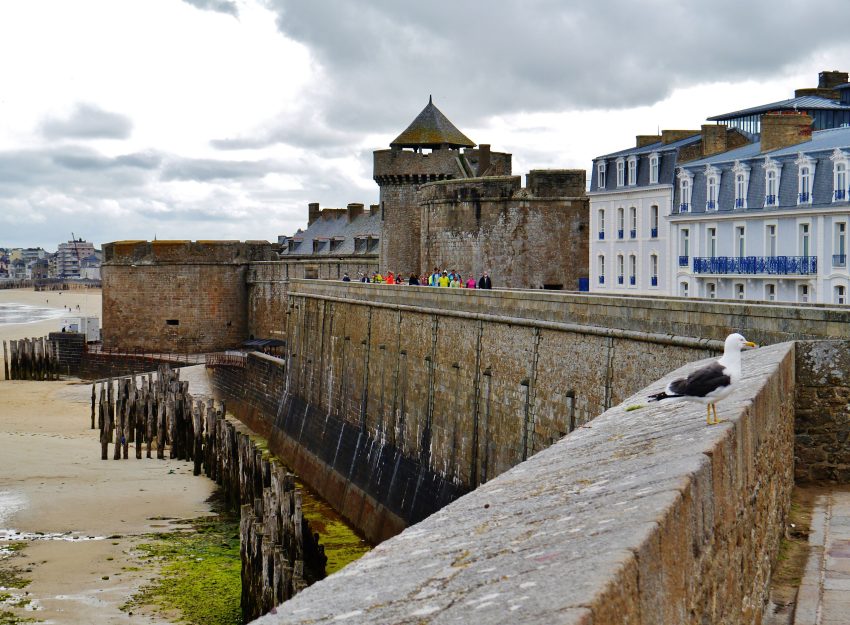
The Saint-Malo Ramparts wrap almost entirely around Intra-Muros, the old walled city at the heart of Saint-Malo, and they're the quickest way to understand why this place has always felt half-city, half-ship. Up on the granite walkway, you get wide-open views of the sea, beaches, harbor basins, and rooftops below-plus that bracing, salty Atlantic air that makes even a short stroll feel like an adventure.
If you only do one walk here, make it this one: it's one of the must-see places in Saint-Malo, and it naturally anchors any walking tour of Saint-Malo because you can join and leave the circuit at multiple gates and staircases. The full loop is roughly 1.75 km, but it never feels like a “route you must finish”-more like a string of viewpoints you can sample at your own pace.
Table of Contents
- History and Significance of the Saint-Malo Ramparts
- Things to See and Do in the Saint-Malo Ramparts
- How to Get to the Saint-Malo Ramparts
- Practical Tips on Visiting the Saint-Malo Ramparts
- Where to Stay Close to the Saint-Malo Ramparts
- Is the Saint-Malo Ramparts Worth Visiting?
- For Different Travelers
- FAQs for Visiting the Saint-Malo Ramparts
- Nearby Attractions to the Saint-Malo Ramparts
History and Significance of the Saint-Malo Ramparts
The earliest fortifications date back to the 12th century, when Saint-Malo was already growing into a maritime stronghold that needed serious protection. Over time, the walls evolved with the city's fortunes-especially as Saint-Malo became synonymous with privateers, transatlantic trade, and the hard-edged pragmatism of a port that expected trouble from the sea.
The ramparts you see today largely reflect major rebuilding and expansion from the 17th and 18th centuries, shaped by the military logic of the era and the wider Vauban school of fortification. Thick granite walls, bastions designed for artillery, and towers positioned to control approaches weren’t just for show-they were part of a defensive machine meant to deter pirates and foreign navies, and to protect the economic heartbeat of the port.
They also embody Saint-Malo’s resilience. While much of Intra-Muros was devastated during World War II, the ramparts survived in large part, and the city was rebuilt within them with extraordinary care, keeping the historic street pattern and the sense of a fortified “island city” that defines Saint-Malo’s character today.
Things to See and Do in the Saint-Malo Ramparts
Start at Porte Saint-Vincent if you want the classic “arrival” into Intra-Muros, then climb up and let the views do the storytelling. Almost immediately, you'll see why the ramparts are so loved: beaches like Plage de Bon-Secours and the changing colors of the sea on one side, and a dense grid of historic streets and granite façades on the other.
As you walk, look out for big set-piece stops that break up the circuit naturally. Bastion de la Hollande is one of the most memorable, with cannons aimed seaward and a broad platform that's ideal for lingering, especially when the tide is moving fast and the waterline keeps shifting. Tour Bidouane is another highlight-its mass and position make it easy to imagine the powder stores, sentries, and the constant readiness that once defined life on a fortified coast.
Keep an eye offshore for Fort National and the tidal islets like Grand Bé and Petit Bé, which make the whole panorama feel layered and cinematic. Even if you don't complete the full loop, the ramparts reward “small bites”: 15 minutes for the atmosphere, 30 minutes for a couple of bastions, or a full circuit if you want the complete, satisfying sense of encircling the city.
How to Get to the Saint-Malo Ramparts
The ramparts are accessed from inside Intra-Muros via gates and staircases, so your real goal is getting to the walled city centre, then joining the walkway at a convenient entry point like Porte Saint-Vincent. The nearest airports typically used for Saint-Malo are Dinard-Pleurtuit-Saint-Malo (DNR) for proximity and Rennes-Saint-Jacques (RNS) for broader flight options. For the best deals and a seamless booking experience, check out these flights to Saint-Malo on Booking.com.
Saint-Malo has a rail station with direct services from Paris (seasonally and/or by schedule) and frequent connections via Rennes, and from the station it's a short taxi or bus ride to the Intra-Muros entrances.You can use SNCF Connect to check schedules, compare routes, and purchase tickets for National (SNCF ) and regional trains (TER). For a more streamlined experience, we recommend using Omio, which allows you to easily compare prices, schedules, and book tickets for both National and Regional travel across all of Europe, all in one place.
If you’re driving, aim for one of the main car parks just outside the walls (or the underground options near the main gateways), then walk in and join the ramparts on foot for the easiest, least stressful experience.If you are looking to rent a car in France I recommend having a look at Discover Cars, first, as they compare prices and review multiple car rental agencies for you.
Practical Tips on Visiting the Saint-Malo Ramparts
- Entrance fee: Free
- Opening hours: Open access, 24 Hours
- Official website: https://www.saint-malo-tourisme.com/nos-tresors-preserves/saint-malo-le-bijou-corsaire/faire-le-tour-des-remparts-de-saint-malo/
- Best time to visit: Early morning for quieter views and clean photos, or late afternoon for softer light on the granite and sea.
- How long to spend: 45-75 minutes for a relaxed full circuit, or 20-30 minutes if you want a highlight stretch and a few key viewpoints.
- Accessibility: Expect steps, uneven surfaces, and narrow sections; for step-free access, look for ramp entries where available rather than tower staircases.
- Facilities: Treat it as an outdoor walk-bring water and a light layer for wind, then plan cafés and rest stops inside Intra-Muros once you come down.
Where to Stay Close to the Saint-Malo Ramparts
If you want maximum atmosphere and the easiest access to the main sights, stay Intra-Muros inside the walls; if your trip is more beach-focused and relaxed, base yourself around Paramé/Sillon for long seafront walks and easier space, then dip into the old town when you want history. For a stay right at the foot of the walls with a classic Saint-Malo feel, Hôtel France et Chateaubriand puts you steps from multiple rampart access points. If you prefer a comfortable, polished base deep inside the walled city, La Maison des Armateurs is brilliantly located for early-morning rampart walks before the streets get busy. For a smaller central option that keeps you close to shops, restaurants, and the gates, Hôtel Cartier is an easy, practical pick.
Is the Saint-Malo Ramparts Worth Visiting?
Yes-this is the Saint-Malo experience in its purest form: sea, stone, and history in a single, walkable circuit. The ramparts give you the best “big picture” views of the city and coastline, and they make it easy to connect landmarks without feeling like you're hopping between disconnected attractions.
They’re also remarkably flexible. You can do a quick section as a scenic break, or make the full loop the backbone of your day, dipping down into streets and cafés whenever the mood (or weather) changes.
What Other Travellers Say...

Rempart St Malo in Saint-Malo offers a walkable circuit of the town's ramparts with sweeping coastal views in every direction; visitors praise it as a must-see fortress where you can stroll the walls, enjoy dramatic waves and wind from above, explore nearby beaches and small islands at low tide, and then head into the walled city for its many restaurants, crêperies and shops — there's also convenient paid parking with a short free shuttle into town.


For Different Travelers
Families with Kids
This is one of the easiest history activities to sell to kids because it feels like an adventure path rather than a lesson. Break it into mini-goals-spot the cannons, find the best fort view, then come down for a treat in Intra-Muros-so it stays fun and paced.
Do keep an eye on wind and narrow sections, and plan a route that avoids too many staircases if you’re using a stroller. A shorter “highlight stretch” often works better than insisting on the full circuit.
Couples & Romantic Getaways
The ramparts are ideal for unhurried, scenic strolling, especially at golden hour when the granite glows and the sea looks almost unreal. It’s a naturally romantic setting-dramatic views, salty air, and plenty of quiet corners once you move away from the main gates.
Pair the walk with a simple plan: ramparts first, then a slow wander through the back streets of Intra-Muros and a seafood dinner. It feels effortless, but it lands as a signature Saint-Malo memory.
Budget Travelers
With free access and constant views, the ramparts are one of the best-value things you can do in Saint-Malo. You can build an entire half-day around the loop, photo stops, and beach views without spending anything beyond snacks and transport.
If you’re watching costs, bring a packed picnic and time your walk for a quieter window so you can linger without feeling jostled. It’s the kind of “expensive-looking” experience that’s completely free.
FAQs for Visiting the Saint-Malo Ramparts
Getting There
Tickets & Entry
Visiting Experience
Tours, Context & Itineraries
Photography
Accessibility & Facilities
Nearby Attractions to the Saint-Malo Ramparts
- Tour Solidor and the Cité d'Alet, a quieter historic area in Saint-Servan with strong viewpoints over the harbor mouth.
- Saint-Malo Intra-Muros streets, a dense grid of granite lanes packed with cafés, shops, and the classic corsair-city atmosphere.
- Fort National, the offshore fortress you can often reach at low tide, offering a dramatic perspective back toward the walls.
- Grand Bé, a tidal islet walk with sweeping views and the famous tomb of Chateaubriand.
- Plage de Bon-Secours, the iconic beach below the walls with a seawater pool and a classic Saint-Malo panorama.
The Saint-Malo Ramparts appears in our Complete Guide to Visiting Saint-Malo!

Moira & Andy
Hey! We're Moira & Andy. From hiking the Camino to trips around Europe in Bert our campervan — we've been traveling together since retirement in 2020!
This website uses affiliate links which may earn a commission at no additional cost to you!
Planning Your Visit
Open access, 24 Hours
Free
Nearby Attractions
- Porte Saint-Vincent (0.0) km
City Gate - Place Chateaubriand (0.1) km
Square - Château de Saint-Malo (0.1) km
Castle - Étoile du Roy (0.2) km
Museum - Saint-Vincent Cathedral (0.2) km
Cathedral - Plage de l'Éventail (0.3) km
Beach - Maison du Québec (0.3) km
Arts Venue - La Demeure de Corsaire (0.4) km
Historic Building and Museum - Tour Bidouane (0.4) km
Tower - Plage de Bon-Secours (0.5) km
Beach