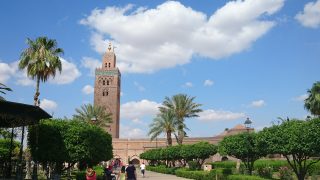
Saadian Tombs, Marrakesh
Palace in Marrakesh

Hidden just behind the qibla wall of the Kasbah Mosque, the Saadian Tombs are one of Marrakech's most breathtaking surprises. From the outside you see only high walls and a discreet entrance, but step inside and you are suddenly surrounded by carved cedar ceilings, honeycomb stucco, colourful zellij tiles, and luminous Carrara marble epitaphs. This royal necropolis, developed mainly under the Saadian sultan Ahmad al-Mansur in the late 16th and early 17th centuries, is often described as the high point of Saadian architecture and remains one of the must-see places in Marrakech if you care about craftsmanship.
What makes the Saadian Tombs so special is the way history and artistry overlap in such a compact space. You are walking through a cemetery that began in Almohad and Marinid times, was transformed by the Saadians, reused by the Alaouites, then sealed off and “rediscovered” in 1917 before being carefully restored. Today the tombs are often visited on walking tours of Marrakech, but they reward a slower, independent visit where you can follow the story room by room, from early Saadian burials to the dazzling Chamber of the Twelve Columns.
Table of Contents
- History and Significance of the Saadian Tombs
- Things to See and Do in the Saadian Tombs
- How to Get to the Saadian Tombs
- Practical Tips on Visiting the Saadian Tombs
- Where to Stay close to the Saadian Tombs
- Is the Saadian Tombs Worth Visiting?
- FAQs for Visiting Saadian Tombs
- Nearby Attractions to the Saadian Tombs
History and Significance of the Saadian Tombs
The story of the Saadian Tombs begins long before the Saadians themselves. The necropolis stands immediately behind the southeastern (qibla) wall of the Kasbah Mosque, which was built along with the surrounding citadel under the Almohad caliph Ya'qub al-Mansur in the late 12th century. It seems likely that this area served as a cemetery from at least that time, even if the Almohad rulers themselves were buried at Tinmal. In 1351, Marinid sultan Abu al-Hasan was briefly interred here before his body was moved to Chellah near Rabat, and a marble epitaph recording that first burial is still preserved in the complex today. Later, powerful Hintati emirs who controlled the region in the 15th and early 16th centuries were also laid to rest in this kasbah cemetery.
The necropolis as you see it today, however, took shape in the Saadian period. Sultan Moulay Abdallah al-Ghalib (1557-1574), a prolific patron, appears to have built the first major mausoleum chamber on the eastern side of the site to honour his father Muhammad al-Sheikh, founder of the dynasty, who was killed in 1557. Abdallah was later buried alongside him, and possibly his brother Abd al-Malik as well. This early chamber set the pattern: a square room adjoining the mosque wall, gradually enriched with marble epitaphs, carved wood, and refined tilework.
Under Ahmad al-Mansur (1578-1603), the necropolis was greatly extended and embellished. When his mother, Lalla Mas‘uda, died in 1591, he had her buried in the same mausoleum and seized the opportunity to upgrade the entire complex. He expanded the original chamber, added loggias and the so-called Grand Chamber to the south, then shifted focus westwards to build an entirely new mausoleum for himself: a three-part building comprising the Chamber of the Mihrab, the glorious Chamber of the Twelve Columns, and the Chamber of the Three Niches. Here he and key family members-wives, sons, and later Saadian sultans-rest under some of the most elaborate mqabriya (marble tombstones) in Morocco. Even after the Alaouites took power, the necropolis continued to be used, with later rulers such as Moulay al-Yazid likely buried here. When the tombs were sealed off and forgotten, their decoration was preserved by neglect, only to be meticulously restored from 1917 onwards.
Things to See and Do in the Saadian Tombs
Most visits to the Saadian Tombs start in the western mausoleum, the masterpiece commissioned by Ahmad al-Mansur. The Chamber of the Twelve Columns is the highlight: a lofty, carefully proportioned space where slender marble columns support carved cedar beams and a finely worked muqarnas (honeycomb) dome. Sunlight catches gilded details and painted patterns, while the floor is covered in multi-coloured zellij tiles. In the centre lies al-Mansur's own tomb, flanked by Carrara marble mqabriyas belonging to his wife Lalla Aisha as-Shabaniyya and key Saadian successors like Moulay Zidan and Muhammad al-Sheikh al-Saghir.
Adjacent rooms tell other parts of the story. The Chamber of the Mihrab, originally conceived as a prayer space, is now filled with Alaouite graves that testify to the tombs’ continued use into the 18th century. The Chamber of the Three Niches contains more tombs and important inscription panels that were moved here from earlier mausoleums, including those dedicated to Muhammad al-Sheikh and Abdallah al-Ghalib. As you move between rooms, pay attention to differences in decoration: variations in stucco patterns, tile colours, and timber carving hint at different phases of construction and restoration.
Outside, the open-air cemetery extends the narrative. Here you find rows of tombs marked by simple tile-covered mounds alongside more formal mqabriyas, all set within small garden plots. It is worth lingering to read some of the inscriptions if you can, or simply to absorb the quiet contrast between the jewel-box interiors and this more modest, sunlit burial ground. The eastern mausoleum, begun under Abdallah al-Ghalib, adds further depth, with its older Saadian graves and the Grand Chamber packed with later burials. Together, these spaces create a layered picture of how dynasties used architecture and ornament to shape their memory.
How to Get to the Saadian Tombs
To reach the Saadian Tombs, you first need to travel to Marrakech. Most international visitors arrive via Marrakech Menara Airport, which is only a short drive from the historic centre and has regular connections to major European and Moroccan cities. For the best deals and a seamless booking experience, check out these flights to Marrakesh on Booking.com. From the airport, taxis and pre-booked transfers can bring you towards the kasbah district; asking for the Kasbah Mosque (often called Moulay El Yazid Mosque) or the Saadian Tombs is usually enough for drivers.
If you are already in Morocco, trains are a convenient way to reach Marrakech from cities like Casablanca, Rabat, and Tangier, with services arriving at the main railway station in the new town.Train schedules and bookings can be found on Omio. From there, a petit taxi will take you to the kasbah area in around 10-15 minutes, depending on traffic, or you can combine a taxi ride with a walk through the medina. Long-distance buses from other regions also serve Marrakech; from their stations, taxis are once again the simplest way to get to the tombs.
Arriving by car, you will find that the Saadian Tombs are easier to reach than some deeper medina sites, as they lie close to the southern city walls. You can park in one of the guarded car parks near the Kasbah Mosque or Bab Agnaou, then walk a short distance through the neighbourhood to the entrance. Many visitors combine a visit here with nearby El Badi Palace, so you will often be following the same general flow of tourists around the kasbah district.
Practical Tips on Visiting the Saadian Tombs
- Suggested tips: Go early in the morning if you can; the site is compact and can feel crowded when tour groups arrive, especially around the Chamber of the Twelve Columns.
- Best time to visit: Mornings and late afternoons are ideal for softer light filtering into the mausoleums and for more comfortable temperatures in the open-air cemetery.
- Entrance fee: Adults: Dh100
- Opening hours: 9am-5pm
- Official website: https://saadiantombs.com/
- How long to spend: Plan on 45-60 minutes to explore the main chambers and courtyard at a relaxed pace, longer if you like to study the details.
- Accessibility: Access can be challenging: there are narrow passageways, steps, and uneven floors, and the site can become crowded.
- Facilities: Basic facilities such as a ticket office and nearby cafés are available in the surrounding kasbah streets, but there are limited amenities inside the necropolis itself.
- Photography tip: Be patient in the Chamber of the Twelve Columns-wait for brief gaps between groups to capture the symmetry of columns, dome, and tombs without too many people.
- Guided tours: A guide can greatly enhance your visit by explaining the dynastic history, reading key inscriptions, and pointing out details that are easy to miss.
- Nearby food options: After your visit, explore the streets around the Kasbah Mosque or head towards Bab Agnaou and Jemaa el-Fnaa for cafés, snack bars, and rooftop terraces.
Where to Stay close to the Saadian Tombs
Staying near the Saadian Tombs places you in the kasbah district, a slightly quieter part of the medina that still offers easy access to major sights like El Badi Palace and Jemaa el-Fnaa. For a luxurious stay with strong historic character, La Sultana Marrakech sits just a short walk from the tombs and combines lavish décor with intimate courtyards and rooftop views. If you prefer a garden setting, Riad Les Jardins de la Medina offers a lush, almost resort-like atmosphere tucked behind traditional walls in the same neighbourhood. Travellers wanting a welcoming, well-located base between the kasbah and the main square might opt for Riad Dar Anika, which makes it easy to walk to the Saadian Tombs, El Badi Palace, and Jemaa el-Fnaa in turn.
Is the Saadian Tombs Worth Visiting?
If you love intricate decoration and layered history, the Saadian Tombs are unquestionably worth visiting. In a relatively small space, you see some of the finest wood carving, stucco, and tilework of the Saadian era, set around the tombs of rulers who shaped Marrakech's golden age. The contrast between the modest approach through the kasbah lanes and the richness of the interiors inside makes the experience even more striking, and the tombs easily deserve their reputation as one of the best places to visit in Marrakech for architecture enthusiasts and curious travellers alike.
What Other Travellers Say...

Saadian Tombs, at 400 Rue de La Kasbah in Marrakesh, is a compact, once-hidden necropolis set around gardens and noted for colourful zellige tilework, marble, carved cedar and stucco detailing; visitors praise the well preserved decoration and craftsmanship but commonly warn that entry involves queues and a brief visit inside—often only a quick view into a few rooms—entrance can feel rushed and the site can seem crowded or under restoration, so it's best to visit if you're nearby and expect a short stop.



FAQs for Visiting Saadian Tombs
Nearby Attractions to the Saadian Tombs
- El Badi Palace: Vast, atmospheric ruins of a once-glittering Saadian reception palace, just a short walk away in the kasbah district.
- Kasbah Mosque (Moulay El Yazid Mosque): The historic mosque beside the necropolis, anchoring the neighbourhood with its distinctive minaret and square.
- Agdal Gardens: Expansive historic gardens and reservoirs south of the kasbah, originally developed under the Almohads and later renovated by the Saadians.
- Jemaa el-Fnaa: Marrakech's famous main square, filled with food stalls, performers, and market life, reachable on foot through the medina streets.
- Bahia Palace: A 19th-century palace with richly decorated rooms and serene courtyards that offer a different but complementary glimpse of Moroccan craftsmanship.
The Saadian Tombs appears in our Complete Guide to Visiting Marrakesh!

Moira & Andy
Hey! We're Moira & Andy. From hiking the Camino to trips around Europe in Bert our campervan — we've been traveling together since retirement in 2020!
This website uses affiliate links which may earn a commission at no additional cost to you!
Planning Your Visit
9am-5pm
Adults: Dh100
Nearby Attractions
- Walls of Marrakesh (0.2) km
City Gate and City Walls - El Badi Palace (0.3) km
Palace - Bahia Palace (0.6) km
Palace - Tiskiwin Museum (0.8) km
Museum - Dar Si Said (0.8) km
Historic Building and Museum - Kasbah Mosque (0.9) km
Mosque - Koutoubia Mosque (0.9) km
Mosque - Koutoubia Gardens (Lalla Hassna Park) (0.9) km
Gardens - Jemaa el-Fnaa (1.0) km
Market and Square - Souks of Marrakesh (1.1) km
Market