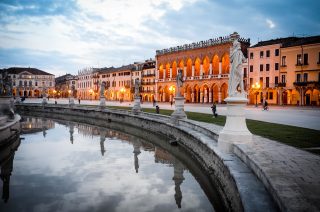
Roman Arena of Padua, Padova
Amphitheatre in Padova
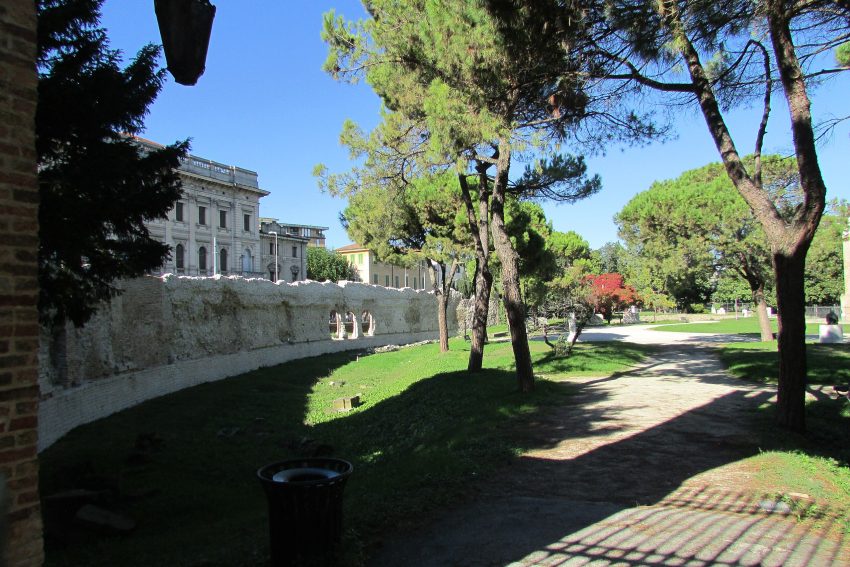
Tucked beside the Giardini dell'Arena, the Roman Arena of Padua is an evocative reminder that long before frescoes and universities, this was the bustling Roman city of Patavium. Today, only fragments of the supporting walls and a series of arches survive, but standing among them you can still imagine the roar of the crowd in a structure whose size once rivalled the famous Verona Arena. It is a quieter site than many of Padua's headline attractions, yet it offers a powerful sense of continuity between the ancient city and the modern one.
Recent cleaning and restoration work, along with ongoing excavations, are gradually revealing more of the original amphitheatre: floors, foundations and structural details that had disappeared beneath centuries of soil build-up and later construction. Informative panels help you picture the elliptical arena around 70 AD, with its eighty two-tiered arches, grand entrances and tiered seating. Combined with the nearby museums and parks, this atmospheric ruin is a great place to visit on a walking tour of Padua, especially if you enjoy piecing together history from what remains.
Table of Contents
- History and Significance of the Roman Arena of Padua
- Things to See and Do in the Roman Arena of Padua
- How to Get to the Roman Arena of Padua
- Practical Tips on Visiting the Roman Arena of Padua
- Where to Stay close to the Roman Arena of Padua
- Is the Roman Arena of Padua Worth Visiting
- FAQs for Visiting Roman Arena of Padua
- Nearby Attractions to the Roman Arena of Padua
History and Significance of the Roman Arena of Padua
The Roman Arena of Padua was constructed around 70 AD during the Claudian-Flavian period, when Patavium was a thriving provincial city of the Roman Empire. Like other amphitheatres, it was primarily used for gladiatorial games and public spectacles, providing entertainment and a display of imperial power for the local population. Its elliptical footprint, with around eighty arches arranged in two tiers, placed it in the same size category as the Verona Arena, underlining how important Patavium was in Roman times.
Two main gates structured the flow of people and drama. The Triumphalis, opening towards what is now Piazza Eremitani, served as the principal entrance for the audience and those taking part in the ceremonies. On the opposite side stood the Libitinensis, the gate used to remove the bodies of defeated gladiators and perhaps animals, a stark reminder of the arena’s brutal function. Within this architectural frame, different social classes would have been seated in distinct tiers, from local elites in prime spots down to ordinary citizens higher up.
Over time, as the Roman Empire waned and the Middle Ages dawned, the amphitheatre fell out of use. Like many ancient structures, it became a convenient quarry: its stones and marbles were stripped and reused in new buildings across Padua. What you see today is therefore only a fraction of the original monument, but that makes its survival all the more compelling. The current conservation and excavation work aim not just to stabilise the ruins, but to recover as much information as possible about the structure and its role in ancient Patavium’s urban life.
Things to See and Do in the Roman Arena of Padua
A visit to the Roman Arena begins with the surviving sections of the outer walls and arches. Walk slowly around the perimeter to appreciate how the remaining blocks outline the original ellipse and imagine the full ring of eighty arches rising above you. Even in ruin, the rhythm of the arches and the thickness of the walls give a sense of the engineering required to support thousands of spectators.
Information panels (where provided) help you visualise the overall plan and highlight where the main gates would have stood. Try to locate in your mind the Triumphalis, where crowds poured in from the direction of today’s Piazza Eremitani, and the Libitinensis, where the grim aftermath of gladiatorial combats was carried out. Standing at ground level, picture the arena floor at the centre and the stands rising around you, filled with noise, colour and movement in stark contrast to today’s peaceful park setting.
Make sure you look for evidence of the ongoing excavation and restoration works. Newly exposed masonry, cleaned surfaces and interpreted sections of foundation all show how archaeologists are slowly peeling back layers of history. Because the arena sits right next to the Giardini dell'Arena and close to the Scrovegni Chapel and Civic Museums, it is easy to build it into a broader itinerary of ancient and medieval Padua; taken together, this cluster of sites is one of the best places to visit in Padua if you want to understand how the city has evolved over two millennia.
How to Get to the Roman Arena of Padua
The Roman Arena is located within the Giardini dell'Arena area in central Padua, close to the Scrovegni Chapel and Museo agli Eremitani. International visitors usually fly into Venice Marco Polo or Treviso airports, then travel on to Padua by shuttle, bus or train before walking into the historic centre. For the best deals and a seamless booking experience, check out these flights to Padova on Booking.com.
If you arrive by train, head to Padova railway station, a major stop on the Venice-Milan and Venice-Bologna lines with frequent regional and high-speed services. From the station, it is about a 10-15 minute walk to the Giardini dell'Arena and the nearby museum complex that includes the Roman Arena remains. Use Omnio to easily compare schedules, book train tickets, and find the best prices all in one place for a hassle-free journey across Italy. Follow signs to the Scrovegni Chapel or Museo agli Eremitani, and you will find the park and the arena ruins close by.
Bus routes from surrounding districts and neighbouring towns typically stop at or near the station or other central hubs, from which the Roman Arena is within walking distance. If you are driving, Padua is easily reached via the A4 and A13 motorways; park in one of the car parks near the station or around the northern edge of the old town, then continue on foot to the Giardini dell'Arena area and the Roman Arena site. If you are looking to rent a car in Italy I recommend having a look at Discover Cars, first, as they compare prices and review multiple car rental agencies for you.
Practical Tips on Visiting the Roman Arena of Padua
- Suggested tips: Combine the Roman Arena with a visit to the Scrovegni Chapel and Museo agli Eremitani; seeing the ruins after viewing Giotto's frescoes gives a strong sense of Padua's long history from Roman to medieval times.
- Best time to visit: Late morning or late afternoon are ideal, when the light is softer for photos and the park is pleasantly lively but not too crowded.
- Entrance fee: Access to view the arena ruins within Giardini dell'Arena is generally free, though charges apply for nearby museums and the Scrovegni Chapel.
- Opening hours: The surrounding gardens keep standard daylight hours, typically opening in the morning and closing around dusk; check local information for seasonal variations.
- How long to spend: Allow 20-40 minutes to walk around the Arena remains and read any explanatory panels, longer if you are also relaxing in the park.
- Accessibility: Paths in the Giardini dell'Arena are generally level and accessible, though some viewpoints close to the masonry may involve uneven ground; sturdy shoes are recommended.
- Facilities: Public facilities such as benches and green spaces are available in the park; restrooms, cafés and more services can be found at the nearby museums or in the surrounding streets.
- Photography tip: Capture wide shots that place the remaining arches against the greenery of the park and the skyline of Padua; close-ups of the stonework reveal centuries of weathering and reuse.
- Guided tours: Some city or archaeological tours include the Roman Arena as part of a wider exploration of ancient Patavium; this can be helpful if you want expert context on the structure and its excavations.
- Nearby food options: After visiting, wander towards Corso Garibaldi or the main market squares for cafés, gelaterie and trattorie where you can enjoy a break before continuing your exploration.
Where to Stay close to the Roman Arena of Padua
Staying near the Giardini dell'Arena area makes it very easy to visit the Roman Arena, Scrovegni Chapel and nearby museums on foot. Hotel Europa Padova is a convenient option within walking distance of the park and the historic centre, ideal if you are arriving by car or train. For a more atmospheric stay in the old town that is still only a pleasant stroll from the Arena, consider Hotel Majestic Toscanelli, which places you near the main piazzas and Caffè Pedrocchi. Another good base is Hotel Milano, offering straightforward access into the centre and a manageable walk to the Giardini dell’Arena and Roman remains.
Is the Roman Arena of Padua Worth Visiting
The Roman Arena of Padua is well worth visiting, particularly if you are interested in ancient history or enjoy seeing how a modern city overlays its Roman past. While it lacks the intact grandeur of Verona's amphitheatre, its surviving arches and walls still convey the scale and importance of Patavium in the 1st century AD. The fact that it is now a peaceful ruin in a green park only adds to its charm, providing a quiet contrast to Padua's busier squares and shopping streets.
Because it sits right beside some of the city's major cultural sites, visiting the Roman Arena requires very little extra effort. A short detour through the Giardini dell'Arena lets you step back nearly two thousand years and imagine gladiatorial contests where now there are trees and lawns. For many travellers, this understated but atmospheric ruin becomes one of the must-see places in Padua, precisely because it reveals a side of the city that is easy to overlook.
What Other Travellers Say...

Arena Romana di Padova on Piazza Eremitani is a small archaeological site you can wander through while waiting to visit the nearby chapel, with some interesting artwork and pleasant linden trees in season; visitors note it's just a modest remnant of an amphitheatre rather than a full arena, and some have found access limited at times with gates closed earlier than expected and overgrown grass, while others report occasional communication and service issues when arranging visits.


FAQs for Visiting Roman Arena of Padua
Nearby Attractions to the Roman Arena of Padua
- Scrovegni Chapel: Giotto's masterpiece fresco cycle in a purpose-built chapel adjacent to the Giardini dell'Arena.
- Museo agli Eremitani: Archaeology and art museum next to the park, ideal for learning more about Roman Patavium and later periods.
- Giardini dell'Arena: The surrounding landscaped park with walking paths and the remains of the Roman amphitheatre, perfect for a stroll or picnic.
- Palazzo Zuckermann: Across Corso Garibaldi, housing decorative arts and the Museo Bottacin's impressive coin collection.
- Church of the Eremitani: Gothic church a short walk away, known for its surviving frescoes and poignant history linked to wartime bombing.
The Roman Arena of Padua appears in our Complete Guide to Visiting Padova!

Moira & Andy
Hey! We're Moira & Andy. From hiking the Camino to trips around Europe in Bert our campervan — we've been traveling together since retirement in 2020!
This website uses affiliate links which may earn a commission at no additional cost to you!
Planning Your Visit
The surrounding gardens keep standard daylight hours, typically opening in the morning and closing around dusk; check local information for seasonal variations.
Access to view the arena ruins within Giardini dell’Arena is generally free, though charges apply for nearby museums and the Scrovegni Chapel.
Nearby Attractions
- Cappella degli Scrovegni (0.1) km
Church - Palazzo Zuckermann (0.1) km
Historic Building and Museum - Musei Civici di Padova (0.1) km
Historic Building and Museum - Chiesa degli Eremitani (0.1) km
Church - Giardini dell’Arena (0.1) km
Gardens - Ponte Molino (0.4) km
Bridge and Historic Building - Cafe Pedrocchi (0.4) km
Historic Building - Palazzo Bo (0.5) km
Historic Building and Palace - Palazzo della Ragione (0.6) km
Historic Building and Market - Piazza dei Signori (0.6) km
Square