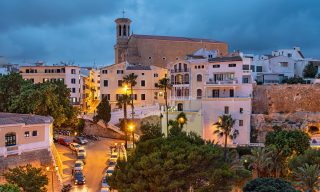
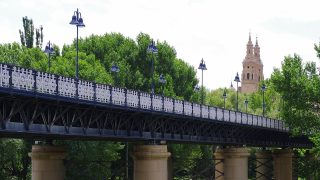
Puente de Piedra, Logroño
Bridge in Logroño

Puente de Piedra is one of those landmarks that quietly defines a city. Stretching across the broad River Ebro from Logroño's Old Town, this 19th-century stone bridge is both a practical crossing and a powerful symbol: it marks the traditional entrance to the city for pilgrims walking the Camino de Santiago, and it features on countless photos, postcards, and memories of La Rioja's capital. With its arches reflected in the water and the towers and rooftops of the historic centre rising behind, it is easy to see why Puente de Piedra is one of the top sights in Logroño.
Completed in 1884, the bridge is sometimes called Puente de San Juan de Ortega, in memory of a chapel that once stood on its left bank. Over time it has carried carts, cars, and now mainly pedestrians and cyclists, but its role as a threshold has never changed. Standing in the middle, you feel the city at your back, vineyards and open countryside up and down the river, and the steady flow of pilgrims and locals crossing in both directions. It is both everyday infrastructure and a place to pause, watch the water, and sense centuries of comings and goings, and it is often visited on walking tours of Logroño that trace the Camino's path through the old streets.
Table of Contents
- History and Significance of Puente de Piedra
- Things to See and Do in Puente de Piedra
- How to Get to Puente de Piedra
- Practical Tips on Visiting Puente de Piedra
- Where to Stay close to Puente de Piedra
- Is Puente de Piedra Worth Visiting?
- FAQs for Visiting Puente de Piedra
- Nearby Attractions to Puente de Piedra
History and Significance of Puente de Piedra
Logroño owes much of its history to its river crossing, and Puente de Piedra is the modern heir to a long line of bridges over the Ebro. The current stone structure dates from 1884, replacing earlier bridges that had suffered from floods, war damage, and the sheer force of the river. Its solid masonry arches and robust piers were designed to give the city a safer, more durable link to the northern bank, while also providing a dignified entrance to the historic centre.
The bridge's alternative name, Puente de San Juan de Ortega, recalls a chapel that once stood near its left bank. This religious link sits naturally alongside its role on the Camino de Santiago, where Puente de Piedra serves as the traditional entrance to Logroño for pilgrims heading west toward Santiago de Compostela. Crossing the bridge, pilgrims symbolically “arrive” in the city, stepping from the open landscapes of La Rioja into a place of rest, wine, and shared stories before continuing their journey.
Beyond its practical function, Puente de Piedra has become an emblem of Logroño's identity. It features in city branding, local artwork, and festivals, and it is a favourite spot during celebrations when fireworks, lights, or processions reflect in the Ebro below. As La Rioja's capital has grown into a lively hub of wine culture and gastronomy, the bridge has remained a constant: a piece of 19th-century engineering that still frames how people arrive, depart, and experience the city.
Things to See and Do in Puente de Piedra
The simplest and best way to experience Puente de Piedra is to walk across it slowly, in both directions. From the Old Town side, step onto the bridge and look upstream and downstream: you'll see the river curling between green banks, islands of gravel and vegetation, and the soft silhouettes of surrounding hills. Turn back toward the city and you'll have classic views of the historic centre, including church towers rising above the rooftops and, at certain angles, the outline of Logroño's old walls and riverside buildings.
Pause midway along the bridge to take in the details and the atmosphere. Cars may still use parts of the crossing depending on traffic arrangements, but the feeling is overwhelmingly pedestrian: people stopping to chat, pilgrims with backpacks and scallop shells taking photos, joggers and cyclists using the bridge as part of their daily routes. At dawn and dusk, the light over the Ebro can be particularly beautiful, with reflections of the arches and city lights rippling on the water. This spot is one of the best places to see in Puente de Piedra's stretch of the river if you want simple, unhurried views of Logroño.
On the Old Town side, explore the streets that fan out from the bridgehead. Here you'll find bars serving pinchos (tapas), wine bars showcasing local Rioja, and small squares where you can sit with a drink and glance back toward the river. On the far bank, paths and viewpoints along the riverside offer alternative angles on the bridge itself. If you are following the Camino de Santiago route, crossing Puente de Piedra marks a small but satisfying milestone, linking the spiritual and historical significance of the bridge with the very practical pleasure of knowing you have “arrived” in Logroño for the day.
How to Get to Puente de Piedra
Puente de Piedra spans the River Ebro at the edge of Logroño's Old Town, so once you're in the city, it is easy to reach on foot by following signs toward the historic centre and the riverfront. Simply walk down from the main squares and old streets until you reach the Ebro, where the stone arches of the bridge are unmistakable.
The nearest airport to Logroño is Logroño-Agoncillo, a small regional airport with limited services; many visitors instead fly into larger hubs such as Bilbao, Zaragoza, or Madrid and then travel onward to La Rioja's capital by train, bus, or car. For the best deals and a seamless booking experience, check out these flights to Logroño on Booking.com. From there, local transport or a short walk brings you into the city centre and down to the river.
Logroño is well connected by train to other Spanish cities, with services from Madrid, Zaragoza, and other regional centres arriving at Logroño's main railway station.Train schedules and bookings can be found on Omio. From the station, it's usually a 15-20 minute walk to the Old Town and Puente de Piedra, or a short bus or taxi ride if you prefer.
Long-distance and regional buses also serve Logroño, linking it with nearby towns in La Rioja and beyond. Once you arrive at the bus station, you can walk into the centre and then down to the Ebro in a similar time.
If you are driving, Logroño is accessible via major roads and motorways from Bilbao, Burgos, Zaragoza, and other cities in northern Spain.If you are looking to rent a car in Spain I recommend having a look at Discover Cars, first, as they compare prices and review multiple car rental agencies for you. Park in one of the public car parks near the centre, then explore the Old Town and riverside on foot; the bridge is close enough that you can easily incorporate it into an evening stroll after a day of wine tasting or sightseeing.
Practical Tips on Visiting Puente de Piedra
- Suggested tips: Time your visit for early morning or sunset to enjoy softer light over the river and fewer people on the bridge.
- Best time to visit: Spring and autumn bring pleasant temperatures and attractive river levels; evenings in summer are lively and warm, ideal for a post-dinner walk.
- Entrance fee: Free
- Opening hours: 24 Hours
- Official website:
- How long to spend: Allow 20-40 minutes to walk across, take photos, and explore the immediate riverfront; longer if you wander the Old Town on the city side.
- Accessibility: The approaches to the bridge are generally gentle, but surfaces can be uneven; most of the crossing is suitable for wheelchairs and strollers, though some nearby streets are cobbled.
- Facilities: There are no facilities on the bridge itself, but cafés, bars, and restrooms are available in the adjacent Old Town and along the riverside.
- Photography tip: For classic shots, photograph the bridge from the opposite bank with the Old Town as a backdrop, or from low angles near the waterline where reflections capture the arches.
- Guided tours: Some city and Camino-focused tours include Puente de Piedra as a key stop, explaining its history, engineering, and role on the pilgrimage route.
- Nearby food options: Step into the Old Town side for pinchos bars and wine taverns, especially along Calle Laurel and nearby streets, where you can sample local Rioja after your riverside stroll.
Where to Stay close to Puente de Piedra
Staying near Puente de Piedra means you are only a short walk from both the river and the heart of Logroño's Old Town. For a comfortable base close to the historic centre, Hotel Calle Mayor offers boutique-style rooms in a renovated palace just a few minutes from the bridge. If you prefer something modern and practical near the shopping streets and still within easy reach of the river, NH Logroño Herencia Rioja makes a solid choice. Travellers looking for a simple, central option might like Hotel Condes de Haro, from which it's an easy stroll through the Old Town down to Puente de Piedra and the Ebro.
Is Puente de Piedra Worth Visiting?
Puente de Piedra is absolutely worth visiting, whether you are in Logroño for wine, the Camino, or a wider tour of northern Spain. It is not a grand fortress or ornate palace, but its importance lies in the way it anchors the city to the river and marks the arrival of pilgrims and visitors alike. The views from the bridge, the feel of the Ebro below, and the simple pleasure of walking from one bank to the other all add an extra layer to your experience of Logroño. As a symbol, a viewpoint, and a link between past and present, it more than earns a place on any itinerary.
What Other Travellers Say...

Puente de Piedra sits in the small mountain village of Munilla and is a lovely spot for a stroll: visitors praise its well‑kept cobbled streets, stone bridge and washhouse, and nearly hanging houses, and note the town is a peaceful base for walks and mountain‑biking routes, with summer municipal pools, a couple of restaurants and charming streets to wander and get pleasantly lost.


FAQs for Visiting Puente de Piedra
Nearby Attractions to Puente de Piedra
- Logroño Old Town - Historic streets and squares packed with churches, shops, and traditional houses just beyond the city end of the bridge.
- Calle Laurel - Famous tapas and pinchos street where bars line up side by side, offering local specialities and Rioja wines.
- Concatedral de Santa María de la Redonda - The main church of Logroño, known for its twin towers and artworks, a short walk from the bridge.
- Parque del Ebro - Green riverside park areas along the Ebro, ideal for a relaxed stroll or bike ride with occasional views back to Puente de Piedra.
- Museo de La Rioja - Regional museum housed in a Baroque palace, showcasing the history and culture of La Rioja, located within the Old Town.
The Puente de Piedra appears in our Complete Guide to Visiting Logroño!

Moira & Andy
Hey! We're Moira & Andy. From hiking the Camino to trips around Europe in Bert our campervan — we've been traveling together since retirement in 2020!
This website uses affiliate links which may earn a commission at no additional cost to you!
Planning Your Visit
24 Hours
Free
Nearby Attractions
- Casa de las Ciencias (0.2) km
Museum - Puente de Hierro (0.2) km
Bridge - Iglesia de San Bartolomé (0.3) km
Church - Old Logroño City Hall (Plaza del Mercado) (0.4) km
Notable Building and Square - Catedral de Santa María de la Redonda (0.4) km
Cathedral - New Logroño City Hall (0.6) km
Notable Building - Fabrica de Tabacos (0.6) km
Historic Building - Museo de la Rioja (0.6) km
Museum - Muralla del Revellín (0.6) km
City Gate and City Walls - Calle Laurel (0.7) km
Street