Puente de Hierro, Logroño
Bridge in Logroño
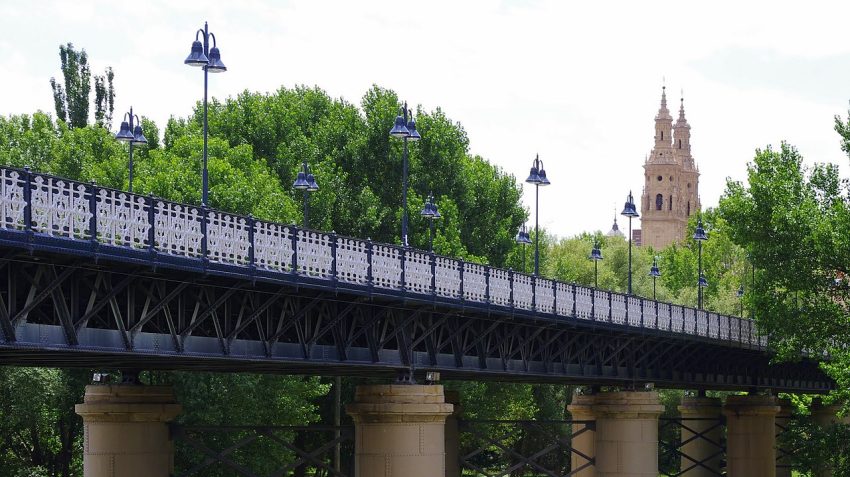
Puente de Hierro, or the Iron Bridge, is where Logroño's industrial past meets its everyday present. Built in 1882, it was the first major modern bridge across the Ebro in the city and is now the oldest of the four spans that cross the river. Its long, rhythmic iron structure stretches for 330 metres, standing around eight metres above the river's lowest waters, and offers lovely views up and down the Ebro. Walk across at sunset and you'll see the skyline of Logroño-towers, rooftops, and the distant hills-take on warmer tones as the river reflects the changing light.
The bridge played a crucial role in Logroño's development. Promoted by Práxedes Mateo Sagasta and designed by engineer Fermín Manso de Zúñiga, Puente de Hierro significantly improved the city's commercial connections with northern Spain, making it easier to move people, goods, and of course Rioja wine. Today it serves everyday traffic and pedestrians, but it also acts as a scenic viewing platform and a quiet reminder of how engineering helped shape the modern city. Combined with nearby riverside walks and the stone bridge further along, it is one of the top sights in Logroño for visitors who enjoy pairing history with a good view.
Table of Contents
- History and Significance of Puente de Hierro
- Things to See and Do in Puente de Hierro
- How to Get to Puente de Hierro
- Practical Tips on Visiting Puente de Hierro
- Where to Stay close to Puente de Hierro
- Is Puente de Hierro Worth Visiting?
- FAQs for Visiting Puente de Hierro
- Nearby Attractions to Puente de Hierro
History and Significance of Puente de Hierro
Before Puente de Hierro was built, crossing the Ebro at Logroño was less reliable and more vulnerable to floods or damage. By the late 19th century, the city needed a durable, modern solution that could handle growing trade and travel. The initiative came from Práxedes Mateo Sagasta, a prominent political figure who pushed for a new bridge that would better connect Logroño with the rest of northern Spain. The commission went to engineer Fermín Manso de Zúñiga, who designed an iron structure in line with the advanced engineering of the period.
Completed in 1882, the bridge marked a turning point in Logroño's infrastructure. Its iron framework and substantial length made it a bold statement of confidence and modernity for what was then a relatively small city. The bridge helped integrate Logroño into wider transport networks, facilitating the movement of agricultural products, manufactured goods, and travellers. In a region where wine was becoming ever more important, such reliable connections were vital.
Over time, Puente de Hierro has remained both functional and symbolic. While newer bridges have been added, and cars have replaced carts, the iron span still stands as a visible reminder of the city's leap into the industrial age. For locals, it is part of the everyday landscape; for visitors, it offers a compact story about how engineering and politics combined to shape the Logroño you see today, and it is often visited on walking tours of Logroño that follow the riverfront and historic centre.
Things to See and Do in Puente de Hierro
The simplest and best way to enjoy Puente de Hierro is to walk across it. From the deck, you get broad views along the Ebro in both directions: upstream towards greener banks and distant bridges, downstream towards Puente de Piedra and the Old Town skyline. The contrast between the iron framework of this bridge and the stone arches of its neighbour helps you appreciate how construction styles evolved as the city grew.
Pause halfway across and look back toward the city. You'll see the towers of Santa María de la Redonda rising above the rooftops, the riverside parks stretching along the banks, and, depending on your angle, the red-and-white façade of Casa de las Ciencias just along the river. The interplay of river, bridges, and buildings makes this a great place for photos, especially in the soft light of morning or evening.
On the north bank, you can link a crossing of Puente de Hierro with a walk along the riverfront paths, either toward Casa de las Ciencias and Puente de Piedra or out into quieter sections of the riverside parks. On the south bank, the bridge feeds straight back into central Logroño, placing you within easy walking distance of Parque del Ebro, Parque del Espolón, and the Old Town streets that lead to Calle Laurel and its pintxos bars. It's a simple structure to visit, but one that ties together several of the city's most enjoyable areas.
How to Get to Puente de Hierro
Puente de Hierro spans the Ebro on the eastern side of central Logroño and is easy to reach on foot from the Old Town. From the cathedral or Plaza del Mercado, walk down toward the river and follow local signs or a map eastwards along the bank until you see the iron bridge running across the water; you can access it directly from the riverside paths and nearby streets.
If you are arriving by air, you may fly into Logroño-Agoncillo Airport or into larger hubs such as Bilbao or Zaragoza before continuing by road or public transport to Logroño. For the best deals and a seamless booking experience, check out these flights to Logroño on Booking.com. From central hotels, it is a straightforward walk to the riverside and the bridge.
By train, you will arrive at Logroño's main railway station, which has regular connections with cities like Madrid and Zaragoza.Train schedules and bookings can be found on Omio. From the station, walk into the city centre and then head down to the river, following signs or maps towards Puente de Hierro, or use a short taxi ride to get closer before exploring on foot.
If you are driving, motorways and main roads link Logroño with the rest of La Rioja and northern Spain.If you are looking to rent a car in Spain I recommend having a look at Discover Cars, first, as they compare prices and review multiple car rental agencies for you. Park in a central car park near the Old Town or riverfront, then stroll down to the Ebro; from there, the iron bridge is easy to spot and access.
Practical Tips on Visiting Puente de Hierro
- Suggested tips: Combine a walk across Puente de Hierro with a loop that also includes Puente de Piedra and the riverside parks for varied views and photo stops.
- Best time to visit: Early morning and late afternoon offer cooler temperatures and softer light on the water and iron structure, making for more pleasant walks and photos.
- Entrance fee: Free – the bridge is part of the public road and pedestrian network.
- Opening hours: Accessible at all times, though daylight hours are best for views and photography.
- Official website: https://lariojaturismo.com/lugar-de-interes/puente-de-hierro/
- How long to spend: Allow 20-40 minutes to walk across, take photos, and enjoy the river views, longer if you link it with a riverside stroll.
- Accessibility: The approaches and deck are generally level, making the bridge suitable for wheelchairs and strollers, though care is advised near traffic on shared sections.
- Facilities: There are no facilities on the bridge itself; cafés, bars, and restrooms can be found a short walk away in the Old Town and along nearby streets.
- Photography tip: For a full view of the iron structure, shoot from the riverbank or from Puente de Piedra; on the bridge itself, focus on skyline views and the repeating lines of the iron framework.
- Guided tours: Some city tours include the bridge as part of broader routes along the river and through the Old Town, adding historical and engineering context.
- Nearby food options: After your walk, head back into central Logroño for pintxos on Calle Laurel or a relaxed drink on terraces along Calle Portales.
Where to Stay close to Puente de Hierro
Staying in or near the Old Town makes it easy to walk down to Puente de Hierro while keeping all of Logroño's main sights within reach. For a stylish base in a restored historic building, Hotel Calle Mayor offers boutique comfort just a pleasant stroll from the river and bridges. If you prefer a modern hotel close to both the Old Town and main avenues, NH Logroño Herencia Rioja is a convenient option within walking distance of the riverfront. For a practical, central stay, Hotel Condes de Haro places you near Parque del Espolón, the pintxos streets, and an easy route down to the Ebro and Puente de Hierro.
Is Puente de Hierro Worth Visiting?
Puente de Hierro is definitely worth visiting, especially if you enjoy combining gentle walks with a bit of history and river scenery. It may not be as ornate as a cathedral or as busy as Calle Laurel, but its 19th-century ironwork, long span, and role in transforming Logroño's links with northern Spain give it a quiet importance. Add in the views along the Ebro and the ease of incorporating it into a broader riverside or Old Town walk, and it becomes a simple, satisfying stop that rounds out your picture of the city.
What Other Travellers Say...
Reviews Summary
Puente de Hierro in Logroño sits in La Rioja and is noted by visitors for its iron structure and convenient location, offering an easy crossing and pleasant views of the surrounding cityscape.
FAQs for Visiting Puente de Hierro
Nearby Attractions to Puente de Hierro
- Puente de Piedra - Historic stone bridge over the Ebro, offering contrasting architecture and direct access to the Old Town.
- Casa de las Ciencias - Family-friendly science centre in a red-and-white former slaughterhouse building on the riverbank nearby.
- Parque del Ebro - Riverside park with walking and cycling paths, perfect for extending your stroll along the river.
- Catedral de Santa María de la Redonda - Co-cathedral with twin Baroque towers in the heart of the Old Town, a short walk from the river.
- Parque del Espolón - Central promenade and gardens with the Monument to General Espartero, ideal for a relaxed break before or after your riverside walk.
The Puente de Hierro appears in our Complete Guide to Visiting Logroño!

Moira & Andy
Hey! We're Moira & Andy. From hiking the Camino to trips around Europe in Bert our campervan — we've been traveling together since retirement in 2020!
This website uses affiliate links which may earn a commission at no additional cost to you!
Planning Your Visit
Accessible at all times, though daylight hours are best for views and photography.
Free - the bridge is part of the public road and pedestrian network.
Nearby Attractions
- Casa de las Ciencias (0.1) km
Museum - Puente de Piedra (0.2) km
Bridge - Old Logroño City Hall (Plaza del Mercado) (0.4) km
Notable Building and Square - Iglesia de San Bartolomé (0.4) km
Church - Catedral de Santa María de la Redonda (0.5) km
Cathedral - Muralla del Revellín (0.5) km
City Gate and City Walls - Fabrica de Tabacos (0.5) km
Historic Building - Museo de la Rioja (0.5) km
Museum - Calle Laurel (0.6) km
Street - Parque del Espolón (0.7) km
Park