Postbllok, Tirana
Monument in Tirana
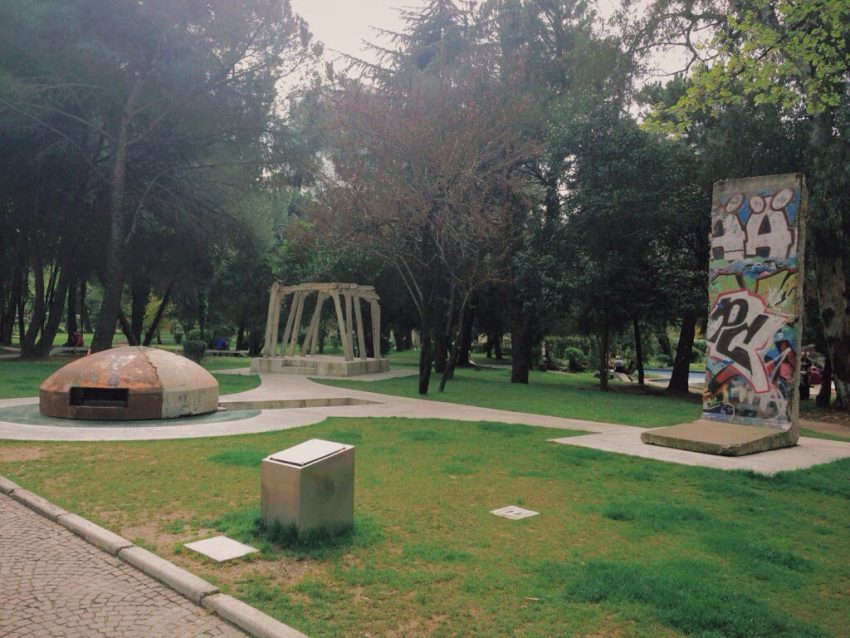
Postbllok Memorial (often called “Postbllok - Checkpoint”) is an outdoor installation in central Tirana that commemorates Albanians who suffered as political prisoners under the communist regime. It sits on Bulevardi Dëshmorët e Kombit, opposite key government buildings, so you often encounter it while moving between the city centre, the boulevard museums, and the Blloku area.
What makes Postbllok so striking is how it compresses a heavy national story into a few stark objects you can walk around in minutes, yet think about for hours. It's one of the things to see in Tirana if you want your trip to include more than cafés and colours, and it slots naturally into a walking tour of Tirana because it's right on the main central axis.
Table of Contents
- History and Significance of the Postbllok Memorial
- Things to See and Do in the Postbllok Memorial
- How to Get to the Postbllok Memorial
- Practical Tips on Visiting the Postbllok Memorial
- Where to Stay Close to the Postbllok Memorial
- Is the Postbllok Memorial Worth Visiting?
- For Different Travelers
- FAQs for Visiting Postbllok Memorial
- Nearby Attractions to the Postbllok Memorial
History and Significance of the Postbllok Memorial
Postbllok was conceived as a public act of memory: not a grand statue, but a deliberately uncomfortable checkpoint of symbols that forces you to pause. The memorial was co-created by former political prisoner and writer Fatos Lubonja and artist Ardian Isufi, linking lived experience with contemporary civic art in a city that has been rapidly rewriting its streetscape.
The installation’s power comes from its three-part composition. One element is a small concrete bunker, echoing the defensive bunkers scattered across Albania. Another is a line of concrete supports taken from the Spaç labor camp mine structures, referencing the forced labour system that underpinned political imprisonment.
The third element is a brightly painted fragment of the Berlin Wall, brought in to underline Albania’s broader isolation and the wider European context of closed borders and surveillance states. Together, these pieces turn a normal boulevard into a place where daily life and difficult history share the same pavement.
Things to See and Do in the Postbllok Memorial
Start by walking the memorial slowly from one end to the other, treating it like a narrative rather than a single object. The bunker is the most immediately “photographable” piece, but it’s also the most unsettling when you stand close and imagine how fear gets built into everyday landscapes.
Spend a moment with the Spaç elements, because they are the most specific to Albania’s story. Spaç was a high-security prison and labour camp in a remote valley in the Mirditë region, tied to a copper mine where prisoners were forced into harsh work; understanding that context makes these plain concrete forms feel painfully direct.
Finally, step back and view the Berlin Wall fragment with the other elements in the same line of sight. The contrast between the bright paint and the grim materials is intentional: it’s a reminder that memory can be presented in modern colours without making it any less real.
How to Get to the Postbllok Memorial
Most visitors reach Postbllok on foot because it's central and sits on a main walking corridor between the city centre and Blloku; from Skanderbeg Square, you can walk south along the boulevard in roughly 10-15 minutes.
The nearest airport is Tirana International Airport Nënë Tereza (TIA), and the simplest transfer is by taxi or airport bus into the centre, then a short walk to the boulevard. For the best deals and a seamless booking experience, check out these flights to Tirana on Booking.com.
City buses and taxis make this easy if you are staying farther out; ask for the Prime Minister’s Office or the boulevard near the Ismail Qemali statue, then cross to the memorial.
Train travel is not a practical way to reach central Tirana for most itineraries, so it's best to plan around buses, taxis, or walking instead.
If you are driving, aim for nearby paid street parking or garage options around the city centre and walk the last few minutes, as this boulevard area can be busy and controlled at times. If you are looking to rent a car in Albania I recommend having a look at Discover Cars, first, as they compare prices and review multiple car rental agencies for you.
Practical Tips on Visiting the Postbllok Memorial
- Entrance fee: Free
- Opening hours: 24 hours daily
- Best time to visit: Early morning is calm for reflection and photos, while late afternoon gives softer light and a livelier city backdrop.
- How long to spend: 10-20 minutes is enough for a thoughtful stop, but give yourself longer if you want to sit nearby and absorb the context.
- Accessibility: It’s an outdoor, street-level memorial with flat pavement, so it’s generally easy to visit with wheels, strollers, or limited mobility.
- Facilities: There are no dedicated facilities on-site, but you’ll find cafés, shops, and restrooms in nearby venues in the city centre and Blloku.
Where to Stay Close to the Postbllok Memorial
For a culture-heavy itinerary, base yourself in central Tirana near Skanderbeg Square and the main boulevard; if nightlife and restaurants are the priority, stay in or near Blloku so evenings are effortless.
A classic choice nearby is Rogner Hotel Tirana, which puts you right on the boulevard with an easy walk to museums, parks, and the memorial. For a modern, high-rise base close to the pedestrian core and shopping streets, Maritim Hotel Plaza Tirana is well-positioned for short walks in multiple directions.
If you want a more indulgent stay with spa time built in after a day of city walking, Xheko Imperial Luxury Hotel & SPA sits close to both the memorial area and Blloku’s restaurant scene.
Is the Postbllok Memorial Worth Visiting?
Yes, especially if you want at least one stop in Tirana that adds emotional depth and historical context to your trip. It's quick, free, and central, but it delivers a clear message about surveillance, forced labour, and isolation without needing a museum ticket or a long time commitment.
Postbllok also works well as a “bridge” site between bigger attractions: visit it on the way to the Pyramid, after a museum stop, or as a pause before heading into Blloku for dinner, so history and modern Tirana sit in the same day.
What Other Travellers Say...

Checkpoint, on Bulevardi Dëshmorët e Kombit in Tiranë, is a small park-like memorial featuring several mini bunkers, a section of the Berlin Wall and concrete supports salvaged from a prison or mine; visitors say it’s a compact, poignant stop that’s easy to walk through and often included on walking tours, though some find the signage lacking and the area can be untidy.


For Different Travelers
Families with Kids
This can be a meaningful stop for older kids and teens if you frame it simply as a place that explains why freedom of speech and movement matters. Keep it brief, focus on the visible objects (bunker, wall fragment), and let them ask questions rather than overloading details.
If you’re travelling with younger children, treat it as a short visual stop on a longer walk and pair it with a nearby park or a snack break afterward. The area is stroller-friendly, but the subject matter is best handled with age-appropriate context.
Couples & Romantic Getaways
It may not be “romantic,” but it can add a thoughtful, intimate moment to a city day, especially if you visit in the early morning when the boulevard feels quieter. Couples who like meaningful travel often appreciate a stop that sparks conversation and slows the pace.
Follow it with something lighter nearby, like a café in Blloku or a sunset walk toward the Pyramid area, so the day balances reflection with relaxation.
Budget Travelers
Postbllok is ideal for budget itineraries because it's free, central, and pairs easily with other walkable sights, cutting down transport costs. Build a low-cost loop that includes Skanderbeg Square, the boulevard, the Pyramid, and a cheap lunch spot in the city centre.
If you want deeper context without paying for a museum, read up briefly beforehand and treat the memorial as a self-guided “chapter” in Tirana’s communist-era story.
History Buffs
This is a must-stop because it references specific sites and systems of repression, especially the Spaç labour camp and the broader symbolism of isolation. Take your time identifying each element and thinking about why these particular objects were chosen.
For a richer day, pair Postbllok with the House of Leaves (surveillance history) and Bunk'Art 2 (communist-era exhibits) so the memorial becomes part of a coherent, city-centre history route.
FAQs for Visiting Postbllok Memorial
Getting There
Tickets & Entry
Visiting Experience
Tours, Context & Itineraries
Photography
Accessibility & Facilities
Food & Breaks Nearby
Safety & Timing
Nearby Attractions to the Postbllok Memorial
- Blloku: The city’s liveliest district for cafés and dinner, ideal for decompressing after a heavier historical stop.
- Skanderbeg Square: Tirana's main square and easiest starting point for a city-centre walking loop.
- Pyramid of Tirana: A striking landmark linked to the communist era, now reimagined as a modern city attraction.
- House of Leaves: A museum focused on surveillance and secret policing that adds strong context to Postbllok's themes.
- Bunk'Art 2: A compact, central museum on communist-era policing and everyday life under the regime.
The Postbllok appears in our Complete Guide to Visiting Tirana!

Moira & Andy
Hey! We're Moira & Andy. From hiking the Camino to trips around Europe in Bert our campervan — we've been traveling together since retirement in 2020!
This website uses affiliate links which may earn a commission at no additional cost to you!
Planning Your Visit
24 hours daily
Free
Nearby Attractions
- Palace of Congress (0.2) km
Notable Building - Former Residence of Enver Hoxha (0.2) km
Historic Building - Pyramid of Tirana (0.3) km
Notable Building - Tirana National Museum of Archaeology (0.3) km
Museum - Café-Museum Komiteti (0.3) km
Museum - Mother Teresa Square (0.4) km
Square - Rinia Park (0.5) km
Park - REJA - The Cloud (0.5) km
Monument - Colorful Buildings of Tirana (0.6) km
Notable Building - National Art Gallery (0.6) km
Gallery