Porte de l'Aude, Carcassonne
City Gate, City Walls and Historic Site in Carcassonne
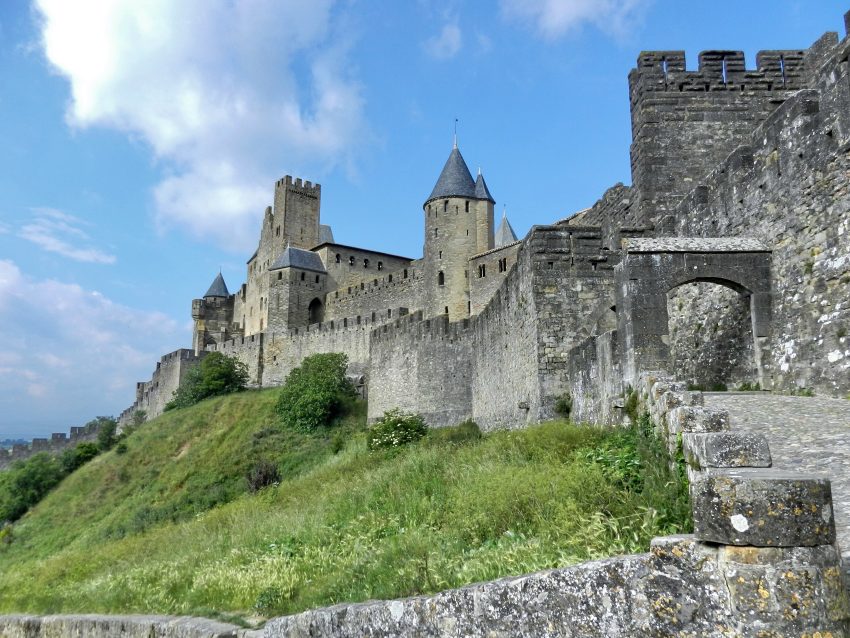
Porte de l'Aude is the western gateway into the Cité de Carcassonne, perched above the River Aude and reached via a steep, scenic approach from the Pont Vieux (Old Bridge). It's one of the two main entrances to the medieval fortified city, and it's especially memorable for its views, layered defenses, and the feeling of “arriving” into the walls rather than simply stepping through them.
If you're doing a self-guided walking tour, a classic route is to enter the Cité via Porte Narbonnaise, explore the lanes and viewpoints, then exit through Porte de l'Aude for the downhill walk back toward the river and the lower town. For photos, the best spots are the approach from the bridge, the ramped path up to the gate, and the exterior walls where you can appreciate the fortifications from below.
Table of Contents
- History and Significance of the Porte de l’Aude
- Things to See and Do in the Porte de l’Aude
- How to Get to the Porte de l’Aude
- Practical Tips on Visiting the Porte de l’Aude
- Where to Stay Close to the Porte de l’Aude
- Is the Porte de l’Aude Worth Visiting?
- For Different Travelers
- FAQs for Visiting Porte de l’Aude
- Nearby Attractions to the Porte de l’Aude
History and Significance of the Porte de l’Aude
Porte de l'Aude (historically also known as the Toulouse Gate) is more than a simple doorway in the wall: it's part of a defensive system designed to slow, expose, and control anyone approaching from the river side. The approach forces a climb and changes of direction, which historically made attackers vulnerable from above.
The gate sits within the broader story of Carcassonne’s layered fortifications, where different periods of construction and reinforcement created a complex “double wall” effect. As you walk in, you can read the site like a textbook of medieval military architecture: ramps, towers, and protected passages that turn a short distance into a carefully engineered obstacle.
Today, Porte de l'Aude is significant because it connects the living, walkable Cité to the river landscape below. It's one of the most atmospheric ways to enter or leave the UNESCO-listed medieval city, especially when the light hits the stonework in the morning or late afternoon.
Things to See and Do in the Porte de l’Aude
The main experience here is the approach itself. Coming from the Pont Vieux, you'll get a dramatic, rising view of the walls and towers, and the climb builds anticipation before you pass through into the Cité. On the way, pause often: the river-and-ramparts perspective is one of Carcassonne's best.
Once you’re at the gate, take time to look back outward before you head into the lanes. The exterior vantage points help you understand how the fortifications were meant to be seen and defended, and they’re ideal for wide-angle photos that capture the Cité’s scale.
For a satisfying mini-itinerary, pair Porte de l'Aude with a loop: start at Porte Narbonnaise, wander through the central streets, detour to viewpoints along the walls where accessible, then finish by exiting at Porte de l'Aude and walking down toward the river for a calmer, less crowded decompression.
How to Get to the Porte de l’Aude
The nearest airports are Carcassonne Airport (Salvaza) for limited flights, plus larger hubs like Toulouse-Blagnac and Montpellier for more options and onward connections. For the best deals and a seamless booking experience, check out these flights to Carcassonne on Booking.com.
Carcassonne is easy to reach by train, with services into Carcassonne station; from there you can continue by local bus, taxi, or a longer walk toward the Cité. You can use SNCF Connect to check schedules, compare routes, and purchase tickets for National (SNCF ) and regional trains (TER). For a more streamlined experience, we recommend using Omio, which allows you to easily compare prices, schedules, and book tickets for both National and Regional travel across all of Europe, all in one place.
If you're driving, aim for signed parking around the Cité or the lower town and then walk up via the Pont Vieux approach for the most scenic arrival. If you are looking to rent a car in France I recommend having a look at Discover Cars, first, as they compare prices and review multiple car rental agencies for you.
Practical Tips on Visiting the Porte de l’Aude
- Official website: https://www.tourisme-carcassonne.fr/en/discover/the-medieval-city-of-carcassonne/
- Entrance fee: Free.
- Opening hours: 24 Hours.
- Best time to visit: Go early morning for softer light and fewer tour groups, or late afternoon for golden-hour views over the river and walls.
- How long to spend: Budget 20–40 minutes if you’re just using it as an entry/exit point, or 60–90 minutes if you’re stopping often for photos and viewpoints.
- Accessibility: The approach is steep and can be slippery in rain; expect uneven stone surfaces and inclines that may be challenging for wheelchairs or anyone with limited mobility.
- Facilities: The gate area itself is mainly an outdoor passage; you’ll find more restrooms, cafés, and shops once you’re inside the Cité or back down in the lower town.
Where to Stay Close to the Porte de l’Aude
For the easiest sightseeing, base yourself in the lower town (Bastide Saint-Louis) so you can walk to the Pont Vieux and approach the gate without dealing with Cité crowds at your doorstep.
Hôtel du Pont Vieux A favorite for location: it sits right by the route between the lower town and the Cité, making early starts and late returns simple.
Hôtel Le Donjon - Coeur de la Cité Médiévale Staying inside the walls is the special factor here; it’s ideal if you want to experience the Cité after day-trippers leave.
Hôtel de la Cité Carcassonne - MGallery A splurge pick with a landmark feel, chosen for its setting and the “once-in-a-lifetime” atmosphere of sleeping within the historic ensemble.
Tribe Carcassonne A modern, comfortable base near the train station area, included for travelers who value easy arrivals/departures and contemporary amenities.
Best Western Plus Le Donjon Included for travelers who want a reliable, well-known standard right in the Cité, convenient for dawn and evening walks.
Is the Porte de l’Aude Worth Visiting?
Yes, especially if you enjoy scenic approaches, historic fortifications, and photography. It's one of the most rewarding ways to experience Carcassonne because the climb from the river reveals the walls gradually, and the exit downhill is a satisfying finale after exploring the Cité.
Honest Pivot: if steep walks, uneven surfaces, or crowded peak-season conditions will make the visit stressful, you may prefer approaching the Cité via easier routes and focusing on viewpoints from the lower town instead. You’ll still get excellent photos without committing to the climb.
What Other Travellers Say...

Reviews are overwhelmingly positive, with visitors calling Porte de l'Aude a beautiful, scenic way to access the Cité and praising the views from the river and old bridge approach. Many highlight that it's especially rewarding as an exit route because the downhill walk is easier on the feet and the scenery opens up as you descend. Common downsides include the steep climb if you approach from the river side and the fact that the wider Cité area can feel very crowded at peak times.


For Different Travelers
Porte de l'Aude works well as a flexible “choose-your-own-effort” stop: you can treat it as a quick pass-through or build it into a longer loop that frames your entire visit to the Cité.
Families with Kids
Kids often enjoy the sense of entering a real fortress, and the approach feels like an adventure compared with flatter city sightseeing. If you’re with younger children, plan short breaks on the way up and turn the climb into a “spot the towers” game.
For strollers, the steepness and uneven ground can be frustrating, so a baby carrier may be easier. Consider doing the gate as a downhill exit rather than an uphill entry to keep energy levels up.
Couples & Romantic Getaways
This is one of the most romantic approaches to the Cité, especially around sunset when the stone warms in color and the river views feel cinematic. Walking down from the gate toward the Pont Vieux can be a quieter, more intimate moment after the busier lanes inside.
Pair it with a slow evening stroll and a drink or dinner in the lower town afterward. The contrast between the illuminated walls above and the calmer streets below makes for a memorable night.
Budget Travelers
Porte de l'Aude is a high-impact experience that doesn't require a ticket, making it perfect for travelers prioritizing free highlights. You can get some of the best “Carcassonne postcard” views simply by walking the bridge-to-gate route.
To keep costs down, bring water and snacks and time your visit outside the busiest hours. You’ll spend more time enjoying the scenery and less time feeling pushed along by crowds.
History Buffs
Approach the gate slowly and look for how the route controls movement: ramps, turns, and exposure to defenders above. It’s a practical lesson in medieval defensive thinking, not just a pretty entrance.
To deepen the context, combine the gate walk with a circuit that includes wall viewpoints and interpretive stops inside the Cité. Seeing the fortifications from below and then from within helps you understand the site’s layered construction.
FAQs for Visiting Porte de l’Aude
Getting There
Tickets & Entry
Visiting Experience
Tours, Context & Itineraries
Photography
Accessibility & Facilities
Food & Breaks Nearby
Safety & Timing
Nearby Attractions to the Porte de l’Aude
- Pont Vieux (Old Bridge): The classic river crossing with postcard views up to the Cité and the gate approach.
- Porte Narbonnaise: The main eastern entrance to the Cité, dramatic and iconic for first-time arrivals.
- Château Comtal: The inner castle complex with exhibits and access to sections of the ramparts (ticketed).
- Basilica of Saints Nazarius and Celsus: A standout church inside the Cité known for its architecture and stained glass.
- Bastide Saint-Louis (Lower Town): Carcassonne’s grid-planned lower town, great for dining, shopping, and a calmer evening stroll.
The Porte de l'Aude appears in our Complete Guide to Visiting Carcassonne!

Moira & Andy
Hey! We're Moira & Andy. From hiking the Camino to trips around Europe in Bert our campervan — we've been traveling together since retirement in 2020!
This website uses affiliate links which may earn a commission at no additional cost to you!
Nearby Attractions
- Basilique Saint-Nazaire (0.1) km
Basilica, Church and Religious Building - Château et Remparts (0.1) km
Castle, City Walls and Historic Site - Jean Deschamps Theatre (0.1) km
Arts Venue, Attraction and Theatre - Eglise Saint-Gimer (0.1) km
Church and Religious Building - Cité de Carcassonne (0.2) km
Ancient City, Castle and City Walls - Jean-Pierre Cros-Mayrevieille Monument (0.2) km
Memorial, Monument and Statue - Musée de l'Ecole (0.2) km
Museum - La Grand Puit (0.2) km
Historic Site and Monument - Musee de L'Inquisition (0.2) km
Attraction and Museum - Porte Narbonnaise (0.2) km
Attraction, City Gate and Historic Site