Porte d'Auguste, Nimes
City Gate, Monument and Roman Site in Nimes
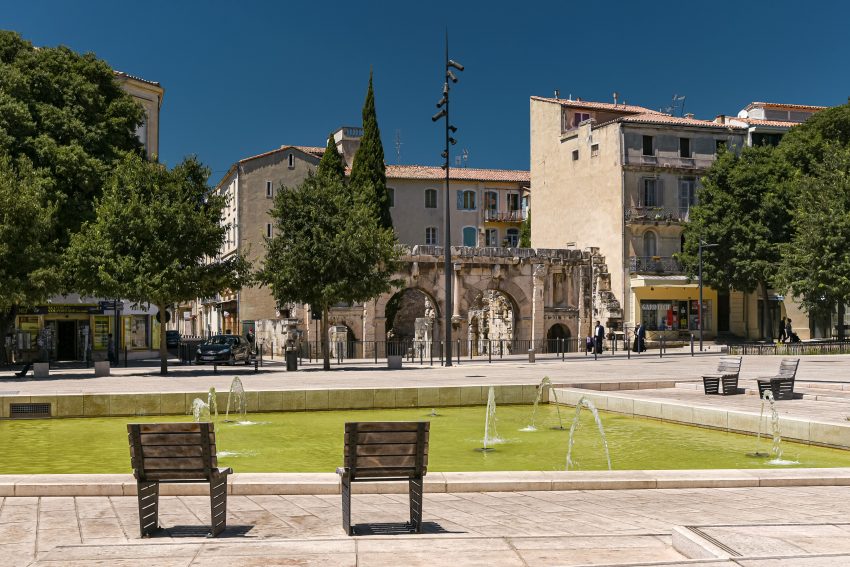
Porte d'Auguste is one of Nîmes' most atmospheric Roman remnants: a monumental city gate that still stands where the ancient walls once controlled access to the town. Set near the Church of Saint-Baudile, it's an easy stop to appreciate from street level, with multiple arches that hint at how traffic and pedestrians once flowed in and out of Roman Nemausus.
Because it sits right on the edge of the historic core, Porte d'Auguste works beautifully on a self-guided walking tour linking Nîmes' headline sights. Pair it with the Arènes (amphitheatre), Maison Carrée, and the Jardins de la Fontaine for a day that's heavy on history but light on logistics.
Table of Contents
- History and Significance of the Porte d’Auguste
- Things to See and Do in the Porte d’Auguste
- How to Get to the Porte d’Auguste
- Practical Tips on Visiting the Porte d’Auguste
- Where to Stay Close to the Porte d’Auguste
- Is the Porte d’Auguste Worth Visiting?
- For Different Travelers
- FAQs for Visiting Porte d’Auguste
- Nearby Attractions to the Porte d’Auguste
History and Significance of the Porte d’Auguste
Porte d'Auguste is a surviving gateway from the fortified Roman enclosure that once wrapped around Nîmes. Built under Emperor Augustus, it formed part of an impressive defensive system that protected the colony and signaled the city's importance in Roman Gaul.
What makes the gate especially meaningful is its relationship to movement and power: it marked a major entrance point connected to the Via Domitia, the strategic Roman road linking Italy and Spain. In other words, this wasn’t just a local doorway, but a threshold on a continental route.
Today, the remaining arches and the gate’s sheer scale make it easy to imagine the original fortified landscape, with towers and walls extending outward from this point. It’s a compact site, but it carries big “sense of place” for anyone trying to visualize Roman Nîmes beyond the major monuments.
Things to See and Do in the Porte d’Auguste
Start by walking around the structure to take in the different archways: the larger central passages were designed for vehicles, while the smaller side openings served pedestrians. Even without an interior to tour, the details are best appreciated slowly, from multiple angles, as the gate reads differently depending on light and traffic.
For photographers, the most rewarding approach is to frame the arches with the surrounding streetscape to show how ancient infrastructure still anchors modern Nîmes. If you enjoy urban archaeology, look for how the gate aligns with the broader city layout and imagine the line of the former walls.
To turn this into a richer visit, use Porte d'Auguste as a “context stop” early in your day: it helps you understand why Nîmes developed where it did, and it sets up the rest of the Roman circuit (amphitheatre, temple, gardens) with a clear story of entry, movement, and empire.
How to Get to the Porte d’Auguste
The nearest major airports are Montpellier–Méditerranée Airport and Marseille Provence Airport, with additional options via Lyon–Saint Exupéry for wider international connections. For the best deals and a seamless booking experience, check out these flights to Nimes on Booking.com.
Nîmes is well connected by rail, and arriving by train is one of the simplest ways to start sightseeing on foot once you’re in the center. You can use SNCF Connect to check schedules, compare routes, and purchase tickets for National (SNCF ) and regional trains (TER). For a more streamlined experience, we recommend using Omio, which allows you to easily compare prices, schedules, and book tickets for both National and Regional travel across all of Europe, all in one place.
If you’re driving, Nîmes is straightforward to reach via major roads in the Gard area, and you can park outside the tightest central streets before walking to the gate. If you are looking to rent a car in France I recommend having a look at Discover Cars, first, as they compare prices and review multiple car rental agencies for you.
Practical Tips on Visiting the Porte d’Auguste
- Official website: https://www.nimes.fr/que-faire-a-nimes/patrimoine/les-monuments-romains/la-porte-auguste
- Entrance fee: Free.
- Opening hours: 24 Hours.
- Best time to visit: Go in the morning or late afternoon for softer light and more comfortable temperatures, especially in warmer months. It’s also easier to pause for photos when foot and car traffic is lighter.
- How long to spend: Plan 10–20 minutes for a quick look and photos, or 30 minutes if you like to linger and connect it to the story of the Roman walls and road network.
- Accessibility: Viewing is from public streets and sidewalks, so access is generally step-free, but expect uneven paving and curb transitions typical of historic European streets.
- Facilities: There are no dedicated on-site facilities; use cafés and restrooms in central Nîmes before or after your stop.
Where to Stay Close to the Porte d’Auguste
For the easiest sightseeing, base yourself in central Nîmes so you can walk to the Roman monuments, restaurants, and evening strolls without needing transport.
Maison Albar Hotels L’Imperator A polished, high-comfort choice for travelers who want a special stay with a sense of occasion, well placed for walking to the city’s major Roman sights.
Best Western Le Marquis de La Baume A characterful option in the old town that’s ideal if you want classic Nîmes atmosphere and quick access to dining streets after sightseeing.
Appart’City Collection Nîmes Arènes Great for longer stays or travelers who like apartment-style convenience, with a location that makes it easy to link the amphitheatre area to the rest of the center.
Novotel Atria Nîmes Centre A reliable, practical pick with modern comfort, useful if you want straightforward amenities and a simple walk into the historic core.
Ibis Nîmes Ouest A budget-friendly base if you’re arriving by car and prefer easier parking and access, then heading into the center for your main sightseeing blocks.
Is the Porte d’Auguste Worth Visiting?
Yes, Porte d'Auguste is worth visiting if you enjoy Roman history in the real fabric of a city. It's not a “ticketed attraction” with exhibits, but it's a powerful, quick stop that adds depth to a Nîmes walking tour and helps you picture the ancient walls and road network.
Honest Pivot: if you're short on time and only want the biggest, most immersive monuments, you might prioritize the Arènes, Maison Carrée, and the Jardins de la Fontaine instead. Porte d'Auguste is best for travelers who like connecting-the-dots heritage rather than a long, curated visit.
What Other Travellers Say...




For Different Travelers
Porte d'Auguste is flexible: you can treat it as a five-minute photo stop or a meaningful “scene setter” for Roman Nîmes. Because it's outdoors and always in your path if you're exploring on foot, it's easy to adapt to different travel styles.
Families with Kids
Kids often respond well to the simple, dramatic idea of a city gate: a place where people entered, exited, and were controlled. Turning it into a quick “spot the arches” challenge keeps the stop fun and short.
To make it more engaging, connect it to a bigger story the same day, like gladiators at the amphitheatre or the fountains and open space at the Jardins de la Fontaine. That way, the gate becomes part of an adventure rather than a standalone ruin.
Couples & Romantic Getaways
For couples, Porte d'Auguste is a great excuse to slow down and notice the layers of Nîmes: ancient stonework set against everyday city life. It's especially nice as a gentle detour on the way to dinner in the center.
Pair it with a golden-hour walk that includes other Roman landmarks, and use it as a quiet moment between bigger sights. The best experience comes from pacing, not from spending a long time on site.
Budget Travelers
This is an easy win for budget travelers because it’s a meaningful Roman sight you can enjoy without paying for entry. It also helps you build a full day of walking-based sightseeing with minimal transport costs.
Use it as a waypoint between free or low-cost experiences, and save paid tickets for the one or two monuments you most care about. With smart routing, you can see a lot of Nîmes in a single day without overspending.
History Buffs
History lovers will appreciate that Porte d'Auguste is about infrastructure and urban planning, not just spectacle. It's a reminder that Roman power was expressed through roads, walls, and controlled access as much as through temples and arenas.
To deepen the visit, read up on the Via Domitia and the Roman fortifications of Nîmes before you go, then look at how the gate sits in the modern street grid. It’s a compact stop, but it rewards curiosity.
FAQs for Visiting Porte d’Auguste
Getting There
Tickets & Entry
Visiting Experience
Tours, Context & Itineraries
Photography
Accessibility & Facilities
Food & Breaks Nearby
Safety & Timing
Nearby Attractions to the Porte d’Auguste
- Arènes de Nîmes: A remarkably preserved Roman amphitheatre that anchors the city’s ancient identity.
- Maison Carrée: A beautifully intact Roman temple and one of Nîmes’ most iconic landmarks.
- Musée de la Romanité: A modern museum that adds context to the city’s Roman monuments with strong interpretation.
- Jardins de la Fontaine: A scenic park area built around historic water features, ideal for a relaxed stroll.
- Tour Magne: A hilltop Roman tower offering panoramic views over Nîmes after a short climb.
The Porte d'Auguste appears in our Complete Guide to Visiting Nimes!

Moira & Andy
Hey! We're Moira & Andy. From hiking the Camino to trips around Europe in Bert our campervan — we've been traveling together since retirement in 2020!
This website uses affiliate links which may earn a commission at no additional cost to you!
Planning Your Visit
24 Hours.
Free.
Nearby Attractions
- Eglise Sainte-Baudile (0.0) km
Church, Historic Building and Religious Building - Musee du Vieux Nimes (0.3) km
Museum - Nimes Cathedral (0.3) km
Cathedral, Church and Religious Building - Les Halles de Nimes (0.4) km
Market - Place de l'Horloge (0.4) km
Area, Attraction and Square - Rue de l'Aspic (0.4) km
Area and Street - Esplanade Charles-de-Gaulle (0.5) km
Park, Promenade and Square - Place du Marche (0.5) km
Area, Attraction and Square - Maison Carree (0.6) km
Historic Building, Monument and Roman Site - Antonin Square (0.6) km
Fountain, Monument and Square