Plaza de Toros de Pamplona
Bullring in Pamplona
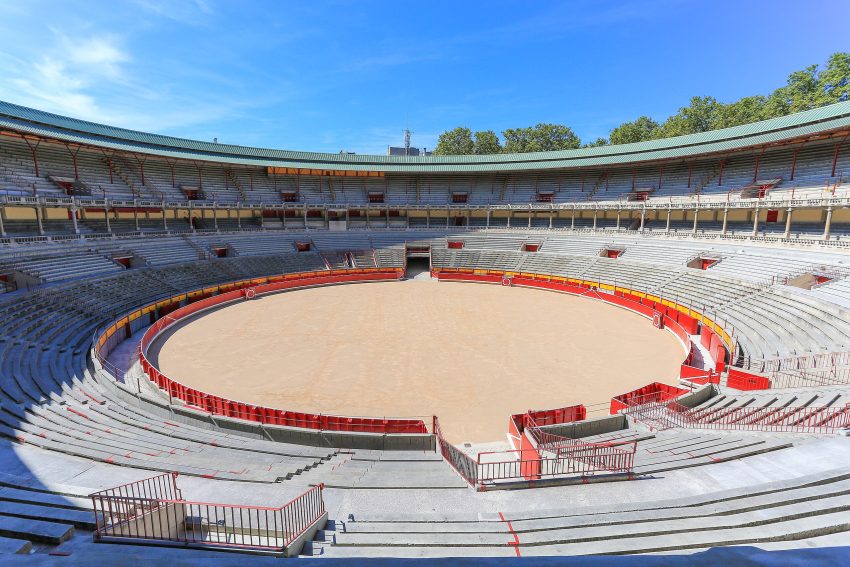
In the Second Ensanche of Pamplona, the bullring rises like a huge amphitheatre of stone and concrete, purpose-built in 1920 for one thing: to hold bullfights. With a capacity of around 19,720 spectators after the latest safety upgrades, it is the largest bullring in Navarre and the third largest in the world after Mexico City and Madrid, which already makes it one of the top attractions in Pamplona for anyone curious about Spanish bullfighting culture. Even if you do not attend a corrida, standing in the stands or on the sand gives a real sense of the scale and intensity of the spectacle.
For a week each July, the arena becomes the final destination for the famous Running of the Bulls during the San Fermín Fair, held annually from 7 to 14 July. Runners and bulls race through the old streets before pouring into this vast ring, where the crowd roars and the adrenaline finally breaks. Outside festival season, the bullring has broadened its role and now also hosts concerts and large-scale shows, so you might find a rock band, cultural event or fairground-style spectacle taking over the same space that once echoed only to hooves and cheers. Because of its location and history, it is often visited on walking tours of Pamplona that trace the encierro route from the streets into the heart of the arena.
Table of Contents
- History and Significance of the Bullring of Pamplona
- Things to See and Do in the Bullring of Pamplona
- How to Get to the Bullring of Pamplona
- Practical Tips on Visiting the Bullring of Pamplona
- Where to Stay close to the Bullring of Pamplona
- Is the Bullring of Pamplona Worth Visiting?
- FAQs for Visiting Bullring of Pamplona
- Nearby Attractions to the Bullring of Pamplona
History and Significance of the Bullring of Pamplona
The current bullring was projected in 1920 as part of the expansion of Pamplona's Second Ensanche, reflecting both the popularity of bullfighting at the time and the city's ambition to create a modern, high-capacity venue. Earlier bullrings in the city had been smaller or more makeshift; this one was designed from the ground up as a permanent arena that could handle large festival crowds safely, while also tying Pamplona into the wider world of Spanish and international bullfighting. Its near 20,000-seat capacity still impresses today.
Over the decades, the bullring's identity has been inseparable from San Fermín. Every morning from 7 to 14 July, the encierro route threads through the old town and culminates here as the bulls and runners charge into the ring. For many visitors, the arena is the image they associate with Pamplona: packed stands, white clothes and red scarves, and the sudden eruption of applause as the gates close behind the last bull. The building is effectively the stage on which the festival's most famous daily ritual ends, giving it a symbolic weight far beyond that of a regular sports venue.
Modern safety regulations have prompted reforms and upgrades over time, adjusting seating, exits and infrastructure while preserving the essential character and layout of the ring. In recent years, the bullring has also diversified its use, hosting concerts, shows and cultural events that draw in people who might never attend a bullfight. This evolution reflects a broader shift in Pamplona’s cultural life: traditions remain, but the city is also looking for new ways to use its biggest arena and keep it active throughout the year.
Things to See and Do in the Bullring of Pamplona
If you visit outside event times, guided tours or open visiting hours often allow you to walk through the stands, corridors and, in some cases, down onto the arena floor. Standing in the middle and looking up at almost 20,000 seats gives you a real sense of scale, and it is easy to imagine the roar of the crowd during San Fermín. Wander through the interior passageways to see how the building channels people and animals in precise flows, designed to manage both spectacle and safety.
During San Fermín, the atmosphere is completely different. If you choose to attend a bullfight, expect a packed, noisy crowd and a strong sense of tradition, from the music of the bands to the rituals in the ring. Even if you do not watch a corrida, passing by in the late morning or early afternoon lets you see how the arena functions as a magnet for festival-goers, with bars and temporary stalls spilling out into the surrounding streets. For many, simply watching the runners and bulls enter the ring from outside the gate is powerful enough.
Outside of July, check the schedule to see what else is on. The bullring now regularly hosts concerts and big shows, transforming the sand into a stage or floor and using the stands as a natural grandstand. Seeing a music performance or cultural event here is a very different experience from a bullfight, but the building's scale and history still add drama. Even on a quiet day, a short visit to the bullring can be easily combined with time in Plaza del Castillo and the nearby Running of the Bulls Monument, giving you a fuller picture of Pamplona's relationship with this arena.
How to Get to the Bullring of Pamplona
Most visitors arrive in Pamplona via Pamplona Airport or larger regional airports such as Bilbao or San Sebastián, then travel into the city centre by bus, taxi or hire car. For the best deals and a seamless booking experience, check out these flights to Pamplona on Booking.com. From central squares like Plaza del Castillo, the bullring is only a short walk away in the Second Ensanche, clearly signposted and easy to spot thanks to its size.
If you are travelling by train, Pamplona's main station connects with Madrid, Barcelona and other major Spanish cities.Train schedules and bookings can be found on Omio. From the station, you can take a local bus or taxi into the centre and then walk to the bullring, or walk the entire way if you prefer a longer urban stroll through the Ensanche and Old Quarter.
Arriving by car, follow the main roads into Pamplona and use one of the nearby car parks serving the city centre and Second Ensanche.If you are looking to rent a car in Spain I recommend having a look at Discover Cars, first, as they compare prices and review multiple car rental agencies for you. From most parking areas it is only a few minutes’ walk to the bullring, and you can easily combine your visit with a self-guided walk along parts of the encierro route that finishes inside the arena.
Practical Tips on Visiting the Bullring of Pamplona
- Suggested tips: Decide in advance whether you want to see the bullring during San Fermín, when it is at its liveliest but also most crowded, or at a quieter time when tours and non-bullfighting events dominate.
- Best time to visit: For a calm visit and guided tours, spring, early summer and autumn are ideal; for full festival atmosphere, plan around the San Fermín dates of 7-14 July.
- Entrance fee: Adults: from €20
- Opening hours: Until July 31st: Monday to Sunday, from 10:30 a.m. to 7:00 p.m. From August 1st to 30th: Monday to Sunday, from 10:30 a.m. to 8:00 p.m. (group by reservation) From September 1st to October 31st: Monday: groups only by reservation. Tuesday to Saturday, from 10:30 a.m. to 7:30 p.m. Sundays, from 10:30 to 14:30 October 12th, 10:30 a.m. to 7:30 p.m.
- Official website: http://www.feriadeltoro.com/
- How long to spend: Allow 45-60 minutes for a tour or self-guided look around the arena; longer if you are attending a bullfight, concert or show.
- Accessibility: The building has multiple entrances and levels; some areas include steps and steep seating, but accessible routes and reserved seating are often available for visitors with reduced mobility.
- Facilities: Expect ticket offices, toilets, food and drink concessions during events, and plenty of bars and cafés in the surrounding streets.
- Photography tip: Wide-angle shots work best inside to capture the full circle of the stands; outside, try framing the façade with crowds or festival decorations if you visit during San Fermín.
- Guided tours: Consider taking an official tour that explains the history of the arena, the encierro, and the logistics behind major events; it can add depth to what you see.
- Nearby food options: Pre- or post-visit, you will find numerous pintxos bars, cafés and restaurants within a short walk, especially around Plaza del Castillo and nearby streets.
Where to Stay close to the Bullring of Pamplona
Staying near the city centre puts the bullring, Plaza del Castillo and the Old Quarter all within easy walking distance. A classic option right on the main square is Gran Hotel La Perla, which places you close to the bullring and the central San Fermín action. For a slightly quieter but still very central base near the cathedral and old walls, Pamplona Catedral Hotel offers a characterful stay with an easy stroll to the arena. If you like being next to green spaces as well as the city centre, Hotel Tres Reyes Pamplona gives you quick access to La Taconera Park and a comfortable walk to the bullring and festival streets.
Is the Bullring of Pamplona Worth Visiting?
The bullring of Pamplona is definitely worth visiting, even if you are unsure about attending a bullfight. As the final point of the Running of the Bulls, the largest bullring in Navarre and one of the biggest in the world, it plays a central role in the city's identity and San Fermín festivities. Whether you take a quiet daytime tour, visit for a concert or simply see it from outside while tracing the encierro route, the arena helps you understand how Pamplona's history, culture and festival energy all converge in one dramatic space.
What Other Travellers Say...

Plaza de Toros in Pamplona is a 1920s bullring known as the finish of the San Fermín running of the bulls and still hosts bullfights; visitors describe an electric, passionate atmosphere during corridas, especially during the festival, and note you can bring drinks and often find ticket sellers outside. The site also offers a self-guided tour with an audio guide that takes you from the entrance around the arena to the stables, ending with images and video presentations that explain the event's story, though some visitors find the displays emotionally difficult and question the tradition. Address: P.º Hemingway, s/n, 31002 Pamplona, Navarra, Spain.


FAQs for Visiting Bullring of Pamplona
Nearby Attractions to the Bullring of Pamplona
- Plaza del Castillo: Pamplona's main square and social hub, lined with cafés and historic façades, only a short walk from the bullring.
- Running of the Bulls Monument: A dramatic bronze sculpture of bulls and runners that captures the energy of the encierro year-round.
- Pamplona Cathedral: The Gothic cathedral with Neoclassical façade, cloister and royal tombs, located in the nearby Old Quarter.
- Museum of Navarra: The regional museum housed in a former pilgrims' hospital, with collections from prehistory to modern art.
- Ciudadela de Pamplona: A 16th century star-shaped fortress turned park, ideal for a relaxed stroll among ramparts and green lawns after visiting the arena.
The Plaza de Toros de Pamplona appears in our Complete Guide to Visiting Pamplona!

Moira & Andy
Hey! We're Moira & Andy. From hiking the Camino to trips around Europe in Bert our campervan — we've been traveling together since retirement in 2020!
This website uses affiliate links which may earn a commission at no additional cost to you!
Planning Your Visit
Until July 31st: Monday to Sunday, from 10:30 a.m. to 7:00 p.m.
From August 1st to 30th: Monday to Sunday, from 10:30 a.m. to 8:00 p.m. (group by reservation)
From September 1st to October 31st: Monday: groups only by reservation. Tuesday to Saturday, from 10:30 a.m. to 7:30 p.m. Sundays, from 10:30 to 14:30
October 12th, 10:30 a.m. to 7:30 p.m.
Adults: from €20
Nearby Attractions
- Running of the Bulls Monument (0.1) km
Statue - Palacio de Navarra (0.2) km
Palace - Centro De Interpretacion De Las Fortificaciones (0.2) km
Castle, City Walls and Museum - Calle Estafeta (0.3) km
Street - Plaza del Castillo (0.3) km
Square - Albergue de Jesús y María (0.4) km
Church and Hostel - Iglesia De San Nicolas (0.4) km
Church - Catedral de Pamplona (0.5) km
Cathedral - Ayuntamiento de Pamplona (0.5) km
Town Hall - Iglesia de San Saturnino (San Cernin) (0.5) km
Church