Plaza Cervantes, San Sebastián
Square and Statue in San Sebastián

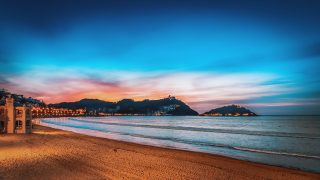
Plaza Cervantes is a small triangular lookout on the La Concha promenade in San Sebastián, perched above an underground car park and framed by one of the city's most scenic backdrops: the curve of the bay, the beach, and the elegant waterfront buildings. It's not a “big attraction” in the ticketed sense, but it's the kind of place you end up lingering-partly for the view, and partly because the statues here are genuinely memorable.
At the centre is the plaza's headline feature: a bronze Don Quixote on horseback with Sancho Panza on his donkey, set up like they've paused mid-journey to admire the sea. It's one of the things to see in San Sebastián when you want a quick, photogenic stop that fits naturally into a walking tour of San Sebastián without pulling you away from the promenade.
Table of Contents
- History and Significance of the Plaza Cervantes
- Things to See and Do in the Plaza Cervantes
- How to Get to the Plaza Cervantes
- Practical Tips on Visiting the Plaza Cervantes
- Where to Stay Close to the Plaza Cervantes
- Is the Plaza Cervantes Worth Visiting?
- For Different Travelers
- FAQs for Visiting Plaza Cervantes
- Nearby Attractions to the Plaza Cervantes
History and Significance of the Plaza Cervantes
Plaza Cervantes sits in a part of the city shaped by modern waterfront planning, where the promenade was refined into a series of small, view-friendly spaces. The plaza's most important cultural element is its sculptural ensemble, which ties San Sebastián to Spain's most famous literary world through the figures of Don Quixote and Sancho Panza.
The bronze statues were created in 1929 by the Spanish sculptor Lorenzo Coullaut-Valera, and they are closely linked to his celebrated work for Madrid's Plaza de España. In essence, the San Sebastián piece echoes the same iconic sculptural language-instantly recognisable even if you've never read the novel-while giving it a distinctly coastal setting.
The plaza’s story also reflects changing tastes and city politics. The installation was commissioned for the newly urbanised plaza and sparked debate at the time, with some artists arguing the work felt outdated. When the underground car park was formally opened in the 1970s, the plaza and its sculpture became a fixed part of the modern promenade experience: a practical piece of infrastructure beneath, and a symbolic, public-facing artwork above.
Things to See and Do in the Plaza Cervantes
Start with the statues up close. The detailing is part of the fun-the posture of Don Quixote, the quieter sturdiness of Sancho, and the way the whole scene feels theatrical against the open sea. It’s one of those spots where you can take a classic photo in 30 seconds, or spend five minutes finding better angles as the light shifts.
Then use the plaza for what it does best: pausing your promenade walk. It's perfectly placed for a short stop between the City Hall end of the bay and the rest of the La Concha waterfront, and it works well as a reset point before deciding whether you're heading onward to the beach, the Old Town, or a café.
If you enjoy people-watching, this is a strong little perch. You'll see the rhythm of San Sebastián in motion-locals walking the promenade, runners and cyclists passing through, and travelers doing exactly what you're doing: stopping for the view and the story.
How to Get to the Plaza Cervantes
The nearest airport is San Sebastián Airport (EAS) in Hondarribia, while Bilbao Airport (BIO) and Biarritz Airport (BIQ) are common alternatives with more route options. For the best deals and a seamless booking experience, check out these flights to San Sebastián on Booking.com.
San Sebastián's main rail hub is Donostia-San Sebastián station, and from there you can walk toward the centre and reach La Concha via the Boulevard and the City Hall side of the bay.Train schedules and bookings can be found on Omio.
Local buses make it easy to reach the city centre, but Plaza Cervantes is best approached on foot once you're near the waterfront, since it sits directly on the promenade and is easiest to experience as part of a seaside walk.
If you’re driving, the simplest approach is to use a central underground car park and then walk to the promenade, rather than trying to navigate waterfront traffic and limited stopping space.If you are looking to rent a car in Spain I recommend having a look at Discover Cars, first, as they compare prices and review multiple car rental agencies for you.
Practical Tips on Visiting the Plaza Cervantes
- Entrance fee: Free
- Opening hours: 24 Hours
- Best time to visit: Late afternoon into early evening is ideal, when the promenade has atmosphere and the light over La Concha is at its best for photos.
- How long to spend: 10-20 minutes is perfect as a scenic stop, or longer if you’re using it as a relaxed pause on a longer bay walk.
- Accessibility: The promenade approach is generally flat and easy, with smooth paving that suits strollers and most mobility needs.
- Facilities: You’re moments from cafés, restrooms, and services around the City Hall and central waterfront area, so it’s easy to pair with a break.
Where to Stay Close to the Plaza Cervantes
For a culture-heavy itinerary, base yourself in the City Centre or the Old Town so you can walk to museums, pintxos streets, and the bay; if your focus is beach time and a slower coastal rhythm, staying along La Concha keeps sunrise and sunset walks effortlessly close.
For a classic promenade stay with immediate access to the waterfront, Hotel de Londres y de Inglaterra is hard to beat for location and atmosphere. If you prefer a polished boutique feel near both the Old Town and the bay, Lasala Plaza Hotel is a strong choice. For a modern, walk-everywhere base slightly inland but still very close to the promenade, Hotel Arbaso fits well.
Is the Plaza Cervantes Worth Visiting?
Yes-especially because it's so easy to include. You're likely to walk the La Concha promenade anyway, and Plaza Cervantes gives you a distinctive “only in this city” moment: a famous Spanish literary duo set against one of Europe's most beautiful urban bays.
It’s also worth it as a micro-stop with real payoff. Even if you spend only ten minutes here, you’ll come away with a strong photo, a small piece of cultural context, and that satisfying feeling of having noticed something beyond the obvious headline sights.
What Other Travellers Say...

Kontxa Pasealekua in Donostia / San Sebastián is a sweeping, well-kept sandy cove with a long promenade ideal for walking the full loop in 30–60 minutes, enjoying golden sands and clear swimming spots, and watching waves crash against the rocks at the northern end where splashes sometimes come over the wall; there are handy taps and showers to rinse off after a swim, and paths up the western hill (accessible by funicular) offer elevated views of the bay.


For Different Travelers
Families with Kids
Plaza Cervantes is an easy family stop because it's quick, visual, and right on a flat promenade route. The statues feel storybook-friendly even for kids who don't know the characters, and it's a natural place to pause without the logistics of a museum visit.
Use it as a short break rather than a destination. A couple of photos, a look at the figures, and then onward to beach time or a snack stop nearby keeps the day moving smoothly.
Couples & Romantic Getaways
For couples, the charm is in the setting: a literary scene framed by sea air and one of San Sebastián’s most scenic stretches of promenade. It works beautifully as part of a slow bay walk, especially when the light is soft and the city feels calmer.
It’s also a nice “small moment” stop-brief, unforced, and memorable. Pair it with a drink nearby or continue along La Concha for a simple, romantic loop that doesn’t need much planning.
Budget Travelers
This is a great budget-friendly highlight because it’s free and sits directly on one of the city’s best walks. You get a distinctive landmark photo and a cultural detail without paying for entry or transport.
It also helps structure a self-guided day: Old Town, City Hall area, promenade, and beach all connect naturally here. The best value in San Sebastián often comes from these easy, walkable link points.
FAQs for Visiting Plaza Cervantes
Getting There
Visiting Experience
Tours, Context & Itineraries
Photography
Accessibility & Facilities
Food & Breaks Nearby
Safety & Timing
Nearby Attractions to the Plaza Cervantes
- La Concha Promenade: The city's signature waterfront walk with nonstop bay views and a relaxed, local rhythm.
- Alderdi Eder Gardens: A palm-shaded flower garden beside City Hall that's ideal for a quick pause and photos.
- San Sebastián City Hall (Ayuntamiento): The grand former casino building that anchors the waterfront and defines this part of the bay.
- Parte Vieja (Old Town): San Sebastián's historic core for pintxos bars, lively streets, and classic architecture a short walk away.
- San Telmo Museum: The city's standout museum for Basque society and culture, tucked beside Mount Urgull near Plaza Zuloaga.
The Plaza Cervantes appears in our Complete Guide to Visiting San Sebastián!

Moira & Andy
Hey! We're Moira & Andy. From hiking the Camino to trips around Europe in Bert our campervan — we've been traveling together since retirement in 2020!
This website uses affiliate links which may earn a commission at no additional cost to you!
Planning Your Visit
24 Hours
Free
Nearby Attractions
- Playa de la Concha (0.1) km
Beach - Parque de Alderdi Eder (0.2) km
Gardens - Plaza de Gipuzkoa (0.3) km
Gardens and Square - Ayuntamiento de San Sebastian (0.3) km
Town Hall - Real Club Náutico de San Sebastián (0.3) km
Notable Building - Parte Vieja (Old Town) (0.5) km
Area - Plaza de la Constitución (0.5) km
Square - Victoria Eugenia Theater (0.5) km
Theatre - Mercado de la Bretxa (0.5) km
Market - Basílica de Santa María del Coro (0.6) km
Church