Piazza dei Signori, Padova
Square in Padova
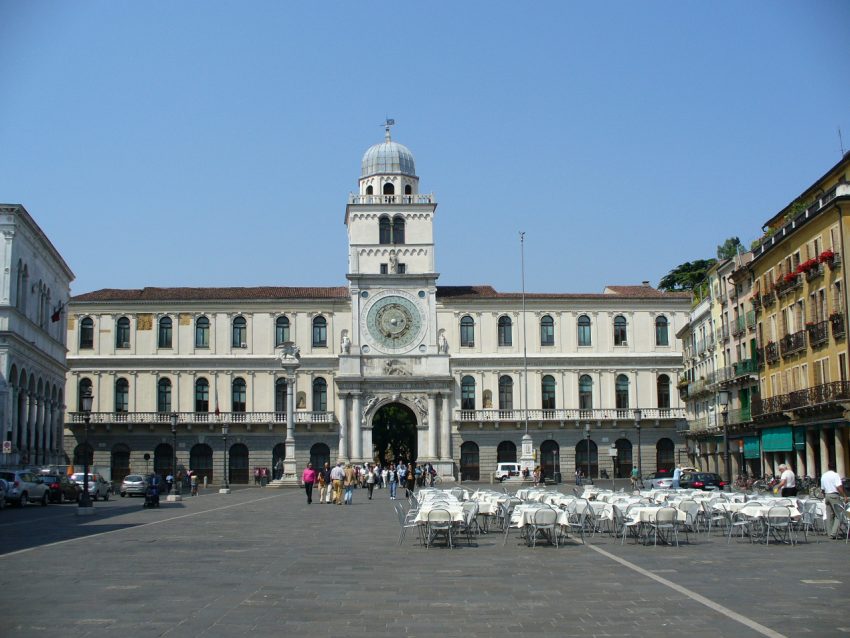
Piazza dei Signori is one of the best places to visit in Padua if you want to feel the city's political and social heart across the centuries. Once the working and living headquarters of the signori, the rulers appointed by the Republic of Venice, this elegant square has long been the setting for official ceremonies, tournaments, festivals and public events. Today, cafés spill out under arcades and stalls set up for the morning market, but the space is still dominated by the famous Clock Tower, which has been the visual anchor of the piazza since the Renaissance.
The square emerged in the 14th century when an older district in front of the church of San Clemente was demolished on the orders of Ubertino da Carrara to create a grand open space in front of his palace. Over the centuries, it has changed names and functions, from the “Square of Triumphs” to Piazza Pio IX and Piazza Unità d'Italia, before returning to Piazza dei Signori under the Fascist era. Today, as you wander across the trachyte paving stones, it is easy to imagine jousts, bull hunts on Shrove Tuesday and elaborate festivities staged here to impress visiting dignitaries, making it a highlight of any walking tour of Padua.
Table of Contents
- History and Significance of the Piazza dei Signori
- Things to See and Do in the Piazza dei Signori
- How to Get to the Piazza dei Signori
- Practical Tips on Visiting the Piazza dei Signori
- Where to Stay close to the Piazza dei Signori
- Is the Piazza dei Signori Worth Visiting
- FAQs for Visiting Piazza dei Signori
- Nearby Attractions to the Piazza dei Signori
History and Significance of the Piazza dei Signori
Piazza dei Signori was laid out in the 14th century as part of an ambitious urban renewal project. Ubertino da Carrara, a member of the ruling Carraresi family, ordered the demolition of an existing district in front of San Clemente to create a new ceremonial space aligned with the palace and the tower on the east side. The intention was clear: to showcase the power of Padua's rulers with a square that offered space for tournaments, parades and public appearances, all framed by the city's most important civic buildings.
The square's fortunes rose and fell with the political upheavals of northern Italy. The wars between the Carraresi and the Visconti in the 14th century left the area damaged, a period known as the “time of Desolation.” With the arrival of Venetian rule, Piazza dei Signori was reimagined as Padua's fifth great civic space, alongside the other main piazzas. It became the stage for tournaments, horse rides, mock battles, concerts and elaborate festivities, especially on major dates such as the July 17 celebration of Venice's reconquest of Padua in 1509. Ephemeral architecture - temporary arches, stands and decorations - would transform the square for special occasions.
Names came and went as political winds shifted. Once known as the “Square of Triumphs,” then “Piazza della Signoria,” it was rechristened “Piazza Pio IX” on 9 May 1848 by the priest Alessandro Gavazzi as an act of anti-Austrian symbolism. After Italian unification, it became “Piazza Unità d'Italia” and only later reverted to Piazza dei Signori. Alongside these political stories, the square itself evolved physically: the original herringbone brick paving was replaced in the 18th century with slabs of Euganean trachyte, and a once-monumental well at the square's entrance was sealed and dismantled in 1785, its materials reused elsewhere.
Things to See and Do in the Piazza dei Signori
The most striking feature of Piazza dei Signori is the Clock Tower, whose arch links the square with neighbouring streets and piazzas. Its astronomical clock and elegant façade serve as a constant reminder of Padua's medieval and Renaissance sophistication, when timekeeping, civic pride and architectural display were closely intertwined. Standing beneath the tower, you get a strong sense of how this space once served as the ceremonial front yard of the city's rulers.
As you explore the piazza, take time to notice the façades of the palazzi that frame it. Many have arcaded ground floors sheltering shops, bars and cafés, inviting you to pause for a coffee and watch local life unfold. In the mornings, the square often hosts part of the city market, continuing an eight-century tradition of Piazza dei Signori as a place of trade as well as ceremony. The contrast between the everyday bustle of stalls and the historic architecture around them is part of its charm.
Walk towards the church of San Clemente to appreciate how the square was cut out of the medieval urban fabric in front of the church, creating a broad, open space. From the centre, look outward along the connecting streets towards Piazza delle Erbe and Piazza dei Frutti to understand how these three squares form one large, interconnected civic stage. Piazza dei Signori is especially atmospheric in the evening, when the façades are softly lit and the square becomes a relaxed meeting place for locals and visitors alike.
How to Get to the Piazza dei Signori
Piazza dei Signori lies in the heart of Padua's historic centre, a short walk from other main sights like Palazzo della Ragione, Caffè Pedrocchi and the University quarter. International visitors usually arrive via Venice Marco Polo or Treviso airports, then connect to Padua by shuttle, bus or train before walking into the old town. For the best deals and a seamless booking experience, check out these flights to Padova on Booking.com.
By train, travel to Padova railway station, an important stop on the Venice-Milan and Venice-Bologna lines with frequent regional and high-speed services. Use Omnio to easily compare schedules, book train tickets, and find the best prices all in one place for a hassle-free journey across Italy. From the station, you can reach Piazza dei Signori on foot in about 15-20 minutes along signed routes that lead towards the historic market squares, or by taking the tram or a city bus to stops near the old town and walking a few minutes from there.
Bus connections from nearby towns and districts generally terminate near the station or at central stops close to the historic core, from which it is easy to walk to the piazza. If you are driving, Padua is close to the A4 and A13 motorways; it is best to park in one of the car parks on the edge of the centre and then explore on foot, as many streets around Piazza dei Signori are pedestrianised or restricted to local traffic. If you are looking to rent a car in Italy I recommend having a look at Discover Cars, first, as they compare prices and review multiple car rental agencies for you. Once parked, follow signs to the main piazzas and you will quickly find yourself in the square under the Clock Tower.
Practical Tips on Visiting the Piazza dei Signori
- Suggested tips: Pair Piazza dei Signori with nearby Piazza delle Erbe and Piazza dei Frutti to appreciate how Padua's civic and market life has revolved around these spaces for centuries; plan a coffee or aperitivo stop here to soak up the atmosphere.
- Best time to visit: Come in the morning to see the market in full swing, or at sunset and early evening when the façades glow and the square feels particularly lively yet relaxed.
- Entrance fee: Free
- Opening hours: 24 House
- How long to spend: Allow at least 30-45 minutes to wander, take photos and enjoy a drink; longer if you are visiting markets or using the square as a base while exploring nearby streets.
- Accessibility: The square is flat and paved with stone slabs, making it generally accessible; watch for occasional market stalls, café seating and crowds that can narrow pathways.
- Facilities: Numerous cafés, bars and restaurants ring the square and surrounding streets; public restrooms are easiest to find at nearby cafés or within larger public buildings.
- Photography tip: For classic shots, frame the Clock Tower from the centre of the square or from one of the side arcades; night-time photography can be especially rewarding when the façades are lit and the sky is dark.
- Guided tours: Many walking tours of Padua include Piazza dei Signori as a key stop, linking it with the other market squares and historic buildings; this can provide extra context on its changing names and political symbolism.
- Nearby food options: You are spoiled for choice here, with everything from quick coffee bars to traditional trattorie in the surrounding streets and nearby piazzas.
Where to Stay close to the Piazza dei Signori
Staying near Piazza dei Signori puts you right in the middle of Padua's historic core, perfect for exploring on foot by day and enjoying the evening atmosphere in the piazzas. A stylish central option is Hotel Majestic Toscanelli, just a short walk from Piazza dei Signori, Piazza delle Erbe and Caffè Pedrocchi. For a slightly more modern feel within easy reach of both the historic centre and the station, Hotel Europa Padova offers convenient access while still keeping you close to the main sights. Another good base is Hotel Milano, which is a pleasant stroll from the old town and allows you to reach Piazza dei Signori and the surrounding attractions without needing public transport.
Is the Piazza dei Signori Worth Visiting
Piazza dei Signori is absolutely worth visiting and deserves a prime spot on any Padua itinerary. This is not just another pretty square: it is the historic stage for civic power, public celebrations and everyday life, shaped by the Carraresi rulers, the Venetians and the political upheavals of the 19th century. Standing beneath the Clock Tower, surrounded by historic façades and the buzz of market stalls or café terraces, you get a vivid sense of how the city has lived and celebrated in this space for centuries.
Because it sits at the heart of the pedestrian centre and connects easily to nearby piazzas and monuments, you are likely to pass through Piazza dei Signori several times during your stay. Each visit reveals something different, from morning markets to evening aperitivo crowds. For many travellers, it quickly becomes a favourite spot, both for people-watching and for appreciating Padua's layered history in a single glance.
What Other Travellers Say...

Piazza dei Signori, at P.za dei Signori in Verona, is a tranquil public square edged by elegant medieval and Renaissance buildings where visitors often pause for a coffee, stroll, or to meet; it features an imposing statue of Dante Alighieri and is praised for its evocative, artful atmosphere and quieter charm compared with busier nearby squares.


FAQs for Visiting Piazza dei Signori
Nearby Attractions to the Piazza dei Signori
- Palazzo della Ragione: Monumental medieval hall between Piazza delle Erbe and Piazza dei Frutti, with a vast frescoed upper floor and historic covered market below.
- Piazza delle Erbe and Piazza dei Frutti: Lively neighbouring market squares filled with stalls by day and a buzzing atmosphere in the evenings.
- Caffè Pedrocchi: Historic café known as the “café without doors,” long a favourite meeting place for writers, students and revolutionaries.
- Duomo di Padova and Baptistery: The cathedral and its beautifully frescoed baptistery on nearby Piazza Duomo, offering an important spiritual and artistic counterpoint to the civic piazzas.
- Palazzo del Bo: Historic seat of the University of Padua, home to Galileo's lectern and the world's oldest anatomical theatre, an easy walk from the square.
The Piazza dei Signori appears in our Complete Guide to Visiting Padova!

Moira & Andy
Hey! We're Moira & Andy. From hiking the Camino to trips around Europe in Bert our campervan — we've been traveling together since retirement in 2020!
This website uses affiliate links which may earn a commission at no additional cost to you!
Planning Your Visit
24 House
Free
Nearby Attractions
- Torre dell'Orologio (0.1) km
Tower - Palazzo della Ragione (0.1) km
Historic Building and Market - Duomo di Padova (0.2) km
Cathedral - Cafe Pedrocchi (0.3) km
Historic Building - Palazzo Bo (0.3) km
Historic Building and Palace - Ponte Molino (0.4) km
Bridge and Historic Building - Chiesa degli Eremitani (0.6) km
Church - Palazzo Zuckermann (0.6) km
Historic Building and Museum - MUSME - Museum of the History of Medicine (0.6) km
Museum - Roman Arena of Padua (0.6) km
Amphitheatre