Parc de Samara, Amiens
Museum near Amiens
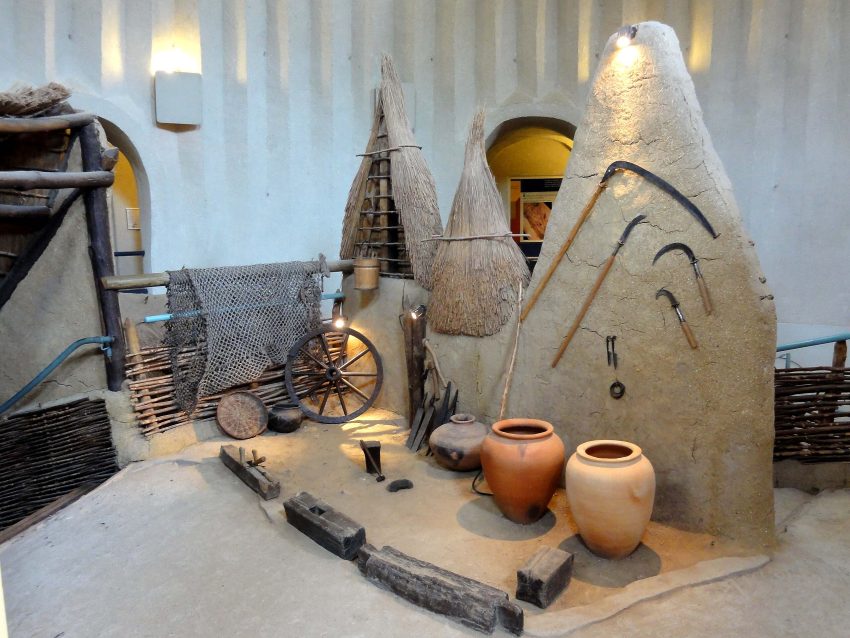
Parc de Samara, near Amiens in La Chaussée-Tirancourt, is an open-air archaeological and nature park focused on prehistoric and early historic life in the Somme Valley. Across its outdoor route, visitors find reconstructed dwellings, craft demonstrations, exhibition spaces and planted landscapes rather than a conventional indoor museum.
The park matters because it turns regional archaeology into visible, practical detail: shelters, tools, fire-making, weaving, pottery and metalwork show how people lived with the river, marshes and woodland around them. It suits families, school-age children and travelers who like outdoor history, while those short on time in Amiens may find it better as a half-day trip than a quick city stop.
History and Significance
The Somme Valley and Prehistory
The Somme Valley has played an important role in the study of prehistory, especially through archaeological work carried out in northern France since the 19th century. Parc de Samara uses that local context to present a long sequence of human life, with displays and reconstructions linked to the landscapes of the river valley.
The park tells a broad story, from early human occupation through prehistoric communities and into the Gallo-Roman period. Its approach is practical: rather than focusing only on objects in cases, it shows how shelters were built, tools were made and natural resources were used.
Experimental Archaeology in the Open Air
Opened in 1988, Samara was designed as a place where archaeology could be explained through full-scale reconstruction and live demonstration. The houses, shelters and workshops are based on archaeological evidence from Picardy and the wider region, then presented in a form visitors can walk around and compare.
This makes the site especially useful for understanding scale. A Neolithic building, a Bronze Age structure or an Iron Age farm enclosure feels different when seen outdoors, with smoke, timber, thatch, clay and tools placed in context.
The Oppidum and the Natural Setting
The wider site includes the area known as the oppidum of La Chaussée-Tirancourt, often referred to as Camp de César. This fortified plateau adds a later Iron Age layer to a park otherwise strongly associated with prehistoric life and early settlement.
Samara is also a nature site. Arboretum paths, marshland, planted areas and open slopes show why the relationship between people and landscape is central to the visit, not a decorative extra.
Things to See and Do
The main reason to visit is the sequence of reconstructed habitats and the live craft demonstrations. I would start with the exhibition building for basic context, then move outside to the prehistoric shelters, Neolithic-style buildings, later huts and farm structures, stopping when mediators demonstrate fire-making, flint working, weaving, pottery or metalwork.
Do not rush the natural side of the park. The arboretum, marsh paths and plant areas give the visit a slower rhythm, and they help explain how early communities used wood, fibres, clay, plants and wetland resources in daily life.
Families usually get the most out of Samara when they treat it as an active outdoor visit rather than a museum checklist. There is a fair amount of walking, so comfortable shoes and a flexible pace make a noticeable difference.
How to Get to the Parc de Samara
The nearest airport for Amiens is Paris Beauvais, with Paris Charles de Gaulle and Lille also practical for wider flight options before continuing by train or car. For the best deals and a seamless booking experience, check out these flights to Amiens on Booking.com.
Amiens is linked by regional trains, including services to and from Paris-Nord, and the park then requires onward travel by car, taxi, bike or local transport toward La Chaussée-Tirancourt. You can use SNCF Connect to check schedules, compare routes, and purchase tickets for National (SNCF ) and regional trains (TER). For a more streamlined experience, we recommend using Omio, which allows you to easily compare prices, schedules, and book tickets for both National and Regional travel across all of Europe, all in one place.
By car, Parc de Samara is about a 20-minute drive west of central Amiens via the D1, with arrival at Rue d'Amiens in La Chaussée-Tirancourt. If you are looking to rent a car in France I recommend having a look at Discover Cars, first, as they compare prices and review multiple car rental agencies for you.
Where to Stay Close
For most visitors, the best base is central Amiens: it keeps the cathedral, Saint-Leu, the station and restaurants close, while Samara remains an easy half-day drive or taxi trip west of the city.
Mercure Amiens Cathédrale works well if you want to stay near the cathedral and the old centre, especially for a culture-focused itinerary. Moxy Amiens is a practical choice for travelers prioritizing the station area, public transport and a straightforward modern stay. ibis Styles Amiens Centre suits visitors who want a central base with easier access to both the station and the main sights.
Is the Parc de Samara Worth Visiting?
Parc de Samara is worth a half-day visit if you are traveling with children, interested in archaeology, or prefer outdoor interpretation to a standard museum. It is less essential if you only have one day in Amiens and want to focus on the cathedral, Saint-Leu and the Hortillonnages; in that case, treat Samara as optional unless early human history is a priority.
What Other Travellers Say...

Samara Arboretum in La Chaussée-Tirancourt is an open-air museum and arboretum where villagers and artisans demonstrate prehistoric and historic crafts like fire-making, weaving and jewelry design; the site features reconstructed dwellings from the Paleolithic through Iron Age, an exhibition building covering the region’s long human history, a plant maze and walking paths, and hands-on activities that engage children and adults alike—visitors note it involves a fair bit of walking, staff are helpful, and it’s a family-friendly place where picnics are welcome.


Practical Tips on Visiting the Parc de Samara
- Best time to visit: Visit between April and October, when the outdoor route is at its most comfortable and demonstrations are more likely to shape the day. In 2026, the public season runs from 11 April to 1 November.
- How long to spend: Allow at least half a day. A full day makes more sense if you want to follow several timed demonstrations, eat on-site and walk the nature areas without rushing.
- Accessibility: Many paths are manageable, but this is an outdoor park with walking distances and some uneven ground around reconstructed areas. Visitors with limited mobility should plan a slower route and check current access details before arrival.
- Facilities: The site has visitor facilities such as food service, picnic areas, restrooms and a shop. Dogs are not admitted, except guide and assistance dogs.
FAQs for Visiting the Parc de Samara
Getting There
Tickets & Entry
Visiting Experience
Tours, Context & Itineraries
Photography
Accessibility & Facilities
Food & Breaks Nearby
Safety & Timing
The Parc de Samara appears in our Complete Guide to Visiting Amiens!

Moira & Andy
Hey! We're Moira & Andy. From hiking the Camino to trips around Europe in Bert our campervan — we've been traveling together since retirement in 2020!
This website uses affiliate links which may earn a commission at no additional cost to you!
Planning Your Visit
FROM APRIL TO JUNE AND FROM SEPTEMBER TO NOVEMBER
Monday to Friday: 9:30 a.m. to 5:30 p.m.
Weekends, public holidays and during school holidays in zone B: from 10 a.m. to 6 p.m.
IN JULY AND AUGUST
Every day from July 6: from 10 a.m. to 6:30 p.m.
Adult: €13
Nearby Attractions
- Jules Verne's Tomb (9) km
Tomb - Amiens Zoo (9.3) km
Zoo - Convent of the Grey Sisters (10.5) km
Convent - Belfry of Amiens (10.7) km
Tower - Hotel de Ville - Amiens (10.8) km
Historic Building - Musée de Picardie (10.9) km
Museum - Dewailly Clock (11) km
Statue - Maison du Pèlerin (11) km
Historic Building - Cathédrale Notre-Dame d'Amiens (11.1) km
Cathedral - Man on his Buoy (11.2) km
Sculpture