Palacio de Navarra, Pamplona
Palace in Pamplona
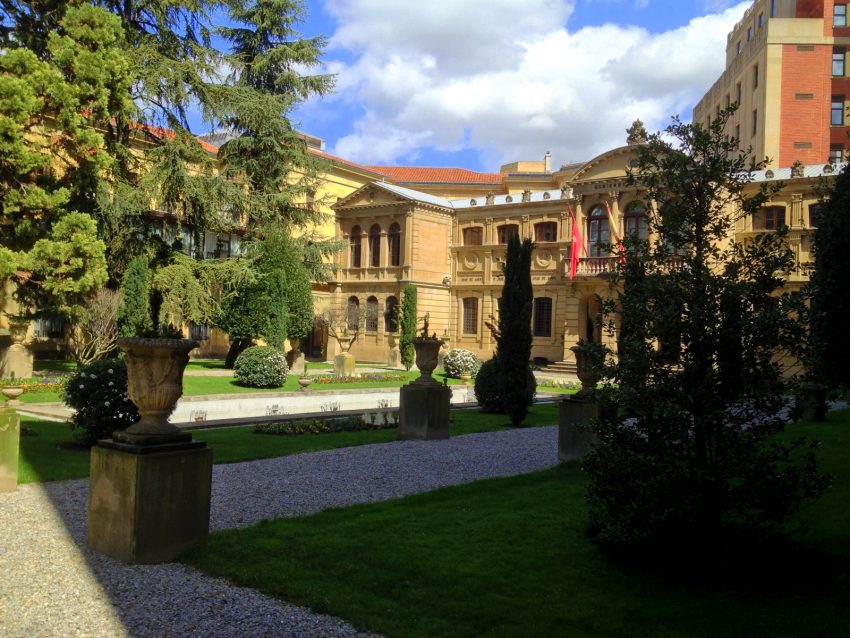
At the very heart of Pamplona, just a short walk from Plaza del Castillo, the Palacio de Navarra stands as the elegant seat of the Diputación Foral, the regional government of Navarre. This 19th-century Neoclassical palace is one of the top attractions in Pamplona for travellers interested in politics, history and art all under one roof. From the outside it looks like a stately administrative building; step inside on a guided tour and it becomes a richly decorated world of gilded ceilings, paintings and historic textiles.
The palace is still a working government building, but parts of it open to the public on guided visits that reveal highlights such as the lavish Throne Room, a portrait of Ferdinand VII by Goya and a rare 13th-century tapestry depicting the Battle of Las Navas de Tolosa. Together they tell the story of Navarre's power, identity and taste over the centuries. Because of its central location, the Palacio de Navarra is often visited on walking tours of Pamplona that link the main square, cathedral, citadel and museums in a single, easy circuit.
Table of Contents
- History and Significance of the Palacio de Navarra
- Things to See and Do in the Palacio de Navarra
- How to Get to the Palacio de Navarra
- Practical Tips on Visiting the Palacio de Navarra
- Where to Stay close to the Palacio de Navarra
- Is the Palacio de Navarra Worth Visiting?
- FAQs for Visiting Palacio de Navarra
- Nearby Attractions to the Palacio de Navarra
History and Significance of the Palacio de Navarra
The Palacio de Navarra was conceived as a physical expression of regional authority, a dignified setting for the Diputación Foral that would reflect both continuity and modernity in 19th-century Navarre. Its Neoclassical design, with ordered façades and balanced proportions, echoes the values of stability and rational government that were prized at the time. Rather than being a royal palace, it is a civic one, dedicated to the administration of the province and the representation of its people.
Inside, the palace quickly moves beyond bureaucratic neutrality. The decoration of formal rooms, particularly the Throne Room, shows how Navarre’s elites chose to project their identity: rich stuccowork, mirrors, chandeliers and carefully selected artworks create a space intended to impress visiting dignitaries and citizens alike. The presence of major works, such as Goya’s portrait of Ferdinand VII, underlines the connection between local government and the wider Spanish monarchy and art world.
The 13th-century tapestry depicting the Battle of Las Navas de Tolosa adds an even older layer to the story. This key medieval battle, in which Christian forces defeated Almohad armies in 1212, has long been tied to ideas of Christian reconquest and the shaping of the Iberian kingdoms. By displaying such a piece in the palace, the Diputación Foral visually links its modern role to centuries of regional and national history, turning the building into a kind of condensed narrative of Navarre’s past.
Things to See and Do in the Palacio de Navarra
The standard way to experience the Palacio de Navarra is on a guided tour, which leads you through selected rooms while explaining both their function and decoration. The highlight for many visitors is the Throne Room, where ornate ceilings, rich colours and carefully arranged furniture create a scene that feels straight out of a royal residence. Take time to look at the details-the mouldings, textiles and light fixtures-all of which were chosen to convey prestige.
Seek out the key artworks that help define the palace’s character. The Goya portrait of Ferdinand VII stands out not only for its artistic merit but also for what it represents: the complex relationship between the Spanish crown and regional institutions. The 13th-century tapestry of the Battle of Las Navas de Tolosa is another must-see, full of medieval symbolism and detail; from a distance it reads as a grand historical scene, but stepping closer reveals the intricacies of armour, banners and landscape.
Along the way, you will likely pass through reception areas, staircases and corridors that offer their own quieter pleasures: polished balustrades, period furniture, portraits and decorative elements that together create a cohesive world. Because the palace is still in governmental use, you also get a sense of how historic spaces can be adapted to contemporary administration without losing their ceremonial weight. This mix of living institution and heritage site is part of what makes a visit here distinctive.
How to Get to the Palacio de Navarra
Most visitors arrive in Pamplona via Pamplona Airport or larger regional hubs such as Bilbao, then continue into the city by bus, taxi or hire car. For the best deals and a seamless booking experience, check out these flights to Pamplona on Booking.com. Once in the centre, the Palacio de Navarra is easy to reach on foot from Plaza del Castillo and other main squares.
If you are travelling by train, Pamplona's main station connects with Madrid, Barcelona and other Spanish cities.Train schedules and bookings can be found on Omio. From the station, you can take a local bus or taxi into the historic centre; from there, a short walk through the Casco Viejo brings you to the palace area, which is clearly part of the administrative heart of the city.
For those arriving by car, major roads link Pamplona to the rest of northern Spain.If you are looking to rent a car in Spain I recommend having a look at Discover Cars, first, as they compare prices and review multiple car rental agencies for you. It is usually best to park in a central car park at the edge of the old town and then walk to the Palacio de Navarra, as the immediate surroundings are designed for pedestrians and official use rather than visitor parking.
Practical Tips on Visiting the Palacio de Navarra
- Suggested tips: Check guided tour schedules in advance and, if possible, book ahead to secure a place on your preferred language and time slot.
- Best time to visit: Late morning or early afternoon on weekdays often works best, when tours are more likely to run and the administrative bustle is moderate.
- Entrance fee: Free
- Opening hours: Last Friday of each month 5:00 PM, 6:00 PM and 7:00 PM. Apply on website 1 week in advance.
- Official website: https://www.navarra.es/es/tramites/on/-/line/visitas-guiadas-al-palacio-de-navarra
- How long to spend: Allow about 45-90 minutes for the guided tour, depending on the route and level of commentary provided.
- Accessibility: As a historic building, some areas may involve steps or narrow passages; check when booking whether accessible routes or accommodations are available.
- Facilities: Expect basic visitor services such as security control and possibly a small information area; cafés, shops and toilets are readily available in nearby streets and squares.
- Photography tip: Ask about photography rules at the start of the tour; if allowed, focus on details in the Throne Room, the Goya portrait and the tapestry rather than trying to capture entire rooms in one shot.
- Guided tours: All visits are typically guided; an English-language tour may be available with advance notice, offering deeper insight into the building’s political and artistic significance.
- Nearby food options: Use the palace visit as a springboard to explore nearby pintxos bars and cafés around Plaza del Castillo and the surrounding streets.
Where to Stay close to the Palacio de Navarra
Staying in central Pamplona makes it easy to visit the Palacio de Navarra and explore the rest of the old town on foot. A classic option directly on Plaza del Castillo is Gran Hotel La Perla, which places you just a short stroll from the palace and other key sights. For a quieter stay near the cathedral and old town walls, Pamplona Catedral Hotel offers a characterful base within easy walking distance of the administrative quarter. Another comfortable choice close to parks and only a few minutes’ walk from the centre is Hotel Tres Reyes Pamplona, ideal if you want quick access to both green spaces and city landmarks.
Is the Palacio de Navarra Worth Visiting?
If you are interested in how power, art and architecture intertwine, the Palacio de Navarra is definitely worth visiting. It offers a rare chance to step inside a working seat of regional government that also houses significant artworks and historic objects, from Goya's portrait of Ferdinand VII to a 13th-century tapestry of Las Navas de Tolosa. Combined with its central location and the fact that visits are guided, giving you context you might otherwise miss, the palace adds a rich and slightly unexpected dimension to a cultural stay in Pamplona.
What Other Travellers Say...

Royal and General Archive of Navarra on C. Dos de Mayo in Pamplona is a compact but rewarding destination for history and record enthusiasts: visitors praise its helpful staff and extensive holdings of public and personal documents, manuscripts and books, note an impressive large wooden model of Pamplona from around 1900, and mention an accessible 12th‑century crypt; some find the recent remodelling makes the building feel more like a replica than an original palace, but many still recommend a quick visit, especially for Spanish speakers.


FAQs for Visiting Palacio de Navarra
Nearby Attractions to the Palacio de Navarra
- Plaza del Castillo: Pamplona's main square and social hub, lined with cafés and arcades, just a short walk away.
- Pamplona Cathedral: A Gothic cathedral with Neoclassical façade, royal tombs and cloister, offering a deep dive into the city's religious and royal history.
- Ciudadela de Pamplona: A star-shaped Renaissance fortress turned public park, ideal for a relaxing stroll after sightseeing.
- Museum of Navarra: The regional museum housed in a former pilgrims' hospital, with collections ranging from prehistory to Goya and 20th-century art.
- Taconera Park: One of Pamplona's oldest parks, with landscaped gardens and shaded paths, providing a green escape close to the historic centre.
The Palacio de Navarra appears in our Complete Guide to Visiting Pamplona!

Moira & Andy
Hey! We're Moira & Andy. From hiking the Camino to trips around Europe in Bert our campervan — we've been traveling together since retirement in 2020!
This website uses affiliate links which may earn a commission at no additional cost to you!
Planning Your Visit
Last Friday of each month 5:00 PM, 6:00 PM and 7:00 PM.
Apply on website 1 week in advance.
Free
Nearby Attractions
- Running of the Bulls Monument (0.1) km
Statue - Plaza del Castillo (0.1) km
Square - Plaza de Toros de Pamplona (0.2) km
Bullring - Calle Estafeta (0.2) km
Street - Iglesia De San Nicolas (0.3) km
Church - Albergue de Jesús y María (0.3) km
Church and Hostel - Ayuntamiento de Pamplona (0.3) km
Town Hall - Centro De Interpretacion De Las Fortificaciones (0.4) km
Castle, City Walls and Museum - Iglesia de San Saturnino (San Cernin) (0.4) km
Church - Catedral de Pamplona (0.4) km
Cathedral