MUSME - Museum of the History of Medicine, Padova
Museum in Padova
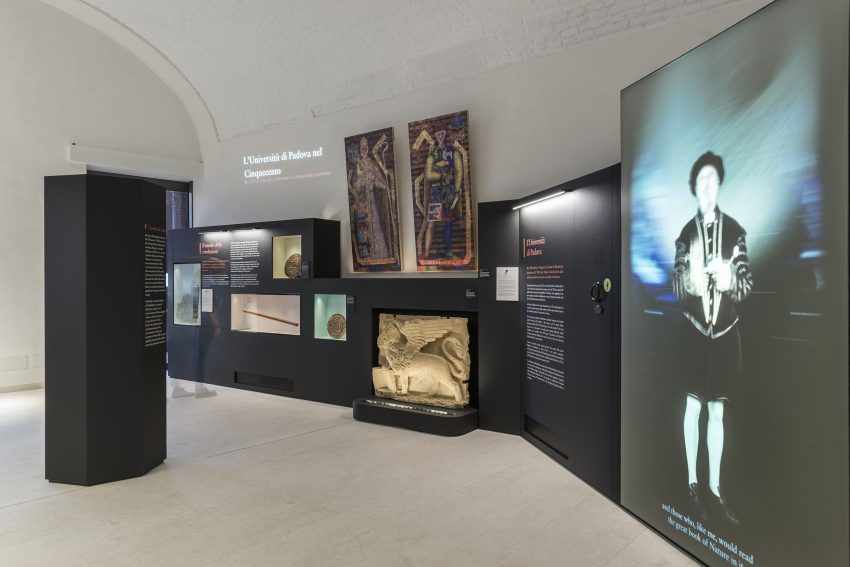
Tucked inside the former Hospital of San Francesco Grande, the Museum of the History of Medicine of Padua (MUSME) is where centuries of medical breakthroughs are brought to life with modern, hands-on exhibits. Instead of glass cases and dry labels, you get touchscreens, models and immersive rooms that trace medicine from ancient theories to cutting-edge science, always highlighting Padua's own university - long considered one of the best places to visit in Padua if you care about learning and research. It is the kind of museum where you move from anatomy and surgery to public health and genetics almost without noticing, because everything is framed as a story.
Being here also means standing in a building that once housed the city's main hospital from the 15th to the 18th century. You are walking where doctors once taught at the bedside, where ideas about anatomy, clinical practice and the scientific method were tested and refined. Today, MUSME blends that history with family-friendly, interactive displays aimed at visitors of all ages, making it often visited on walking tours of Padua as a rare place where science, architecture and everyday human stories come together.
Table of Contents
- History and Significance of the Museum of the History of Medicine of Padua
- Things to See and Do in the Museum of the History of Medicine of Padua
- How to Get to the Museum of the History of Medicine of Padua
- Practical Tips on Visiting the Museum of the History of Medicine of Padua
- Where to Stay close to the Museum of the History of Medicine of Padua
- Is the Museum of the History of Medicine of Padua Worth Visiting
- FAQs for Visiting Museum of the History of Medicine of Padua
- Nearby Attractions to the Museum of the History of Medicine of Padua
History and Significance of the Museum of the History of Medicine of Padua
MUSME’s home, the former Hospital of San Francesco Grande, dates back to the early 15th century and was for four centuries the main hospital of Padua. It stood next to the church and convent of San Francesco Grande, forming a major complex dedicated to care, charity and healing. When you step into today’s museum, you are entering a space that has seen generations of patients, physicians and carers pass through its courtyards, wards and corridors long before the idea of a “medical museum” even existed.
Padua’s medical school became one of Europe’s leading centres of learning from the late Middle Ages onwards, and the museum is designed to reflect that legacy. It highlights the role of Padua in the scientific revolution, when medicine shifted from inherited dogma to observation, experiment and anatomy. Figures such as Andrea Vesalius, Gabriele Falloppio and Girolamo Fabrici d’Acquapendente helped turn the city into a powerhouse of anatomical discovery, while clinicians like Giovanni Battista da Monte pioneered bedside teaching - all themes you will encounter as you move through the galleries.
The idea for MUSME took shape in the early 2000s, when the restored hospital complex - renamed Palazzo della Salute - was earmarked as a space to tell the story of medicine in Padua. Backed by the University of Padua, local authorities and health institutions, the museum opened in 2015 and quickly gained recognition for its innovative, digital-first approach to science communication. Today it is a key stop for anyone wanting to understand how Padua’s doctors and scientists helped transform medicine from medieval theory into a modern discipline grounded in evidence and experiment.
Things to See and Do in the Museum of the History of Medicine of Padua
MUSME is laid out as a journey through the history of medicine, so you can follow a loose chronological path or dive into whichever theme interests you most. Interactive stations explain how ideas about the body evolved, from humours and medieval medicine to anatomy, microbiology and contemporary surgery. Expect a mix of multimedia displays, models, historical instruments and reconstructions that make it easy to grasp complex ideas without needing a medical degree.
One of the most engaging aspects of the museum is its focus on Padua’s own contributions. You will find sections dedicated to the university’s anatomical theatre, early dissections and the introduction of autopsy as a scientific tool. Exhibits explore how Padua’s doctors mapped the human body, refined surgical techniques and established clinical teaching at the bedside. These displays bring names from textbooks to life, connecting them to the spaces and patients of the city itself.
For younger visitors and anyone who prefers a hands-on experience, MUSME offers plenty of opportunities to touch, try and test. Interactive screens let you explore organs and body systems, while games and simulations show how disease spreads or how medical tools are used. The building itself, with its restored historical features, is part of the experience: high ceilings, old stonework and modern design details sit side by side. Plan time to explore each floor slowly so you do not rush past smaller exhibits and short films that add colour and context to the main storylines.
How to Get to the Museum of the History of Medicine of Padua
The Museum of the History of Medicine of Padua is located next to the church of San Francesco Grande, a short walk from the historic centre. International visitors usually arrive via nearby airports such as Venice Marco Polo or Treviso, then continue to Padua by bus, shuttle or train, making it easy to fold a visit to MUSME into a wider Veneto itinerary. For the best deals and a seamless booking experience, check out these flights to Padova on Booking.com.
By train, Padova railway station is on major high-speed and regional lines linking Venice, Milan, Bologna and Verona. Use Omnio to easily compare schedules, book train tickets, and find the best prices all in one place for a hassle-free journey across Italy. From the station, you can walk into the old town in around 20-25 minutes or take a tram or local bus towards the centre, then continue on foot following signs for San Francesco or Palazzo della Salute.
If you are travelling by bus, Padua’s urban network and regional services connect the station, suburbs and nearby towns with stops within walking distance of the museum. Ask locally or check route maps for the best line towards the old town and San Francesco area. For those driving into the city, Padua is close to the A4 and A13 motorways, with signed exits and multi-storey or surface car parks around the historic centre; park once and then reach MUSME on foot through the atmospheric streets of central Padua. If you are looking to rent a car in Italy I recommend having a look at Discover Cars, first, as they compare prices and review multiple car rental agencies for you.
Practical Tips on Visiting the Museum of the History of Medicine of Padua
- Suggested tips: Give yourself enough time to read, watch and try the interactive elements rather than just walking through; it is a museum that rewards curiosity and lingering.
- Best time to visit: Weekday mornings or early afternoons are usually quieter; school groups tend to visit at set times, so checking in advance or arriving early can help you avoid the busiest hours.
- Entrance fee: Adults: €12.00
- Opening hours: Tuesday to Friday: 2:30 to 19:00; Weekends and Holidays: 9:30 – 19:00
- Official website: https://www.musme.it
- How long to spend: Plan at least 1.5 to 2 hours to explore comfortably; keen readers and science enthusiasts could easily spend half a day.
- Accessibility: The renovated hospital building includes lifts and modern facilities, but some areas may have uneven floors; if mobility is an issue, consult staff about accessible routes.
- Facilities: Expect a ticket desk, cloakroom area, restrooms and usually a small bookshop or gift corner; cafés and restaurants are available within a short walk in the surrounding streets.
- Photography tip: Focus on contrasts between old architecture and sleek digital displays, and try to capture the sense of movement and interaction rather than just static cases.
- Guided tours: Look out for guided visits, themed events or educational workshops, which can add depth to the exhibits and are ideal if you have a strong interest in history of science.
- Nearby food options: The area around San Francesco offers local cafés, bakeries and restaurants where you can grab an espresso, snack or full meal before or after your museum visit.
Where to Stay close to the Museum of the History of Medicine of Padua
Staying in or near Padua’s historic centre makes it simple to reach MUSME on foot while also enjoying the city’s main sights. A good option within walking distance of the museum is Hotel Majestic Toscanelli, a classic central hotel close to the main squares and university quarter. For a smaller, boutique-style stay, Hotel Belludi 37 places you near the Basilica of Saint Anthony and still within an easy stroll of the museum and Piazza delle Erbe. Another convenient choice is Hotel Europa Padova, handy if you are arriving by car or train yet want to walk into the old town for museums, churches and evening aperitivi.
Is the Museum of the History of Medicine of Padua Worth Visiting
The Museum of the History of Medicine of Padua is very much worth visiting, especially if you enjoy museums that make complex ideas accessible and engaging. Rather than just displaying old instruments in cases, MUSME uses interactive screens, models and creative storytelling to show how medicine has evolved, and how Padua’s own doctors and scientists helped drive that change. It is both educational and entertaining, which makes it appealing to families, students and seasoned travellers alike.
Because the museum sits in the former main hospital, it also gives you a strong sense of place: you are learning about anatomy, surgery and public health in the same kind of building where those ideas were tested on real patients over the centuries. Combined with a walk to nearby churches, piazzas and university buildings, a visit here rounds out your understanding of why Padua was once seen as a leading centre of science in Europe. For anyone curious about how we came to understand the human body, MUSME is one of the top attractions in Padua.
What Other Travellers Say...

MUSME on Via S. Francesco in Padova is a focused, family-friendly museum about human anatomy and the local history of medicine, housed in a historic building complex; its displays mix interactive exhibits, explanatory text and videos, and include anatomical models, plastinated organ samples, surgical instruments and prosthetic devices. Visitors praise the engaging, hands-on elements and accessible English throughout most of the displays and videos, though a few areas lack full English translations; there's also a small shop. Some found it quiet and felt certain texts or books without English limited their experience, and a modest admission price was suggested by one reviewer.


FAQs for Visiting Museum of the History of Medicine of Padua
Nearby Attractions to the Museum of the History of Medicine of Padua
- Basilica of Saint Anthony of Padua: One of Italy's most important pilgrimage churches, richly decorated and only a short walk from the museum.
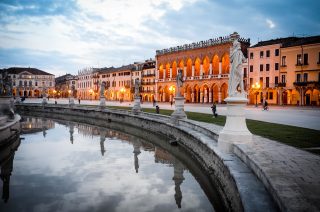
- Prato della Valle: A vast, elliptical square with a central island, statues and a surrounding canal, perfect for a stroll before or after your museum visit.
- Orto Botanico di Padova: The world's oldest university botanical garden, ideal for a peaceful walk among historic plant collections and modern greenhouses.
- Palazzo del Bo and University of Padua: The historic seat of the university, with guided tours that explore lecture halls, courtyards and the famous anatomical theatre.
- Piazza delle Erbe and Piazza dei Frutti: Lively market squares with arcades, shops and cafés that show off Padua’s everyday life and local character.
The MUSME - Museum of the History of Medicine appears in our Complete Guide to Visiting Padova!

Moira & Andy
Hey! We're Moira & Andy. From hiking the Camino to trips around Europe in Bert our campervan — we've been traveling together since retirement in 2020!
This website uses affiliate links which may earn a commission at no additional cost to you!
Planning Your Visit
Tuesday to Friday: 2:30 to 19:00; Weekends and Holidays: 9:30 - 19:00
Adults: €12.00
Nearby Attractions
- Palazzo Bo (0.3) km
Historic Building and Palace - Cafe Pedrocchi (0.4) km
Historic Building - Piazza del Santo (0.4) km
Square - Basilica di Sant'Antonio (0.4) km
Basilica - Palazzo della Ragione (0.5) km
Historic Building and Market - Piazza dei Signori (0.6) km
Square - Chiesa degli Eremitani (0.6) km
Church - Musei Civici di Padova (0.6) km
Historic Building and Museum - Torre dell'Orologio (0.6) km
Tower - Orto Botanico (0.7) km
Gardens