Museum of Archaeology, Sarandë
Museum in Sarandë
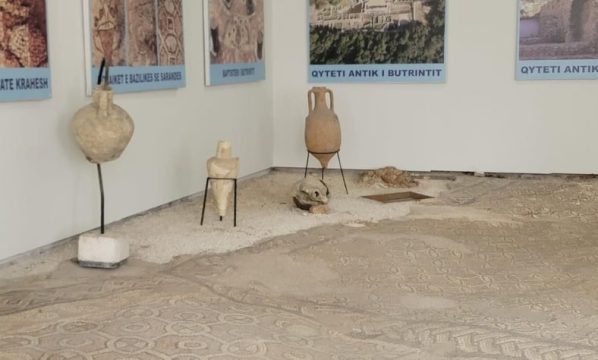
A few minutes from Sarandë's harbour, the Museum of Archaeology is tucked into the city's former post office building, and it feels exactly like the kind of local museum you hope to stumble upon while wandering. It's compact and low-key, but the moment you step inside you realise why it matters: the space exists to protect a large late-antique mosaic floor discovered right here in the city.
The highlight is the so-called Dolphin Mosaic, and seeing it up close is what turns this into one of the things to do in Sarandë beyond the beaches and promenade. Because it's central, it slots neatly into a walking tour of Sarandë, especially on a hot day when you want a short, culture-rich stop that still keeps you near the waterfront.
Table of Contents
- History and Significance of the Museum of Archaeology
- Things to See and Do in the Museum of Archaeology
- How to Get to the Museum of Archaeology
- Practical Tips on Visiting the Museum of Archaeology
- Where to Stay Close to the Museum of Archaeology
- Is the Museum of Archaeology Worth Visiting?
- For Different Travelers
- FAQs for Visiting the Museum of Archaeology
- Nearby Attractions to the Museum of Archaeology
History and Significance of the Museum of Archaeology
The museum's story is tied to a single exceptional find. During construction work in Sarandë, a large mosaic floor came to light, and the museum was designed as a protective shell around it rather than a conventional gallery-first institution. That decision matters: without a dedicated building, a fragile floor mosaic of this size would likely have been reburied, removed, or left vulnerable to the elements.
Most interpretations place the mosaic in Late Antiquity, often associated with the 6th century, when Sarandë and the surrounding coast sat on busy cultural currents linking Epirus, the Ionian, and the wider Mediterranean. The mosaic's imagery and an inscription naming a church official (a presbyter) offer a rare, personal clue about patronage and local religious life, hinting at a community that invested in public sacred or semi-sacred space.
The museum also plays an outsized role for a small venue: it’s one of Sarandë’s simplest ways to connect the modern resort town to the older landscape of nearby sites like Butrint, Phoenice, and the region’s early Christian and late Roman layers. In other words, it’s the kind of place that quietly upgrades your whole understanding of where you are.
Things to See and Do in the Museum of Archaeology
Start by giving the Dolphin Mosaic time. Walk its perimeter slowly, looking for how the design guides your eye through borders, motifs, and the central field. The best approach is to treat it less like “an exhibit” and more like an intact floor from another era-because that’s what it is-then imagine the building that once rose above it and the people who moved across it daily.
After the mosaic, turn to the smaller displays: pottery fragments, inscriptions, coins, and architectural pieces that sketch Sarandë’s long timeline in quick, digestible beats. The interpretive panels and photographs are useful here, because they help place what you’re seeing within the wider archaeological map of southern Albania, especially if you’re planning to visit Butrint and want a short primer beforehand.
Finally, use the museum as a pacing stop. It’s ideal between waterfront wandering and more time-consuming excursions: you can pop in, reset in the shade, and leave with a sharper sense of the region’s depth without committing half a day.
How to Get to the Museum of Archaeology
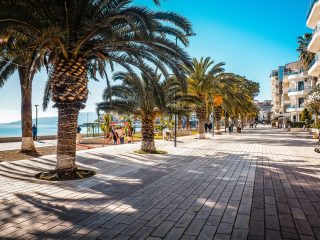
If you're already in Sarandë, the museum is easy to reach on foot from the harbour and the waterfront promenade, making it one of the simplest cultural stops in the city centre.
For travellers arriving from outside the area, the nearest airports are Corfu International Airport (CFU) via the Corfu-Sarandë ferry, or Tirana International Airport (TIA) followed by the long southbound journey by road. For the best deals and a seamless booking experience, check out these flights to Sarandë on Booking.com. Sarandë does not have a practical train connection, so buses, minibuses, and taxis are the realistic public-transport options for reaching town. If you’re driving, the museum is straightforward once you’re in central Sarandë, but parking can be limited in peak season, so it’s often easier to leave the car and walk. If you are looking to rent a car in Albania I recommend having a look at Discover Cars, first, as they compare prices and review multiple car rental agencies for you.
Practical Tips on Visiting the Museum of Archaeology
- Entrance fee: 100 Albanian lek (inlcuddes admision to Museum of Traditions)
- Opening hours: Monday – Friday: 09:00–13:00 & 19:00–22:00. Saturday – Sunday: 19:00–22:00.
- Best time to visit: Visit in the late morning or early evening when the centre feels calmer and you can view the mosaic without feeling rushed.
- How long to spend: Plan 20-45 minutes for a satisfying visit, longer only if you enjoy reading every panel closely.
- Accessibility: The museum is central and compact, but expect typical older-building constraints and focus your visit on the most comfortable viewing points.
- Facilities: Keep expectations simple; treat it as a focused museum stop and plan cafés, restrooms, and longer breaks along the nearby waterfront.
Where to Stay Close to the Museum of Archaeology
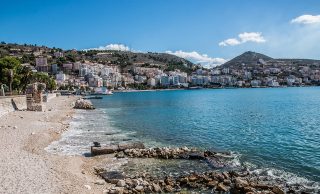
For a culture-heavy itinerary, base yourself along Sarandë's central waterfront promenade; if your trip is mostly beaches and day trips toward Ksamil and Butrint, staying on the southern side of town makes those departures quicker.
If you want to be able to walk everywhere in the evenings and still have an easy route back after sightseeing, Hotel Saranda Butrinti, Affiliated by Meliá is a strong central choice near the promenade energy. For a comfortable, well-located alternative with good access to the centre and coastal road, Hotel Brilant Saranda works well for travellers who want convenience without overthinking logistics. If you’re prioritising quick hops to the ferry terminal and harbour area, Hotel Piccolino puts you close to the waterfront flow.
Is the Museum of Archaeology Worth Visiting?
Yes, especially if you like small museums that deliver a genuinely memorable highlight. The Dolphin Mosaic gives you a rare, close-up encounter with late-antique craftsmanship, and the visit is short enough to fit into almost any Sarandë day without trade-offs.
It’s also a smart “context stop” before bigger heritage outings. Even if your main goal is beaches, this museum makes the destination feel richer and more grounded in its long history.
What Other Travellers Say...

Synagogue - Basilica, Archeological Remains in Sarandë sits in the town centre within the old fortress walls and is an open, free-to-enter archaeological site where visitors can view remains of a basilica and synagogue dating back many centuries; displays on site include photo replicas of mosaics (the originals are kept in the Sarandë Museum of Archaeology), signage is minimal and sometimes faded, and the small site is easy to see from the surrounding streets near the central square, tourism office and bus station.


For Different Travelers
Families with Kids
This museum works best for families as a short, focused visit with a single “wow” object. The mosaic is easy for kids to engage with because it’s visual and immediate, so you can build the visit around spotting shapes, borders, and motifs rather than reading lots of text.
Keep the pacing light: treat it as a 20-30 minute indoor break that adds variety to a day of walking and seaside time. Pair it with a waterfront snack afterward so it feels like a pleasant stop, not a lesson.
Couples & Romantic Getaways
For couples, the appeal is the contrast: a quiet, intimate space in the middle of a lively seaside town. The mosaic invites slow looking, and the setting makes it easy to weave culture into an otherwise relaxed Riviera day.
It also pairs naturally with an evening promenade stroll. A brief museum visit followed by dinner along the waterfront is a simple, low-effort plan that still feels thoughtful and well-rounded.
Budget Travelers
Budget travellers tend to love this stop because it’s quick, central, and typically inexpensive, with a high “value per minute” payoff. You can see something genuinely distinctive without paying for transport or reorganising your day.
It’s also useful as a planning tool: the panels and photos help you decide whether to prioritise bigger-ticket archaeological sites nearby. If you’re choosing carefully, this is a good way to sharpen your itinerary.
History Buffs
History-focused travellers should treat the Dolphin Mosaic as a primary source you can stand over, not just an image in a book. The inscription and the late-antique context open up questions about patronage, worship, and civic identity at a time when the region was changing fast.
Use this as a springboard for nearby sites rather than an endpoint. Once you’ve absorbed the museum, you’ll read places like Butrint with a better eye for late Roman and early Byzantine layers, not just the headline ruins.
FAQs for Visiting the Museum of Archaeology
Getting There
Tickets & Entry
Visiting Experience
Tours, Context & Itineraries
Photography
Accessibility & Facilities
Food & Breaks Nearby
Nearby Attractions to the Museum of Archaeology
- Synagogue Complex: Open-air ruins with striking mosaics that reveal Sarandë's layered Jewish and early Christian past.
- Sarandë Promenade: The lively waterfront walk, perfect for an easy stroll, people-watching, and café stops.
- Lekursi Castle: A hilltop fortress with panoramic views over Sarandë and Corfu, especially popular near sunset.
- Monastery of the 40 Saints: A historic hill site that adds context to Sarandë's spiritual heritage and offers sweeping views.
- Butrint National Park: The region's headline archaeological destination, combining major ruins with a beautiful natural setting south of town.
The Museum of Archaeology appears in our Complete Guide to Visiting Sarandë!

Moira & Andy
Hey! We're Moira & Andy. From hiking the Camino to trips around Europe in Bert our campervan — we've been traveling together since retirement in 2020!
This website uses affiliate links which may earn a commission at no additional cost to you!
Planning Your Visit
Monday - Friday: 09:00-13:00 & 19:00-22:00.
Saturday - Sunday: 19:00-22:00.
100 Albanian lek (inlcuddes admision to Museum of Traditions)
Nearby Attractions
- Sarandë Museum of Archaeology (0.0) km
Museum - Sarandë Museum of Tradition (0.0) km
Museum - Museum of Traditions (0.0) km
Museum - Synagogue Complex (0.2) km
Ruins - Sarandë Beach (0.3) km
Beach - Monastery of Forty Saints (1.0) km
Ruins - Lekursi Castle (1.7) km
Castle - Monastery’s Beach (6.8) km
Beach - Saint George Monastery (7.1) km
Monastery - Mirror Beach (7.8) km
Beach