Monte da Penha, Guimarães
Religious Building and Viewing Point in Guimarães
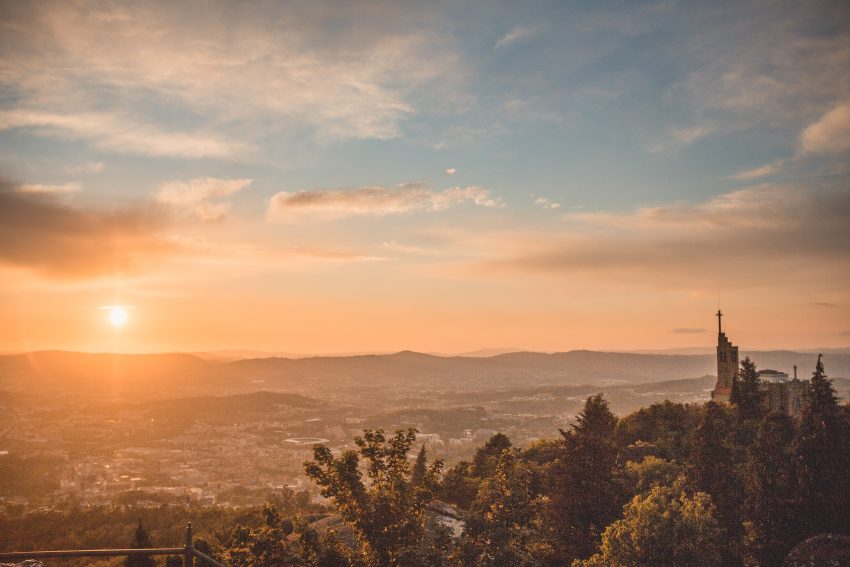
Monte da Penha rises southeast of Guimarães, offering one of the top attractions in Guimarães and a highlight of any walking tour of Guimarães. At 617 metres, it is the highest point for kilometres around, making it one of the must-see places in Guimarães for anyone who loves nature, scenic views, or peaceful woodland escapes.
The mountain is easily reached by a winding road or the charming Teleférico de Penha. Its summit is filled with cool forests, giant boulders with carved steps and crosses, hidden grottoes, and viewpoints that look out over the entire region. Families especially enjoy the sense of adventure, exploring the boulders and woodland paths.
Table of Contents
History and Significance of Monte da Penha
Monte da Penha has long been cherished as a natural refuge, offering cool forest shade and fresh air away from the summer heat of the city. For centuries, locals came here for picnics, pilgrimages, and quiet walks, making it an important part of Guimarães' cultural landscape.
On the lower slopes stands the historic Mosteiro de Santa Marinha da Costa. Commissioned in 1154 by Dona Mafalda, wife of Afonso Henriques, Portugal’s first king, the monastery fulfilled a vow she made to the patron saint of pregnant women. Rebuilt in the 18th century, the monastery later became one of Portugal’s flagship pousadas, preserving its sacred heritage in a luxurious setting.
The summit of Penha also features a sanctuary, chapels, and scattered shrines, reinforcing the mountain’s long-standing spiritual significance alongside its natural beauty.
Things to See and Do in Monte da Penha
Monte da Penha offers a wide array of experiences. The panoramic viewpoints are among the best places to visit in Guimarães for photography - especially at sunrise or sunset when the city glows beneath the mountain. Wander through the forests to discover enormous granite boulders, some carved with steps or marked with crosses. Children love climbing and exploring the secret grottoes scattered throughout the landscape.
Walking trails crisscross the summit, leading to rock formations, picnic areas, chapels, and natural lookouts. Visitors can also stop at the sanctuary located at the top, a peaceful place surrounded by trees and open spaces.
Below the peak, the Mosteiro de Santa Marinha da Costa offers a serene historic visit. Its elegant architecture and surrounding gardens create a tranquil atmosphere, contrasting beautifully with the rugged granite slopes above.
How to Get to Monte da Penha
The nearest major airport is Porto Airport (OPO). For the best deals and a seamless booking experience, check out these flights to Guimarães on Booking.com. From Porto, frequent trains run to Guimarães, making day trips simple and affordable. Train schedules and bookings can be found on Omio. To reach the top, the Teleférico de Penha departs from Parque das Hortas, just 600m east of the old centre. Visitors travelling by car can drive the winding but scenic cobbled road up the mountain and park near the summit. If you are looking to rent a car in Portugal I recommend having a look at Discover Cars, first, as they compare prices and review multiple car rental agencies for you.
Practical Tips on Visiting Monte da Penha
- Suggested tips: Wear sturdy shoes - rocky paths and boulder areas require good grip.
- Best time to visit: Morning or late afternoon for the clearest views and softer light.
- Entrance fee: Free; cable car has a separate fare.
- Opening hours: Accessible year-round; cable car hours vary by season.
- Official website: Check the Teleférico de Penha pages for schedules and updates.
- How long to spend: 1.5-3 hours depending on trails and viewpoints explored.
- Accessibility: Forested paths and boulders are uneven; some areas are accessible only on foot.
- Facilities: Picnic areas, cafés at the summit, cable car station, and rest areas.
- Photography tip: Capture panoramic shots from the highest viewpoint toward Guimarães.
- Guided tours: Available through local nature and pilgrimage tour operators.
- Nearby food options: Cafés at the summit and restaurants near Parque das Hortas.
Where to Stay close to Monte da Penha
For a memorable hillside stay, consider Pousada Mosteiro de Guimarães, located on the lower slopes in the former monastery of Santa Marinha. For easy access to both the city and the cable car, Hotel Toural is an excellent central option. For modern comfort near the old town, choose Santa Luzia ArtHotel.
Is Monte da Penha Worth Visiting?
Absolutely - Monte da Penha is one of Guimarães' most enjoyable and scenic destinations. Whether you come for hiking, forest walks, panoramic views, sacred sites, or simply to escape the summer heat, the mountain offers a refreshing and unforgettable experience.
What Other Travellers Say...

Sanctuary of Penha sits atop a hill on a spacious piazza overlooking Guimarães, surrounded by walking trails and offering sweeping city views; visitors praise the atmosphere in all weather, enjoy nearby boulder formations, note it's a fresh, picnic-friendly spot with places to eat, and mention a cable car (or drive) makes access easy and worthwhile.


FAQs for Visiting Monte da Penha
Can children enjoy the mountain?
Definitely - the boulders and grottoes are ideal for exploration.
Is the walk from the city long?
The summit is too far to walk comfortably; take the cable car or taxi.
Is the monastery open to visitors?
It functions as a pousada but parts of the exterior and grounds can be visited.
Is Monte da Penha good for hiking?
Yes - multiple trails offer varied difficulty and beautiful scenery.
Nearby Attractions to Monte da Penha
- Mosteiro de Santa Marinha da Costa - Historic monastery and luxury pousada on the lower slopes.
- Castelo de Guimarães - Portugal's symbolic birthplace on Monte Largo.
- Paço dos Duques de Bragança - Impressive Gothic palace near the castle.
- Largo da Oliveira - Historic square filled with arcades and monuments.
- Praça de São Tiago - Medieval plaza linked to ancient legends.
The Monte da Penha appears in our Complete Guide to Visiting Guimarães!

Moira & Andy
Hey! We're Moira & Andy. From hiking the Camino to trips around Europe in Bert our campervan — we've been traveling together since retirement in 2020!
This website uses affiliate links which may earn a commission at no additional cost to you!
Planning Your Visit
Winter: Open Fridays, Saturdays, Sundays 10 am – 5:15 pm
Adults €7.50, Children €3.50.
Nearby Attractions
- Nossa Senhora da Consolação (2.1) km
Church - Centro Cultural Vila Flor (2.2) km
Gardens and Historic Building - Igreja de São Francisco (2.3) km
Church - Alberto Sampaio Museum (2.4) km
Museum - Largo da Oliveira (2.4) km
Square - Muralhas de Guimaraes (2.4) km
City Gate and City Walls - Convento de Santa Clara (2.5) km
Convent - Praça de São Tiago (2.5) km
Square - Rua de Santa Maria (2.5) km
Street - Largo do Toural (2.5) km
Square